Cooked tomato gives you more lycopene (the red pigment in tomatoes) than raw. Paste gives you the most of all.
Add oil. Lycopene (the red pigment in tomatoes) needs fat to cross the gut wall.
Most of the prostate and heart evidence sits on cooked tomato.
Reflux (stomach acid rising into the throat) is the one common complaint, and it comes from the acid rather than the lycopene (the red pigment in tomatoes).
Chapter 2 of 14
Why It Matters
Nobody has to persuade you to eat tomato. It's already in the gheymeh, already in the salad, already spread on the bread. That matters more than potency. A nutrient you swallow twice a day without thinking beats a supplement you remember on Sundays.
Two lines of research point the same way for older adults. In long cohort studies (a study that follows a group of people over time), higher lycopene (the red pigment in tomatoes) in the blood tracks with lower heart and blood vessel risk. Cooked tomato has also produced small drops in LDL (the harmful type of cholesterol) cholesterol in feeding trials. The prostate work is more mixed than headlines suggest, though cooked tomato intake still comes out slightly favourable across pooled analyses.
Roughly 290 mg of potassium in a medium tomato, on the right side of the sodium balance.
Daily tomato paste raised the skin's resistance to sunburn in a small controlled trial.
Chapter 3 of 14
What It Contains
Primary compounds
Lycopene (the red pigment in tomatoes) is the red carotenoid (the orange and yellow plant pigments your body can use) and the reason cooked tomato outperforms raw.
Vitamin C sits mostly in the jelly around the seeds, which is the part people scoop out.
Potassium, at a useful level for a food this low in calories.
Other Constituents
Naringenin, a flavonoid (a family of protective plant compounds) in the skin, which is one more argument against peeling.
Vitamins
Vitamin K, Folate, Vitamin A
Other notable constituents
Minerals: Manganese · Antioxidants: Beta-carotene · Fiber: About 1.5 g per medium tomato
Chapter 4 of 14
What Studies in People Show
Moderate evidence
Tomato and lycopene (the red pigment in tomatoes) intake was associated with modestly lower heart and blood vessel risk in pooled cohort studies.Moderate evidence
Tomato products lowered LDL (the harmful type of cholesterol) cholesterol compared with control diets in a meta-analysis (a study that pools the results of many trials) of intervention trials.Moderate evidence
Early research
Daily tomato paste with olive oil increased skin resistance to ultraviolet-induced reddening over twelve weeks.Emerging evidence
Cooked tomato intake was associated with a small reduction in prostate cancer risk, with raw intake showing no clear effect.Emerging evidence
Chapter 5 of 14
Using It in the Kitchen
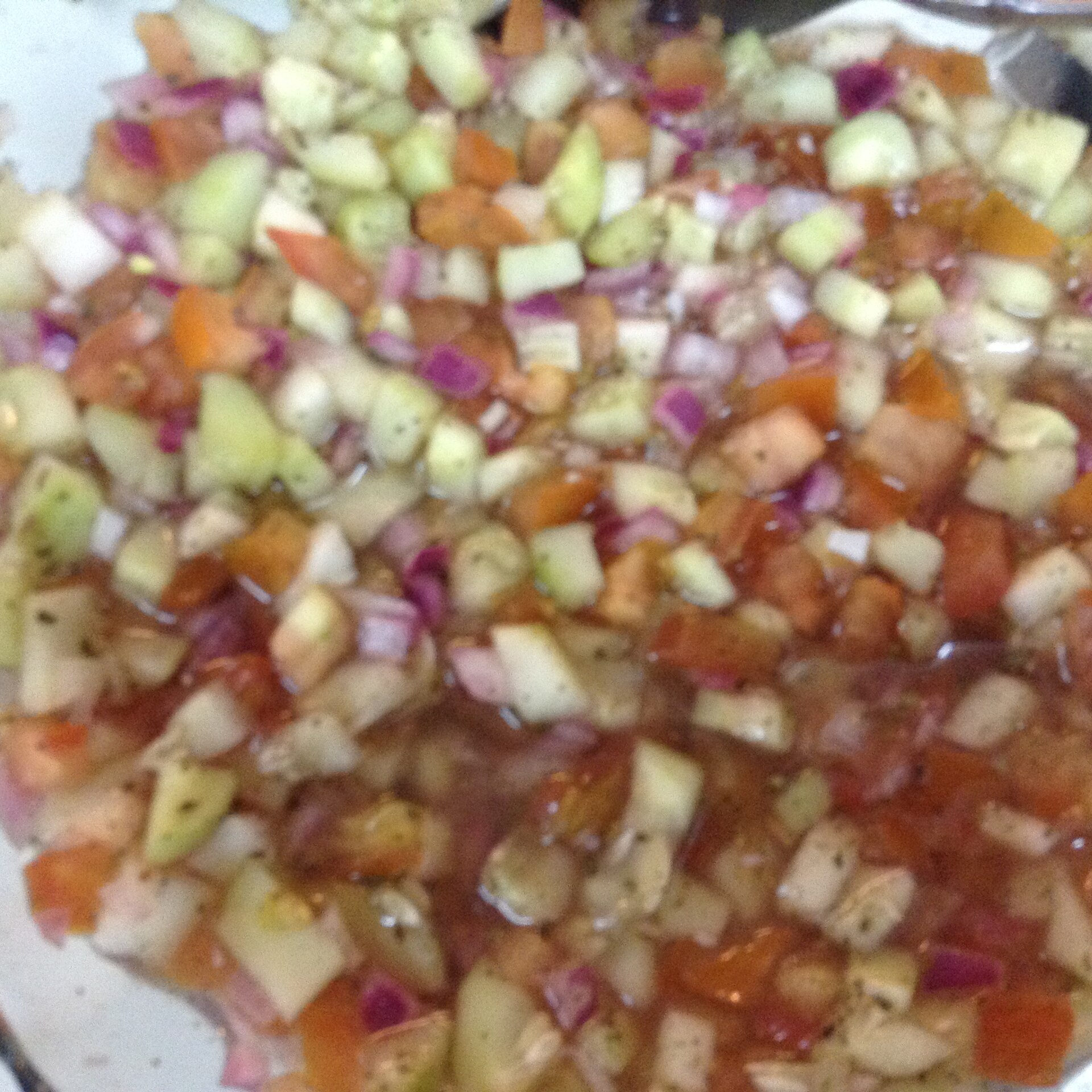
In the kitchen: with a main meal, cooked, and with oil in the pan. Cooked down slowly into rob-e goje, the household tomato paste. Diced fine with cucumber, onion and lime for salad shirazi. Grilled whole beside kabab until the skin splits. Simmered into khoresh gheymeh with split peas and dried lime.
Other Ways to Use It
Two tablespoons of tomato paste cooked in oil covers the lycopene dose used in most trials.
Cook the paste in oil for a minute before adding liquid. It darkens, loses the tinny edge, and the colour deepens.
Keep tomatoes out of the fridge until they're cut. Cold flattens the flavour and turns the flesh mealy.
Score the skin, drop in boiling water for thirty seconds, then into cold. The skin slips off.
Salt sliced tomatoes ten minutes early so they release juice before they hit the salad.
Chapter 6 of 14
Medicines and Interactions
Medication interaction:
ACE inhibitors and potassium-sparing diuretics — Tomato is high in potassium. Large daily amounts of juice or paste can add up if your kidneys or your medication already hold potassium back. Ordinary cooking amounts aren't a problem. (low concern)
Chapter 7 of 14
Who Should Be Careful
General caution:
The acid can push reflux in people who already get it. Cooked tomato and a meal around it help; a raw tomato on an empty stomach doesn't.
Allergy:
Tomato is a common trigger for mouth tingling in people with latex or grass-pollen allergy.
General caution:
Canned tomato is fine nutritionally. Check the label for added salt, which is where the sodium in a home-cooked stew often hides.
General caution:
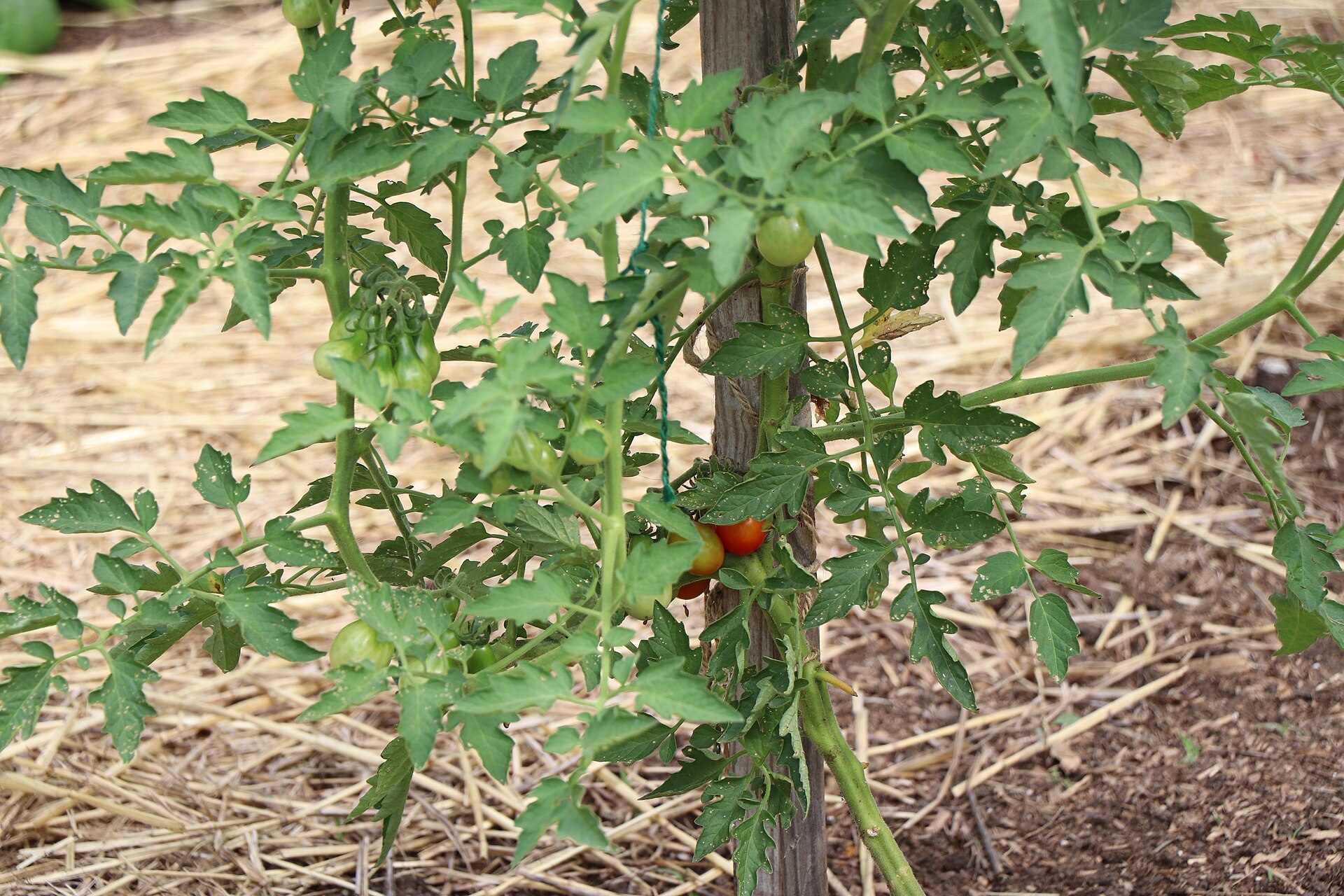
Green unripe tomatoes carry solanine and taste bitter for a reason. Cook them, and don't eat them raw in quantity.
Allergy:
Known tomato or nightshade allergy.
Chapter 8 of 14
Pregnancy, Children and Older Adults
Pregnancy and breastfeeding
Pregnancy and breastfeeding:
Safe and useful. The folate and vitamin C both matter, and the acid is the only common complaint, since heartburn is already more likely in late pregnancy. Cooked tomato in a meal usually sits better than raw on its own.
Children
Allergy:
Well tolerated from around six months, cooked and sieved at first. A ring of redness around the mouth after tomato is usually contact irritation from the acid rather than an allergy, though it's worth mentioning to your doctor if it repeats.
Older adults
Older adults:
Cooked tomato is soft, cheap and easy to chew, and it carries potassium into a diet that often runs short of it. If reflux (stomach acid rising into the throat) is a problem, keep the last tomato-heavy meal at least three hours before bed.
Chapter 9 of 14
Traditional Persian Perspective
Persian temperament: Cool & Moist (1st degree). A modern assignment. Read as cooling and thirst-quenching, which is why cooks balance it with warming spice in winter stews.
Introduced to Iran in the Qajar era and treated at first as a curiosity rather than food.
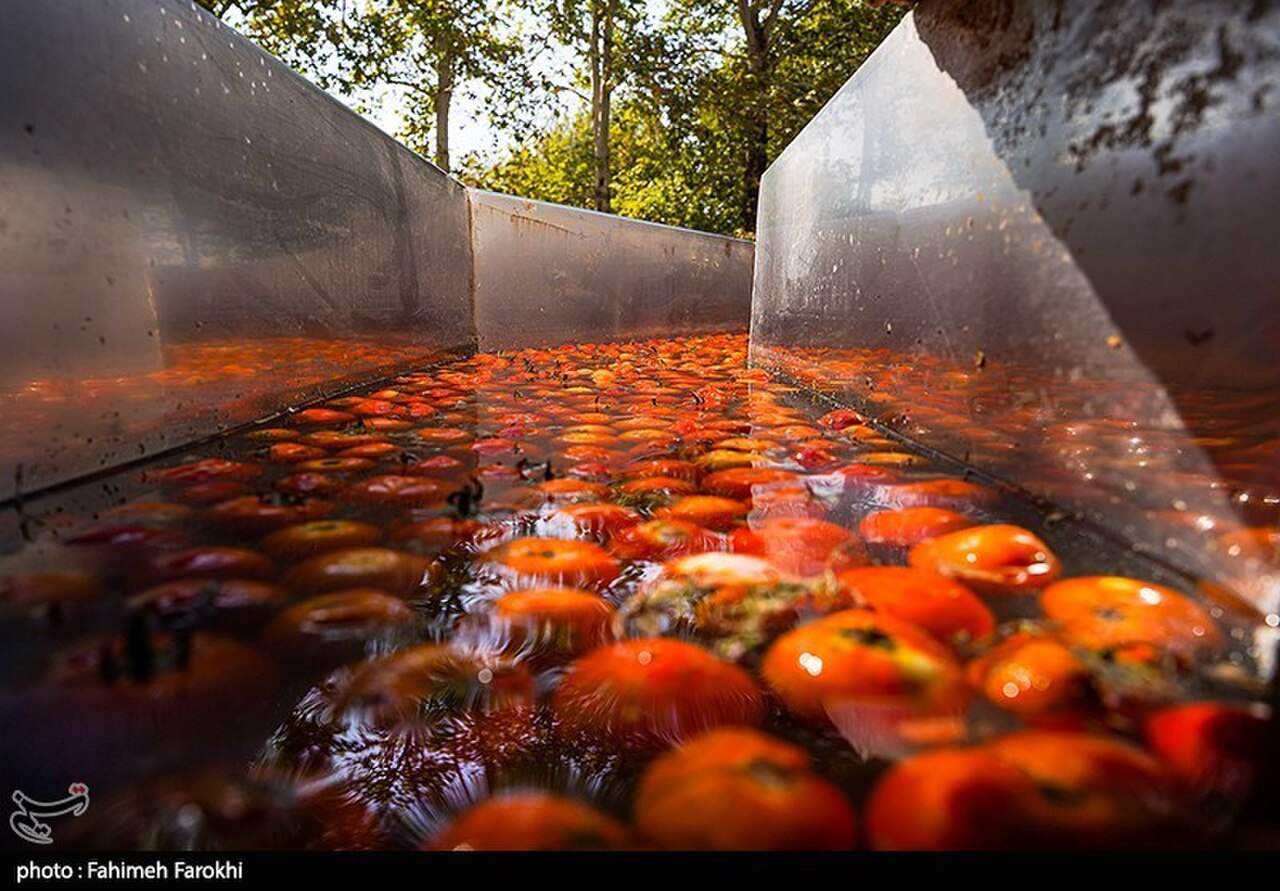
Cooked down into rob-e goje for winter, which is how most households stored the crop before refrigeration.
Adopted into khoresh in the twentieth century, replacing older sour agents in some stews.
In the Household
Goje farangi entered Iranian cooking through the nineteenth-century court and never left. Rob-e goje, the thick sun-cooked paste, now colours khoresh gheymeh, gheymeh nesar and half the stews in the country. Every summer, households still buy crates of tomatoes and cook them down for the year ahead. The smell of that pot marks the season. Cut finely with cucumber, onion and lime in salad shirazi, tomato does the opposite job: it cools.
Chapter 10 of 14
What It Goes With
Pairing:
Olive oil
Fat carries lycopene (the red pigment in tomatoes) across the gut wall. Cooking tomato without oil wastes half of it.
Pairing:
Cucumber
Salad shirazi. Water and crunch against acid and sweetness, held together by lime.
Herb:
Basil
Reyhan on the sabzi khordan plate goes with a sliced tomato better than any dressing does.
Pairing:
Feta
Salt against acid, and a tomato with cheese and bread is a whole Iranian breakfast.
Chapter 11 of 14
Through the Year
Spring:
Spring
Greenhouse fruit dominates. Cook it rather than slicing it. Heat covers a thin flavour.
Summer:
Summer
Field season. Eat them raw with salt, lime and onion, and cook the surplus down for winter.
Autumn:
Autumn
The last of the crop, best roasted whole with garlic until the edges catch.
Winter:
Winter
Paste season. A spoonful cooked in oil is the base of most Iranian stews.
Chapter 12 of 14
Questions People Ask
Is cooked really better than raw?
For lycopene (the red pigment in tomatoes), yes. Heat breaks down the cell walls and changes the shape of the molecule into one the gut absorbs more easily. Raw tomato still gives you the vitamin C, which cooking reduces.
Are canned tomatoes as good?
Yes, and often better, because they're canned ripe and the process concentrates the lycopene. Read the label for added salt and sugar.
Why do tomatoes taste like nothing in winter?
They were picked green and ripened in transit, and refrigeration finishes the job. Cook them instead. In a stew nobody can tell.
Should I peel them?
For a smooth sauce, yes. For everything else, no. The skin holds much of the lycopene and the flavonoids (a family of protective plant compounds).
Chapter 13 of 14
Sources
Sad Giah Hezar Darman (صد گیاه و هزار درمان) — One Hundred Plants and One Thousand Remedies — Dr. Hossein Erfani, 4th edition (1375 / 1996–1997). Primary traditional Persian herbal reference cited throughout this platform. Presented as traditional knowledge, not as modern medical proof.
Office of Dietary Supplements: fact Sheets — US National Institutes of Health (NIH). https://ods.od.nih.gov/factsheets/list-all/.
Herbal Database: memorial Sloan Kettering Cancer Center. https://www.mskcc.org/cancer-care/diagnosis-treatment/symptom-management/integrative-medicine/herbs.
Herbs at a Glance: uS NIH National Center for Complementary and Integrative Health (NCCIH). https://www.nccih.nih.gov/health/herbsataglance.
FoodData Central: searchable nutrient database — US Department of Agriculture (USDA). https://fdc.nal.usda.gov/.
Chapter 14 of 14
Sources (continued)
The Nutrition Source: harvard T.H. Chan School of Public Health. https://www.hsph.harvard.edu/nutritionsource/.
PubMed — peer-reviewed biomedical literature — US National Library of Medicine. https://pubmed.ncbi.nlm.nih.gov/