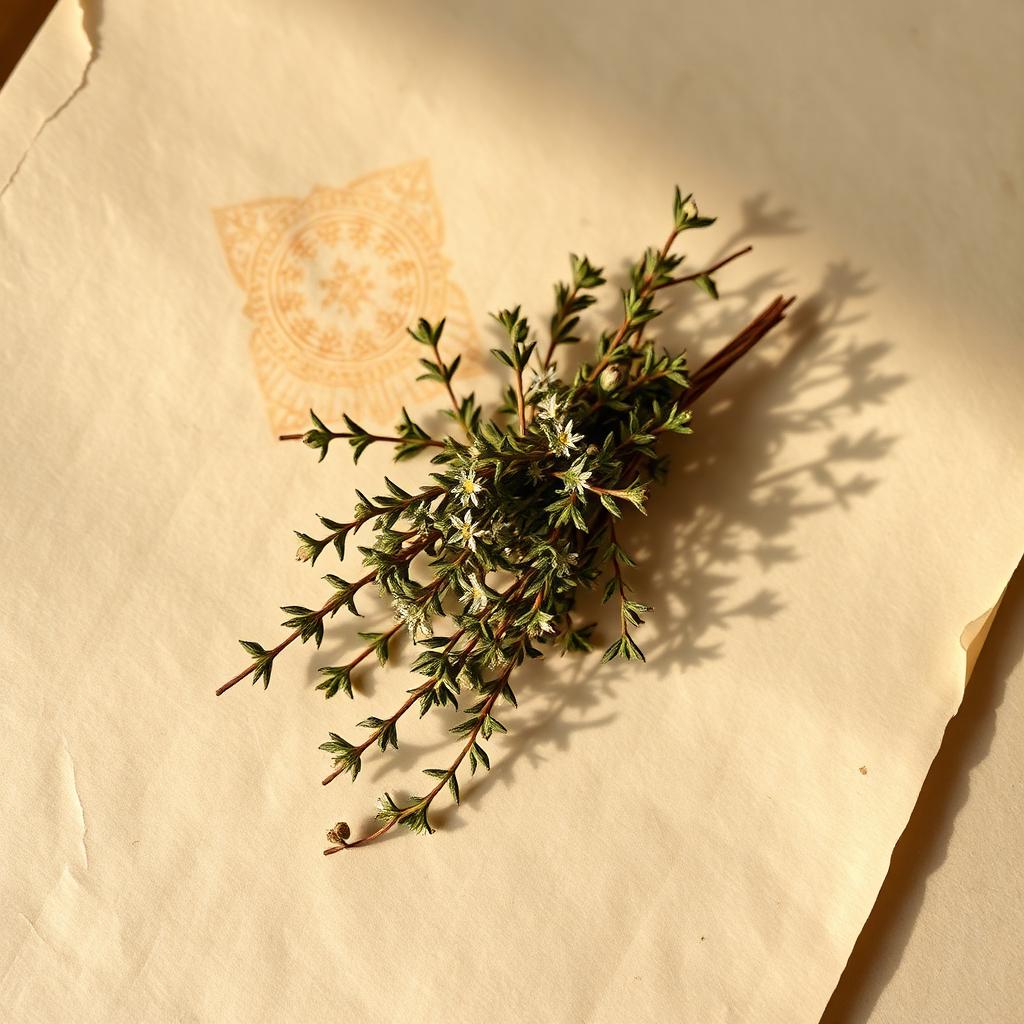
Aromatic chest and throat herb whose thymol gives it real germ-fighting power.
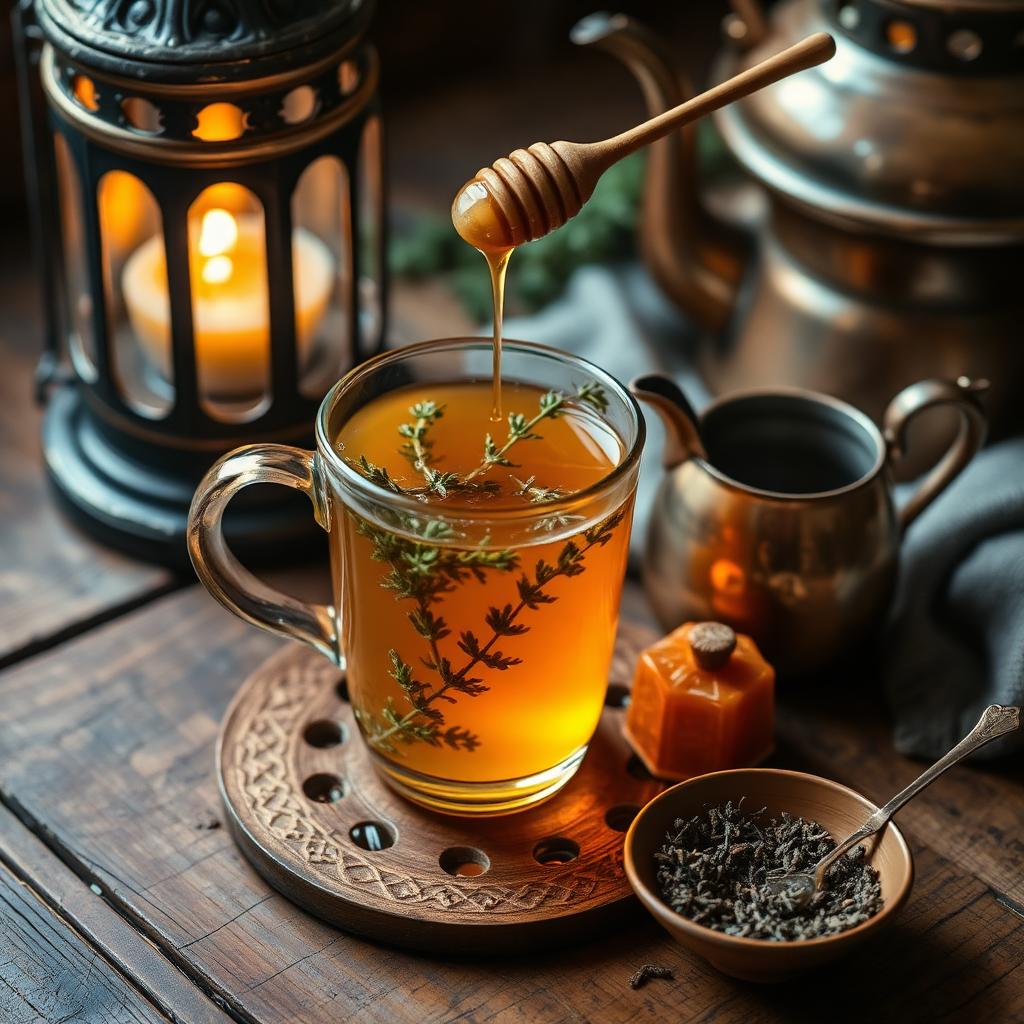
Strong tea sweetened with honey is the classic Persian cough remedy.
Concentrated essential oil (the concentrated aromatic oil of the plant) isn't for internal use.
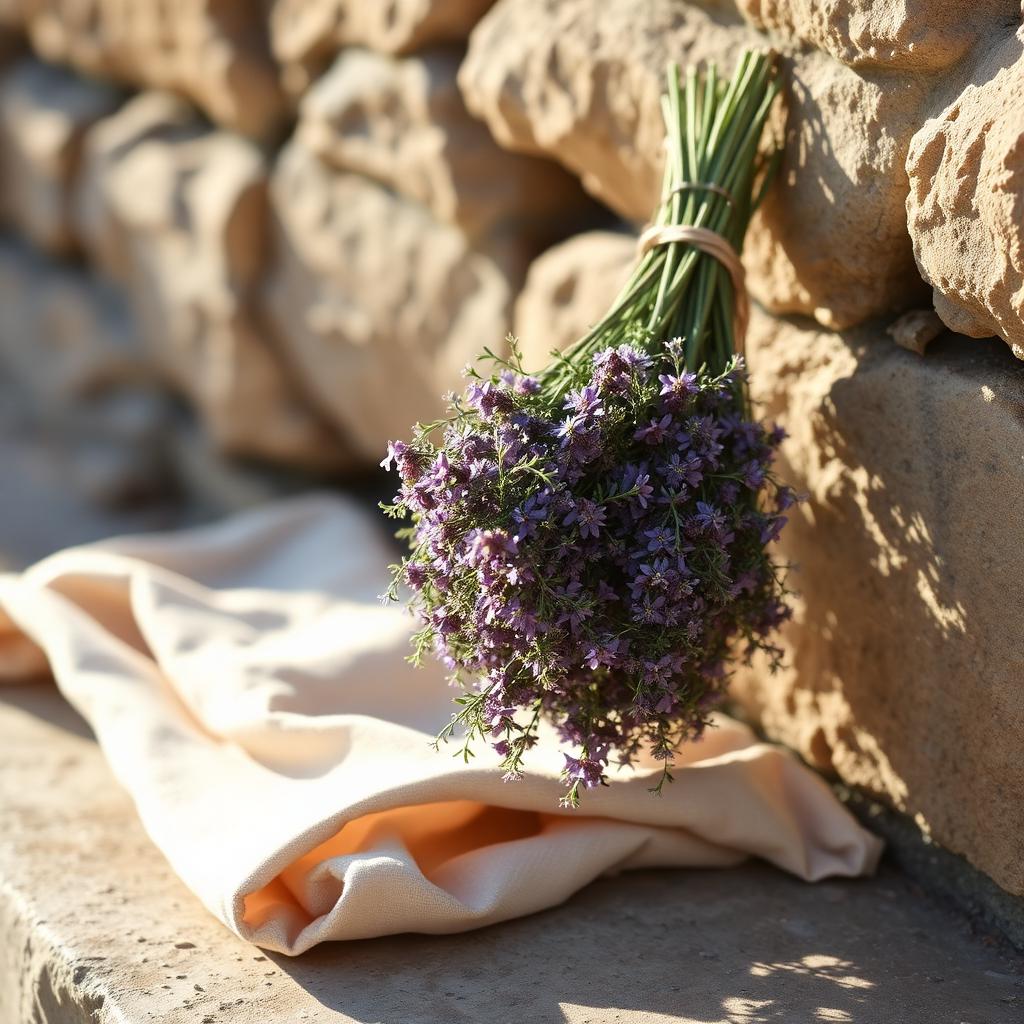
You may know thyme as a kitchen herb, but it has a long history beyond cooking. This small, woody Mediterranean plant is rich in thymol, a natural compound with well-documented germ-fighting power. Persian and European traditions both brew it as a tea for coughs and chest congestion.
Known to botanists as Thymus vulgaris.
Chapter 2 of 12
Why Herbalists Still Reach for It
Keeping your chest and gut resilient matters as you age. Thyme is one of the few everyday kitchen herbs that supports both. Its strongest familiar form (a strong covered infusion with honey) is already a household remedy across Persia and the Mediterranean.
Frequent low-grade respiratory infections and chronic gut inflammation can quietly drive frailty later in life. Using thyme each day — in beans, soups, eggs, roasted vegetables — adds aromatic antimicrobial (slows the growth of germs) compounds and polyphenols (protective plant compounds) at almost no cost.
Helps digestion and reduces gas.
Antioxidant-rich.
Chapter 3 of 12
What Is In It
Primary compounds
Thymol is the dominant phenolic monoterpene. Documented antimicrobial (slows the growth of germs) and mucolytic activity.
Carvacrol: thymol's isomer. Broad-spectrum antibacterial and antifungal in vitro (in laboratory dishes, not in people) · p-Cymene & γ-terpinene: biosynthetic precursors to thymol, contributing warming aromatics.
Other Constituents
Rosmarinic acid is the shared Lamiaceae polyphenol (protective plant compounds). Antioxidant and mild anti-inflammatory.
Flavonoids (luteolin, apigenin, thymonin) — antioxidant and mild spasmolytic.
Vitamins
Vitamin C, Vitamin A
Other notable constituents
Minerals: Iron, Manganese, Calcium
Chapter 4 of 12
What Studies in People Show
Moderate evidence
Thyme syrup was non-inferior to bromhexine for productive cough in a paediatric RCT.Moderate evidence
Fixed combination of thyme herb and ivy leaves extract significantly reduced cough frequency in acute bronchitis (double-blind RCT).Moderate evidence
European Medicines Agency (HMPC) herbal monograph accepts traditional use of thyme herb for symptoms of coughs and colds and for oral/pharyngeal inflammation.Moderate evidence
Early research
Zataria multiflora (Shirazi thyme) essential-oil mouthwash reduced gingivitis and plaque vs placebo in small RCTs.Emerging evidence
Chapter 5 of 12
How It Is Prepared
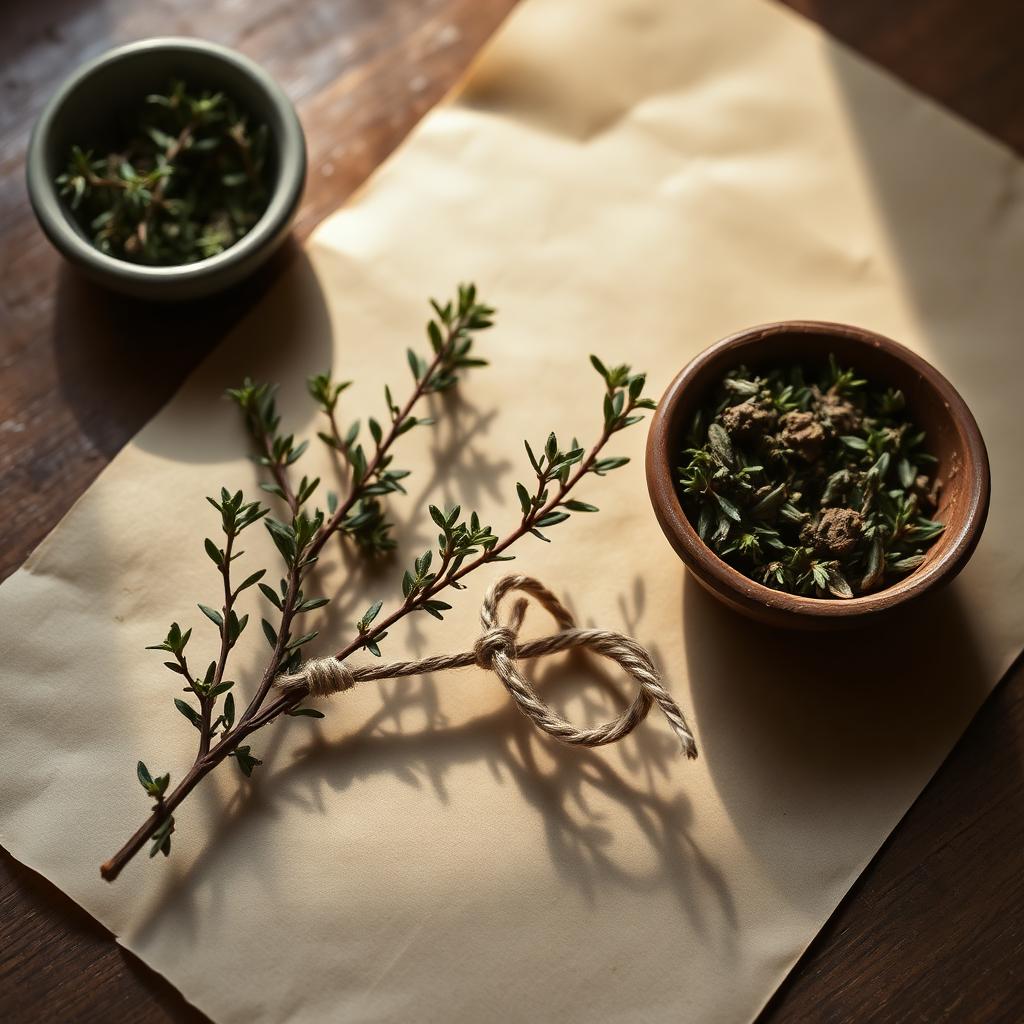
Strong tea: 1 Tbsp fresh or 1 tsp dried in 1 cup hot water, steeped 10 min, sweetened with honey.
Gargle is cooled strong infusion (a drink made by steeping the plant in hot water) for sore throat.
Steam inhalation: handful of leaves in hot water under a towel.
Honey infusion (a drink made by steeping the plant in hot water): fresh sprigs in raw honey 2–3 weeks for a winter syrup.
Add fresh thyme to slow-cooked beans, soups, and roasted vegetables daily.
Stir honey in only after the tea cools below 110°F.
Chapter 6 of 12
Medicines and Interactions
Medication interaction:
Warfarin (a blood-thinning medicine) / DOACs — Concentrated thyme extracts and essential oil show mild antiplatelet (medicines that stop blood cells sticking together, such as aspirin) activity in vitro; culinary use is compatible, extract or essential-oil supplementation warrants clinician discussion. (low concern)
Medication interaction:
Antihypertensives — Very high thyme essential-oil doses may modestly lower blood pressure in preclinical work; culinary and low-dose leaf-tea are compatible. (low concern)
More Interactions to Know
Medication interaction:
Cholinergic drugs / acetylcholinesterase inhibitors — Thymol has mild AChE-inhibitory activity in vitro; additive effects only at extract or essential-oil doses, not culinary. (low concern)
Medication interaction:
Hormone-sensitive therapies (tamoxifen, aromatase inhibitors) — High-dose thyme extract shows mild estrogenic activity in preclinical models; culinary use isn't a concern, concentrated extracts avoided in hormone-sensitive conditions. (low concern)
Medication interaction:
Hepatotoxic drugs — Concentrated thyme essential oil taken internally can be hepatotoxic; never combined with hepatotoxic medication and never taken undiluted. (high concern)
Persistent cough > 3 weeks, coughing blood, high fever, or breathlessness — seek medical care rather than continued self-treatment.
Allergy:
Allergic reaction in Lamiaceae-sensitive people — discontinue immediately.
Pregnancy and breastfeeding:
Pregnancy and breastfeeding — avoid medicinal doses and undiluted essential oil; culinary thyme is fine.
Allergy:
Lamiaceae (mint family) allergy.
Chapter 8 of 12
Pregnancy, Children and Older Adults
Pregnancy and breastfeeding
Pregnancy and breastfeeding:
Culinary thyme in soups, beans, roasted vegetables, and marinades is safe throughout pregnancy. Medicinal doses (strong tea taken as a daily therapy, standardised extracts, thyme essential oil in any form) are reserved for the non-pregnant window given classical emmenagogue (traditionally used to bring on a menstrual period) records and possible uterine effects at high dose.
Children
Children:
Culinary thyme in family food is safe from weaning. Weak thyme–honey tea from around age 4 for a chesty cough (honey only after age 1). Thyme essential oil is never applied undiluted, and isn't applied to the face or chest of infants and small children — thymol and 1,8-cineole can trigger reflex breath-holding in the very young.
Older adults
Older adults:
A daily culinary habit — thyme in the bean pot, on roast vegetables, folded into an egg, and a covered damkardeh with honey when the throat scratches — is one of the lower-friction respiratory-and-gut-resilience levers on the Persian table. Frequent low-grade chest and gut infections are quiet drivers of frailty in later decades, and thyme meets both.
Chapter 9 of 12
What Persian Medicine Says
Persian temperament: Warm & Dry (3rd degree). Persian medicine — Avicenna in the Canon and Aghili Khorasani in Makhzan al-Adwiya — places thyme as warm and dry in the third degree: a powerfully warming cephalic and pectoral herb that opens cold-damp obstructions of the chest, disperses phlegm, warms sluggish digestion, and clears the head. The classical remedy for a cold-wet cough, a heavy chest, and a slow winter stomach.
In the Household
Persian and Mediterranean traditions read thyme as hot and dry, and reach for it in cold, damp patterns: a wet, rattling winter cough, a chest that feels heavy, a stomach slowed by rich food. The classical preparations follow the complaint — a covered steam inhalation for the chest, a honeyed infusion (a drink made by steeping the plant in hot water) for the throat, the dried leaf rubbed into food for both flavour and keeping.
Chapter 10 of 12
What Persian Medicine Says: Older Uses
Because it's strongly warming and drying, hot constitutions take it briefly rather than daily, and it's used cautiously in pregnancy and in small amounts for children.
It was used: coughs, bronchitis, and chest congestion. Recovery and convalescence after illness.
Traditional support for coughs and respiratory comfort.
Thyme is found in za'atar, mountain teas, soups, and honey preparations throughout the Middle East and Mediterranean.
Chapter 11 of 12
Sources
Thyme: health Information — Memorial Sloan Kettering Cancer Center.
Sad Giah Hezar Darman (صد گیاه و هزار درمان) — One Hundred Plants and One Thousand Remedies — Dr. Hossein Erfani, 4th edition (1375 / 1996–1997). Primary traditional Persian herbal reference cited throughout this platform. Presented as traditional knowledge, not as modern medical proof.
Office of Dietary Supplements: fact Sheets — US National Institutes of Health (NIH). https://ods.od.nih.gov/factsheets/list-all/.
Herbal Database: memorial Sloan Kettering Cancer Center. https://www.mskcc.org/cancer-care/diagnosis-treatment/symptom-management/integrative-medicine/herbs.
Herbs at a Glance: uS NIH National Center for Complementary and Integrative Health (NCCIH). https://www.nccih.nih.gov/health/herbsataglance.
FoodData Central: searchable nutrient database — US Department of Agriculture (USDA). https://fdc.nal.usda.gov/.
Chapter 12 of 12
Sources (continued)
The Nutrition Source: harvard T.H. Chan School of Public Health. https://www.hsph.harvard.edu/nutritionsource/.
PubMed — peer-reviewed biomedical literature — US National Library of Medicine. https://pubmed.ncbi.nlm.nih.gov/