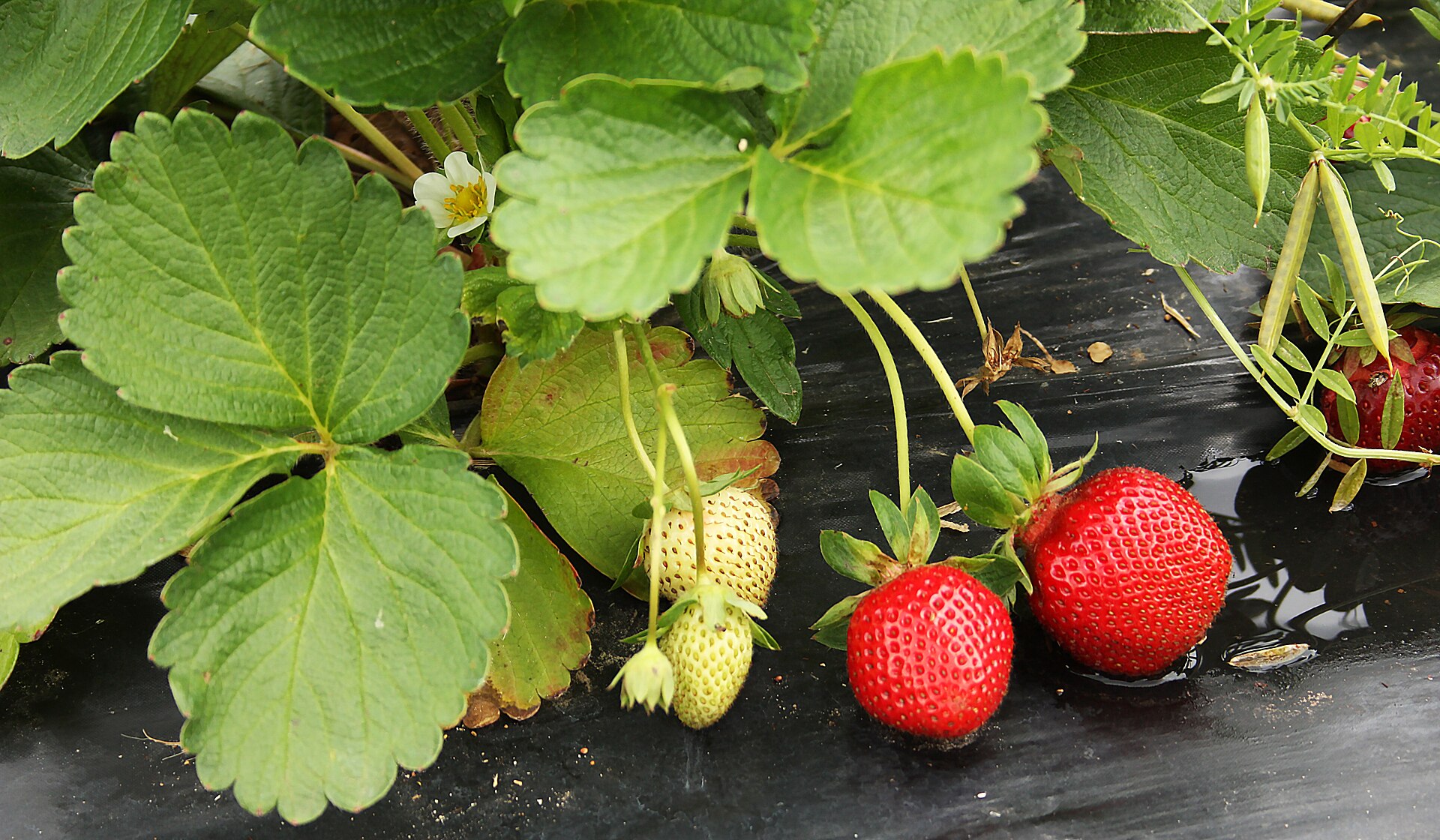
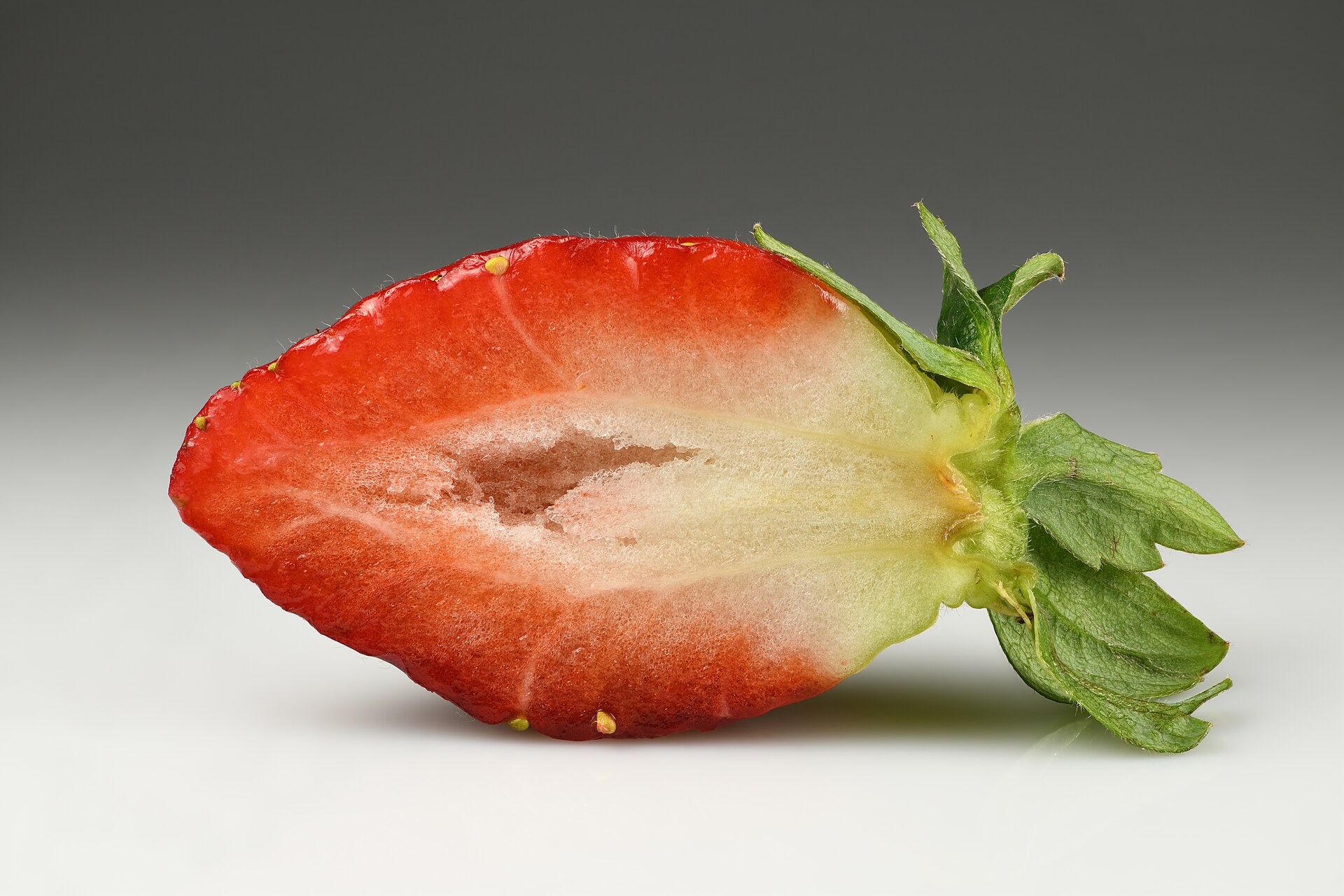
A cup covers a day of vitamin C and holds about 7 g of sugar.
The red colour is pelargonidin, the part with the heart evidence behind it.
Three grams of fibre a cup puts it among the higher-fibre fruits.
Toot farangi means "foreign berry", and this is a fruit that belongs to spring.
Known to botanists as Fragaria × ananassa.
Chapter 2 of 14
Why It Matters
Most sweet fruit asks you to trade some sugar for the good it does. Strawberry doesn't. You get vitamin C, fibre and a well-studied polyphenol (protective plant compounds) at a sugar load a diabetic dietitian will sign off on.
The berry trials that keep coming back positive focus on blood vessels and memory, and strawberry appears in most of them. For an older person, the practical case is even simpler: it's soft, needs no peeling or chewing effort, and goes down when appetite is poor.
It supplies vitamin C for immunity and for the collagen that holds skin and vessel walls together.
It's sweet without moving blood sugar much, which is rare.
The fibre feeds gut bacteria and slows the sugar that's there.
Chapter 3 of 14
What It Contains
Primary compounds
Pelargonidin is the anthocyanin that makes the fruit red. It's the compound behind most of the heart research.
Ellagic acid comes from the seeds and gives the fruit a good part of its antioxidant score.
Vitamin C sits at about 90 mg a cup, more than an orange.
Quercetin (a plant compound found in onions, apples and tea) appears in smaller amounts, alongside the fibre in the skin and seeds.
Vitamins
Folate, Vitamin K
Other notable constituents
Minerals: Potassium, Manganese
Chapter 4 of 14
What Studies in People Show
Moderate evidence
Regular strawberry intake improved cholesterol and inflammatory markers in adults with metabolic syndrome (a group of problems including high blood sugar, blood pressure and waist size).Moderate evidence
Higher anthocyanin (the natural colour pigments that make fruit red, purple or blue) intake from berries was associated with fewer heart attacks in a long-running cohort of women.Moderate evidence
Early research
Freeze-dried strawberry powder improved insulin response after a meal in adults with obesity.Emerging evidence
Chapter 5 of 14
Preparation and Kitchen Use
Spring afternoons, cold, while the local crop is in the market.
Rinse under running water with the green tops still on, then hull.
Chill for an hour before serving. Cold sharpens the flavour.
Simmer 500 g with 3 tbsp honey for five minutes for compote.
Freeze whole on a tray, then bag, for sharbat out of season.
Eat them plain and cold in the afternoon, stems on.
Slice over yogurt with honey and a pinch of cardamom.
Blend into a sharbat with rose water.
Simmer briefly with rose petals for a compote.
Chapter 6 of 14
Medicines and Interactions
Medication interaction:
Warfarin — Strawberries contain a little vitamin K. Ordinary portions aren't a problem; a sudden change from none to a punnet a day is worth mentioning to your clinic. (low concern)
Chapter 7 of 14
Who Should Be Careful
Allergy:
It is one of the fruits that most often triggers mouth itching in people with birch pollen allergy. Cooked fruit is usually fine when raw fruit isn't.
General caution:
Strawberries carry more pesticide residue than most produce. Wash them well under running water; buy Iranian and in season where you can.
General caution:
Hull them after washing, not before, so they don't fill with water.
Allergy:
Known strawberry allergy.
Chapter 8 of 14
Pregnancy, Children and Older Adults
Pregnancy and breastfeeding
Pregnancy and breastfeeding:
A good pregnancy fruit. The folate matters in the first trimester and the vitamin C helps you absorb iron from lentils and greens. Wash them properly, since soft fruit eaten raw is a listeria route.
Children
Children:
Children take to them without persuasion. Slice them lengthways for anyone under four, because a whole berry is the right size and shape to block a small airway. A rash around the mouth after a first taste is common and usually settles.
Older adults
Older adults:
Soft, needs no chewing, needs no peeling, and tastes of something when the sense of taste has faded. That combination is hard to find in a fruit bowl. The vitamin C helps iron absorption at an age when iron often runs low.
Chapter 9 of 14
Traditional Persian Perspective
Persian temperament: Cool & Moist (1st degree). Cooling and thirst-quenching, light on the stomach. Warm spices such as cardamom balance it for cold constitutions.
Persian herbalists met the fruit late, so it has no place in the Canon. Modern practice reads toot farangi as cool and moist. It's said to cool liver heat, settle thirst, and sit lightly on a stomach that refuses heavier food. That's why hakims group it with sour cherry and mulberry.
Sold as a luxury import in Qajar-era Tehran before Kordestan started growing it.
In the Household
Used in modern Persian herbalism as a cooling fruit for spring heat and thirst.
Simmered with rose petals into a compote kept for the summer table.
When the berry arrives in the market, Tehran households know Nowruz is behind them and spring is real. It goes on the fruit plate for guests, whole, with the green tops left on.
Chapter 10 of 14
What It Goes With
Dairy:
Yogurt
The classic bowl. Protein alongside the sugar, and the sourness lifts the fruit.
Rose:
Rose Water
A teaspoon over sliced berries. Persian kitchens have done this since the fruit arrived.
Pairing:
Walnuts
Fat and crunch against soft, sweet fruit. Also slows the sugar.
Spice:
Cardamom
A warm spice on a cool fruit. Which is how hakims balance anything cold and moist.
Chapter 11 of 14
Through the Year
Spring:
Spring
The season. Kordestan and Caspian fruit reaches the market from late Farvardin, and it's worth eating daily while it lasts.
Summer:
Summer
Early summer fruit is still good. Late summer berries are watery and cost more than they're worth.
Autumn:
Autumn
Out of season. Frozen berries from spring do the job in a sharbat or a compote.
Winter:
Winter
Imported fruit is picked hard and travels badly. Reach for citrus instead.
Chapter 12 of 14
Questions People Ask
Are frozen strawberries as good?
For vitamin C, close enough. They're frozen within hours of picking, which imported fresh fruit never is. The texture goes, so use them blended or cooked.
Do strawberries raise blood sugar?
Less than almost any other sweet fruit. A cup is about 7 g of sugar with 3 g of fibre alongside it. Most people with diabetes can eat them without a spike.
Why do they make my mouth itch?
A protein in the fruit resembles birch pollen, and a body primed for one reacts to the other. It's usually mild and limited to the mouth. Cooked fruit normally causes no trouble.
Should I buy organic?
If you buy any produce organic, this is the one. Strawberries top the residue lists year after year because the fruit is soft and sprayed close to harvest.
Chapter 13 of 14
Sources
Sad Giah Hezar Darman (صد گیاه و هزار درمان) — One Hundred Plants and One Thousand Remedies — Dr. Hossein Erfani, 4th edition (1375 / 1996–1997). Primary traditional Persian herbal reference cited throughout this platform. Presented as traditional knowledge, not as modern medical proof.
Office of Dietary Supplements: fact Sheets — US National Institutes of Health (NIH). https://ods.od.nih.gov/factsheets/list-all/.
Herbal Database: memorial Sloan Kettering Cancer Center. https://www.mskcc.org/cancer-care/diagnosis-treatment/symptom-management/integrative-medicine/herbs.
Herbs at a Glance: uS NIH National Center for Complementary and Integrative Health (NCCIH). https://www.nccih.nih.gov/health/herbsataglance.
FoodData Central: searchable nutrient database — US Department of Agriculture (USDA). https://fdc.nal.usda.gov/.
Chapter 14 of 14
Sources (continued)
The Nutrition Source: harvard T.H. Chan School of Public Health. https://www.hsph.harvard.edu/nutritionsource/.
PubMed — peer-reviewed biomedical literature — US National Library of Medicine. https://pubmed.ncbi.nlm.nih.gov/