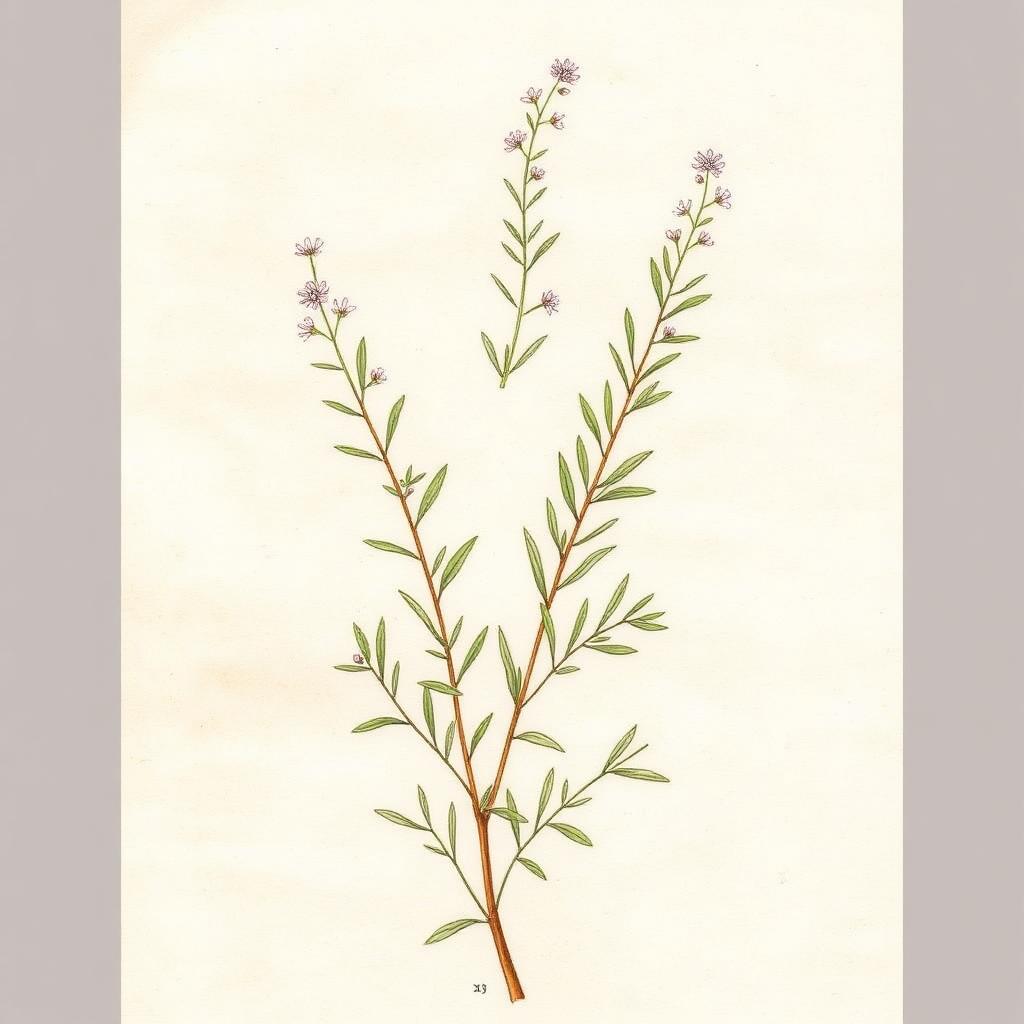
Marzeh is a kitchen herb first — a standing member of the sabzi-khordan plate.
Its aroma is carvacrol, the phenol that also defines oregano and thyme.
The traditional job is digestive: a few sprigs eaten with the meal.
Culinary amounts are very safe. The essential oil (the concentrated aromatic oil of the plant) isn't a food.
Chapter 2 of 14
Savory: What It Is and Which Part Is Used
Marzeh is one of the seven foundational herbs on the Persian sabzi-khordan (fresh-herb plate), and a much-loved seasoning across Iran, the Caucasus, and the Mediterranean. Traditional Persian medicine treats it as a warming, drying carminative (traditionally used to settle gas and bloating) for sluggish, cold-type digestion. Its essential oil is rich in carvacrol — the same compound that gives oregano and thyme their well-known antimicrobial (slows the growth of germs) activity.
Known to botanists as Satureja hortensis.
Chapter 3 of 14
Why Herbalists Still Reach for It
Persian meals put a plate of raw herbs on the table and expect you to eat it throughout — and marzeh is the sharpest, most peppery thing on it. That plate is a quiet habit: fresh greens at every meal, without anyone calling it a health measure.
The value is habit, not pharmacology. A herb plate raises daily greens and adds strong flavour without salt — useful when taste dulls and blood pressure matters.
Rosmarinic acid provides antioxidant support.
Warming, dispersing action for cold-damp digestion.
Compact aromatic annual 20–40 cm tall with narrow opposite leaves and small lilac-white flowers. Highly aromatic, similar in scent to thyme with a peppery edge.
Family: Lamiaceae (mint family).
Chapter 4 of 14
What Is In It
Primary compounds
Carvacrol is the dominant phenol in the essential oil.
Thymol is a related phenol shared with thyme.
Rosmarinic acid is an antioxidant polyphenol (protective plant compounds) of the mint family.
Vitamins
Vitamin A, Vitamin C, B6
Other notable constituents
Minerals: Iron, Calcium, Manganese, Magnesium · Notable: Phenolic volatile oils (the concentrated aromatic oil of the plant)
Chapter 5 of 14
In the Laboratory
From laboratory work, not from people taking it
Carvacrol and thymol show broad antimicrobial (slows the growth of germs) activity in lab studies.
Satureja hortensis essential oil, rich in carvacrol, inhibits a broad range of bacteria and fungi in laboratory testing. Rated: moderate evidence.
Chapter 6 of 14
How It Is Prepared
With meals rather than between them — savory is a companion to food, and tradition treats it that way.
Add 3–5 fresh sprigs to every Persian meal as part of sabzi-khordan.
In the kitchen: a pinch of dried marzeh into lentil and bean dishes as they simmer. Tea after heavy meals: 1 tsp dried herb in 1 cup hot water, 8 min.
Other Ways to Use It
Fresh leaves on the herb plate (3–5 sprigs per meal).
After a rich meal: 1 tsp dried herb steeped 8 minutes with fennel seed · Steam inhalation: 1 Tbsp dried herb in hot water, breathe under a towel 5 min.
Diluted essential oil (1%) in olive oil for warming chest rub.
Mouthwash from cooled strong infusion (a drink made by steeping the plant in hot water) for gingivitis.
Chapter 7 of 14
Leaf, Tea and Essential Oil
Most laboratory work on savory tests carvacrol-rich essential oil at concentrations no cup of tea reaches. The dried leaf in a teapot and a bottle of steam-distilled oil aren't the same preparation and can't be assumed to behave the same way.
Undiluted essential oils of the oregano and savory family are irritant to skin and mucous membranes and aren't a home remedy to be swallowed.
Chapter 8 of 14
Essential Oil Is Not the Same as the Herb
General caution:
Generally very safe in culinary amounts.
General caution:
Concentrated essential oil is potent — never ingest neat.
Pregnancy and breastfeeding:
Pregnancy: keep to culinary amounts only.
Pregnancy and breastfeeding:
Pregnancy — avoid concentrated essential oil and medicinal-dose teas.
Allergy:
Known Lamiaceae allergy.
Children:
Infants and young children — essential oil.
Chapter 9 of 14
What Persian Medicine Says
Persian temperament: Hot & Dry (3rd degree). One of the more strongly warming herbs of the Persian kitchen. Classical practice pairs it with cold, heavy, wind-producing foods — beans, dairy, bread — exactly where it still appears.
Persian medicine classifies savory as hot and dry to the third degree — strongly warming, dispersing, and digestive. Avicenna recommended it after heavy or cold-natured meals, and mountain shepherds have long chewed it for stamina and chest warmth.
Chapter 10 of 14
What Persian Medicine Says: In the Household
Daily fresh herb on the sabzi-khordan plate to ease digestion of bread and dairy.
Warm infusion (a drink made by steeping the plant in hot water) after fatty meals for bloating and heaviness.
It was used: steam inhalation for cold-type chest congestion and topical (put on the skin) wash for fungal skin complaints.
Traditional carminative (traditionally used to settle gas and bloating): eases gas, bloating, and post-meal heaviness.
Savory is one of the herbs of sabzi khordan, the plate of raw herbs that sits on an Iranian table through the meal, and it's dried into the herb mixes rubbed onto grilled meat.
Its culinary role is peppery and assertive — a little goes a long way, and it's used where mint or basil would be too soft.
Chapter 11 of 14
Traditional Formulas
Sabzi Khordan is the classic Persian fresh-herb plate — savory, mint, basil, tarragon, radish, scallion, walnut, and feta — eaten at every meal to aid digestion.
Marzeh Digestive Tea: 1 tsp dried savory + ½ tsp fennel seed steeped 10 min, sipped after rich meals.
Chapter 12 of 14
Questions People Ask
Is marzeh the same as za'atar?
No. Za'atar usually means a wild thyme or the blend built on it. Marzeh is Satureja hortensis — sharper, peppery.
Chapter 13 of 14
Sources
Satureja hortensis: phytochemistry and pharmacology review — Journal of Ethnopharmacology (PubMed). https://pubmed.ncbi.nlm.nih.gov/.
Sad Giah Hezar Darman (صد گیاه و هزار درمان) — One Hundred Plants and One Thousand Remedies — Dr. Hossein Erfani, 4th edition (1375 / 1996–1997). Primary traditional Persian herbal reference cited throughout this platform. Presented as traditional knowledge, not as modern medical proof.
Office of Dietary Supplements: fact Sheets — US National Institutes of Health (NIH). https://ods.od.nih.gov/factsheets/list-all/.
Herbal Database: memorial Sloan Kettering Cancer Center. https://www.mskcc.org/cancer-care/diagnosis-treatment/symptom-management/integrative-medicine/herbs.
Chapter 14 of 14
Sources (continued)
Herbs at a Glance: uS NIH National Center for Complementary and Integrative Health (NCCIH). https://www.nccih.nih.gov/health/herbsataglance.
FoodData Central: searchable nutrient database — US Department of Agriculture (USDA). https://fdc.nal.usda.gov/.
The Nutrition Source: harvard T.H. Chan School of Public Health. https://www.hsph.harvard.edu/nutritionsource/.
PubMed — peer-reviewed biomedical literature — US National Library of Medicine. https://pubmed.ncbi.nlm.nih.gov/