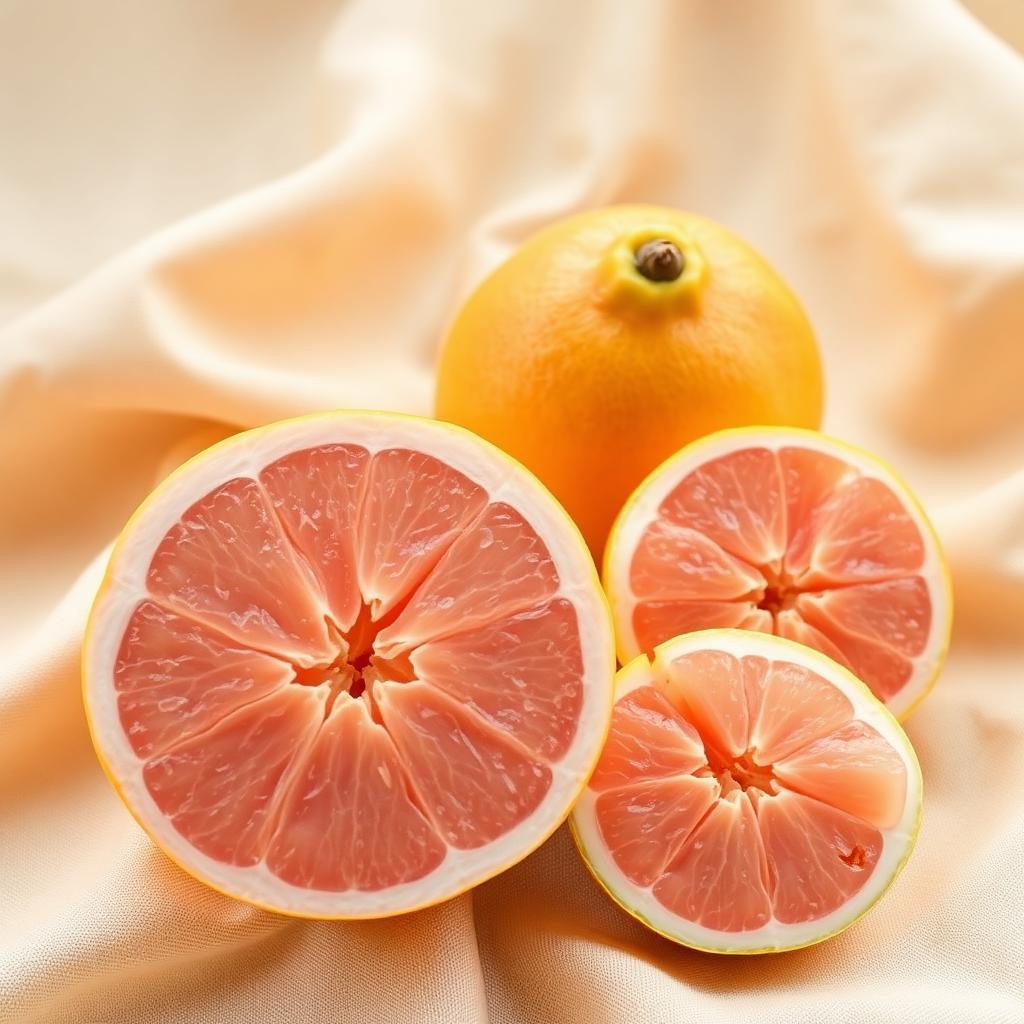
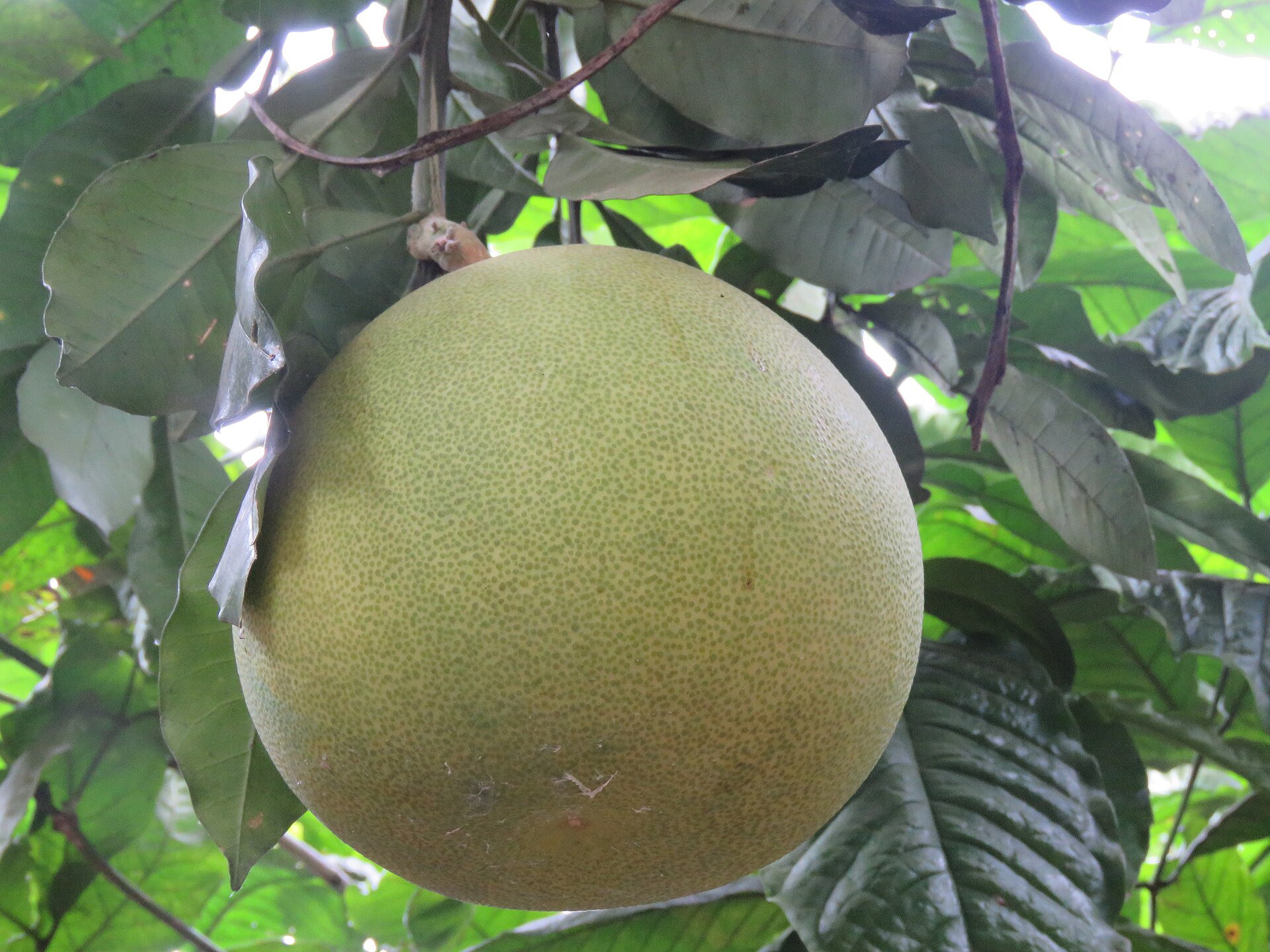
A parent fruit of all citrus. Milder and less sour than grapefruit. High in vitamin C, low in calories.
A pomelo takes a little work. First comes the thick skin, then even thicker pith. What you reach inside is firm, gently sweet, and much milder than grapefruit.
Known to botanists as Citrus maxima.
Chapter 2 of 14
Why It Matters
Pomelo gives you a large, satisfying serving of fruit for very little sugar. It takes time to peel, and that slowness is part of its charm. You end up sharing it rather than simply swallowing it.
A large serving of fruit with very little sugar can suit older adults watching blood sugar. The peeling ritual slows the meal down too, which can help you feel full.
It was used: water and fibre together, so it satisfies. Naringin, the bitter compound also studied in grapefruit.
The pomelo is the largest citrus fruit. One can be as big as a person's head. The skin is thick and spongy, and under it sits a deep white layer. The flesh comes apart in firm, dry segments that don't run with juice like an orange. It's one of the three original citrus fruits that all the others came from.
Family: Rutaceae (citrus family).
Chapter 4 of 14
What It Contains
Primary compounds
Limonene. Pectin (a soft fibre in fruit that thickens jam).
Vitamins
Vitamin B6, Thiamine
Other notable constituents
Minerals: Potassium, Copper, Magnesium · Antioxidants: Beta-carotene (in pink types)
Chapter 5 of 14
What Studies in People Show
What studies in people show
Pomelo juice inhibits intestinal CYP3A4 (a liver enzyme that breaks down many medicines) and raises blood levels of drugs metabolised by that enzyme.Strong evidence
Citrus fruit intake is linked to higher vitamin C status and better measures of vascular (relating to the blood vessels) function.Moderate evidence
Chapter 6 of 14
Preparation and Kitchen Use
In the kitchen: score the skin in four places and lift it off in sections. Strip away the white pith: it's bitter and tough.
Peel the thin skin off each segment. Pomelo segments come away cleanly.
Fresh segments, peeled by hand.
Sprinkle with a little salt or dried mint, as is common across Iran.
In a winter salad with pomegranate seeds.
Peel, pull the segments apart, and eat plain.
Toss segments through a salad with mint and walnut.
Chapter 7 of 14
Medicines and Interactions
General cautions
Medication interaction:
The medicine interaction is real and worth checking; it isn't the fruit being unsafe in itself.
Medication interaction:
Pomelo, like grapefruit, can interact with several prescription medicines including some statins (cholesterol-lowering medicines) and blood-pressure drugs. Ask a pharmacist before eating it regularly if you take daily medication.
Specific medicines
Medication interaction:
Statins — Pomelo blocks the same liver enzyme grapefruit does, which can push statin levels higher than intended. Ask your pharmacist before eating it regularly. (high concern)
More Interactions to Know
Medication interaction:
Calcium channel blockers — Blood pressure medicines in this group can build up when eaten with pomelo, causing dizziness and low pressure. (moderate concern)
Medication interaction:
Ciclosporin and other transplant medicines — Narrow-margin drugs handled by CYP3A4 (a liver enzyme that breaks down many medicines) are the most dangerous combination. Avoid pomelo entirely unless your specialist says otherwise. (high concern)
Chapter 8 of 14
Who Should Be Careful
General caution:
The white pith is very bitter. Peel it away fully or the whole plate tastes of it.
General caution:
Pomelo is acidic. If you get reflux (stomach acid rising into the throat) or heartburn, a large serving on an empty stomach can set it off.
General caution:
A whole pomelo is a lot of fruit. Half is a normal serving for one person.
Chapter 9 of 14
Pregnancy, Children and Older Adults
General
Children:
The segments are drier and firmer than orange. Small children can find them hard to chew, so cut them small.
Pregnancy and breastfeeding
Pregnancy and breastfeeding:
The fruit itself is a good source of vitamin C and fluid in pregnancy. The drug interaction still applies, so check any prescription with your pharmacist.
Children
Children:
Fine for children who aren't on medicine. Peeling the segments properly matters more here than with orange, because the membrane is genuinely bitter.
Older adults
Medication interaction:
This is the age group most likely to be on statins (cholesterol-lowering medicines) or blood pressure tablets, which is exactly the group that should ask before eating pomelo often. Worth one conversation with a pharmacist.
Chapter 10 of 14
Traditional Persian Perspective
Persian temperament: Cold & Moist (1st degree). Read as cooling like other citrus, though less sharply so than lemon, and given for heat and heaviness after rich food.
Persian medicine sees pomelo as cool and moist. People offered it to ease thirst, settle a hot stomach, and lift the heavy feeling after rich food. They valued the fragrant peel separately and kept it in cupboards to scent linen and clothing.
Traditionally eaten to cut thirst and settle a hot stomach.
The peel was kept as a household perfume.
In northern Iran, balang appears on winter tables, cut open and shared while everyone talks. In East and Southeast Asia, people give whole pomelos as mid-autumn gifts because their size feels generous.
Chapter 11 of 14
What It Goes With
Herb:
Mint
Mint over pomelo segments turns a plain fruit plate into something you notice.
Pairing:
Walnut
Bitter walnut against sweet-sour segments is an old and reliable Persian pairing.
Pairing:
Pistachios
Chopped pistachio on segments gives the crunch a soft citrus badly needs.
Honey:
Honey
A thread of honey takes the edge off a sour fruit without turning it into a dessert.
Chapter 12 of 14
Through the Year
Spring:
Spring
Season closing. Fruit turns dry and pithy, and the segments come away in shreds.
Summer:
Summer
Nothing worth buying. This is a cold-weather citrus.
Autumn:
Autumn
The first good fruit arrives, heavy for its size and thick-skinned.
Winter:
Winter
The season. Peeled segments on the table through the cold months, and candied peel afterwards.
Chapter 13 of 14
Questions People Ask
Is a pomelo just a big grapefruit?
The other way around. Grapefruit is a cross between pomelo and sweet orange.
Does it affect medicines like grapefruit?
It can. If you take daily prescription medicine, ask a pharmacist first.
Why is it drier than an orange?
The juice sacs hold their shape. A good pomelo is juicy in the mouth.
Chapter 14 of 14
Sources
Citrus fruits: composition and health effects — Nutrients. https://pubmed.ncbi.nlm.nih.gov/31480215/