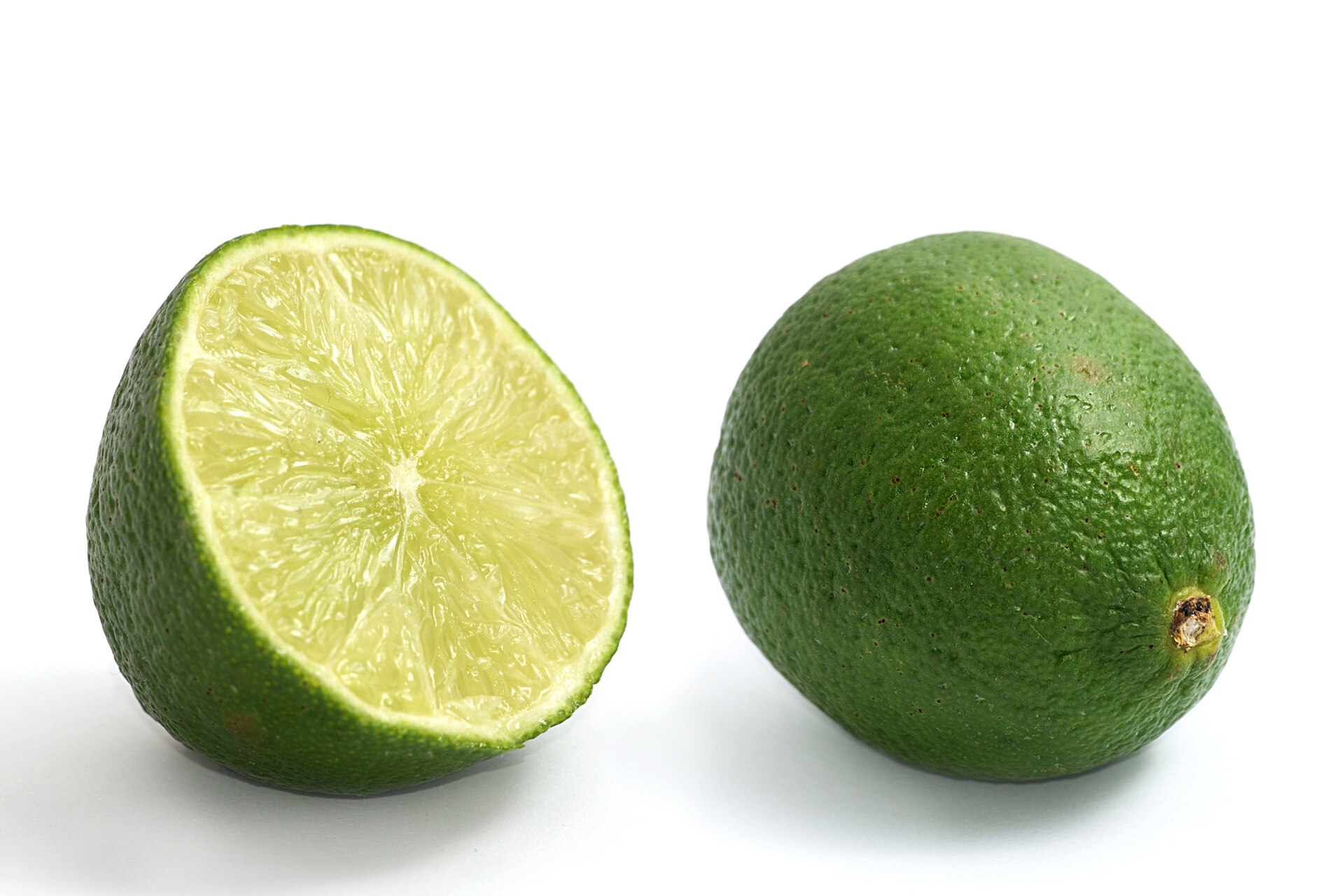
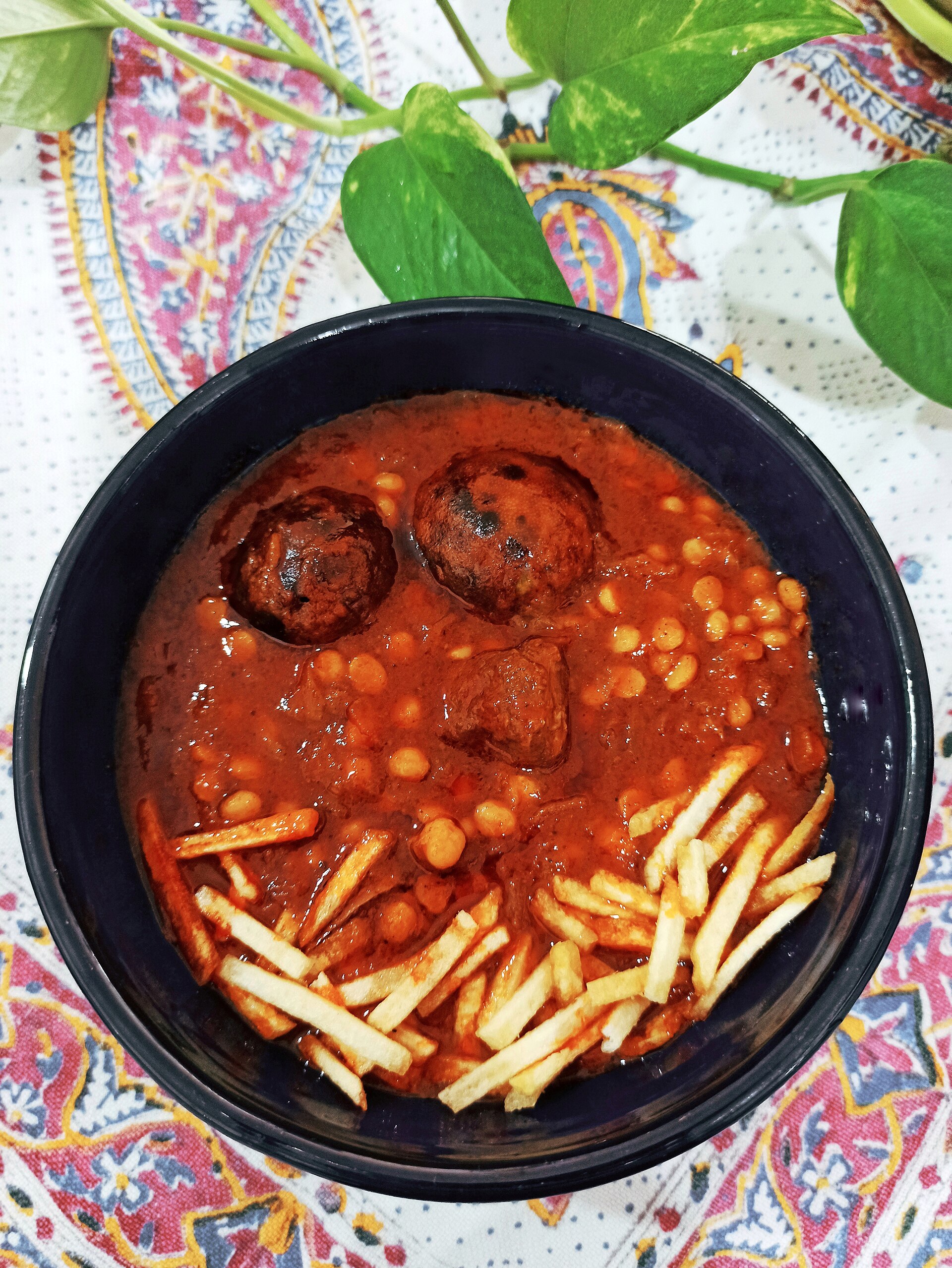
A squeeze of lime on a plate of lentils or greens roughly doubles the iron you absorb from it.
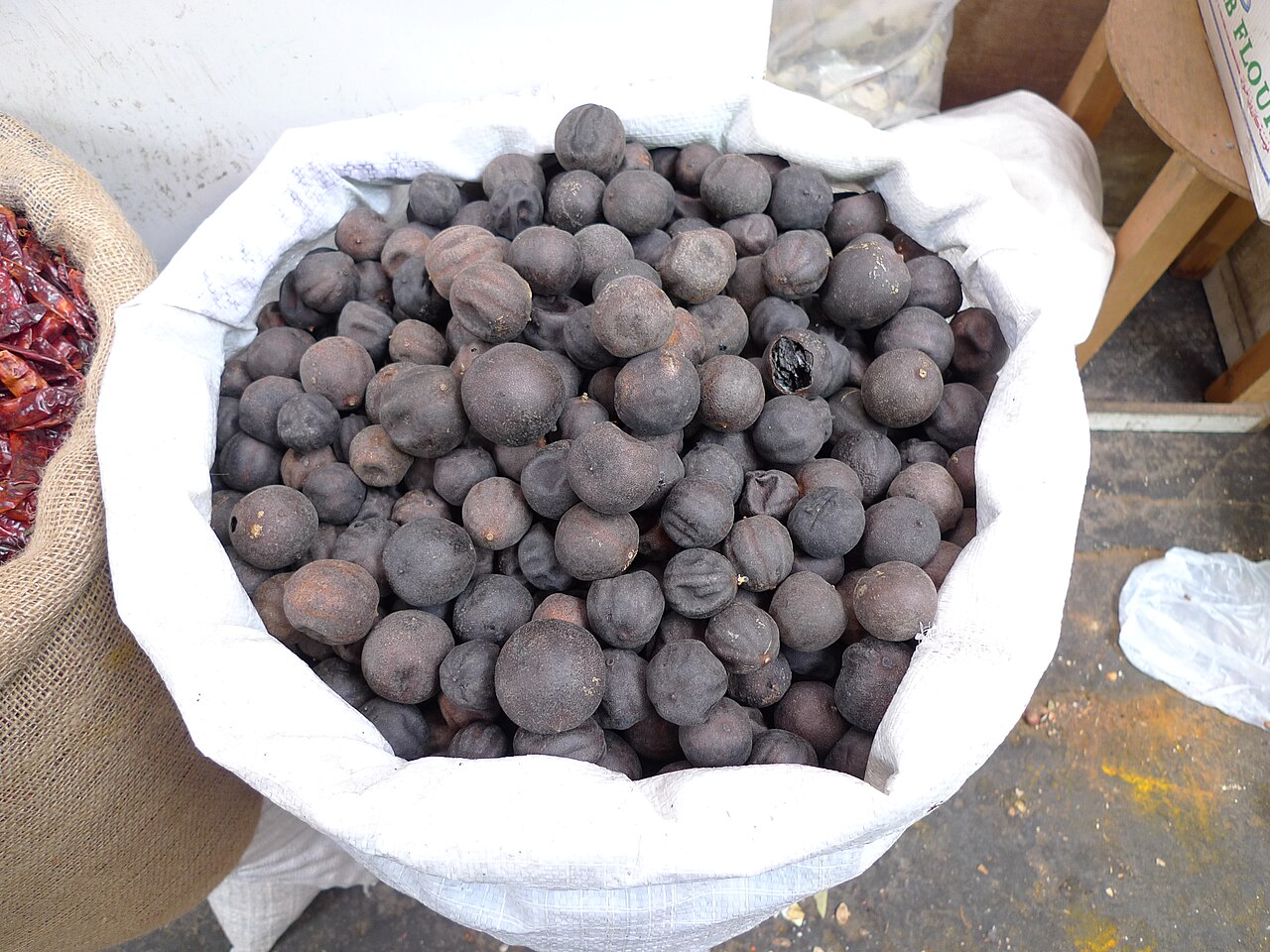
Limu omani is dried lime, and it tastes nothing like the fresh fruit.
The sourness is what balances a rich khoresh in Persian nutritional thinking.
Neat lime juice is hard on tooth enamel. Rinse with water, and wait before brushing.
Chapter 2 of 15
What Lime Actually Is
Limu torsh is the small green lime of the southern provinces. Limu omani is that same fruit boiled in salt water and dried until it turns black and hollow. Fresh lime sits on the table beside the rice, while dried lime goes into the pot for hours and gives ghormeh sabzi and gheimeh a sour, slightly fermented depth that nothing else can match. They're the same fruit at different ages, and Persian cooking depends on both.
Known to botanists as Citrus aurantiifolia.
Chapter 3 of 15
Why It Matters
Iranian meals often rely on lentils, beans and greens for iron, but your body doesn't absorb plant iron very well on its own. Add vitamin C and that changes severalfold. So squeezing lime over the plate isn't just decoration. It helps the meal do its job.
After 70, iron and vitamin C often run low, and appetite can fade too. Sour flavour is one of the few things that reliably wakes an older appetite. Simply keeping a lime on the table can do more practical work than many supplements.
The sourness opens the appetite and gets digestion moving.
Citrus flavonoids (a family of protective plant compounds) in the peel support blood vessel function.
The peel oils are mildly antimicrobial, which is part of why lime was used to dress raw food.
Chapter 4 of 15
What It Contains
Primary compounds
Vitamin C is the reason lime does what it does for iron absorption.
Limonene is the oil in the peel and the source of the smell.
Hesperidin and naringenin are the citrus flavonoids, concentrated in the peel and pith.
Furanocoumarins (a compound found in grapefruit that blocks that enzyme) in the peel are what make lime juice on sunlit skin a problem.
Other notable constituents
Minerals: Potassium, Calcium · Fiber: About 1.9 g per whole fruit, almost none in the juice
Chapter 5 of 15
What Studies in People Show
Strong evidence
Vitamin C substantially increases absorption of non-heme iron from plant foods eaten in the same meal.Strong evidence
Lime juice on skin exposed to sunlight causes phytophotodermatitis, well documented in clinical case series.Strong evidence
Moderate evidence
Citrus flavonoid intake is linked to improved endothelial (relating to the thin inner lining of your blood vessels) function in controlled trials.Moderate evidence
Chapter 6 of 15
Using It in the Kitchen
In the kitchen: at the table, on the plate, at every meal that involves rice or pulses. Roll the fruit hard on the counter before cutting. It yields far more juice. Pierce dried limes two or three times so the liquid gets inside them.
Add dried lime in the last hour of a stew. Longer than that and it turns bitter.
Other Ways to Use It
In the kitchen: crack a dried lime and steep it in hot water for ten minutes for tea. Squeeze fresh over rice, khoresh and grilled meat.
Simmer whole dried limes in ghormeh sabzi and gheimeh.
In the kitchen: zest into cakes and syrups. At the table, squeeze half a lime over rice, lentils or greens. For a stew, pierce two dried limes and drop them in for the last hour.
Chapter 7 of 15
Medicines and Interactions
Medication interaction:
Statins (cholesterol-lowering medicines) and other CYP3A4 (a liver enzyme that breaks down many medicines) medicines — Lime peel carries some of the same compounds as grapefruit. Ordinary juice isn't a concern; large amounts of peel or lime oil could be. (low concern)
Chapter 8 of 15
Who Should Be Careful
General caution:
Lime juice on skin in sunlight causes phytophotodermatitis, a real burn that leaves brown marks for months. Wash your hands after squeezing if you're going outside.
General caution:
Neat juice erodes tooth enamel. Rinse your mouth with water afterwards and leave half an hour before brushing.
General caution:
It can set off reflux (stomach acid rising into the throat) in people prone to it.
Allergy:
Known citrus allergy.
General caution:
Active mouth ulcers or severe reflux (stomach acid rising into the throat) while symptomatic.
Chapter 9 of 15
Pregnancy, Children and Older Adults
Pregnancy and breastfeeding
Pregnancy and breastfeeding:
Useful throughout. The sourness settles nausea, and the vitamin C helps you take up iron from the lentils and greens that most pregnancy diets lean on.
Children
Children:
Children mostly refuse neat lime and there's no reason to insist. A squeeze over their rice does the same iron job without the argument.
Older adults
Older adults:
Sour flavour survives when other tastes fade, so a lime on the table is one of the few reliable ways to make food interesting again. Watch the teeth: enamel is thinner at 80 than at 30.
Chapter 10 of 15
Traditional Persian Perspective
Persian temperament: Cool & Dry (2nd degree). Cools stomach heat, opens the appetite, cuts phlegm. Drying in excess, so it's used as a correction rather than a food in itself.
Persian medicine sees limu torsh as cold and dry in the second degree. It's used to cut phlegm, clear heat from the stomach and liver, wake a closed appetite, and settle nausea. When a dish feels too rich or too warm in nature, lime is the traditional way to balance it. That's why you find it on lamb, rice and anything fried.
In the Household
Dried whole limes travelled the Gulf trade routes because they keep for years without spoiling.
Hakims gave lime juice in water for nausea, fever thirst and a closed appetite.
Fresh juice was used on the skin for blemishes and dark patches, a practice better avoided in sunlight.
Limu omani came into Persian cooking through Gulf trade with Oman, which also gave it its name. Today it's inseparable from ghormeh sabzi, the dish many Iranians name first when you ask what home tastes like.
Chapter 11 of 15
What It Goes With
Pairing:
Lentils
Squeeze lime over the plate. The vitamin C is what unlocks the iron in the lentils.
Grain:
Rice
Lime cuts the richness of buttered, saffroned rice.
Pairing:
Fenugreek
Dried lime and fenugreek greens are the two flavours that define ghormeh sabzi.
Herb:
Mint
Lime and mint in cold water is the Persian summer drink.
Chapter 12 of 15
Through the Year
Spring:
Spring
Fresh limu torsh from the south is at its best. Use it on everything.
Summer:
Summer
Lime in water first thing is the classical Persian answer to a summer appetite that has closed.
Autumn:
Autumn
The turn toward stews. Dried limes go back into the pot.
Winter:
Winter
Limu omani season in the kitchen, in ghormeh sabzi, gheimeh and soups.
Chapter 13 of 15
Questions People Ask
What is limu omani exactly?
A lime boiled in salt water and dried in the sun until it's hollow and black. It keeps for years and tastes sour, earthy and slightly fermented, nothing like fresh lime.
Can I use lemon instead in ghormeh sabzi?
You'll get sourness but not the flavour. Dried lime brings a fermented depth that fresh citrus can't imitate. Most cooks would rather leave it out than substitute.
Why did my stew turn bitter?
The dried limes were in too long or split open early. Add them in the last hour and take them out before serving.
Does lime water help you lose weight?
No. It replaces sweet drinks, which helps, and it costs nothing. The lime itself doesn't burn anything.
Chapter 14 of 15
Sources
Sad Giah Hezar Darman (صد گیاه و هزار درمان) — One Hundred Plants and One Thousand Remedies — Dr. Hossein Erfani, 4th edition (1375 / 1996–1997). Primary traditional Persian herbal reference cited throughout this platform. Presented as traditional knowledge, not as modern medical proof.
Office of Dietary Supplements: fact Sheets — US National Institutes of Health (NIH). https://ods.od.nih.gov/factsheets/list-all/.
Herbal Database: memorial Sloan Kettering Cancer Center. https://www.mskcc.org/cancer-care/diagnosis-treatment/symptom-management/integrative-medicine/herbs.
Herbs at a Glance: uS NIH National Center for Complementary and Integrative Health (NCCIH). https://www.nccih.nih.gov/health/herbsataglance.
FoodData Central: searchable nutrient database — US Department of Agriculture (USDA). https://fdc.nal.usda.gov/.
Chapter 15 of 15
Sources (continued)
The Nutrition Source: harvard T.H. Chan School of Public Health. https://www.hsph.harvard.edu/nutritionsource/.
PubMed — peer-reviewed biomedical literature — US National Library of Medicine. https://pubmed.ncbi.nlm.nih.gov/