Contains oligosaccharides, a carbohydrate that feeds the helpful bacteria in the gut.
The tiny black seeds carry a small amount of healthy fat and are eaten whole.
The red-fleshed variety can turn urine and stool pink — harmless, and not blood.
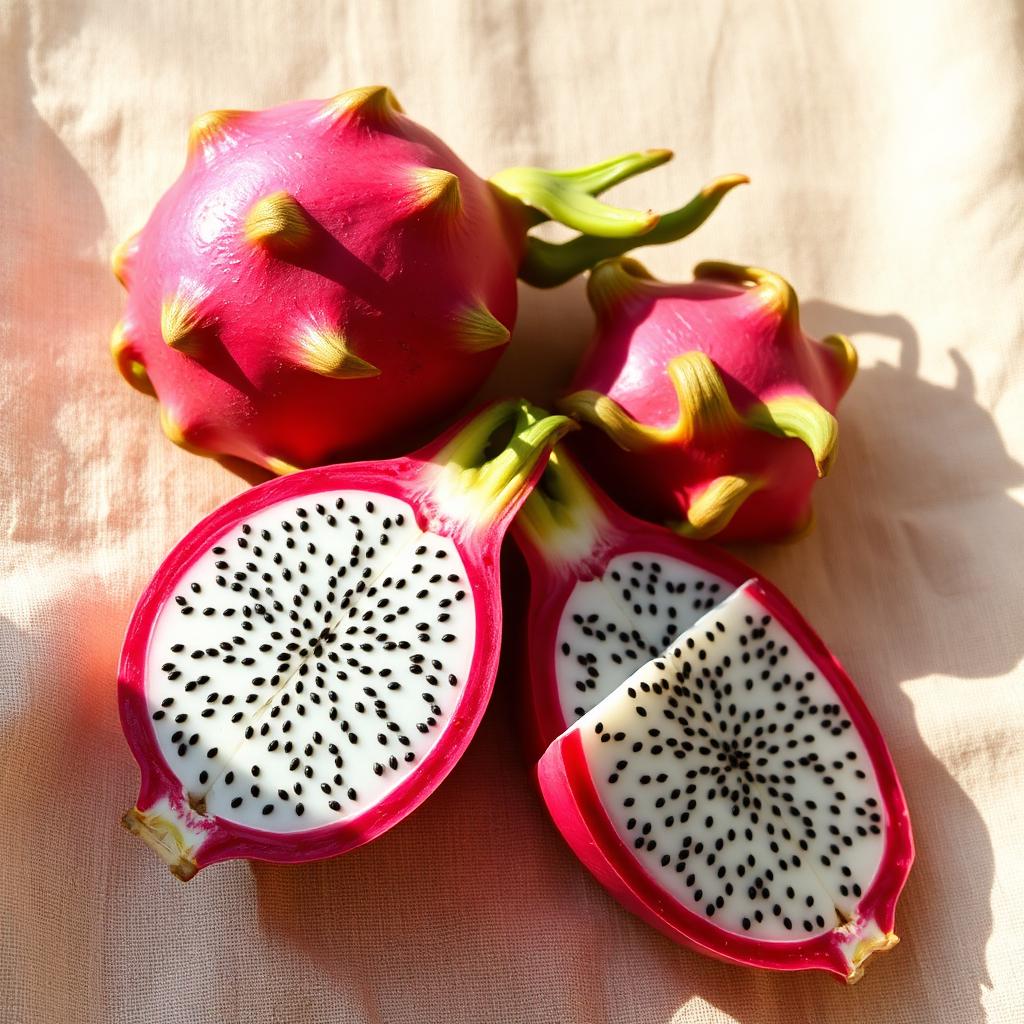
Dragon fruit is the most dramatic thing on the counter and one of the mildest to eat. The white-fleshed kind tastes faintly like a pear crossed with a kiwi. The magenta kind is sweeter and stains everything it touches. Don't expect a big flavour. What you get instead is a very low sugar load, plenty of water, and a group of carbohydrates called oligosaccharides that feed the helpful bacteria in your gut. It's a prebiotic in fruit form, which is rarer than it sounds.
Known to botanists as Selenicereus undatus.
Chapter 2 of 14
Why It Matters
Your gut bacteria live on the fibres you can't digest, and most of us feed them badly. Dragon fruit is one of the few fruits with a measured prebiotic effect. It's also mild enough that people who don't like strong fruit will actually eat it, and that counts for a lot.
The mix of bacteria in your gut shifts with age and tends to lose variety. Foods that feed the helpful strains — prebiotics — matter more later in life, not less. Dragon fruit is one of the easiest and gentlest ways to do that, especially for someone whose appetite for strong flavours has faded.
It was used: low sugar and low calorie for a sweet fruit. Betacyanin pigments in the red variety. Hydrating, with useful magnesium.
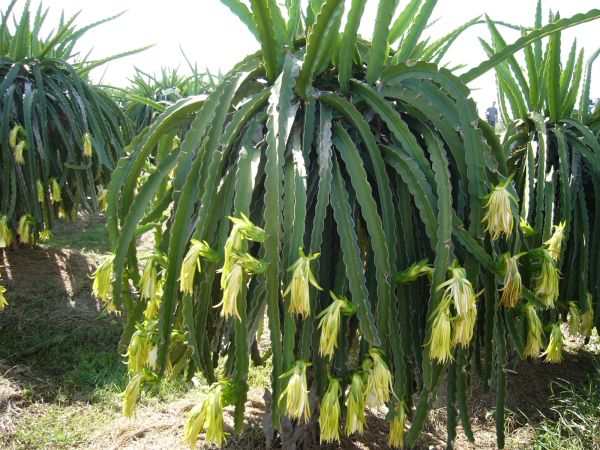
Dragon fruit is the fruit of a climbing cactus. The outside is bright pink with green scales, which is where the name comes from. Inside, the flesh is white or deep magenta and speckled all through with tiny black seeds, like a kiwi. The flower opens for a single night and is pollinated by moths and bats.
Family: Cactaceae (cactus family).
Chapter 4 of 14
What It Contains
Primary compounds
Betacyanins (red flesh). Vitamin C. Seed fatty acids.
Other notable constituents
Minerals: Magnesium, Iron, Potassium · Antioxidants: Phenolic acids · Fiber: ~3 g per cup
Chapter 5 of 14
In the Laboratory
From laboratory work, not from people taking it
Pitaya oligosaccharides increased helpful gut bacteria in laboratory fermentation models.Emerging evidence
What studies in people show
Prebiotic (fibre that feeds the helpful bacteria in your gut) carbohydrates shift the balance of gut bacteria in human feeding studies.Strong evidence
Chapter 6 of 14
Preparation and Kitchen Use
Halved and spooned is the simplest way, and the one that wastes nothing.
Peeled and cubed for salads, where it holds its shape well.
Blended with lime juice, which the mild flesh badly needs.
In the kitchen: frozen cubes for a thick magenta blended bowl. Cubed into salads for colour and crunch.
Cut in half and scoop the flesh with a spoon.
Cube into a fruit salad, where the colour does the work.
Blend into a cold drink with lime, which lifts the mild flavour.
Chapter 7 of 14
Medicines and Interactions
Medication interaction:
Diabetes medicine — Dragon fruit is low in sugar, so it rarely causes trouble. Concentrated powders are a different product and have not been studied alongside glucose-lowering medicine. (low concern)
General caution:
Urine tests — Red-fleshed fruit tints urine pink for about a day and can confuse a dipstick reading. Mention it if you have eaten some. (low concern)
Chapter 8 of 14
Who Should Be Careful
General caution:
The skin isn't eaten.
General caution:
Red varieties colour urine and stool pink for a day. This is harmless — but if you have not eaten dragon fruit, red urine needs a doctor.
General caution:
Choose fruit that gives slightly under the thumb; rock-hard fruit is flavourless.
Allergy:
Rare allergy has been reported; stop if the mouth tingles or swells.
Chapter 9 of 14
Pregnancy, Children and Older Adults
Pregnancy and breastfeeding
Pregnancy and breastfeeding:
Ordinary food amounts are fine and the fruit is mostly water, fibre and vitamin C. Skip supplement powders, which have no pregnancy safety data behind them.
Children
Children:
Children usually like the look more than the taste. Serve it cubed and cold with something sharper alongside. The pink urine surprises parents; it's harmless.
Older adults
Older adults:
Soft, easy to chew, low in sugar and gentle on a slow gut. That combination is unusually useful later in life, especially for someone eating little fruit.
Chapter 10 of 14
Traditional Uses in Southeast Asia
Persian temperament: Cold & Moist (1st degree). Not a classical Persian fruit, but Vietnamese and southern Chinese practice reads it as cooling and moistening, which is how it's used in hot weather.
Dragon fruit comes from Central America and only reached Asia in the last few centuries, so there's no classical Persian or Greek record of it. Vietnamese and southern Chinese folk practice treats it as a cooling fruit, given in hot weather and for dry, hard stools. This reflects traditional use, not a modern medical recommendation — the fruit is a food, and dragon fruit powders or extracts sold as supplements are a different product with no comparable evidence.
Refreshment during fever.
Vietnam grows it at scale as a major export crop, and southern Iran is growing more of it every year. It turned up in Persian markets as a modern novelty, and it's mostly there for colour in salads, drinks and desserts.
Chapter 11 of 14
What It Goes With
§ More Pairings
Fruit:
Lime
Squeeze it over the cubes. Dragon fruit is mild on its own and acid is what wakes it up.
Pairing:
Kiwi
Two seeded fruits, one sweet and one sharp. Together they make a salad that tastes of something.
Dairy:
Yogurt
Spoon the flesh through thick yogurt for breakfast. The fat carries a flavour that's otherwise faint.
Fruit:
Pineapple
Pineapple brings the sugar and acid that dragon fruit lacks, so a bowl of both eats better than either alone.
Chapter 12 of 14
Through the Year
Spring:
Spring
Imported fruit only. It travels badly and is usually underripe and flavourless this early.
Summer:
Summer
The season, and the sensible time to eat it. Chilled cubes with lime belong to hot afternoons.
Autumn:
Autumn
Late fruit is still good and often cheaper. Buy it while it gives slightly under a thumb.
Winter:
Winter
Out of season. Frozen cubes from the summer blend better than anything on the shelf now.
Chapter 13 of 14
Questions People Ask
Why does it taste so mild?
That's normal, especially for the white-fleshed kind. Choose fruit that yields slightly to a thumb, chill it well, and add lime — the acid wakes it up completely.
My urine turned pink. Is something wrong?
If you ate red-fleshed dragon fruit, no. The betacyanin pigment passes straight through and colours urine and stool for about a day. If you did not eat it, see a doctor.
Is it good for blood sugar?
It's one of the lower-sugar tropical fruits and carries prebiotic (fibre that feeds the helpful bacteria in your gut) fibre, so it's a reasonable choice. As with all fruit, portion still matters.