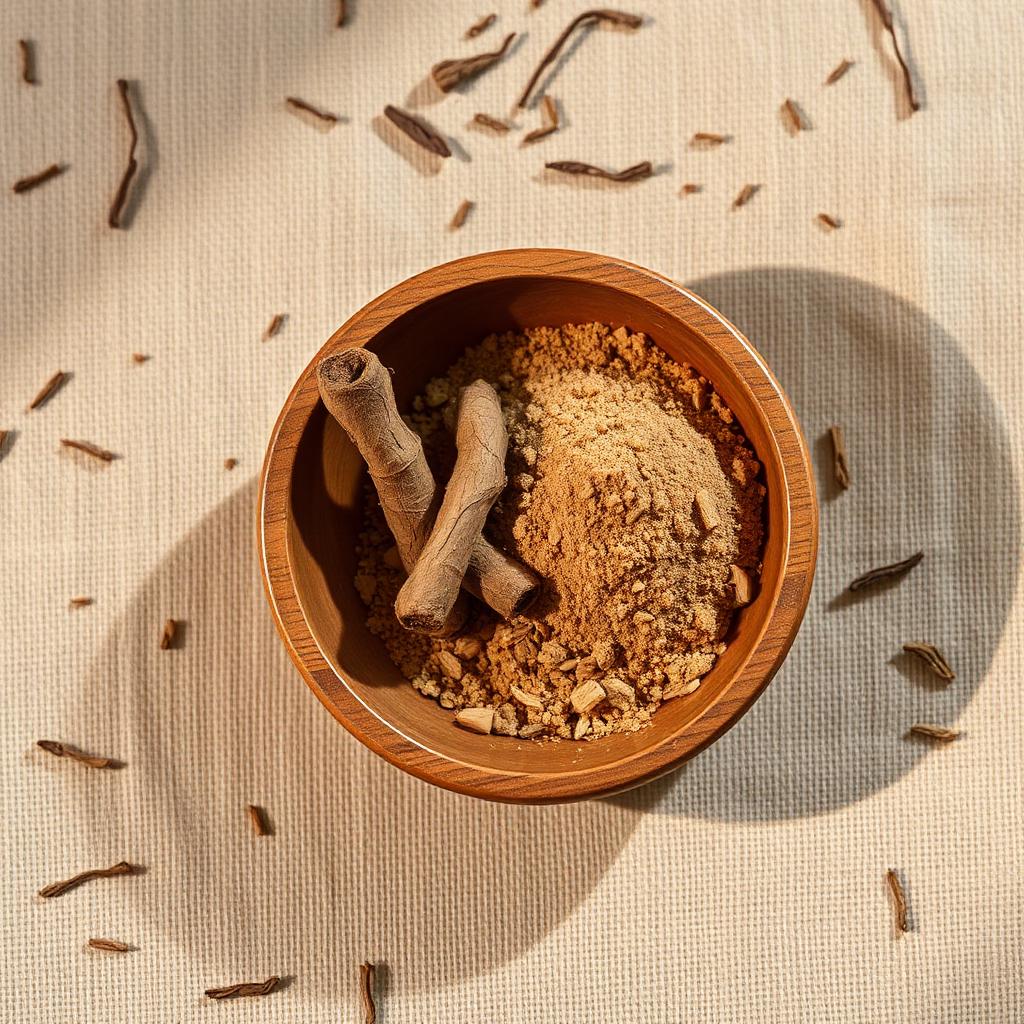
Ashwagandha is used as a restorative for the nervous system, and the modern evidence follows that reading. It may modestly reduce perceived stress and lower cortisol, and trial participants report sleeping better.
It has also been studied for exercise performance and recovery.
Here's the thing: either way, the gains are measured over weeks of steady use.
What Else to Know
Ashwagandha (Withania somnifera) is one of the better-studied herbs in this group. Its Sanskrit name means 'smell of horse', which points to both its earthy scent and its traditional reputation for restoring vigor. Modern trials have looked at stress, sleep, cortisol, and recovery after exercise. You may hear herbalists call it an 'adaptogen', a loose label for a plant said to help the body cope with stress. The label itself isn't proof that it works.
Ashwagandha may modestly reduce perceived stress and lower cortisol. Better sleep quality is the other consistent finding, and for most people it's the reason they take it.
Chapter 2 of 16
How the Root Traveled
Ashwagandha isn't a Persian herb. Withania somnifera grows in India, Nepal, and parts of the Middle East and North Africa. Its medical home is Ayurveda. There it has been used for centuries as a rasāyana — a rebuilding tonic rather than treatment for one symptom.
Ayurveda remains its primary tradition. Its only documented use outside Ayurveda came later through Unani medicine, a Greco-Arabic medical system. Unani medicine adopted Indian materia medica (written knowledge about medicinal substances). It called the root asgand and classed it as warm and dry.
That adoption is its only Persian-language connection. It isn't part of the classical Persian pharmacopoeia (the traditional list of medicines).
That distinction matters on this site. Where this guide says Ayurveda it means Ayurveda. Where it says Unani it means a later borrowing. Neither is relabelled as Persian medicine.
Chapter 3 of 16
What Is Actually in the Root
Primary compounds
Withanolides (the plant's main active compounds) are steroidal compounds. Commercial extracts are often standardised by their withanolide content.
Some of these compounds are bound to sugars.
The root also contains small amounts of alkaloids (natural plant chemicals).
Polysaccharides (complex sugars) and starches make up most of plain root powder.
The root powder contains iron and trace potassium.
Other notable constituents
Minerals: Potassium (trace)
Chapter 4 of 16
In the Laboratory
From laboratory work, not from people taking it
One small randomised trial studied people with subclinical hypothyroidism (an underactive thyroid with no clear symptoms yet). Ashwagandha root extract shifted thyroid measures towards the normal range compared with placebo. These measures were TSH, T3, and T4 (hormones used to check thyroid function). This single small study measured laboratory results.
It isn't evidence that the root treats thyroid disease. It isn't a reason to use the root instead of or alongside thyroid medicine. This same effect is why people with normal thyroid function or taking thyroid replacement should use caution. Rated: early research.
In laboratory and animal work, withanolides and sugar-bound withanolides affect stress-hormone signals, nerve-cell growth factors, and inflammation pathways. This may explain the trial findings, but the effect hasn't been showed in people. Rated: early research.
Chapter 5 of 16
What Human Trials Have Tested
Moderate evidence
Ashwagandha root extract (300 mg twice daily, 60 days) significantly reduced perceived stress and morning cortisol vs placebo. The trial included chronically stressed adults.Moderate evidence
Standardised ashwagandha extract (240 mg/day, 60 days) improved sleep quality and reduced anxiety in adults with insomnia vs placebo. This was a double-blind RCT (a trial where people were randomly assigned and neither group knew who received the extract).Moderate evidence
Ashwagandha root extract (600 mg/day, 8 weeks) increased muscle strength and size vs placebo in resistance-trained men. The study was randomised, double-blind (assignment was by chance, and neither group knew who received the extract).Moderate evidence
Further Findings
A systematic review (a careful summary of studies) and meta-analysis (a study combining trial results) found reduced anxiety symptoms. This finding came from 5 RCTs (randomised controlled trials). The strongest signal was at 12-week, ≥600 mg/day dosing.Moderate evidence
Early research
A case-series report (a report about several patients) linked ashwagandha with hepatic injury (liver damage). It covered five patients, and the injury resolved on withdrawal. This supports caution with concentrated commercial extracts.Emerging evidence
Chapter 6 of 16
Dose, Timing and the Night-Milk Form
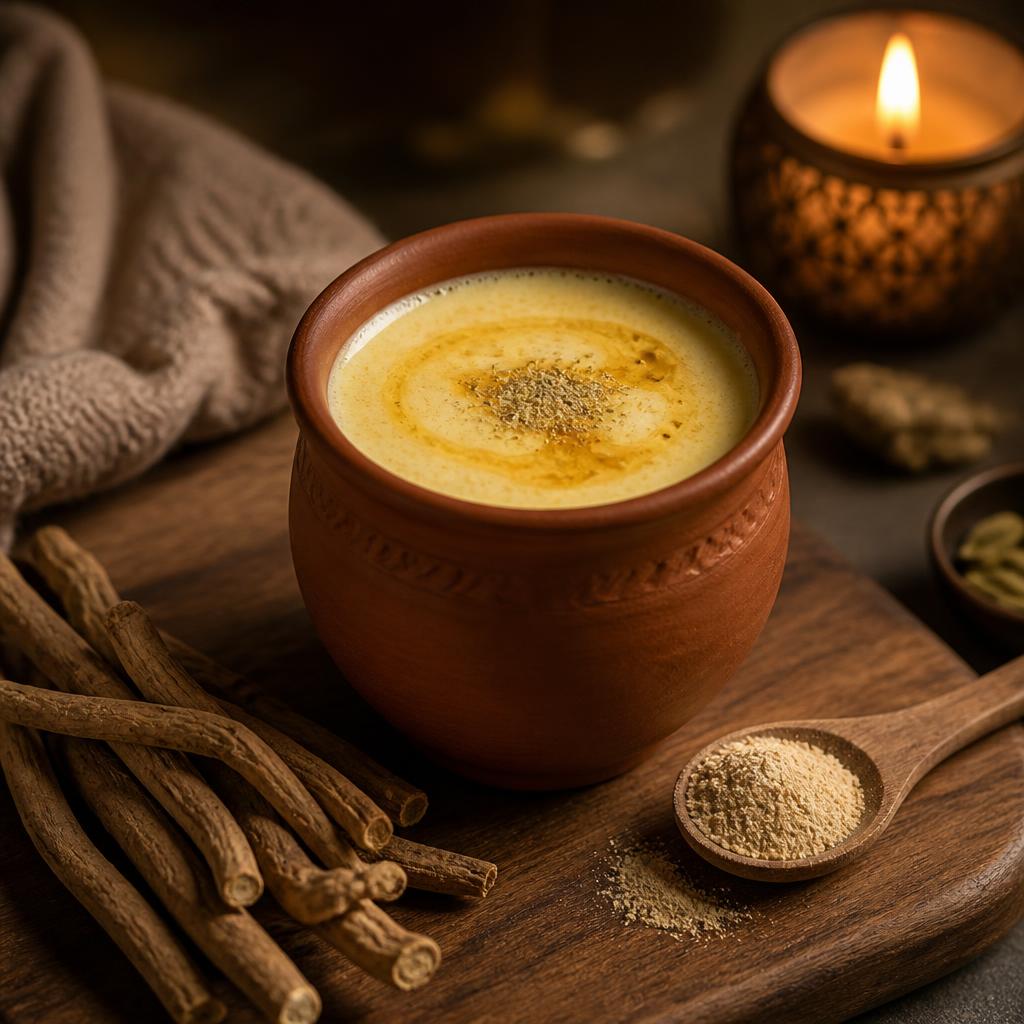
The classical Ayurvedic form is different in shape though not in spirit: about half a teaspoon of plain root powder simmered in milk with a little ghee at night, taken steadily.
Capsules and standardised extracts carry many times the amount you get from food, which is why the cautions below matter more here.
Trials used standardised root extracts at 300–600 mg a day, taken with food, or in warm milk before bed when sleep was the goal. They ran for eight to twelve weeks of continuous use, so the published results describe a habit rather than a dose.
Chapter 7 of 16
Root Powder Is Not a Standardised Extract
Three different products are sold under one name. Whole dried root is the traditional material, ground at home into a coarse churna. Root powder in a jar is the same material, milled finer. A standardised extract is concentrated to contain a stated percentage of withanolides.
Almost every modern trial used a standardised root extract at 300–600 mg a day. Plain root powder is much weaker and has a different balance of compounds. One teaspoon isn't a substitute for those doses. The trial results don't apply directly to plain root powder.
Check whether the label says the product contains root only. The leaf has a different balance of withanolides. Also check for an extract ratio or withanolide percentage. A product that states neither doesn't explain its strength.
Chapter 8 of 16
“Adaptogen” Is a Category, Not a Finding
The word adaptogen was coined in mid-twentieth-century Soviet research to describe plants said to raise non-specific resistance to stress. It's a marketing-friendly category, not a regulated claim and not a showed mechanism.
Calling ashwagandha an adaptogen (a traditional term for a plant said to help the body cope with stress) so tells you nothing about whether it works. What tells you something is the trial record — modest, mostly small, mostly 8–12 week studies on perceived stress, sleep and strength — and that record is set out in its own chapter here.
Chapter 9 of 16
Medicines and Interactions
Medication interaction:
Thyroid hormone (levothyroxine) — Ashwagandha can raise free T3 and T4 in subclinical hypothyroidism. T3 and T4 are the two main thyroid hormones. Subclinical hypothyroidism means an underactive thyroid with no clear symptoms yet. It may make the thyroid too active in people with normal levels or those already taking thyroid medicine. Concentrated extracts are avoided, or watched by a clinician, in anyone on thyroid replacement or with Graves' disease. (high concern)
Medication interaction:
Immunosuppressants (medicines that hold back the immune system), such as ciclosporin, tacrolimus and biologics — Withanolides may stimulate the immune system. This finding comes from early lab and animal work. Concentrated extracts are avoided without specialist input after a kidney, liver, heart, or other solid-organ transplant. They are also avoided during active autoimmune therapy. (high concern)
Medication interaction:
Sedatives (medicines that make you sleepy), including benzodiazepines, Z-drugs and alcohol — Both slow the brain and nervous system. Their effects add together. Morning grogginess and depth-of-sleep changes are often reported with 600 mg/day extract taken alongside prescription sedatives. (moderate concern)
Chapter 10 of 16
Medicines and Interactions: More Interactions to Know
Medication interaction:
Antihypertensives (blood-pressure medicines) — Withania somnifera has produced mild blood-pressure lowering in small trials. That effect adds to blood-pressure medicines at extract doses, so discuss monitoring with the prescriber before starting. (moderate concern)
Medication interaction:
Antidiabetic medicine (metformin, sulfonylureas, insulin) — Withanolides show mild lowering of fasting blood sugar. At concentrated extract doses, this adds to the effects of medicines that lower blood sugar. (low concern)
Medication interaction:
Medicines that can harm the liver, and alcohol — Rare case reports link ashwagandha with liver injury. These reports usually involved concentrated commercial extracts. Avoid concentrated extracts alongside treatment that can harm the liver. Stop and see a clinician for jaundice (yellow skin or eyes), dark urine, or unexplained fatigue. (moderate concern)
Chapter 11 of 16
Pregnancy, Children and Older Adults
Pregnancy and breastfeeding
Pregnancy and breastfeeding:
Ashwagandha should be avoided in pregnancy. Classical Ayurvedic sources describe it as capable of provoking miscarriage, and preclinical work reports uterine-stimulant and antifertility signals. No trial has established a safe dose in any trimester. That applies to root powder, standardised extract and tincture (a liquid extract made with alcohol) alike — no daily amount has been found to be safe.
Children
Children:
Ashwagandha is a nervine-tonic root traditionally used in Ayurveda for older children and adolescents recovering from illness (small root-powder doses in warm milk with ghee and jaggery). It isn't appropriate for infants or unmonitored paediatric use in Western supplement form. Concentrated extracts, in particular, should only be given under paediatric or Ayurvedic-physician supervision.
Chapter 12 of 16
Pregnancy, Children and Older Adults: Other Groups to Consider
Older adults
Older adults:
What has been studied: small randomised trials of standardised root extract at 300–600 mg/day, mostly over 8–12 weeks, reporting improvements in perceived stress and sleep, and — in trials combining the extract with resistance training — in muscle strength and grip. Most participants were healthy adults, and few trials were designed around people over 65, so this is a description of the evidence rather than a recommendation for routine use after 60. Older adults are also the group most likely to be on thyroid replacement, sedatives (medicines that make you sleepy), blood-pressure or glucose-lowering medicines, all of which appear in the interaction list. Anyone considering it should review those first with a clinician, and the trials give no information about use beyond about three months.
Pregnancy and breastfeeding:
Avoid in pregnancy.
Older adults:
Auto-immune conditions: speak with a clinician first.
Chapter 13 of 16
Rasāyana: How Ayurveda Uses the Root
Unani temperament: Warm & Dry (slightly moistening on the tissues) (2nd degree). Ashwagandha (Withania somnifera — asgand) enters Persian herbal use through Unani medicine, where it's classed as warm and dry in the second degree with a nourishing (mughadhī) after-effect on the nervous and reproductive tissues. It warms a cold-weak constitution, quiets an over-fired mind, and restores the vital heat that classical texts describe as depleted by chronic stress, prolonged illness, and old age.
Chapter 14 of 16
Rasāyana: How Ayurveda Uses the Root: In the Household
Ayurvedic tradition classifies ashwagandha as a rasayana — a rebuilding root for a person's overall state, not one symptom. It's traditionally given when someone feels depleted, restless at night, exhausted by day, or thin after long strain or illness. Ayurveda describes it as warming, grounding, and heavy. It suits vata (an Ayurvedic term for a cold, dry, restless constitution) and cold, anxious constitutions.
People who already run hot use it more carefully. In the classical preparation, the powder is simmered in milk with a little honey or ghee at night. It's taken steadily over weeks because the effect is understood to build over time, rather than happen at once.
There's also trial evidence for exercise performance and recovery. That fits its traditional role as a restorative rather than a stimulant.
Often stirred into warm milk with spices, it represents nourishing herbal care rather than a quick stimulant.
Chapter 15 of 16
Sources
Ashwagandha — NCCIH — US NIH National Center for Complementary and Integrative Health. https://www.nccih.nih.gov/health/ashwagandha
Sad Giah Hezar Darman (صد گیاه و هزار درمان) — One Hundred Plants and One Thousand Remedies — Dr. Hossein Erfani, 4th edition (1375 / 1996–1997). Primary traditional Persian herbal reference cited throughout this platform. Presented as traditional knowledge, not as modern medical proof.
Office of Dietary Supplements: fact Sheets — US National Institutes of Health (NIH). https://ods.od.nih.gov/factsheets/list-all/.
Herbal Database: memorial Sloan Kettering Cancer Center. https://www.mskcc.org/cancer-care/diagnosis-treatment/symptom-management/integrative-medicine/herbs.
Herbs at a Glance: uS NIH National Center for Complementary and Integrative Health (NCCIH). https://www.nccih.nih.gov/health/herbsataglance.
Chapter 16 of 16
Sources (continued)
FoodData Central: searchable nutrient database — US Department of Agriculture (USDA). https://fdc.nal.usda.gov/.
The Nutrition Source: harvard T.H. Chan School of Public Health. https://www.hsph.harvard.edu/nutritionsource/.
PubMed — peer-reviewed biomedical literature — US National Library of Medicine. https://pubmed.ncbi.nlm.nih.gov/