Milk Thistle
The Essentials
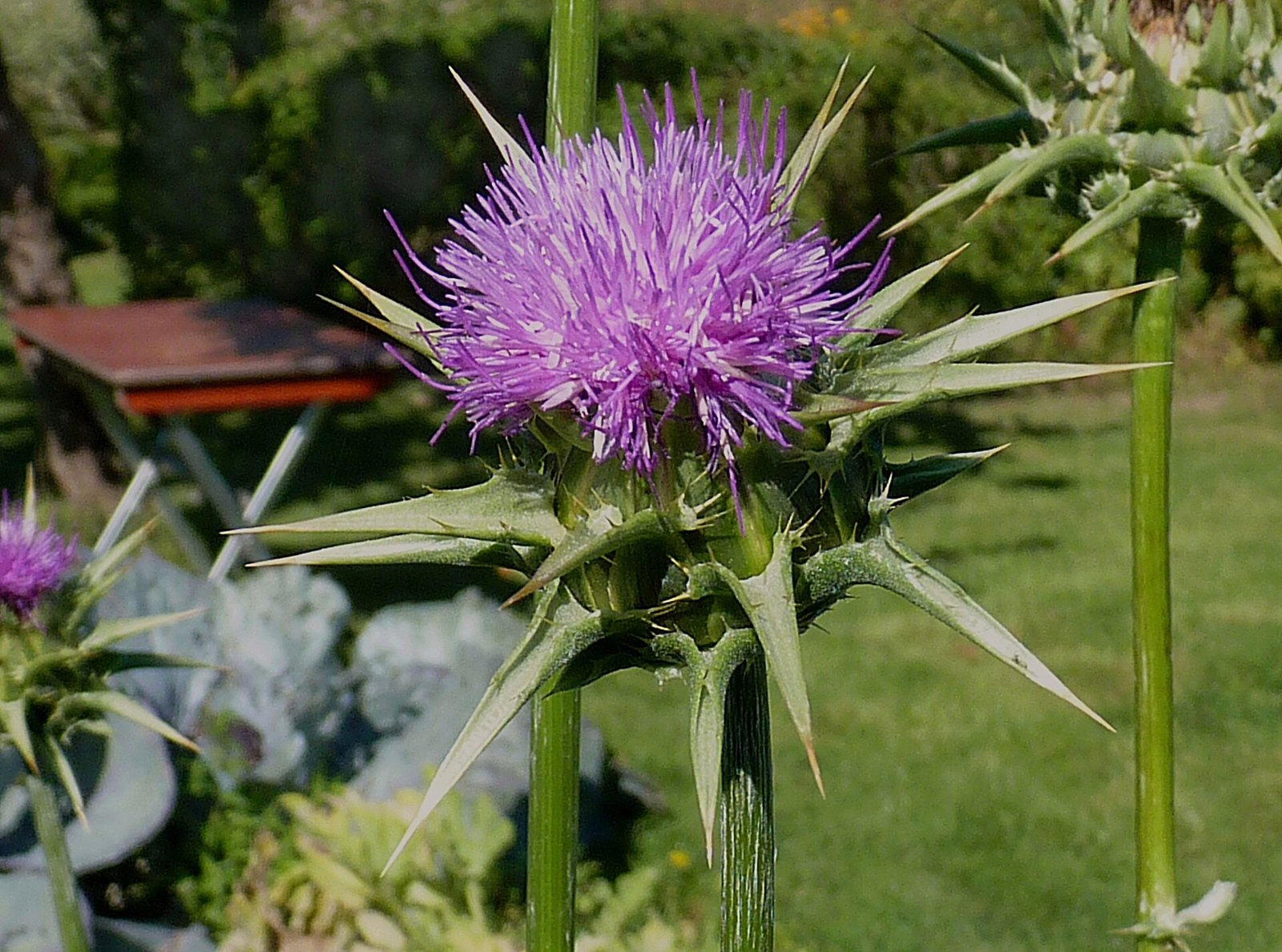
Silymarin — a complex of flavonolignans (silybin A/B, silychristin, silydianin, isosilybin) — is the active fraction. The whole crushed seed contains 1.5–3% silymarin.
Read the whole guide on one page →The best clinical evidence is for non-alcoholic fatty liver disease (NAFLD) — pooled trials show modest reductions in the liver enzymes ALT and AST.
What Else to Know
The seed tea is weak — only a little of the silymarin dissolves into hot water and gets absorbed. Standardised extracts (70–80% silymarin) are the therapeutic form.
It isn't an antidote to alcohol, acetaminophen overdose (except in specific clinical settings), or acute hepatotoxicity — it's a gentle chronic tonic.
Well tolerated across decades of use. The main caution is ragweed / Asteraceae family allergy and modest interaction with a few CYP-metabolised drugs.
You may know milk thistle (Silybum marianum) by its purple flowers and silver-veined leaves. The useful part is the seed, which contains silymarin, a complex of flavonolignans long used in Western herbalism for liver support and protection.