Anise
The Essentials
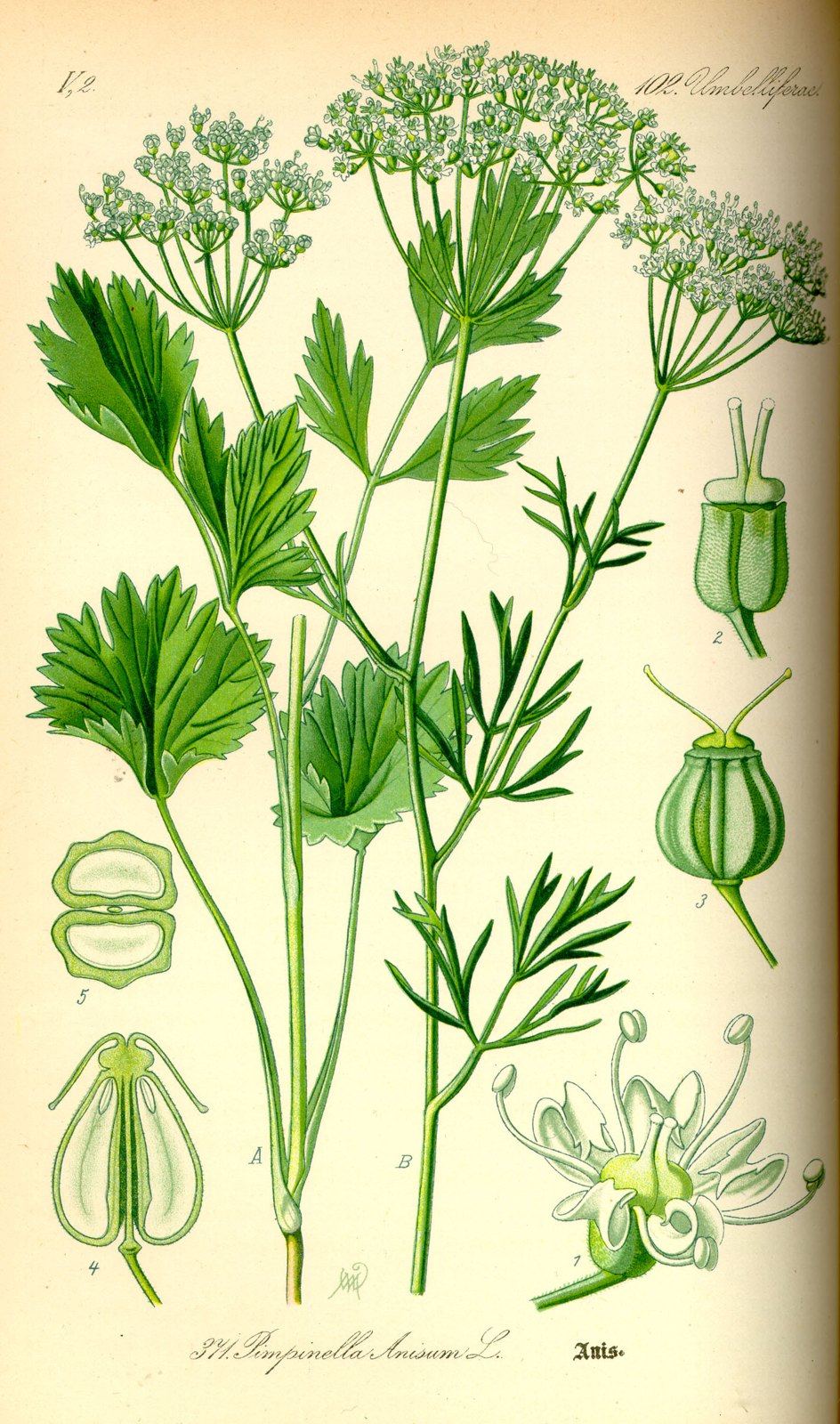
If you've ever wanted something warm after a meal, anise is the sweet, licorice-scented seed Persian households reach for. The habit has chemistry behind it: trans-anethole has documented carminative (traditionally used to settle gas and bloating) effects on the gut, and a lighter expectorant (helps loosen mucus so you can cough it up) action on the chest.
Read the whole guide on one page →The same seed appears as a folk remedy for cough and colic across Persia, the Mediterranean and the Levant. Stay with the seed itself — the concentrated essential oil (the concentrated aromatic oil of the plant) is avoided in pregnancy and in infants.
People have grown anise around the Mediterranean and Persian plateau since ancient times. Both the Egyptian Ebers Papyrus and Avicenna's Canon describe it as a warming aid for digestion and breathing. Its main aromatic compound, trans-anethole, gives the seed its familiar sweet, licorice-like flavour and explains much of how it works.
Known to botanists as Pimpinella anisum.