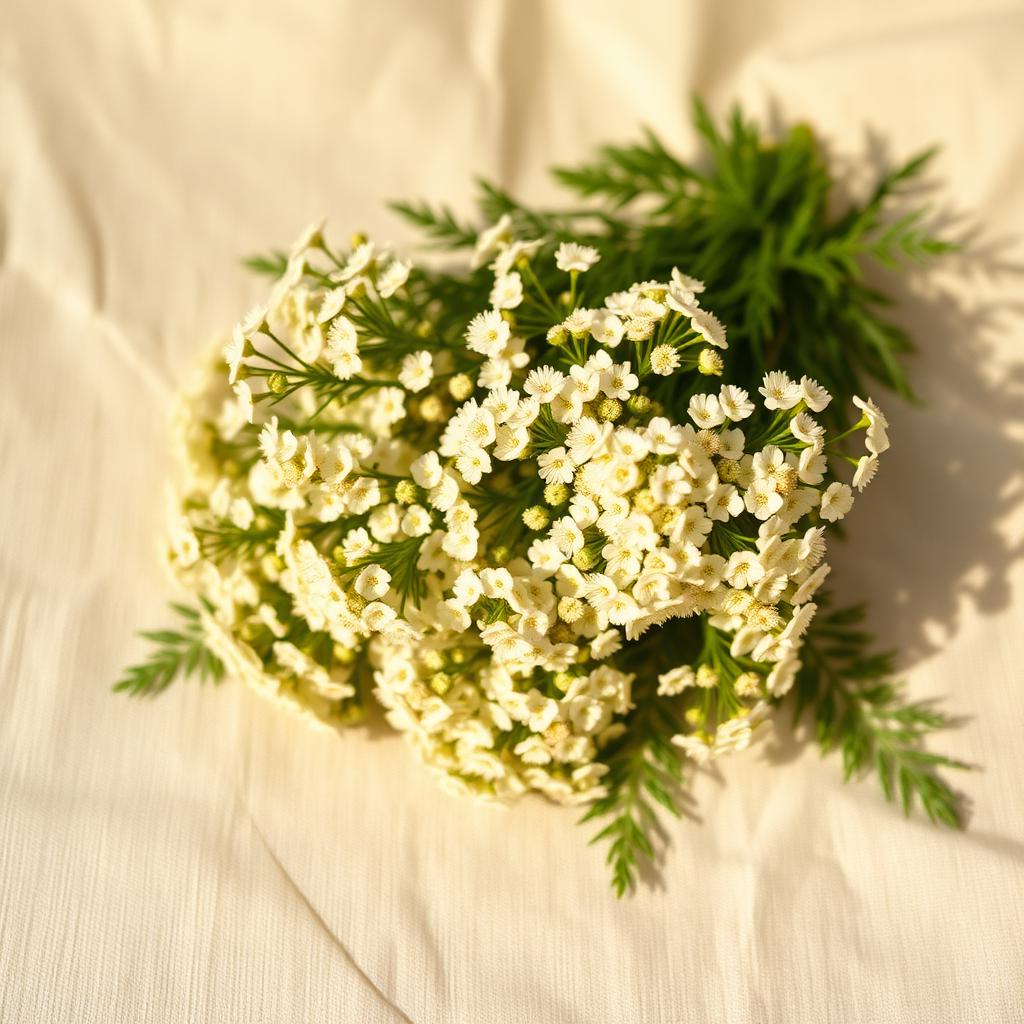
Its oldest use is external: pressed on a small cut or a nosebleed.
Hot yarrow tea makes you sweat. That's the traditional fever use.
It's bitter, which is why it's also used before meals for a lazy digestion.
It's a daisy-family plant: skip it if you react to chamomile or ragweed.
Chapter 2 of 12
Getting to Know Yarrow
Yarrow is named after Achilles, who according to legend used it on his soldiers' wounds. Its oldest and best-known job is just as practical: press it onto a cut and it helps a small bleed stop. Iranian country practice still uses it that way for a nosebleed. Its second traditional use is quieter but just as interesting. A hot yarrow infusion (a drink made by steeping the plant in hot water) opens the pores and brings on a sweat, which is why you'll find it in European and Persian fever teas alongside elderflower and mint. Modern research is mostly laboratory work on its anti-inflammatory and antimicrobial (slows the growth of germs) activity. We have far less human trial evidence than the plant's long history might suggest.
Known to botanists as Achillea millefolium.
Chapter 3 of 12
Why It Matters
You can find yarrow almost everywhere, yet hardly anyone notices it. It grows on waste ground. Once you know that this feathery-leaved roadside weed is the same herb Persian and Greek physicians reached for, even a walk to the shop looks a little different. And its simple, practical use for a nosebleed is worth knowing.
Older skin bruises and bleeds more easily, so a simple, familiar plant for a small cut can have quiet value. The digestive side matters too. Bitter herbs before a meal are one of the oldest answers to an appetite that has faded. Both uses are modest and gentle, and that's often how traditional medicine worked day to day.
Bitter tonic for sluggish digestion.
Chapter 4 of 12
The Plant Itself
Yarrow grows on roadsides and dry hillsides across Iran, Europe and Asia. It has flat white or pale pink flower heads sitting on top of a stem lined with feathery, finely divided leaves — millefolium means thousand leaves. The whole flowering top is used. Crushed, it smells green and slightly bitter, a little like chamomile with an edge.
Family: Asteraceae (daisy family).
Chapter 5 of 12
What It Contains
Achilleine is an alkaloid (strong plant compounds that act on the body even in small amounts) credited in older literature with shortening bleeding time.
Chamazulene is the deep blue compound formed when the oil is distilled, shared with chamomile and studied for calming irritated tissue.
Sesquiterpene lactones are the bitter fraction that stimulates digestion, and also the usual cause of skin reactions.
Flavonoids (a family of protective plant compounds) including apigenin and luteolin — antispasmodic compounds that ease cramping.
Chapter 6 of 12
What Studies in People Show
What studies in people show
There are no strong clinical trials of yarrow. The European Medicines Agency accepts it only as a traditional remedy for mild digestive upset, based on long use rather than trials.
Chapter 7 of 12
Preparation and Kitchen Use
Covered hot infusion (a drink made by steeping the plant in hot water): drunk hot for fever, cool for digestion.
Fresh poultice (a soft paste held against the skin): clean crushed leaf held on a small cut with a cloth.
Fever blend: yarrow with elderflower and peppermint in equal parts.
Bitter aperitif is a small cool cup fifteen minutes before eating.
Tea: one teaspoon of dried flowering tops in a covered cup for ten minutes. Drink hot for the sweating effect.
Chapter 8 of 12
Preparation and Kitchen Use: Other Ways to Use It
Nosebleed: a small rolled piece of clean fresh leaf placed in the nostril with steady pressure · Bath: a large handful of dried herb steeped in hot water and added to the tub.
Drink a hot infusion at the start of a feverish cold to encourage a sweat.
Take a small bitter cup before a heavy meal to wake up digestion.
Add it to a warm bath for aching muscles.
Chapter 9 of 12
Who Should Be Careful
Pregnancy and breastfeeding:
Never in pregnancy.
General caution:
Small cuts only — anything deep or dirty goes to a clinic.
General caution:
A fever that climbs or lasts needs a doctor, not more tea.
Pregnancy and breastfeeding:
Do not use in pregnancy. Yarrow has a long record of stimulating the womb.
Allergy
Allergy:
Avoid if you're allergic to plants in the daisy family — chamomile, ragweed, marigold.
Allergy:
It can make skin more sensitive to sunlight in some people.
Allergy:
Do not use it on a deep or dirty wound. That needs proper cleaning and medical care.
Medication interaction:
It may add to the effect of blood-thinning medicines; be careful if you take them.
Chapter 10 of 12
Traditional Persian Perspective
Persian medicine calls boomadaran warm and dry. Practitioners used it to stop bleeding, open blocked sweat, move stagnant blood, regulate a scanty or difficult period, and strengthen a weak stomach. Because they saw it as blood-moving, classical practice avoided it in pregnancy — a caution that modern herbalists still keep.
Fever with dry skin, to bring on a sweat.
Encourages sweating in a feverish cold (the classical sweat-bringing use).
In the Household
Eases cramping, including menstrual cramping, in traditional practice.
Yarrow appears in the folk medicine of nearly every culture where it grows, and that covers most of the northern world. In Iran, people gather it wild in the Alborz and Zagros. Its stalks were traditionally used to cast the I Ching in China, while European families hung it in their homes to keep illness away — one plant carrying medicine, ritual and superstition together.
Chapter 11 of 12
Questions People Ask
Does yarrow really stop bleeding?
For a small cut or a nosebleed, traditional practice across many cultures says yes, and older literature credits the alkaloid (strong plant compounds that act on the body even in small amounts) achilleine. Modern human trials are thin. Firm pressure is doing much of the work either way.
Can I pick it myself?
Yarrow is common, but it has poisonous look-alikes in the carrot family, including hemlock. Don't forage it unless someone who knows the plant has shown you the difference in person.
Chapter 12 of 12
Sources
Achillea millefolium L.: a review of its traditional uses, phytochemistry and pharmacology — Journal of Ethnopharmacology.
Assessment report on Achillea millefolium L., herba — European Medicines Agency (HMPC).
Anti-inflammatory activity of Achillea millefolium extracts — Phytomedicine.