Take it nightly for about two weeks before deciding whether it works. It isn't a one-dose remedy.
It's stronger than passionflower and can leave some people heavy-headed in the morning.
The smell is genuinely unpleasant. That's normal and not a sign of a bad product.
Valerian is one of the few sleep herbs with a genuine place in classical Persian medicine, where it's called sonbol-ot-tib. Avicenna wrote about it for nervous complaints and pain. The modern picture is honest but messy: several trials show that people feel they fall asleep more easily and sleep better, but measurements in a sleep lab often show much less change than the person's own impression. Reviews call the evidence modest and inconsistent. Valerian also takes time — most traditional and modern practice expects two weeks of nightly use before you judge it.
Known to botanists as Valeriana officinalis.
Chapter 2 of 11
Why Herbalists Still Reach for It
Sleeping tablets carry real costs, especially past sixty: dependence, falls and foggy mornings. Valerian is one of the oldest alternatives with both a classical Persian history and modern trials behind it. It isn't as strong, and it doesn't work for everyone, but it's a reasonable option to try while you address the other causes of poor sleep.
Sleep changes with age, and the medicines usually offered for it are also the ones most likely to cause a fall at three in the morning. Valerian is a gentler option with a long record in Persian practice. It works best as one part of a whole approach: daylight in the morning, movement during the day, a dark and cool room, and a doctor's eye on anything that won't settle.
People often report falling asleep faster and sleeping better (people's own reports across many trials).
Does not cause dependence in the way prescription sedatives (medicines that make you sleepy) can.
Chapter 3 of 11
The Plant Itself
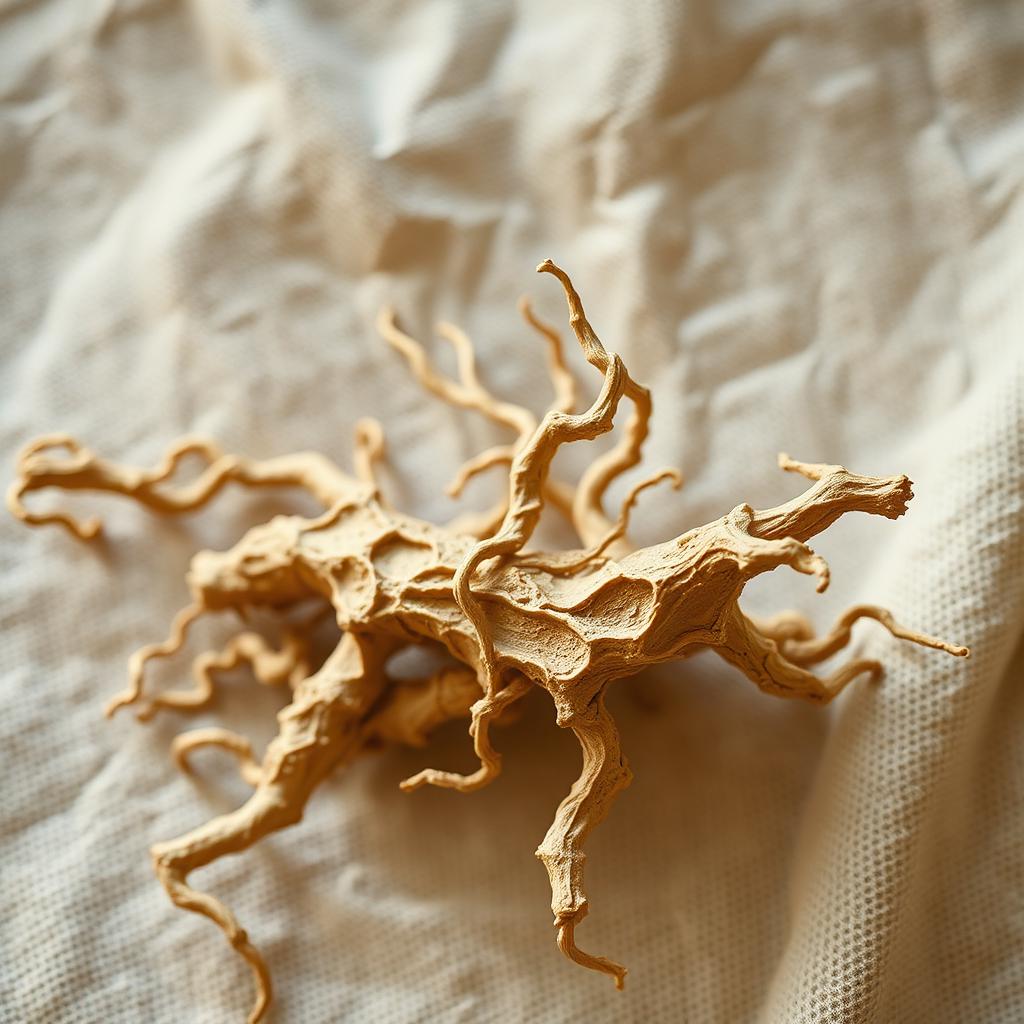
Valerian is a tall meadow plant with clusters of small pink-white flowers that smell sweet. The root doesn't. Dried valerian root has a heavy, earthy, unmistakable smell that most people describe as old socks. The root and rhizome are the parts used, dug in autumn of the second year. Related Iranian species grow wild in the Alborz mountains.
Family: Caprifoliaceae (honeysuckle family).
Chapter 4 of 11
What Is In It
Valerenic acid is the marker compound, shown in laboratory work to act on GABA-A receptors, the brain's calming system.
Valepotriates: unstable compounds that break down as the root dries, which is why fresh and old products differ.
Isovaleric acid is the source of the notorious smell.
Lignans (fibre-linked plant compounds found in seeds) and flavonoids — minor constituents that may add to the sedative (medicines that make you sleepy) effect.
Chapter 5 of 11
What Studies in People Show
What studies in people show
A meta-analysis of 16 trials found valerian might improve sleep quality, but most studies had serious design problems and there were signs that positive results were published more often.
Chapter 6 of 11
How It Is Prepared
Cold infusion (a drink made by steeping the plant in hot water): root steeped in cool water overnight, a gentler traditional method with less of the smell.
Nerve blend: valerian with lemon balm and borage flower.
Tea: one teaspoon of dried root steeped covered for ten to fifteen minutes, one cup before bed.
Other Ways to Use It
Course: nightly for two weeks, then assess.
Take it thirty minutes to two hours before bed, every night for two weeks.
Blend it with lemon balm to soften both the taste and the smell.
Keep the rest of the bedtime routine steady — the herb works with habits.
Chapter 7 of 11
Extracts, Capsules and Concentrates
Capsules and standardised extracts carry many times the amount you get from food, which is why the cautions below matter more here.
Tincture (a liquid extract made with alcohol) is the common Iranian pharmacy form, sold as sonbol-ot-tib drops.
Tincture: follow the label, taken in a little water in the evening.
Capsules: the easiest form if the smell is a problem.
Use a tincture (a liquid extract made with alcohol) or capsule if the tea smell defeats you.
Chapter 8 of 11
Who Should Be Careful
General caution:
Give it two weeks or don't judge it.
Medication interaction:
Some people wake heavy-headed. Try an earlier dose if so.
General caution:
Long-standing insomnia has causes worth investigating properly.
Pregnancy and breastfeeding:
Avoid in pregnancy and breastfeeding.
General caution:
Do not drive until you know how it affects you; some people are drowsy the next morning.
The Rest of It
General caution:
Rarely, it has the opposite effect and makes a person restless. If that happens, stop.
Medication interaction:
Never mix with alcohol or prescribed sedatives (medicines that make you sleepy).
Medication interaction:
Do not combine with sleeping tablets, benzodiazepines, or alcohol — the sedative effects add up.
Medication interaction:
Stop at least two weeks before surgery, as it interacts with anaesthesia.
Chapter 9 of 11
What Persian Medicine Says
Persian medicine describes sonbol-ot-tib as warm and moist. People used it for anxious restlessness, trouble sleeping, cramping pain, and palpitations from nervousness. Avicenna listed it among the calming roots. In Iranian folk practice, people often combine it with lemon balm and borage as an evening drink for the heart and nerves.
It was used: difficulty falling asleep. Cramping pain, including menstrual cramps.
Traditional use for anxious restlessness.
Valerian appears in Persian, Greek, Arabic and European pharmacies alike — it's one of the genuinely shared medicines of the old world. Galen recommended it, and wartime Britain gave it for shell-shock and air-raid nerves. In Iran, it remains a common pharmacy tincture (a liquid extract made with alcohol) sold under its classical name.
Chapter 10 of 11
Questions People Ask
Why does it smell so bad?
Isovaleric acid, which develops as the root dries. It's a sign of an ordinary, correctly dried root.
Can I take it just on bad nights?
You can, but most trials and traditional practice used it nightly for two weeks. Occasional use tends to disappoint people who then conclude it does nothing.
Chapter 11 of 11
Sources
Valerian for sleep: a systematic review and meta-analysis — The American Journal of Medicine.
Assessment report on Valeriana officinalis L., radix — European Medicines Agency (HMPC).
Avicenna, The Canon of Medicine — sonbol-ot-tib — Classical Persian medicine.