It's the best-studied cooking spice for calming inflammation, and most of that effect comes from curcumin (the yellow compound that gives turmeric its colour).
Your body absorbs very little curcumin (the yellow compound that gives turmeric its colour) on its own. Black pepper (which contains piperine) and a little fat are what help it get in.
Good-quality trials show real relief in knee osteoarthritis, plus small improvements in blood sugar and blood fats.
A daily pinch in food is safer and easier to keep up than strong extracts, which can interact with medicines and, rarely, harm the liver.
Chapter 2 of 25
Turmeric: What It Is and Which Part Is Used
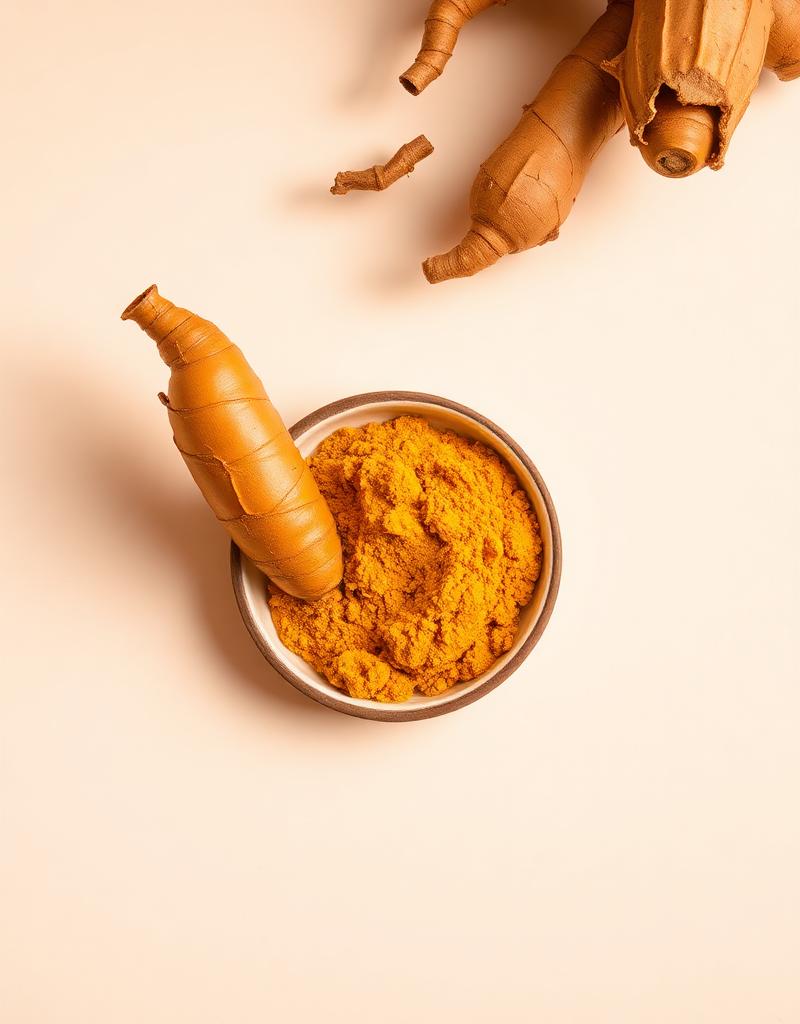
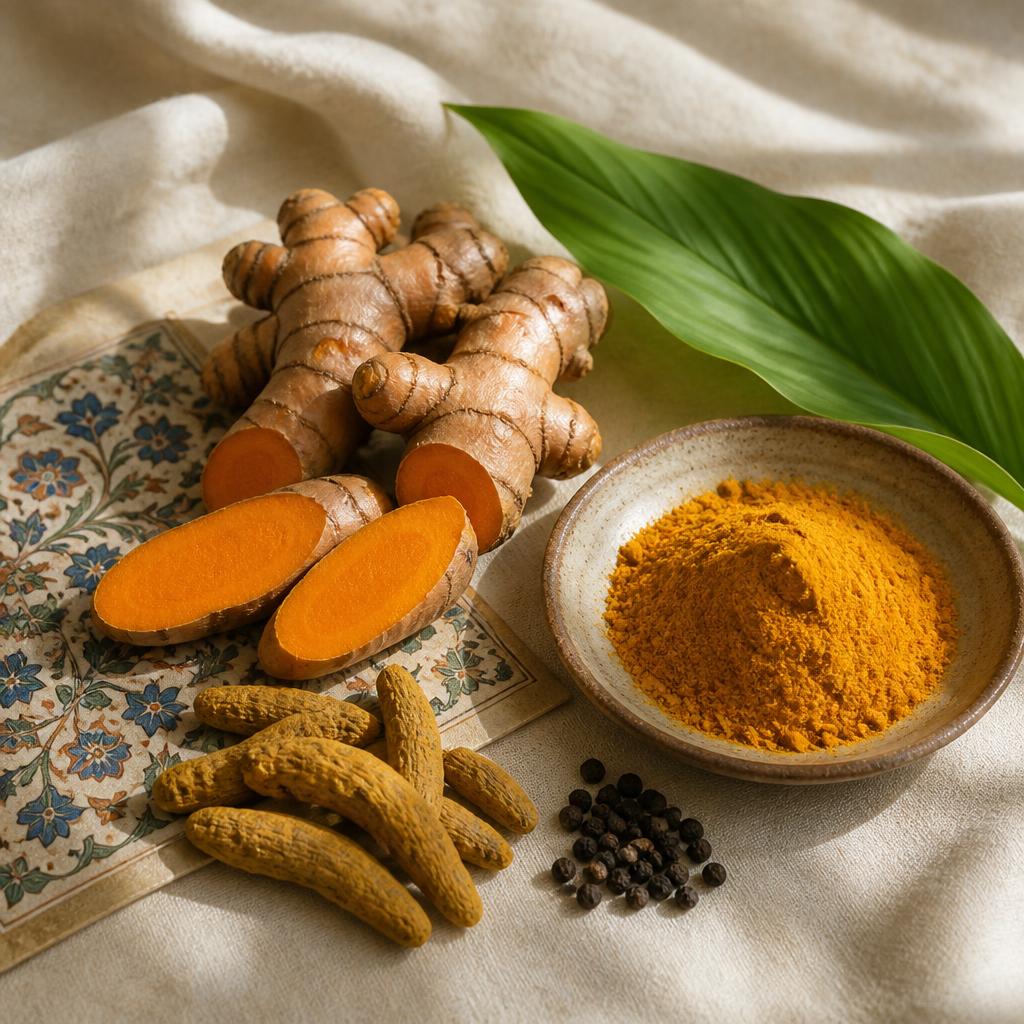
Turmeric (Curcuma longa) comes from an underground stem — a rhizome — in the ginger family. Curcumin is the compound that gives it that bright gold colour. It's also the part researchers have studied most for inflammation and cell health. Across India, Persia, and Southeast Asia, people have cooked with turmeric and used it as medicine for thousands of years. Turmeric for arthritis: does it actually work?
What It Is and Which Part Is Used: A Little More Background
For mild to moderate knee osteoarthritis, the evidence is Strong — a meta-analysis (a study that pools the results of many trials) of 29 randomized trials found that curcumin (the yellow compound that gives turmeric its colour) and turmeric extracts reduce pain and improve function about as much as standard NSAIDs, with less stomach upset.
That evidence comes from standardized extracts, not from the pinch in your rice: culinary use is a gentle long-term habit, while extracts are a targeted dose to discuss with your clinician, especially if you take blood thinners or other daily medicines. Turmeric isn't a cure for arthritis and never replaces prescribed treatment.
Chapter 3 of 25
Why Herbalists Still Reach for It
Slow, low-level inflammation can show up in later life as stiff joints, tired blood vessels, sluggish metabolism, and foggy days. Turmeric is one of the few kitchen spices tested in good trials across all of these areas. You don't need to treat it like a miracle. Think of it as a small daily thread, used gently in the amounts a Persian kitchen has always known.
Turmeric earns its place in a healthy-aging kitchen through small wins that can add up. You may notice less morning stiffness and calmer digestion after meals. Trials also show a lower CRP (a blood test that shows how much inflammation is in the body), along with small but real improvements in blood fats and fasting blood sugar. It's one of the few spices where a lifelong cooking habit may help explain why some populations age with less inflammation.
Chapter 4 of 25
Why Herbalists Still Reach for It: What That Means Day to Day
Modern research is finally catching up with what grandmothers have long practised.
Eases pain and stiffness in knee osteoarthritis in several good-quality trials.
Nudges triglycerides (a type of fat in the blood), LDL (the harmful type of cholesterol) cholesterol, and fasting blood sugar gently in the right direction in metabolic-syndrome trials.
Supports a healthy inflammatory response, measured by the CRP blood test, across mixed groups of people.
Helps keep ulcerative colitis in remission when added to standard treatment.
Helps liver enzymes return toward normal in trials of non-alcoholic fatty liver.
Chapter 5 of 25
What Is In It
Primary compounds
Curcumin (the yellow compound that gives turmeric its colour) and its relatives (demethoxycurcumin, bisdemethoxycurcumin) — together called curcuminoids, the main compounds behind the anti-inflammatory and antioxidant effect.
Turmerones (ar-turmerone, α- and β-turmerone) — aromatic oils in the root that add their own activity and help curcumin (the yellow compound that gives turmeric its colour) absorb.
Volatile oils (the concentrated aromatic oil of the plant): carry the warm aroma and help the body take curcumin (the yellow compound that gives turmeric its colour) up.
Other Constituents
Polysaccharides: plant sugars with mild effects on the immune system.
Knee osteoarthritis and inflammatory-marker reduction have Strong-level evidence from multiple randomized trials and meta-analyses (a study that pools the results of many trials). Metabolic and lipid effects are Moderate. UC-adjunct and NAFLD data are Emerging but promising. Traditional warming, digestive, and joint uses are consistent with modern anti-inflammatory and bile-stimulating pharmacology.
Curcumin supplementation improves lipid profile (triglycerides, LDL, HDL) in metabolic-syndrome and heart and blood vessel-risk populations.
Curcumin lowers fasting glucose, HbA1c (a blood test showing average blood sugar over about three months), and HOMA-IR in type 2 diabetes and metabolic syndrome (a group of problems including high blood sugar, blood pressure and waist size) trials.
Further Findings
Curcumin reduces circulating CRP, IL-6, and other inflammatory markers across mixed patient populations.
Curcumin as adjunct to mesalamine improves clinical and endoscopic remission in mild-to-moderate ulcerative colitis.
Piperine (from black pepper) increases curcumin (the yellow compound that gives turmeric its colour) bioavailability (how much of it your body can actually absorb) by roughly 2,000% in humans, providing the pharmacokinetic basis for the classical culinary pairing.
Chapter 7 of 25
How It Is Prepared
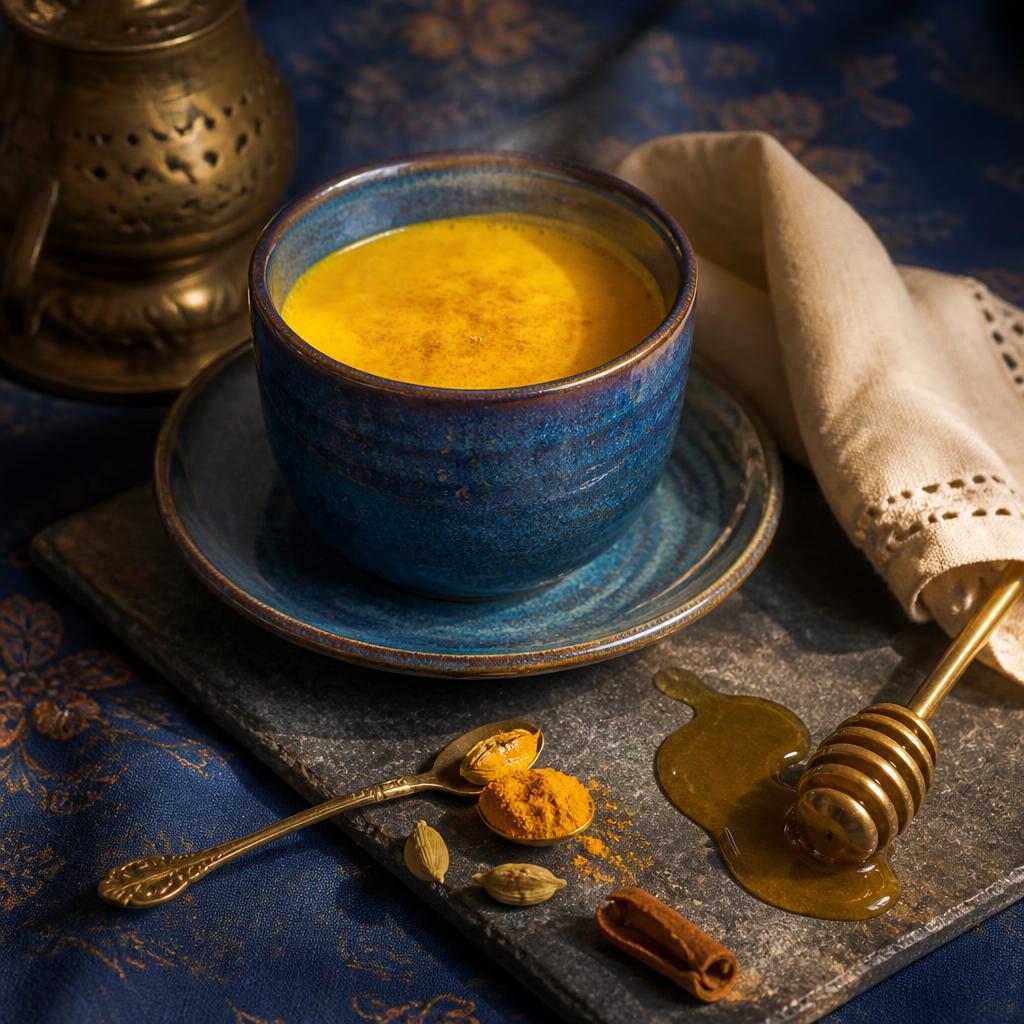
Sheer-e zardchubeh (Persian golden milk): ½ tsp turmeric + a pinch of black pepper + warm milk + honey + cardamom.
Warmed in fat: ¼–½ tsp sizzled for 30 seconds in ghee or olive oil at the start of cooking. The classical way.
Other Ways to Use It
Ground turmeric in food: ¼–1 tsp a day across meals. Always with fat and pepper.
Skin mask (māsk): turmeric + yogurt + a little honey to brighten the face (test a small patch first — turmeric stains).
Stir ¼–1 tsp into rice, lentils, soups, or scrambled eggs. Add some fat and a crack of black pepper.
Warm a pinch in olive oil at the start of a stew. It's the old way of carrying turmeric into the body.
Chapter 8 of 25
Extracts, Capsules and Concentrates
Capsules and standardised extracts carry many times the amount you get from food, which is why the cautions below matter more here.
If you need a stronger, targeted dose, a standardised curcumin (the yellow compound that gives turmeric its colour) extract (500–1,000 mg a day of curcuminoids, ideally with piperine or a form made to absorb well) is another option. Check with your clinician first if you take any daily medicine.
Chapter 9 of 25
Medicines and Interactions
General cautions
Medication interaction:
Extract doses can make blood slower to clot — stop two weeks before planned surgery.
Specific medicines
Medication interaction:
Warfarin (a blood-thinning medicine) / DOACs (apixaban, rivaroxaban, dabigatran) — Standardized curcumin (the yellow compound that gives turmeric its colour) extracts can add to anticoagulation and raise bleeding risk. Culinary turmeric is generally safe. Discuss any daily extract with your clinician and pause two weeks before surgery. (moderate concern)
Medication interaction:
Antiplatelets (aspirin, clopidogrel) — Additive antiplatelet effect at extract doses. Culinary amounts are fine; monitor for bruising if stacking with high-dose curcumin (the yellow compound that gives turmeric its colour). (moderate concern)
Chapter 10 of 25
Medicines and Interactions: More Interactions to Know
Medication interaction:
Antidiabetic medications (metformin, sulfonylureas, insulin) — Curcumin (the yellow compound that gives turmeric its colour) may modestly lower fasting glucose. Welcome for many; monitor if therapy is tightly titrated. (low concern)
Medication interaction:
Antihypertensives — Small additive blood-pressure-lowering effect at extract doses. Monitor if you already run low. (low concern)
Medication interaction:
CYP3A4 (a liver enzyme that breaks down many medicines) substrates (statins, tacrolimus, certain chemotherapy) — Curcumin (especially with piperine) can alter CYP3A4 metabolism and modestly shift drug levels. Coordinate with your clinician if you take a narrow-therapeutic-index drug. (moderate concern)
Further Interactions
Medication interaction:
Iron supplements — High-dose curcumin can bind and reduce iron absorption. Take iron and curcumin extracts several hours apart. (low concern)
Medication interaction:
Hepatotoxic medications and alcohol — Rare but real idiosyncratic liver-injury reports with concentrated curcumin (the yellow compound that gives turmeric its colour) supplements — avoid stacking with hepatotoxic drugs or heavy alcohol use. (moderate concern)
Chapter 11 of 25
Who Should Be Careful
General caution:
Rare but real: some people have had liver injury from concentrated turmeric or curcumin (the yellow compound that gives turmeric its colour) supplements, most often ones combined with piperine.
Medication interaction:
Can cause heartburn, nausea, or loose stools at high doses.
General caution:
Stains skin, cloth, and ceramic — expect it rather than avoid it.
General caution:
Gallstones or a blocked bile duct — turmeric increases bile flow and can bring on pain.
Chapter 12 of 25
Who Should Be Careful: Iron-deficiency anemia
General caution:
An active stomach ulcer or severe GERD (bad acid reflux) — cooking amounts only; avoid concentrated extracts.
Medication interaction:
Iron-deficiency anemia — high curcumin (the yellow compound that gives turmeric its colour) doses can bind more of the iron in your food.
Pregnancy and breastfeeding:
Pregnancy — avoid medicinal or extract doses; amounts used in cooking are fine.
Allergy:
Known allergy to turmeric or the ginger family (rare).
Chapter 13 of 25
Pregnancy, Children and Older Adults
Pregnancy and breastfeeding
Pregnancy and breastfeeding:
Culinary turmeric — stirred into rice, stews, lentils, or a modest golden milk — has been part of Persian pregnancy cooking for centuries and is considered safe. Concentrated curcumin extracts and high-dose supplements should be avoided in pregnancy (theoretical uterine stimulation, and no adequate safety data at extract doses). During breastfeeding, culinary use is compatible with nursing; skip daily standardized extracts until finished, as lactation safety at extract doses is unstudied.
Children
Children:
Culinary turmeric in family cooking is safe and gentle for children of all ages. A mild, well-diluted golden milk (with less turmeric and no honey under 12 months) is a comforting evening drink for children over 1 with a cold or a slow appetite. Standardized curcumin extracts aren't typically needed in children — reserve for specific clinical indications with a pediatrician's involvement.
Chapter 14 of 25
Pregnancy, Children and Older Adults: A Few More Points
Older adults
Medication interaction:
Turmeric is one of the highest-leverage daily kitchen spices after 60: knee-osteoarthritis pain, low-grade inflammation, lipid and glycemic drift, and slow post-meal digestion are exactly its therapeutic zone. The main watchouts are anticoagulant (blood-thinning medicines), antiplatelet (medicines that stop blood cells sticking together, such as aspirin), and narrow-window medications (statins, tacrolimus) — culinary use is almost always safe; discuss standardized curcumin extracts with the clinician who prescribes those.
Chapter 15 of 25
What Persian Medicine Says
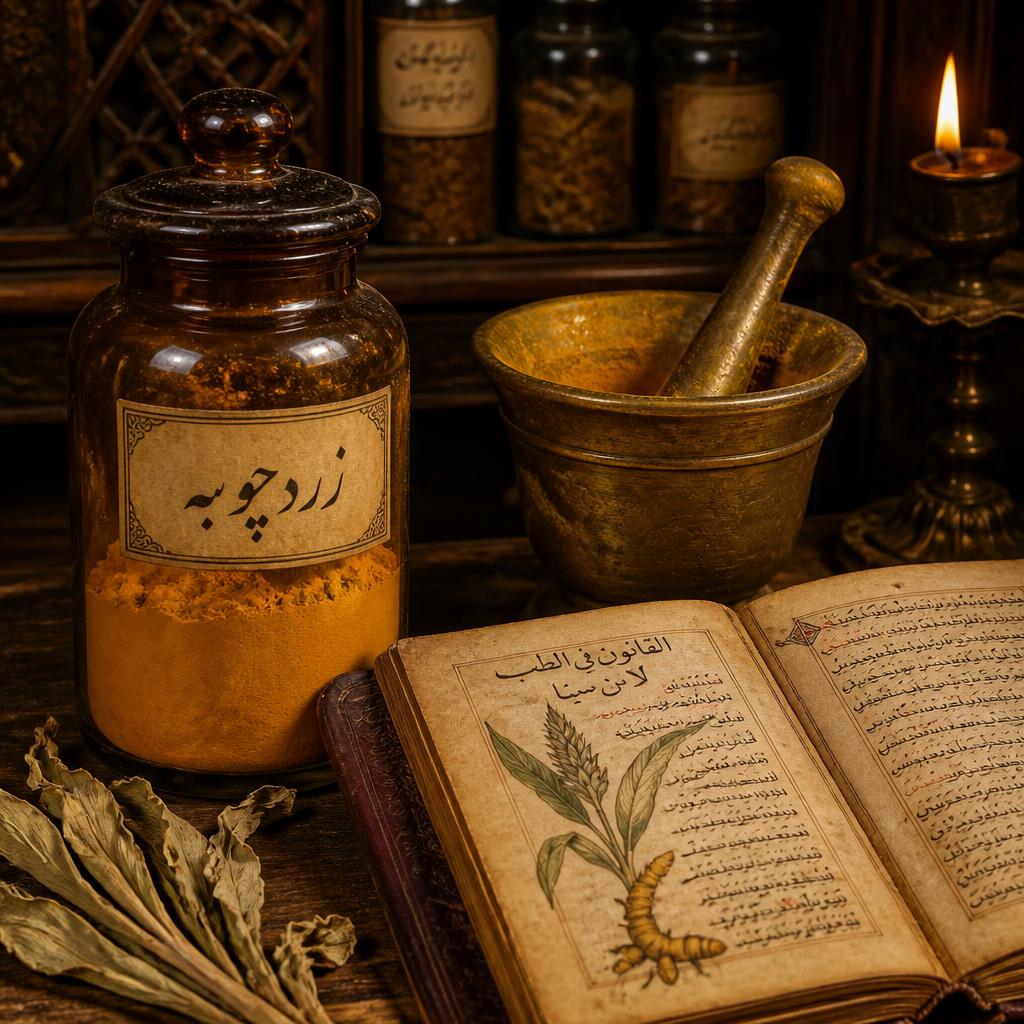
Persian temperament: Hot & Dry (2nd degree — some sources 3rd). Warming, drying, and opening. In tradition it suits people described as cold and damp — slow digestion, stiff mornings, a dull complexion. For people described as already hot or dry, or anyone prone to stomach ulcers, keep to modest amounts in food with cooling carriers such as yogurt, milk, or honey rather than concentrated extracts.
In the Household
Across Persian, Ayurvedic, and Southeast Asian traditions, turmeric is viewed as a warming golden root for sluggish digestion, joint comfort, liver resilience, and recovery after rich meals. It's used with fat and black pepper because the classical preparations — golden milk, a spoon stirred into oil at the start of a stew — were built to carry it, and it suits cold, damp, achy constitutions more than hot, dry ones.
Chapter 16 of 25
What Persian Medicine Says: Older Uses
Stiff, aching joints in the morning — what tradition called cold-pattern pain.
It was used: slow digestion, bloating, and poor appetite. Brightening the skin, applied on the skin (māsk-e zardchubeh).
Its golden color appears in rice, stews, pickles, and healing household drinks, symbolizing warmth, cleansing, and vitality.
Chapter 17 of 25
What It Goes With
Spice:
Ginger
The Zingiberaceae siblings — ginger delivers warmth and blood flow, turmeric delivers depth of anti-inflammatory reach. Together in warm milk is the classical joint tonic.
Spice:
Cinnamon
Cinnamon rounds turmeric's earthy edge and adds gentle glucose-modulating support. That makes it the trio in golden milk that a Persian evening loves.
Spice:
Cardamom
The aromatic that makes daily use pleasant, not medicinal. Cardamom lifts turmeric's heaviness and settles the stomach when higher doses are used.
Chapter 18 of 25
What It Goes With: More Pairings
Spice:
Saffron
Saffron and turmeric together — the twin Persian golds — mood and inflammation share more ground than modern medicine long assumed.
Pairing:
Olive oil
The classical carrier. Curcumin (the yellow compound that gives turmeric its colour) is fat-soluble. A spoon of oil at the start of cooking is what makes it usable.
Honey:
Honey
A teaspoon of turmeric-honey (with a crack of pepper) on cold mornings, which is the Persian household's simplest anti-inflammatory ritual.
Chapter 19 of 25
What It Goes With: A Few More Pairings
Fruit:
Pomegranate
Turmeric and pomegranate together tug in complementary directions (one warming and opening, one cooling and protecting the vessels beneath).
Pairing:
Garlic
The two most-studied culinary heart foods on one plate. Turmeric quiets the inflammatory background, garlic works the pressure and lipids.
Chapter 20 of 25
Through the Year
Spring:
Spring
A pinch bloomed in oil with onion at the start of every khoresh — spring digestion often wakes slowly, and turmeric moves it gently.
Summer:
Summer
Ease off warming golden milk in high summer. Small culinary amounts in cool yogurt (māst-o-khiar-e zardchubeh) or a bright lentil salad keep the anti-inflammatory thread without adding heat.
Autumn:
Autumn
As mornings cool, joints stiffen. Return to daily golden milk in the evening — the classical Persian season for zardchubeh's warming, opening work.
Winter:
Winter
Daily sheer-e zardchubeh, generous turmeric in every stew, and a pinch stirred into honey on cold mornings — winter is when this spice earns its keep.
Chapter 21 of 25
Questions People Ask
How much turmeric should I take daily?
For most people, ¼ to 1 tsp a day in food, spread across meals and eaten with fat and black pepper, is a sensible daily ceiling. Standardised curcumin extracts run 500–1,000 mg a day of curcuminoids. Follow the label, and if you take a daily medicine, ask your clinician first.
Why is black pepper added to turmeric?
Black pepper contains piperine, which slows how fast your gut and liver break curcumin (the yellow compound that gives turmeric its colour) down, so more of it reaches your bloodstream. A crack of pepper and a little fat are what make the spice work — Persian and Indian kitchens have quietly done this for a thousand years.
Is turmeric safe in pregnancy?
The amounts you stir into food are considered safe and are part of Persian pregnancy cooking. Avoid concentrated curcumin extracts and high-dose supplements in pregnancy, and check with your obstetrician while breastfeeding.
Chapter 22 of 25
Questions People Ask: A Few More Questions
Does turmeric really help joint pain?
Yes — for mild to moderate knee osteoarthritis the evidence is Strong. When researchers pool the good trials together, pain and movement improve about as much as with over-the-counter NSAIDs such as ibuprofen, and with less stomach upset. Give it four to six weeks of daily use before you judge.
Chapter 23 of 25
Sources
Curcumin and inflammation: comprehensive review — Foods (NIH PMC). https://www.ncbi.nlm.nih.gov/pmc/articles/PMC5664031/.
Turmeric — NIH NCCIH Health Information — US NIH NCCIH. https://www.nccih.nih.gov/health/turmeric
Curcumin in osteoarthritis: meta-analysis of RCTs — Journal of Medicinal Food (PubMed). https://pubmed.ncbi.nlm.nih.gov/27533649/.
Turmeric — MSK Herbal Database — Memorial Sloan Kettering Cancer Center. https://www.mskcc.org/cancer-care/integrative-medicine/herbs/turmeric
Turmeric — Health Information — US NIH National Center for Complementary and Integrative Health. https://www.nccih.nih.gov/health/turmeric
Curcumin: memorial Sloan Kettering Integrative Medicine — MSKCC. https://www.mskcc.org/cancer-care/integrative-medicine/herbs/turmeric.
Chapter 24 of 25
Sources (part 2 of 3)
Turmeric: medlinePlus — US National Library of Medicine. https://medlineplus.gov/druginfo/natural/662.html.
Sad Giah Hezar Darman (صد گیاه و هزار درمان) — One Hundred Plants and One Thousand Remedies — Dr. Hossein Erfani, 4th edition (1375 / 1996–1997). Primary traditional Persian herbal reference cited throughout this platform. Presented as traditional knowledge, not as modern medical proof.
Office of Dietary Supplements: fact Sheets — US National Institutes of Health (NIH). https://ods.od.nih.gov/factsheets/list-all/.
Herbal Database: memorial Sloan Kettering Cancer Center. https://www.mskcc.org/cancer-care/diagnosis-treatment/symptom-management/integrative-medicine/herbs.
Herbs at a Glance: uS NIH National Center for Complementary and Integrative Health (NCCIH). https://www.nccih.nih.gov/health/herbsataglance.
FoodData Central: searchable nutrient database — US Department of Agriculture (USDA). https://fdc.nal.usda.gov/.
Chapter 25 of 25
Sources (part 3 of 3)
The Nutrition Source: harvard T.H. Chan School of Public Health. https://www.hsph.harvard.edu/nutritionsource/.
PubMed — peer-reviewed biomedical literature — US National Library of Medicine. https://pubmed.ncbi.nlm.nih.gov/