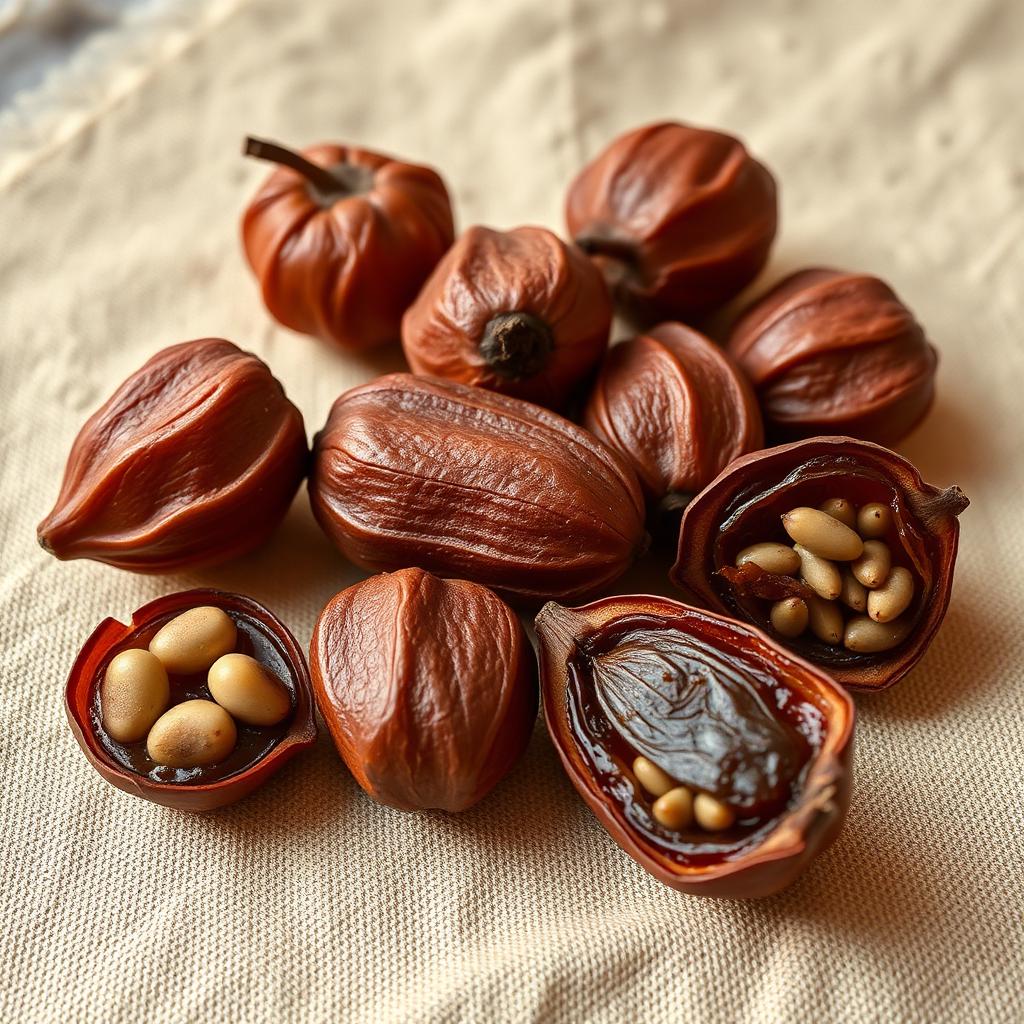
It's a pod, not a berry — a member of the bean family.
Used for sourness in cooking, rarely eaten plain.
Sold as blocks of pulp, as paste, or as whole pods.
Crack open the brown pod and you'll find sticky, sour-sweet pulp. Cooks use it much like lemon: to add sourness.
Known to botanists as Tamarindus indica.
Chapter 2 of 13
Why It Matters
In southern Iran, tamarind provides the sourness in ghalyeh mahi and other fish stews. Think of it as a souring agent, not a sweet fruit. That difference helps you use it well without adding too much.
Tamarind's main gift is flavour. Its strong sourness lets you cut back on salt and sugar without making food taste flat. That's a small, repeatable win for blood pressure and for taste itself.
A useful source of magnesium and potassium for a flavouring.
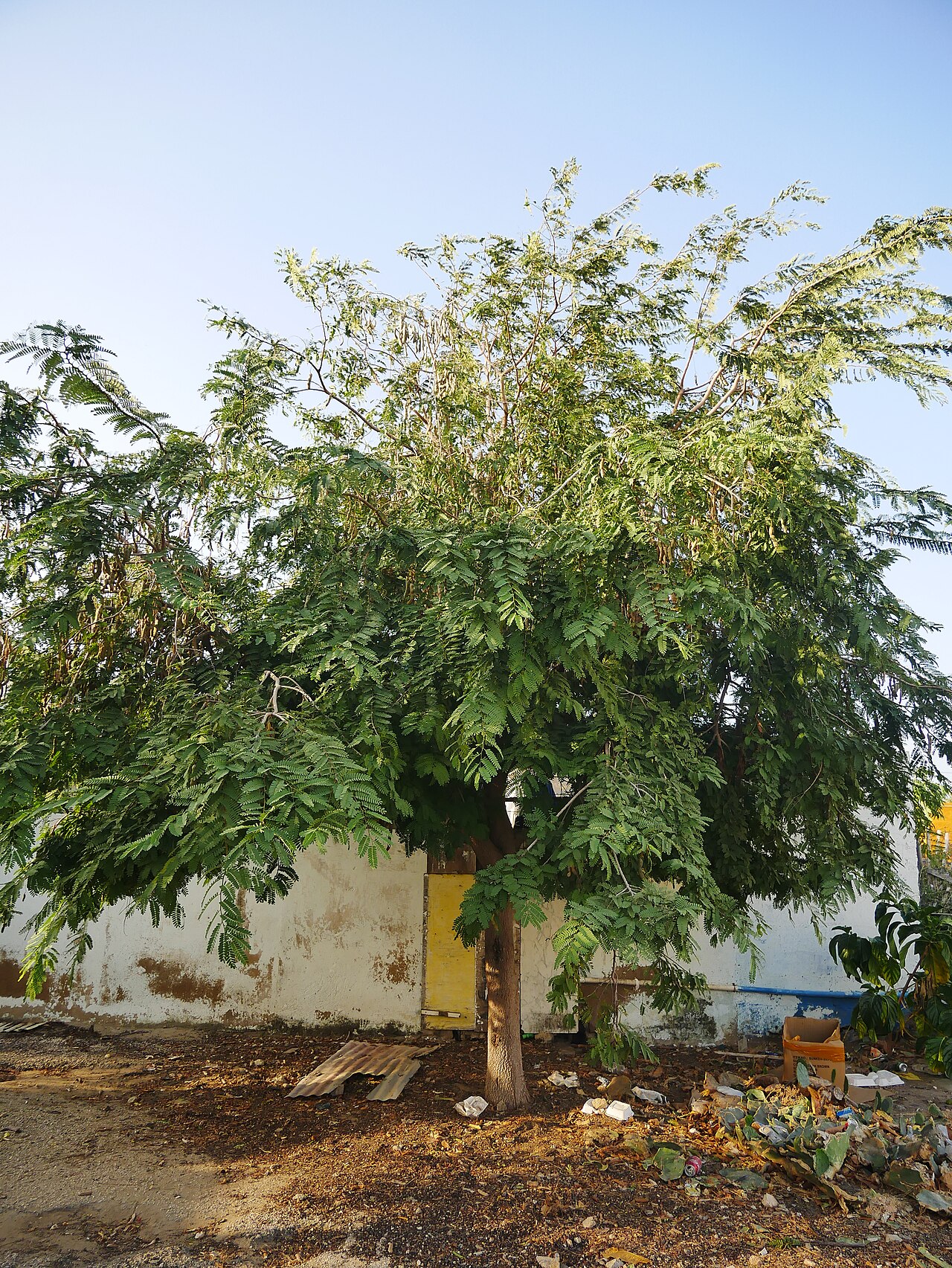
Tamarind grows on a large, long-lived tree with fine, feathery leaves. The fruit is a pod, like a broad bean pod, with a brittle brown shell. Inside is sticky brown pulp wrapped around hard, shiny seeds and a few tough strings.
Tamarind co-administration significantly increased the bioavailability (how much of it your body can actually absorb) of ibuprofen in a human crossover study.Moderate evidence
Tamarindus indica pulp shows antioxidant and lipid-lowering activity in animal and small human studies.Emerging evidence
Chapter 5 of 13
Preparation and Kitchen Use
Block pulp: soak in hot water 15 minutes, mash, sieve out seeds and fibres · Ready-made paste: stir straight in, but taste — brands differ a lot in strength.
Whole pods: crack the shell, pull out the strings, then soak the pulp.
Other Ways to Use It
Strained into fish stews, lentil dishes and chutneys.
Whisked into cold water with a little sugar as a summer drink.
Stirred into a marinade is the acid tenderises.
Add near the end of cooking — long boiling dulls the sourness.
Start with less than you think. It's stronger than lemon.
Chapter 6 of 13
Medicines and Interactions
General cautions
Medication interaction:
Some laboratory work suggests tamarind may affect how the body handles certain medicines, including ibuprofen and aspirin. If you take medicine daily, keep tamarind to normal food amounts and ask your doctor before using concentrated products.
Specific medicines
Medication interaction:
Ibuprofen and similar painkillers — Tamarind increases the absorption of ibuprofen, so the same dose can act more strongly. Take them apart. (moderate concern)
More Interactions to Know
Medication interaction:
Aspirin — Absorption is raised in the same way, which matters most for anyone on a daily dose. (moderate concern)
Medication interaction:
Diabetes medicine — Regular tamarind may lower blood sugar slightly. Watch your readings if you start drinking it daily. (low concern)
Chapter 7 of 13
Who Should Be Careful
General caution:
It is acidic. Large amounts can irritate reflux (stomach acid rising into the throat) or worn tooth enamel.
General caution:
Tamarind sweets and syrups are mostly sugar; they don't carry the pulp's benefits.
General caution:
Large amounts may add to the effect of laxatives.
Chapter 8 of 13
Pregnancy, Children and Older Adults
General
Children:
Seeds are hard and must not be swallowed whole by children.
Pregnancy and breastfeeding
Pregnancy and breastfeeding:
Ordinary cooking amounts are fine and it's a long-standing food in pregnancy across the region. Large medicinal doses aren't studied, so keep it in the kitchen rather than the medicine cupboard.
Children
Children:
Children take to the sweet-sour drink easily. Sour sweets made from tamarind are hard on tooth enamel, so keep them occasional.
Older adults
Medication interaction:
Useful when taste has dulled, because sour and salty flavours still register when sweetness no longer does. The painkiller interaction matters more here, since daily aspirin is common.
Chapter 9 of 13
Traditional Persian Perspective
Persian temperament: Cold & Dry (2nd degree). Strongly cooling in both Persian and Ayurvedic practice, and given in fevers and for heat with thirst rather than in cold weather.
Persian practice reads tamarind as cooling and moist. People served it as a cool drink in hot, dry weather and to anyone described as overheated. This is a temperament reading.
A gentle traditional remedy for constipation, taken as pulp in water.
The name tamr-e hendi means "Indian date" in Arabic. It travelled into Persian and then into Europe as "tamarind". Southern Iranian cooking uses it most, close to the Indian Ocean trade routes that carried it there.
Chapter 10 of 13
What It Goes With
§ More Pairings
Pairing:
Fish
Ghalieh mahi, the sour fish stew of the Persian Gulf, depends on tamarind for its whole character.
Pairing:
Garlic
Garlic fried before the tamarind goes in stops the sourness sitting on top of the dish.
Pairing:
Fenugreek
Bitter fenugreek leaf and sour tamarind are the two poles of southern Persian cooking, and they hold each other up.
Pairing:
Dates
Date paste is the traditional sweetener for a tamarind drink, and it belongs to the same hot regions.
Chapter 11 of 13
Through the Year
Spring:
Spring
Pods ripen and fall in warm regions. Fresh pulp is at its best now in the south.
Summer:
Summer
The cooling drinks are made now. Southern Iran leans on sour, cold sharbat through the worst heat.
Autumn:
Autumn
Block pulp and paste carry the flavour once fresh pods are gone.
Winter:
Winter
Kitchen ingredient rather than fruit. It goes into the sour southern stews.
Chapter 12 of 13
Questions People Ask
Can I swap it for lemon?
Roughly, yes, but tamarind is deeper and slightly sweet. Use a little more lemon and a pinch of date syrup to get close.
Which form should I buy?
A block of seedless pulp. It keeps for months, costs less, and tastes better than most jarred pastes.
Chapter 13 of 13
Sources
Tamarindus indica: phytochemistry and pharmacology — Journal of Ethnopharmacology. https://pubmed.ncbi.nlm.nih.gov/32097700/
Tamarind and drug bioavailability interactions: phytotherapy Research. https://pubmed.ncbi.nlm.nih.gov/16619346/.