One of the densest whole-food sources of vitamin E on the planet. Rich in linoleic acid, magnesium, and selenium — a quiet trio for healthy blood vessels.
Phytosterols support healthy LDL (the harmful type of cholesterol) cholesterol (the kind of cholesterol that can build up in artery walls) at 1–2 g/day.
The most-shared Persian snack: tokhmeh at every tea, park, and gathering.
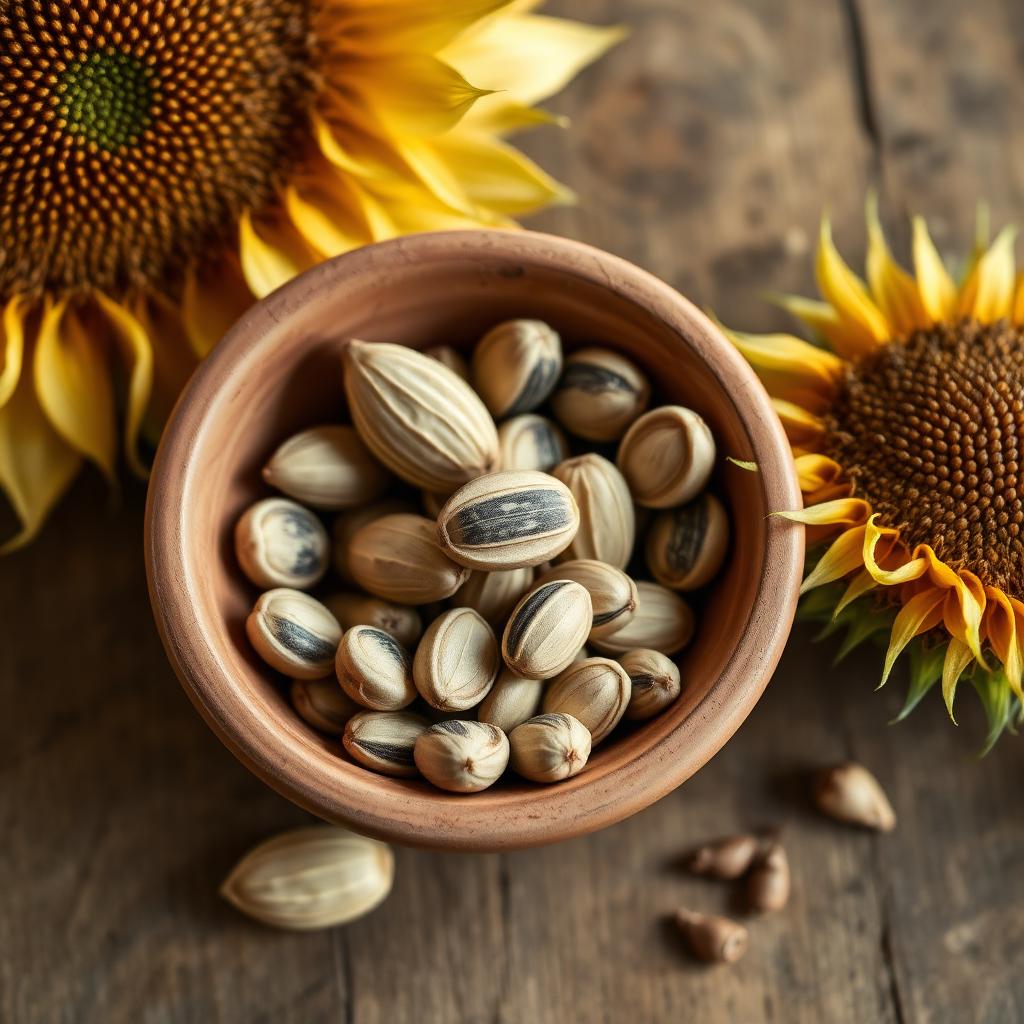
Sunflower seeds are one of the richest food sources of vitamin E. People crack them between their teeth and pass them around by the handful, a relaxed and generous snack across the Middle East, the Mediterranean, and beyond.
Known to botanists as Helianthus annuus.
Chapter 2 of 12
Why It Matters
As we age, vitamin E quietly protects LDL (the harmful type of cholesterol) particles, the skin, and the nervous system. A daily handful of sunflower seeds is one of the cheapest and most enjoyable ways to meet the daily target. It also happens to be the Persian snack most likely to be shared.
For pennies, sunflower seeds put vitamin E, magnesium, phytosterols, and unsaturated fats on the daily table. These are the same nutritional building blocks seen in groups of long-lived Mediterranean and Middle Eastern eaters. The Persian ājeel ritual makes the habit almost automatic.
Vitamin E supports skin, immunity, and antioxidant defenses.
Selenium contributes to thyroid and cell health.
Plant protein and fiber promote satiety (the feeling of being full).
Chapter 3 of 12
What It Contains
Primary compounds
Linoleic acid (omega-6) is the dominant fatty acid, studied for LDL (the harmful type of cholesterol) reduction when it replaces saturated fat.
Phytosterols: plant compounds that competitively inhibit intestinal cholesterol absorption · Magnesium and selenium: mineral scaffolding for nerve, muscle, and thyroid function.
Other Constituents
Phenolic acids (chlorogenic, caffeic) — additional antioxidant capacity in the whole seed.
Vitamins
Thiamin (B1), Folate, Niacin (B3)
Other notable constituents
Minerals: Copper, Manganese, Phosphorus · Protein: ~6 g per 1 oz · Fiber: ~3 g per 1 oz
Chapter 4 of 12
What Studies in People Show
Strong evidence
Replacing dietary saturated fat with linoleic-acid-rich foods (sunflower seeds included) lowers LDL (the harmful type of cholesterol) cholesterol and reduces heart and blood vessel event risk in pooled randomized trials.Strong evidence
Plant sterols/stanols at ~2 g/day lower LDL cholesterol by ~10% — sunflower seeds are a whole-food contributor.Strong evidence
Moderate evidence
Higher habitual nut and seed consumption is linked to lower all-cause and heart and blood vessel mortality in large prospective cohorts.Moderate evidence
Adequate vitamin E status is linked to better skin, immune, and cognitive (to do with thinking and memory) outcomes with aging. Sunflower seeds are among the densest whole-food sources.Moderate evidence
Chapter 5 of 12
Preparation and Kitchen Use
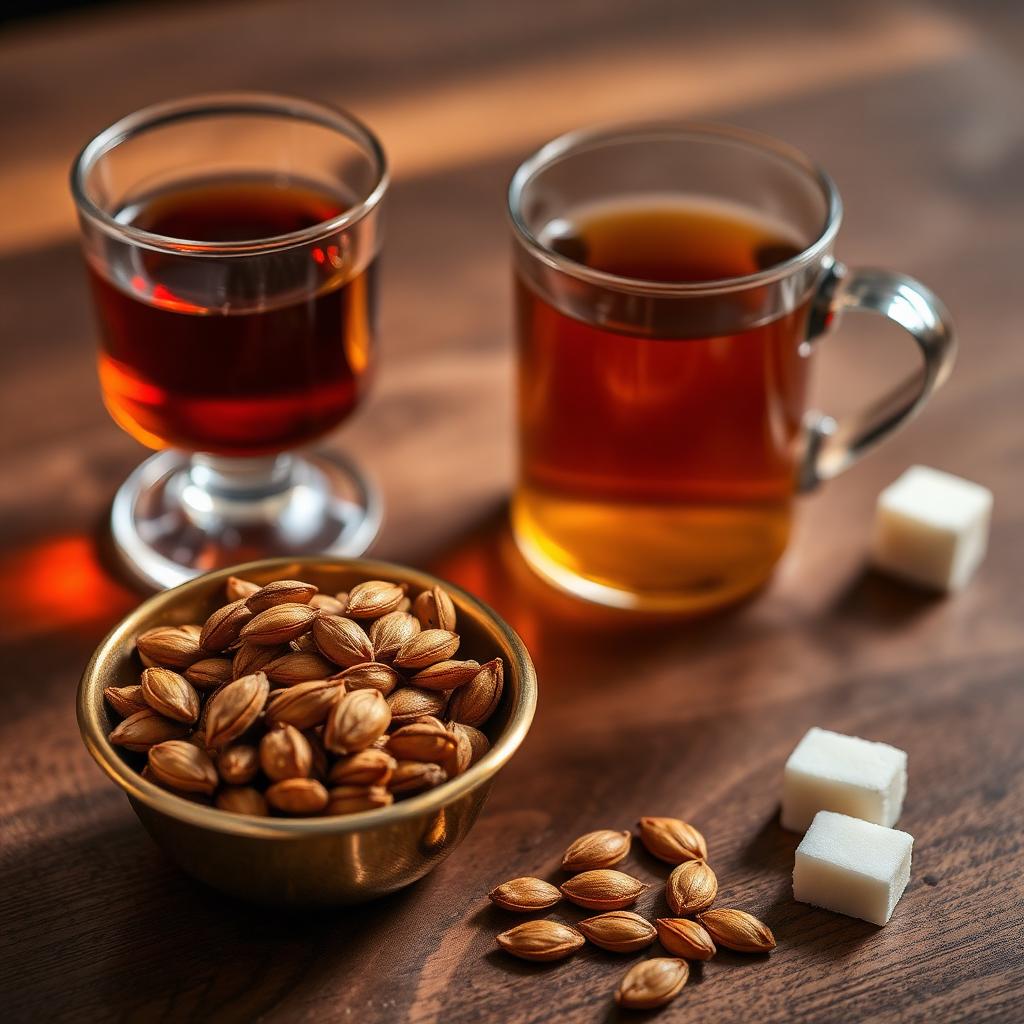
Afternoon tea ritual is a small brass bowl of tokhmeh alongside hot black tea is the classical Persian moment. A morning handful on yogurt or salad is the modern echo.
Buy in the shell for the slower, more satisfying tea-side ritual.
Buy shelled and raw when using in cooking — store cool and dark to protect the fragile oils.
Other Ways to Use It
Toast gently in a dry pan 3–4 minutes just before serving to bloom aroma.
Choose low-salt or unsalted varieties for daily use. Save salted for occasional gatherings.
In the kitchen: snack on shelled or in-shell seeds with tea. Top salads, yogurt, and roasted vegetables.
Blend into sunflower-seed butter as a peanut-free spread.
Stir into granola, energy bars, and trail mix.
Chapter 6 of 12
Medicines and Interactions
Medication interaction:
Warfarin (a blood-thinning medicine) and vitamin K antagonists — Sunflower seeds contain a modest amount of vitamin K. Culinary handfuls are safe if intake stays steady; avoid large sudden increases which can lower INR (the blood test that shows how fast your blood clots). (low concern)
Medication interaction:
Anticoagulants (blood-thinning medicines) and antiplatelets (aspirin, clopidogrel, DOACs) — Vitamin E at very high supplemental doses (>400 IU/day) can mildly increase bleeding risk. Whole seeds at food doses aren't clinically significant. (low concern)
More Interactions to Know
Medication interaction:
Statins and other cholesterol therapy — Phytosterol content is additive and welcome — daily sunflower seeds may modestly enhance LDL (the harmful type of cholesterol) lowering. No dose adjustment needed at culinary intakes. (low concern)
Medication interaction:
Levothyroxine — Selenium at very high supplemental doses can interact with thyroid hormone metabolism; whole seeds at culinary intake aren't a concern. (low concern)
Chapter 7 of 12
Who Should Be Careful
Allergy:
Seed allergies (rare) — avoid the whole family if affected.
General caution:
Salted varieties are high in sodium — choose low-salt or unsalted for daily use.
General caution:
In-shell tokhmeh — cracking with teeth over years may erode enamel; alternate with shelled seeds.
Allergy:
Known sunflower or Asteraceae-family allergy.
Chapter 8 of 12
Pregnancy, Children and Older Adults
Pregnancy and breastfeeding
Pregnancy and breastfeeding:
Culinary handfuls of sunflower seeds — shelled or in-shell — are safe and traditional throughout pregnancy. Their vitamin E, magnesium, and folate quietly support fetal and maternal tissues. Choose unsalted and steady portions.
Children
Children:
Shelled sunflower seeds are a friendly whole-food snack for older children (from about age 4, when the choking risk has passed). In-shell tokhmeh is a shared cultural pleasure best introduced under close supervision. Sunflower-seed butter is an excellent peanut-free spread for younger children.
Older adults
Older adults:
A daily small handful of shelled sunflower seeds after 60 delivers vitamin E, magnesium, and phytosterols — a low-friction way to protect LDL, nerve, and skin health. Choose shelled to spare tooth enamel and denture wear.
Chapter 9 of 12
Traditional Persian Perspective
Persian temperament: Warm & Dry (1st degree). Persian medicine reads tokhmeh as gently warming and drying — grounding for scattered energy and satisfying for the appetite. Pair with cooling tea, cucumber, or yogurt when the constitution runs warm.
Persian households read tokhmeh as warm and dry in the first degree. They offered it when someone's mind felt scattered or their appetite needed steadying after a long day. Families cracked the shells slowly by hand instead of shelling them ahead of time, believing the unhurried rhythm itself calmed a restless spirit. Grandparents and students alike shared it as a home remedy for mild low mood.
Chapter 10 of 12
Traditional Persian Perspective: In the Household
The seed stayed close through cold, damp months, when warming food was thought to counter sluggish digestion and low energy.
It was used: shared with hot black tea as the everyday Persian ājeel ritual. Roasted with a fine dusting of salt and lime for weekend gatherings. Ground into a tahini-style paste as a peanut-free winter spread on bread.
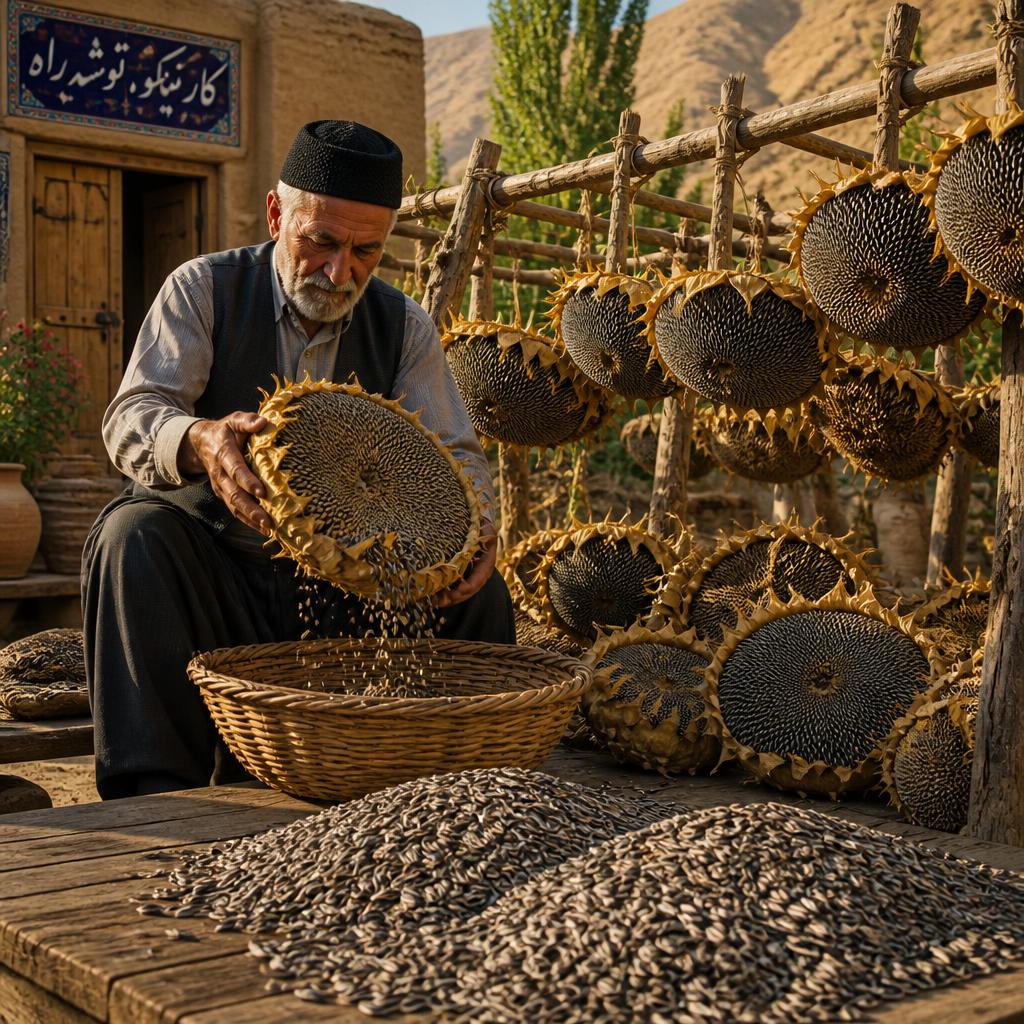
Tokhmeh aftab-gardan may be the most sociable food in Iran. People crack it between their teeth over tea, in parks, on long train rides, and during card games that outlast the sun. Sharing tokhmeh means sharing time itself.
Chapter 11 of 12
Questions People Ask
Are sunflower seeds a good vitamin E source?
Yes — a single ounce delivers roughly half the daily target for adults, more than almonds or hazelnuts.
Is in-shell tokhmeh better than shelled?
Nutritionally they're the same: but the slow ritual of cracking each shell paces the eater, which makes the portion naturally smaller and more satisfying. Alternate to spare tooth enamel.
How much per day?
A small handful (about 1 oz / 28 g) daily is the sweet spot — enough to meet a large share of the vitamin-E target without displacing other whole foods.
Chapter 12 of 12
Sources
Office of Dietary Supplements: nuts & Seeds — US National Institutes of Health (NIH). https://ods.od.nih.gov/factsheets/list-all/.
FoodData Central: uS Department of Agriculture. https://fdc.nal.usda.gov/.