Persian medicine's cool, dry counter-weight to hot, fatty grilled meats.
About 3 g/day of culinary sumac has shown modest blood-sugar and lipid benefits in trials.
Reach for sumac before salt at the table — the tart edge dramatically reduces salt cravings.
What Else to Know
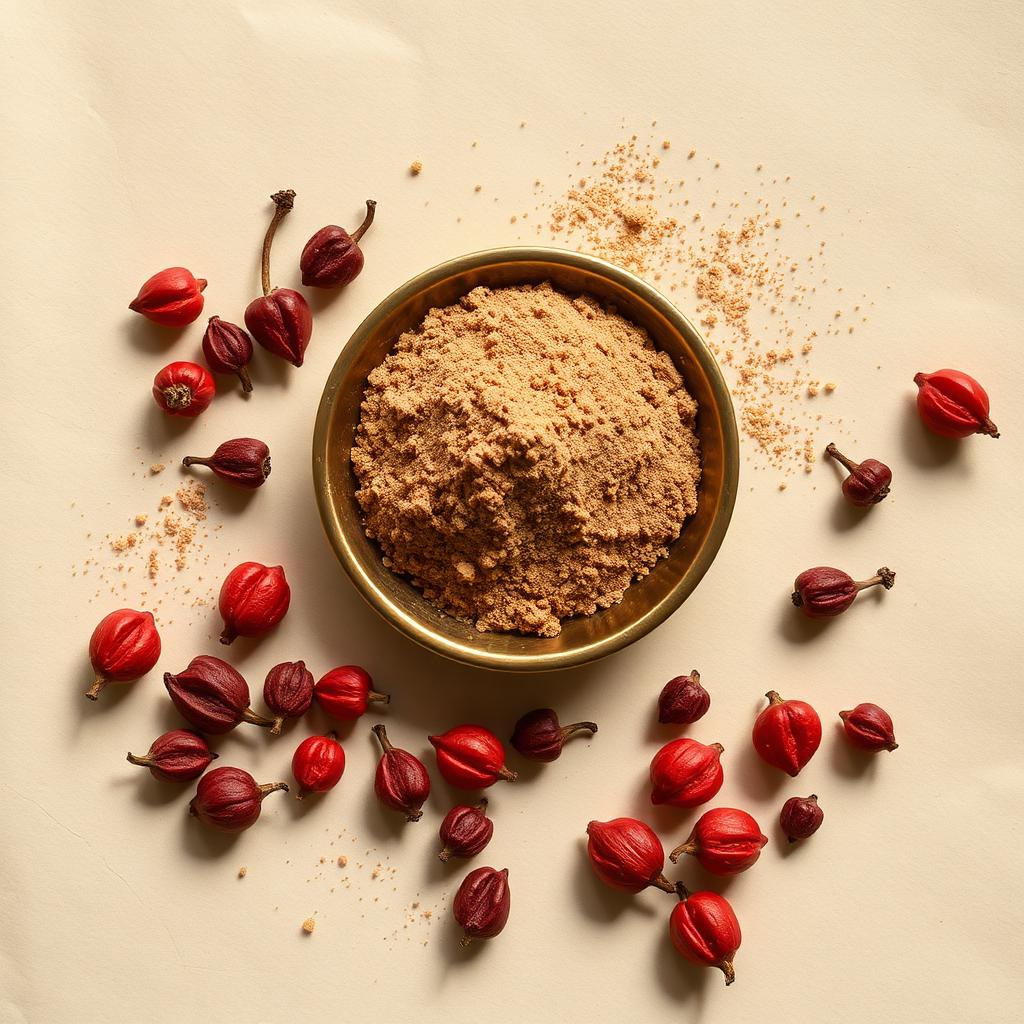
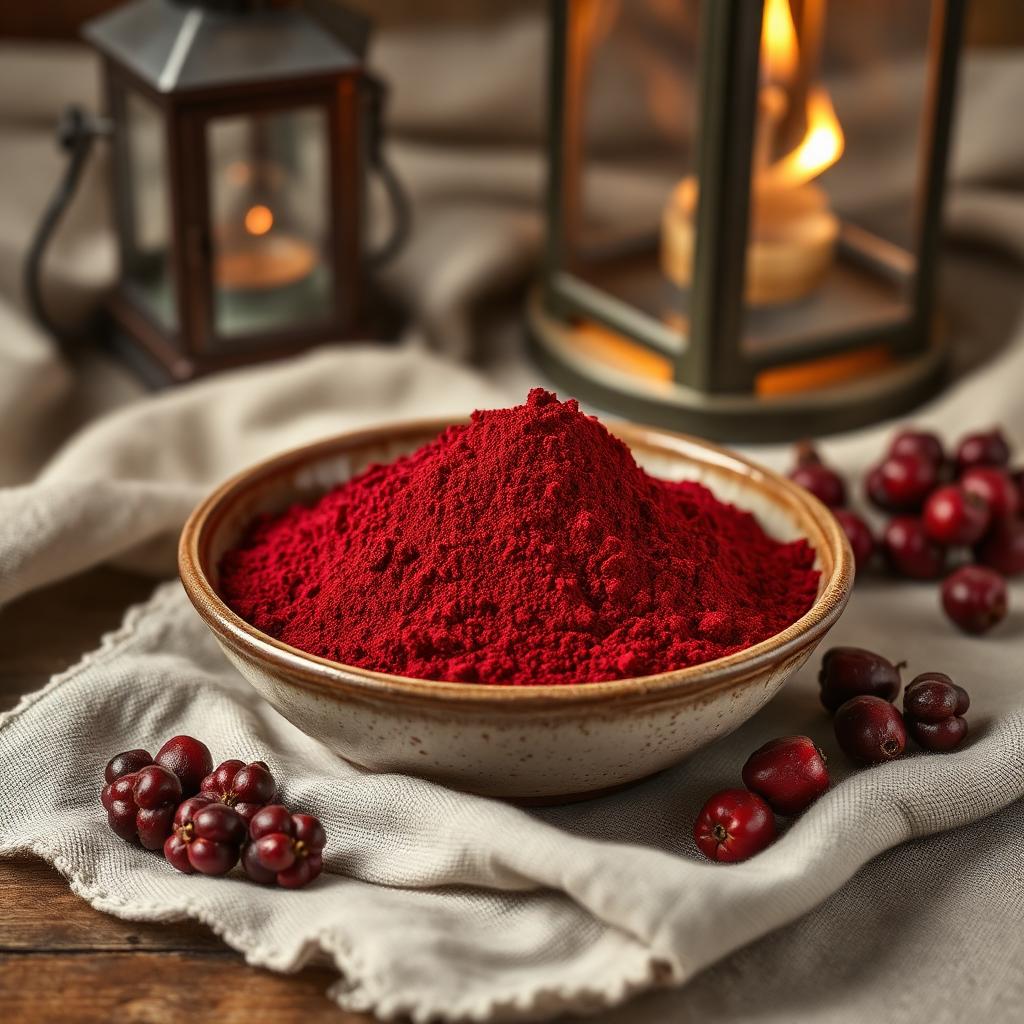
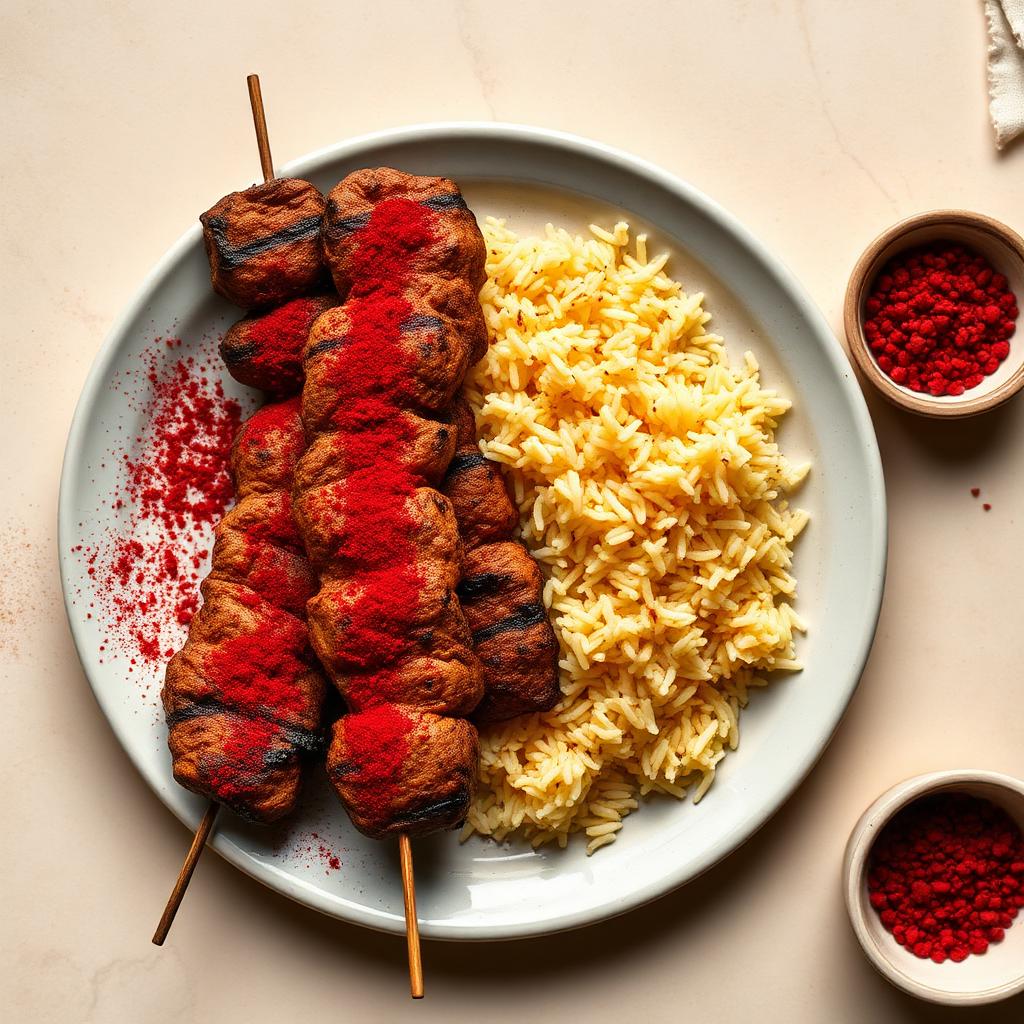
This tangy crimson spice comes from dried sumac berries, and Persians have sprinkled it over kebab and rice for centuries. Modern research is now exploring its antioxidant and blood-sugar effects.
Known to botanists as Rhus coriaria.
Antioxidant tannins (plant compounds that give a dry, puckering taste) and anthocyanins (the natural colour pigments that make fruit red, purple or blue).
Studied for healthy blood-sugar response. Brightens digestion of fatty foods. Cooling counter to warming meats.
Chapter 2 of 14
The Plant Itself
A deciduous shrub or small tree 1–3 m tall with pinnate leaves and dense conical clusters of small reddish-brown drupes. The dried, ground fruit — coated in malic and tartaric acids — is the tart crimson spice. Native to the eastern Mediterranean and grown wild across the Zagros and Anatolian highlands.
Family: Anacardiaceae (cashew family).
Chapter 3 of 14
What Is In It
Primary compounds
Anthocyanins (the natural colour pigments that make fruit red, purple or blue), here cyanidin and delphinidin glycosides, — the ruby color and much of the antioxidant load.
Hydrolysable tannins (plant compounds that give a dry, puckering taste), the gallic acid derivatives, — astringent (tightens tissue and leaves a dry feeling in the mouth), mildly antimicrobial (slows the growth of germs).
Malic and tartaric acids are the tart edge that softens post-meal glucose response.
Flavonoids (quercetin, myricetin) — vascular (relating to the blood vessels) and metabolic support.
Vitamins
Vitamin C (trace)
Other notable constituents
Minerals: Potassium, Calcium
Chapter 4 of 14
In the Laboratory
From laboratory work, not from people taking it
Rhus coriaria polyphenols (protective plant compounds) show antioxidant, antimicrobial (slows the growth of germs), and lipid-lowering activity in preclinical mechanism studies. Rated: early research.
Chapter 5 of 14
What Studies in People Show
What studies in people show
3 g/day sumac powder for 3 months improved fasting glucose, HbA1c (a blood test showing average blood sugar over about three months), and lipid profile in adults with type-2 diabetes (RCT).Moderate evidence
Daily sumac reduced blood pressure and improved lipids in adults with metabolic syndrome (RCT).Moderate evidence
Chapter 6 of 14
How It Is Prepared
Shake generously over the main plate at lunch — the tart edge is most useful when it meets the fat of grilled meat or the starch of rice, right when digestion needs it.
Table seasoning: shake liberally over kebab, rice, eggs, and onions.
Other Ways to Use It
Sumac-onion garnish — soak sliced onions in sumac and lemon 10 min.
Sumac water (āb-e somāq) — steep 1 Tbsp in warm water 15 min, strain, sip before meals.
Sprinkle on kebabs, rice, salads, and hummus.
Use as a tart rim for mocktails.
Chapter 7 of 14
Medicines and Interactions
Medication interaction:
Antidiabetic medication (metformin, sulfonylureas, insulin) — Trials of 3 g/day for 3 months modestly lower fasting glucose and HbA1c — usually additive and gentle at culinary doses, worth monitoring on layered therapy. (low concern)
Medication interaction:
Warfarin (a blood-thinning medicine) / DOACs — Concentrated sumac extracts show mild antiplatelet (medicines that stop blood cells sticking together, such as aspirin) activity in vitro (in laboratory dishes, not in people); culinary use is generally compatible, extracts warrant clinician discussion. (low concern)
Medication interaction:
Antihypertensives — Modest additive blood-pressure lowering reported at daily culinary doses in metabolic-syndrome trials. (low concern)
Chapter 8 of 14
Who Should Be Careful
General caution:
Avoid wild North-American sumac varieties — only culinary Rhus coriaria is safe.
General caution:
Use only culinary Rhus coriaria — never forage wild North-American sumacs.
Allergy:
Rare Anacardiaceae-family allergy (related to cashew and mango).
Chapter 9 of 14
Pregnancy, Children and Older Adults
Pregnancy and breastfeeding
Pregnancy and breastfeeding:
Culinary sumac on kebab, salad, and rice is safe and traditional throughout pregnancy. Concentrated sumac extracts and standardized capsules are reserved for the non-pregnant window given limited safety data.
Children
Children:
Table sumac from around age two, sprinkled lightly — the tart edge is well loved on rice and salad Shirazi. Extracts aren't appropriate for the paediatric body.
Older adults
Older adults:
A daily shake of sumac on kebab, rice, or eggs is one of the lowest-friction ways for older adults to soften the post-meal glucose rise and reduce discretionary salt on the table.
Chapter 10 of 14
What Persian Medicine Says
Persian medicine reads sumac as cool and dry. That's exactly why it sits on the table beside grilled meat rather than in the medicine cabinet. The sour, cooling dust answers the heat of the fire and the richness of kabab and fatty rice, helping the meal suit a hot constitution and a cold one. It was also given for a sluggish, heat-pattern appetite and for loose, hot digestion.
In the Household
People who were already cold and dry were told to go lightly.
Heavy, fatty meals — to balance kebab, lamb, and rich rice.
It was used: hot, irritated liver heat (per classical Persian medicine). Post-meal sugar spikes from white rice and bread.
Shake sumac generously over kebab koobideh and onions, and you have one of the iconic tastes of a Persian table.
Chapter 11 of 14
Traditional Formulas
Kebab-o-somāq is the iconic Persian table pairing — sumac shaken over koobideh kebab to balance its hot, dry, fatty nature.
Salad Shirazi + somāq: cucumber, tomato, onion, lime, and sumac, which is a cooling summer salad with mild glycemic benefit.
Chapter 12 of 14
Questions People Ask
Is culinary sumac the same as the poisonous wild sumac?
No. Culinary sumac is Rhus coriaria — Mediterranean and Middle-Eastern. Poison sumac (Toxicodendron vernix) is a separate North-American species with white berries. Buy from spice shops, never forage unless you can identify it precisely.
Does sumac really help blood sugar?
Small randomized trials in type-2 diabetes have shown 3 g/day of sumac powder for 3 months modestly improves fasting glucose, HbA1c, and lipids — a useful adjunct, never a replacement for medication.
Why is sumac always served with kebab?
Persian medicine balances the hot, dry, fatty nature of grilled meat with sumac's cool, dry, sour nature — both for digestion and to neutralize the heaviness of the meal.
Chapter 13 of 14
Sources
Sad Giah Hezar Darman (صد گیاه و هزار درمان) — One Hundred Plants and One Thousand Remedies — Dr. Hossein Erfani, 4th edition (1375 / 1996–1997). Primary traditional Persian herbal reference cited throughout this platform. Presented as traditional knowledge, not as modern medical proof.
Office of Dietary Supplements: fact Sheets — US National Institutes of Health (NIH). https://ods.od.nih.gov/factsheets/list-all/.
Herbal Database: memorial Sloan Kettering Cancer Center. https://www.mskcc.org/cancer-care/diagnosis-treatment/symptom-management/integrative-medicine/herbs.
Herbs at a Glance: uS NIH National Center for Complementary and Integrative Health (NCCIH). https://www.nccih.nih.gov/health/herbsataglance.
FoodData Central: searchable nutrient database — US Department of Agriculture (USDA). https://fdc.nal.usda.gov/.
Chapter 14 of 14
Sources (continued)
The Nutrition Source: harvard T.H. Chan School of Public Health. https://www.hsph.harvard.edu/nutritionsource/.
PubMed — peer-reviewed biomedical literature — US National Library of Medicine. https://pubmed.ncbi.nlm.nih.gov/