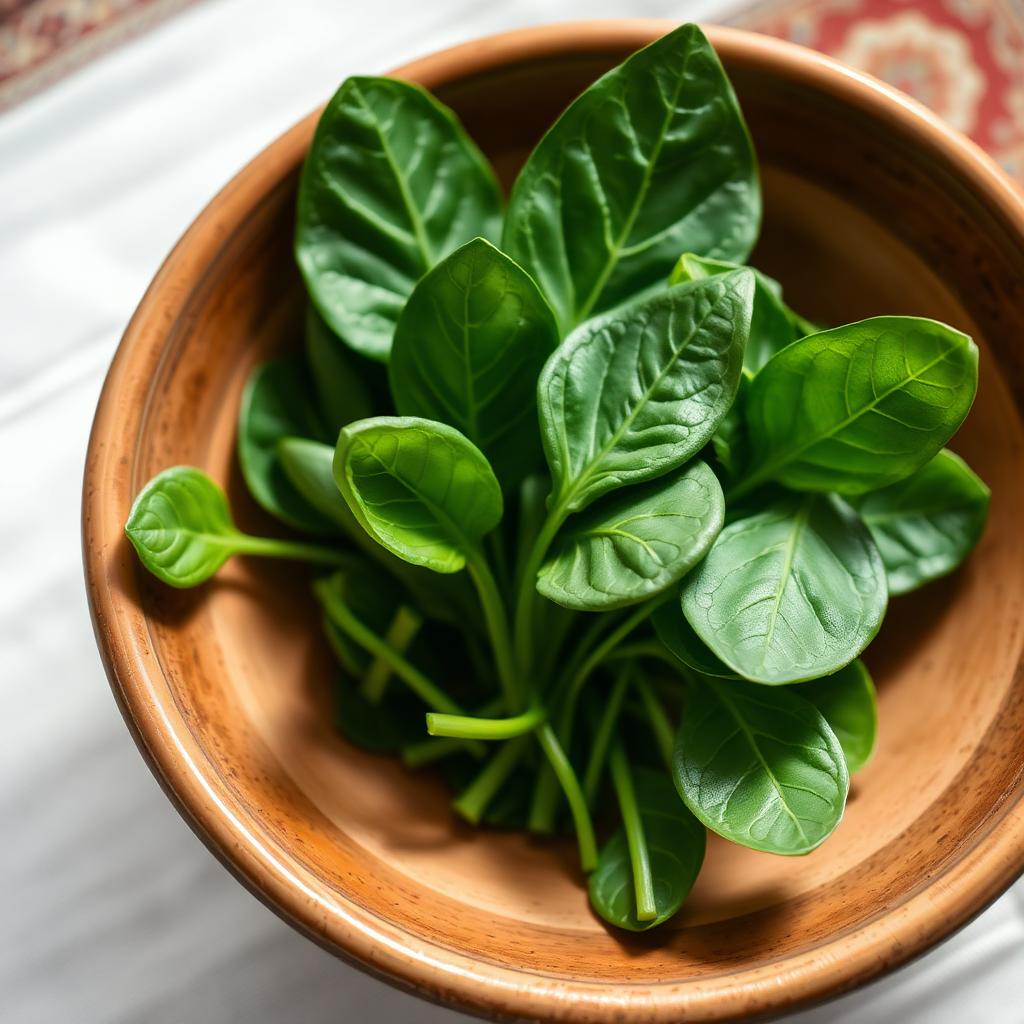
Spinach is one of the densest sources of dietary nitrate, which the body uses to relax blood vessels.
A brief sauté with olive oil and garlic — the Persian way — improves absorption of its fat-soluble vitamins.
Pair it with lemon or another vitamin-C food to get more of its iron.
Spinach is one of the most nutrient-dense leafy greens there's. A small serving covers a meaningful share of your daily magnesium, folate, vitamin K, and the dietary nitrates that support circulation and exercise performance.
Chapter 2 of 10
Why It Matters
Esfenaj is the green that carries the minerals in a Persian meal. Borani, aash, and khoresh-e esfenaj all deliver folate, magnesium, and nitrate in a form people actually eat regularly — and that regularity is what makes a nutrient matter.
Dietary nitrates support healthy blood pressure and stamina.
Folate for heart and blood vessel and reproductive health.
What That Means Day to Day
Lutein (a yellow pigment linked to eye health) and zeaxanthin for eye health.
A large bowl of raw spinach cooks down to a few spoonfuls. That concentration is why cooked spinach delivers far more of everything per mouthful, and why Persian cooking almost always cooks it.
Heat also softens the oxalate-rich leaf and makes iron and calcium somewhat more available, while some vitamin C is lost. Both forms are worth eating. They're simply not interchangeable.
Chapter 3 of 10
What It Contains
Primary compounds
Oxalate (a natural substance in some plants that can add to kidney stones).
Other notable constituents
Minerals: Magnesium, Iron, Potassium, Manganese · Antioxidants: Beta-carotene · Fiber: ~2 g per cooked cup
Chapter 4 of 10
In the Laboratory
From laboratory work, not from people taking it
Nitrate is converted to nitric oxide, which relaxes vascular (relating to the blood vessels) smooth muscle in laboratory models. Rated: early research.
Chapter 5 of 10
What Studies in People Show
What studies in people show
Dietary nitrate from leafy greens lowered systolic blood pressure in randomised trials.Moderate evidence
Higher green leafy vegetable intake was associated with slower cognitive (to do with thinking and memory) decline in older adults.Emerging evidence
Chapter 6 of 10
Preparation and Kitchen Use
With a main meal, cooked and dressed with olive oil — the fat and the lemon both do work.
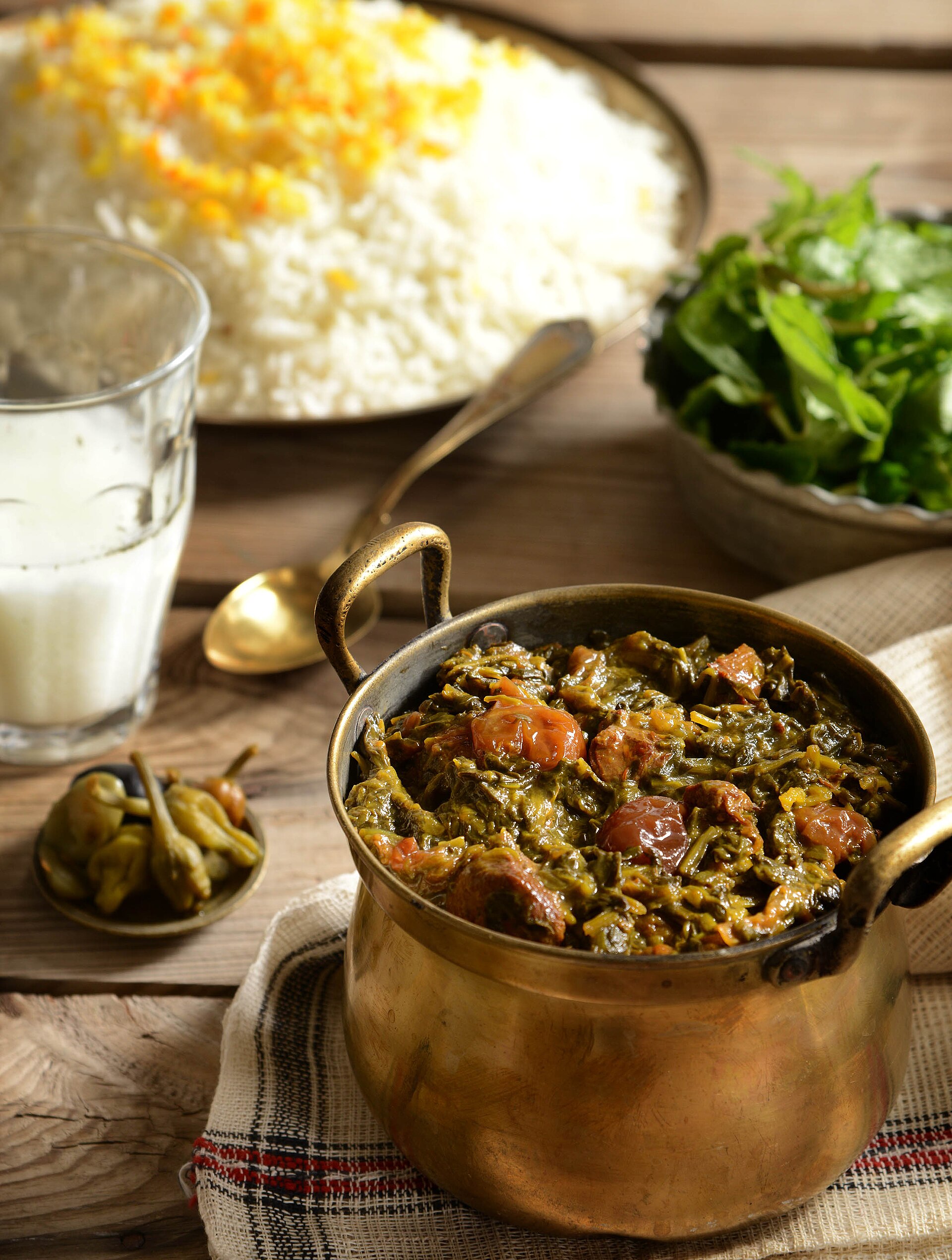
In the kitchen: wilted with garlic and folded into yogurt as borani-ye esfenaj. Simmered into aash and khoresh with prunes or lemon. Sauté quickly with olive oil and garlic.
Use raw in salads with lemon and feta.
Add a handful to smoothies.
In every case it's wilted or fried down first so its water leaves before it joins the dish — spinach added raw to a stew waters it down.
Chapter 7 of 10
Oxalate, Kidney Stones and Blood Thinners
General caution:
Oxalates — those prone to kidney stones may want to vary leafy greens.
General caution:
Iron from plants is less bioavailable; pair with vitamin C.
Medication interaction:
Very high in vitamin K — keep intake steady and speak with your clinician if you take warfarin (a blood-thinning medicine).
Older adults:
Older adults: Soft when cooked and easy to swallow; the folate and magnesium are two of the nutrients most often thin after 70.
Chapter 8 of 10
Traditional Persian Perspective
Persian temperament: Cool & Moist (1st degree). Cooling and softening. Balanced with garlic, olive oil, or cinnamon.
Persian medicine reads esfenaj as cool and moist — cooling, softening, and blood-building. It was given for heat, dryness, and constipation, and cooks traditionally paired it with warming garlic or cinnamon so its cold quality would not weigh on digestion.
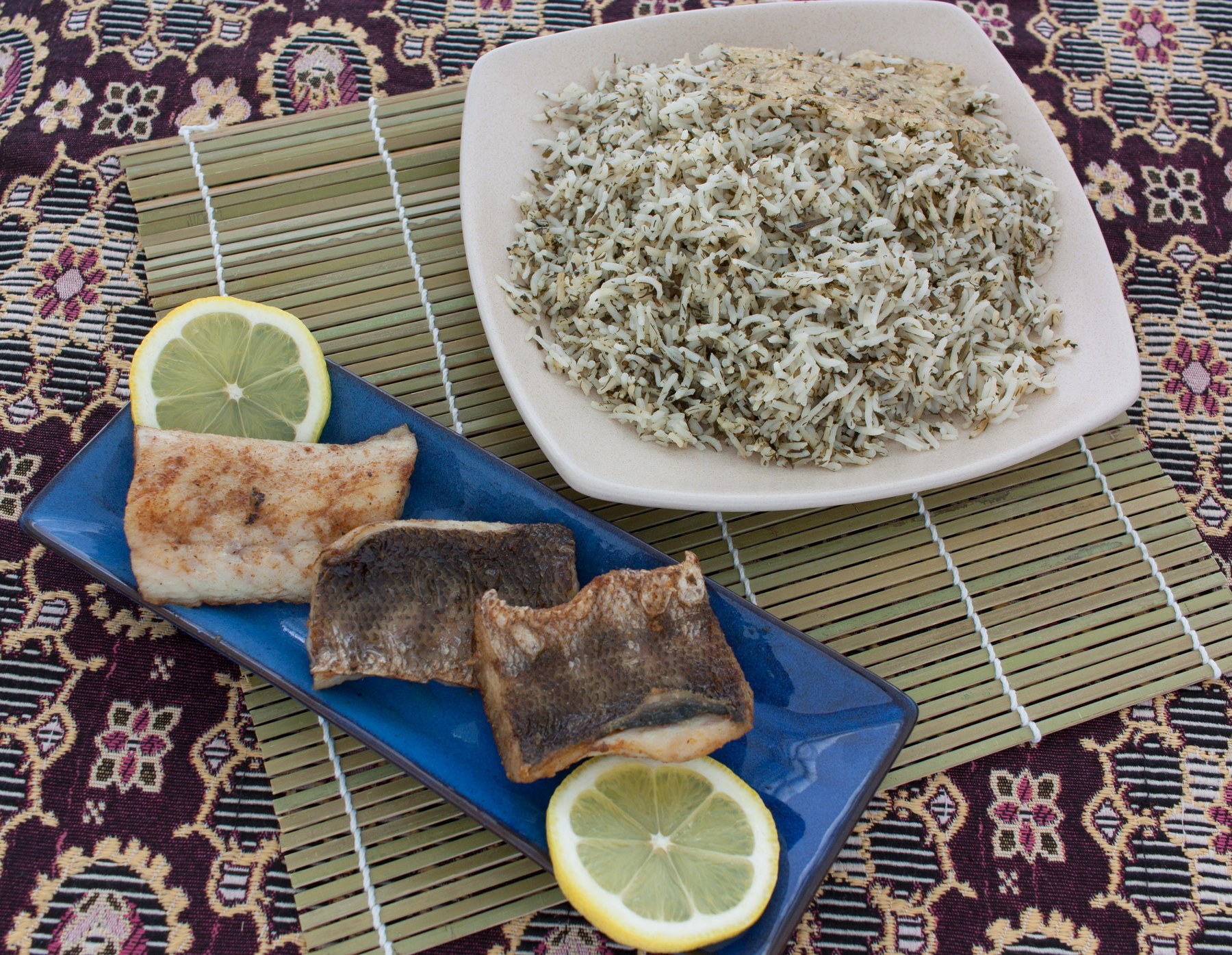
Iranian cooking rarely treats a single leaf as a dish. Spinach usually arrives inside a wider sabzi habit — a table where herbs and greens are eaten daily, in rice, in stews, and raw as sabzi khordan.
That habit, rather than any one leaf, is what a Persian household would call the healthy part.
Chapter 9 of 10
Sources
Sad Giah Hezar Darman (صد گیاه و هزار درمان) — One Hundred Plants and One Thousand Remedies — Dr. Hossein Erfani, 4th edition (1375 / 1996–1997). Primary traditional Persian herbal reference cited throughout this platform. Presented as traditional knowledge, not as modern medical proof.
Office of Dietary Supplements: fact Sheets — US National Institutes of Health (NIH). https://ods.od.nih.gov/factsheets/list-all/.
Herbal Database: memorial Sloan Kettering Cancer Center. https://www.mskcc.org/cancer-care/diagnosis-treatment/symptom-management/integrative-medicine/herbs.
Herbs at a Glance: uS NIH National Center for Complementary and Integrative Health (NCCIH). https://www.nccih.nih.gov/health/herbsataglance.
FoodData Central: searchable nutrient database — US Department of Agriculture (USDA). https://fdc.nal.usda.gov/.
Chapter 10 of 10
Sources (continued)
The Nutrition Source: harvard T.H. Chan School of Public Health. https://www.hsph.harvard.edu/nutritionsource/.
PubMed — peer-reviewed biomedical literature — US National Library of Medicine. https://pubmed.ncbi.nlm.nih.gov/