One of the very few real dietary sources of melatonin — which is why it has been tested in sleep studies.
Its anthocyanins (the natural colour pigments that make fruit red, purple or blue) are among the densest of any common fruit, and several careful trials show less inflammation and soreness after exercise.
Small studies show tart-cherry juice lowers uric acid and reduces how often gout flares come.
Choose unsweetened tart-cherry juice concentrate or whole ālbālu — sweetened 'cherry' drinks are a different product.
Chapter 2 of 13
What Sour Cherry Actually Is
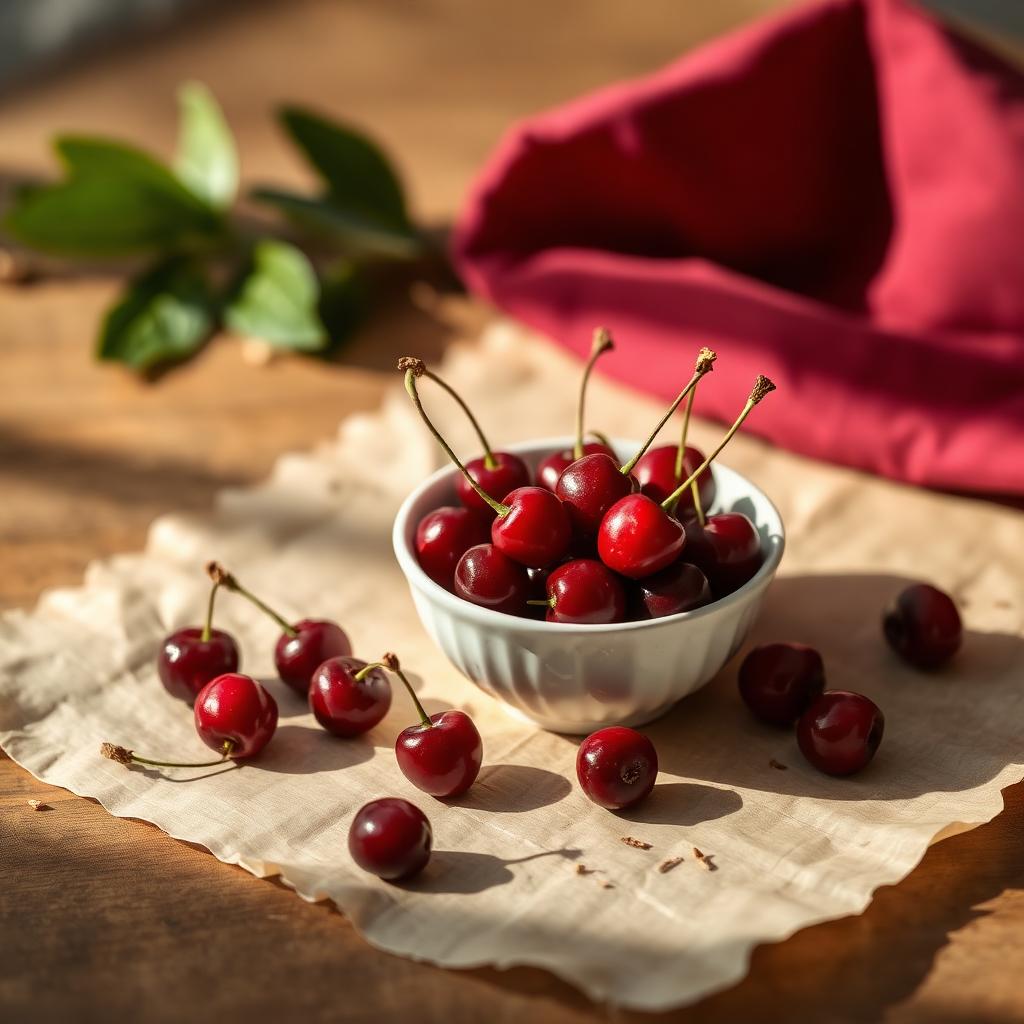
Sour cherry (Prunus cerasus are the Morello, Montmorency, and Persian ālbālu cultivars) is the tart cousin of the sweet cherry, grown across the Iranian plateau and the Caucasus for at least two thousand years. It's the fruit of ālbālu polo (Persia's saffron-rice-and-sour-cherry celebration dish), sharbat-e ālbālu (the classical summer syrup drink), and moraba-ye ālbālu (the deep-crimson breakfast jam). Nutritionally, it stands almost alone as a genuine dietary source of melatonin. Its anthocyanin load (the red-purple pigments in the skin) is also among the highest of any common fruit — which is why a small but consistent body of research has grown around sleep, muscle recovery, and gout.
Chapter 3 of 13
Why It Matters
Deep sleep and low chronic inflammation are two of the most durable drivers of healthy aging, and sour cherry supports both. It does it through natural substances — melatonin and anthocyanins — that scientists understand unusually well for a common food, in a Persian ingredient that already sits at the celebration table.
Sour cherry sits right where the three things that quietly matter after 60 meet. There's sleep quality (the body's own melatonin falls with age, and ālbālu is one of the few real food sources of it), joint and gout inflammation (where its dense anthocyanin pigments help), and heart and blood-vessel tone (potassium and protective plant compounds in a fruit that barely nudges blood sugar). It's one of the most rewarding evening habits on the Persian shelf.
Anthocyanins (cyanidin-3-glucosylrutinoside, cyanidin-3-rutinoside) reduce exercise-induced inflammation and muscle soreness.
Small studies show a meaningful drop in uric acid in the blood and fewer gout attacks.
Small improvements in blood pressure and blood fats reported with daily tart-cherry juice.
Chapter 4 of 13
What It Contains
Primary compounds
Melatonin (~13 ng/g in Montmorello concentrate) — one of the very few real dietary sources. The mechanism behind the sleep-quality trials.
Anthocyanins (cyanidin-3-glucosylrutinoside, cyanidin-3-rutinoside) — among the densest of any common fruit. The mechanism behind the anti-inflammatory and gout evidence.
Quercetin (a plant compound found in onions, apples and tea) and chlorogenic acid — polyphenols (protective plant compounds) contributing to vascular (relating to the blood vessels) and metabolic effects.
Other Constituents
Potassium and vitamin C.
Amygdalin (in kernels only) — the reason pits are discarded, never crushed.
Other notable constituents
Minerals: Manganese, Copper · Fiber: ~2 g per cup fresh
Chapter 5 of 13
What Studies in People Show
Moderate evidence
Tart-cherry juice (240 mL twice daily) improved sleep duration and quality in older adults with insomnia in a placebo-controlled (compared against a dummy treatment) trial.Moderate evidence
Tart-cherry supplementation reduced exercise-induced muscle damage and soreness across multiple randomised trials — meta-analysis (a study that pools the results of many trials) of 10 studies.Moderate evidence
Cherry consumption was associated with a 35% reduction in the risk of recurrent gout attacks in a case-crossover study of 633 gout patients.Moderate evidence
Early research
Tart-cherry concentrate acutely lowered serum uric acid and inflammation markers in healthy adults.Emerging evidence
Chapter 6 of 13
Using It in the Kitchen
Stir 1–2 Tbsp of sharbat-e ālbālu syrup into cold water with ice on a hot afternoon.
Fresh is pitted, folded raw into salads and grain bowls.
Frozen or dried is the year-round base for ālbālu polo and oatmeal.
Sharbat is cooked into a concentrated syrup with sugar and lemon.
Simmer with a little sugar into moraba-ye ālbālu for the breakfast table.
Drink 8–12 oz unsweetened tart-cherry juice (or 1–2 Tbsp concentrate in water) about 1 hour before bed for the sleep and soreness protocols.
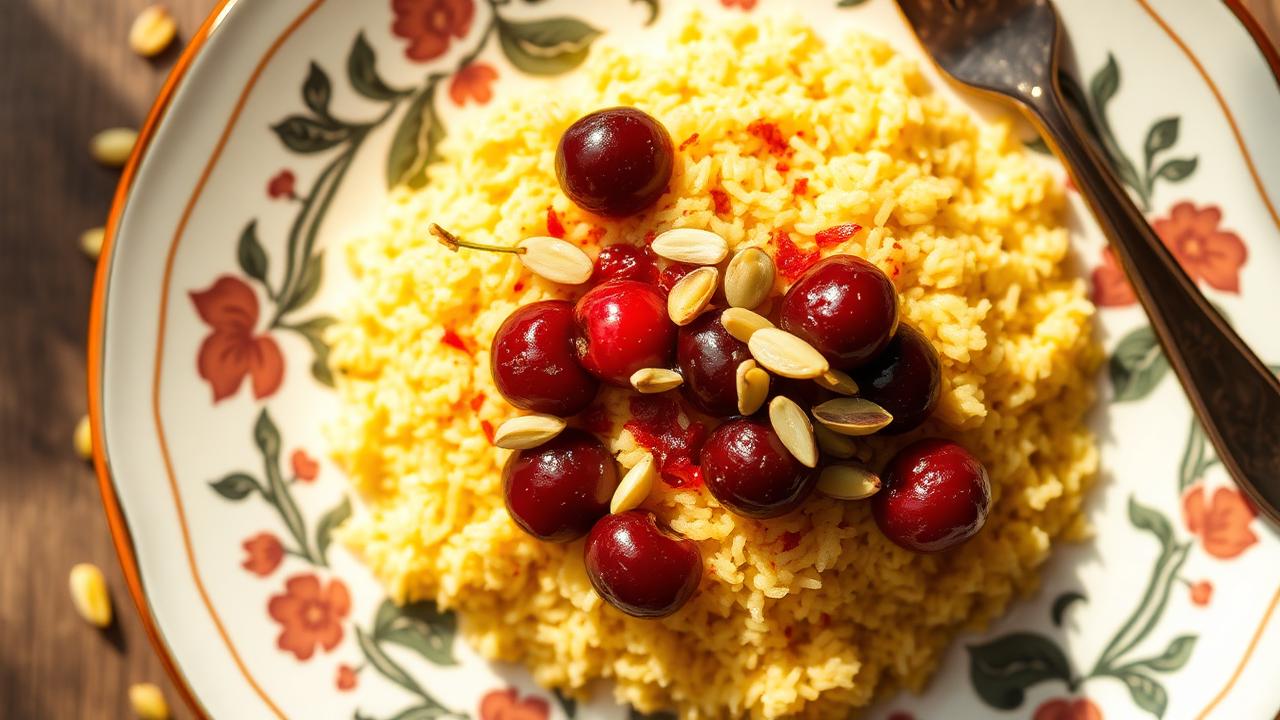
Fold pitted fresh or frozen ālbālu through saffron-basmati for ālbālu polo.
Toss dried tart cherries into oatmeal, grain bowls, and salads for a sweetness that's gentle on blood sugar.
Chapter 7 of 13
Medicines and Interactions
Medication interaction:
Sedatives (medicines that make you sleepy), benzodiazepines, sleep medication — Tart-cherry juice contributes measurable melatonin and can additively deepen sedation. Not a concern at food-scale sharbat or fruit servings, but an evening juice-concentrate protocol layered on prescribed sleep medication should be discussed with the prescriber. (low concern)
General caution:
Uric-acid-lowering therapy (allopurinol, febuxostat) — Tart cherry lowers serum uric acid in small trials — additive with pharmacotherapy at a gentle, food-scale level. In active gout care, discuss combining daily concentrate with prescribed therapy. (low concern)
More Interactions to Know
Medication interaction:
Warfarin (a blood-thinning medicine) / DOACs — Concentrated tart-cherry supplements show mild antiplatelet (medicines that stop blood cells sticking together, such as aspirin) direction; culinary intake at ordinary daily portions is compatible with anticoagulation. Discontinue concentrated supplements 1–2 weeks before elective surgery. (low concern)
Medication interaction:
Antihypertensives — Daily tart-cherry juice modestly lowers systolic blood pressure in small RCTs — additive with prescribed therapy at a gentle level. (low concern)
Chapter 8 of 13
Who Should Be Careful
General caution:
Advanced kidney disease with strict potassium restriction — sour cherry contributes potassium; discuss portions with the renal team.
General caution:
Pits (kernels) contain amygdalin — never crush and consume; discard pits carefully.
General caution:
The juice is acidic — rinse the mouth after drinking to protect enamel.
General caution:
Sweetened cherry drinks aren't the same product — the trial data uses tart-cherry juice concentrate, not sugar-added blends.
General caution:
Sorbitol content in large amounts can loosen the bowel — moderate portions.
General caution:
Sulphite-preserved dried tart cherries in sulphite-sensitive asthma.
Chapter 9 of 13
Pregnancy, Children and Older Adults
Pregnancy and breastfeeding
Pregnancy and breastfeeding:
Culinary sour cherry — ālbālu polo, moraba-ye ālbālu, moderate glasses of sharbat-e ālbālu — is safe and traditional throughout pregnancy, and the anti-inflammatory anthocyanin (the natural colour pigments that make fruit red, purple or blue) profile is a useful addition to a hot-summer pregnancy diet. Concentrated tart-cherry supplements with a defined melatonin claim are reserved for the non-pregnant window given limited pregnancy safety data on supplemental melatonin.
Children
Children:
Cooked, pitted ālbālu in polo, moraba, or sharbat is a normal Persian family food from around age 2; use lightly sweetened sharbat for younger children. Concentrated melatonin-containing tart-cherry supplements aren't appropriate for children outside paediatric care. Whole fresh cherries are a choking risk for children under 4 and must be pitted and halved.
Older adults
Older adults:
Among the most useful evening habits after 60: a small glass of unsweetened tart-cherry juice about an hour before bed contributes real melatonin at exactly the age when endogenous melatonin quietly falls. Anthocyanin (the natural colour pigments that make fruit red, purple or blue) support for joint inflammation and gout flares stacks well with a Mediterranean pattern. Sugar load matters — choose unsweetened juice or the fresh/frozen fruit over heavily sweetened sharbat concentrates.
Chapter 10 of 13
Traditional Persian Perspective
Persian temperament: Cool & Dry (2nd degree). Persian medicine reads ālbālu as cool and dry — a summer fruit for warm constitutions, cooling the liver, refreshing the blood, calming a hot heart, and quenching thirst. Sharbat-e ālbālu is the classical hot-mizaj summer drink.
It was used: restless, hot-pattern insomnia (aligning with modern melatonin data). Post-exertion fatigue and heat recovery.
Chapter 11 of 13
In Persian Life
Ālbālu polo — saffron-scented basmati folded with sour cherries, slivered pistachios, and rose — is the signature Persian celebration rice, served at weddings and Nowruz across Iran. Sharbat-e ālbālu, poured over crushed ice and topped with cold water, is the Persian summer drink. And moraba-ye ālbālu sits on the breakfast table beside walnut and feta from spring right through winter.
Chapter 12 of 13
Sources
Tart cherry juice and sleep quality in older adults — RCT — American Journal of Therapeutics (PubMed). https://pubmed.ncbi.nlm.nih.gov/28158980/
Tart cherry and exercise recovery: meta-analysis — Sports Medicine (PubMed). https://pubmed.ncbi.nlm.nih.gov/31230668/.
Sad Giah Hezar Darman (صد گیاه و هزار درمان) — One Hundred Plants and One Thousand Remedies — Dr. Hossein Erfani, 4th edition (1375 / 1996–1997). Primary traditional Persian herbal reference cited throughout this platform. Presented as traditional knowledge, not as modern medical proof.
Office of Dietary Supplements: fact Sheets — US National Institutes of Health (NIH). https://ods.od.nih.gov/factsheets/list-all/.
Herbal Database: memorial Sloan Kettering Cancer Center. https://www.mskcc.org/cancer-care/diagnosis-treatment/symptom-management/integrative-medicine/herbs.
Chapter 13 of 13
Sources (continued)
Herbs at a Glance: uS NIH National Center for Complementary and Integrative Health (NCCIH). https://www.nccih.nih.gov/health/herbsataglance.
FoodData Central: searchable nutrient database — US Department of Agriculture (USDA). https://fdc.nal.usda.gov/.
The Nutrition Source: harvard T.H. Chan School of Public Health. https://www.hsph.harvard.edu/nutritionsource/.
PubMed — peer-reviewed biomedical literature — US National Library of Medicine. https://pubmed.ncbi.nlm.nih.gov/