So rich in pectin (a soft fibre in fruit that thickens jam) it sets on its own.
Sour, and low in sugar for a berry. Milder in aroma than blackcurrant.
Pectin (a soft fibre in fruit that thickens jam) is a soluble fibre. The quality that helps it set jelly is also what makes this fibre useful in the gut.
Soluble fibre supports both the gut and cholesterol. Redcurrants give you that fibre with very little sugar, which is a useful combination later in life.
Sharp flavour that lifts sweeter food without added sugar.
What Else to Know
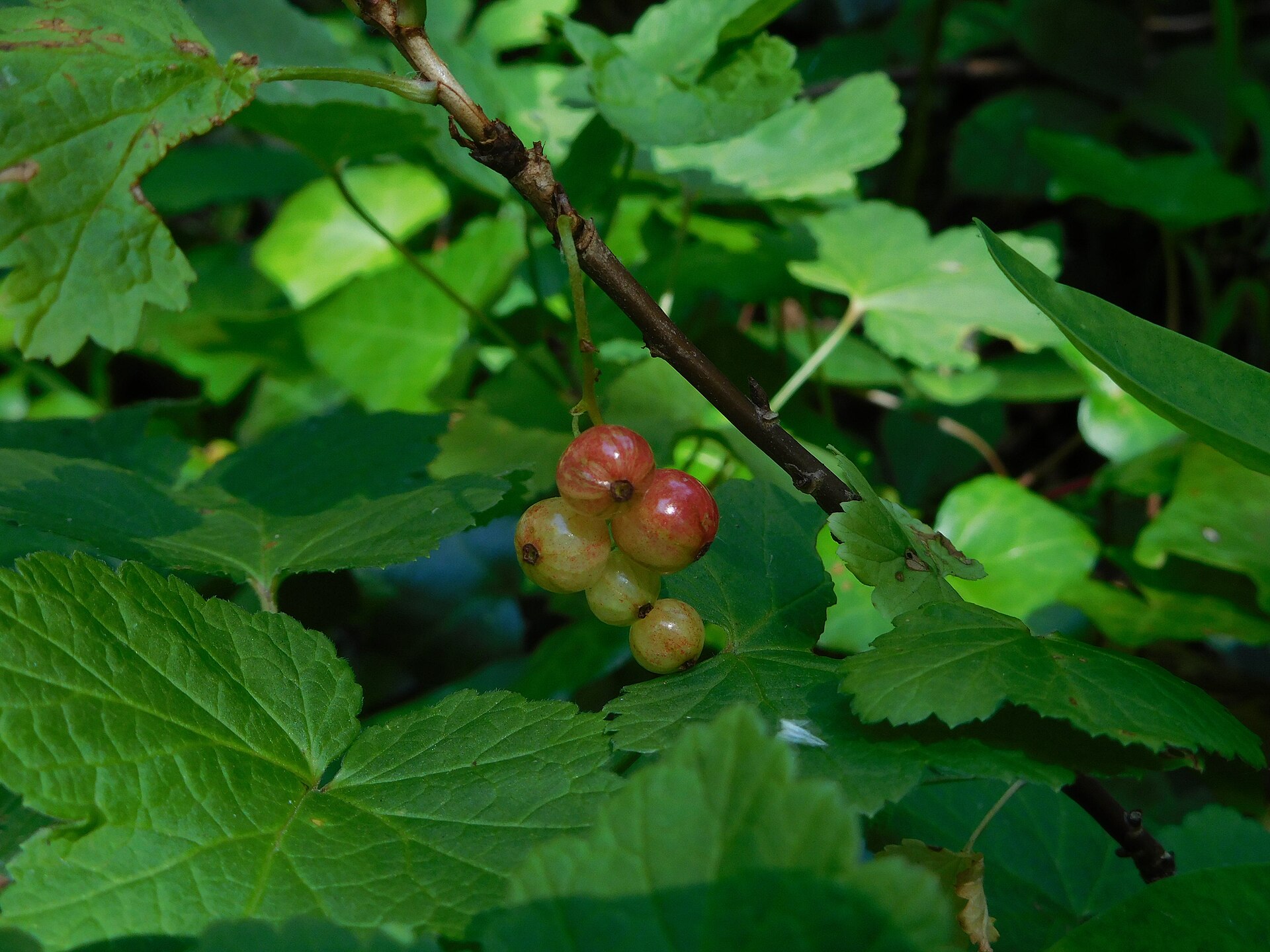
Redcurrants hang in glassy scarlet strings, each berry so clear you can see the tiny seeds inside. They grow on a low bush that lacks the strong scent of the blackcurrant. A ripe string looks like a row of small red beads.
Family: Grossulariaceae (currant family).
Chapter 2 of 11
What It Contains
Primary compounds
Vitamin C.
Anthocyanins (the natural colour pigments that make fruit red, purple or blue).
Organic acids.
Other notable constituents
Minerals: Potassium, Manganese, Iron · Antioxidants: Ellagic acid, Quercetin (a plant compound found in onions, apples and tea)
Chapter 3 of 11
What Studies in People Show
What studies in people show
Anthocyanin-rich berry intake is linked with improved vascular (relating to the blood vessels) measures in trials of modest size.Emerging evidence
Chapter 4 of 11
Preparation and Kitchen Use
Run a fork down each string to free the berries.
Simmer with water and strain through cloth for a clear jelly.
Freeze whole on the string. They keep their shape.
In the kitchen: strip the strings and cook into a clear jelly. Raw, a few at a time, over cream or yogurt. As a sour note in a salad with walnut. Freeze on the string, then shake the berries off.
Chapter 5 of 11
Medicines and Interactions
Medication interaction:
Warfarin — Redcurrants carry a little vitamin K. Consistency in how much you eat matters more than avoidance. (low concern)
Medication interaction:
Blood pressure medication — Ordinary portions are irrelevant; a litre of juice a day isn't. Keep the amount sensible. (low concern)
Chapter 6 of 11
Who Should Be Careful
General caution:
Most redcurrant products are jellies with a great deal of sugar.
General caution:
Wash well; they are grown low to the ground.
Allergy:
Rare allergy within the currant family.
General caution:
Very sour — may aggravate reflux (stomach acid rising into the throat) in quantity.
Chapter 7 of 11
Pregnancy, Children and Older Adults
Pregnancy and breastfeeding
Pregnancy and breastfeeding:
Safe as food and useful for iron absorption when eaten alongside beans, lentils, or greens. Wash the bunches thoroughly before stripping the fruit.
Children
Children:
Small, soft, and easy for children to strip off the stalk themselves, which is often the reason they eat them at all. Sour enough that most need a spoon of yogurt with them.
Older adults
Older adults:
Soft skins and no chewing effort, so they suit anyone whose teeth aren't what they were. The sourness helps a flat appetite.
Chapter 8 of 11
Traditional Uses in Europe and Persia
Persian temperament: Cool & Dry (1st degree). Sour and cooling. Given for thirst and a heated stomach, held back from cold and weak digestions.
European kitchen practice treated redcurrant as cooling and thirst-quenching, and people gave it for fever and a heated stomach. Persian medicine reads sour red fruits much the same way: cool, drying, and useful when the body feels hot.
In the Household
Traditionally made into cooling drinks during fever.
Used in the kitchen to set jams from low-pectin (a soft fibre in fruit that thickens jam) fruit.
Redcurrant jelly is one of Europe's oldest preserves, and the fruit still marks midsummer in northern gardens. People traditionally hang the strings over cake or set them in a summer pudding as much for their colour as their taste.
Chapter 9 of 11
What It Goes With
Dairy:
Yogurt
Strip the berries off the stalk straight into the bowl. The colour bleeds and the bowl looks better than the effort deserves.
Honey:
Honey
Sour fruit takes honey better than sugar, and less of it.
Pairing:
Walnut
Oil against acid. This is the same logic Persian cooks use in fesenjan, at a much smaller scale.
Grain:
Rice
Scattered over rice they behave like barberries, though sweeter and softer.
Chapter 10 of 11
Through the Year
Spring:
Spring
Flowering. Nothing to pick, and nothing worth buying.
Summer:
Summer
The whole season is a few weeks in midsummer. Pick or buy then and freeze what you can't eat.
Autumn:
Autumn
Over. Frozen fruit from the summer is genuinely as good for cooking.
Winter:
Winter
Out of season, except from the freezer.
Chapter 11 of 11
Sources
Ribes fruits: composition and antioxidant capacity — Food Chemistry. https://pubmed.ncbi.nlm.nih.gov/26041199/
Soluble fibre and cholesterol reduction: american Journal of Clinical Nutrition. https://pubmed.ncbi.nlm.nih.gov/10479204/.