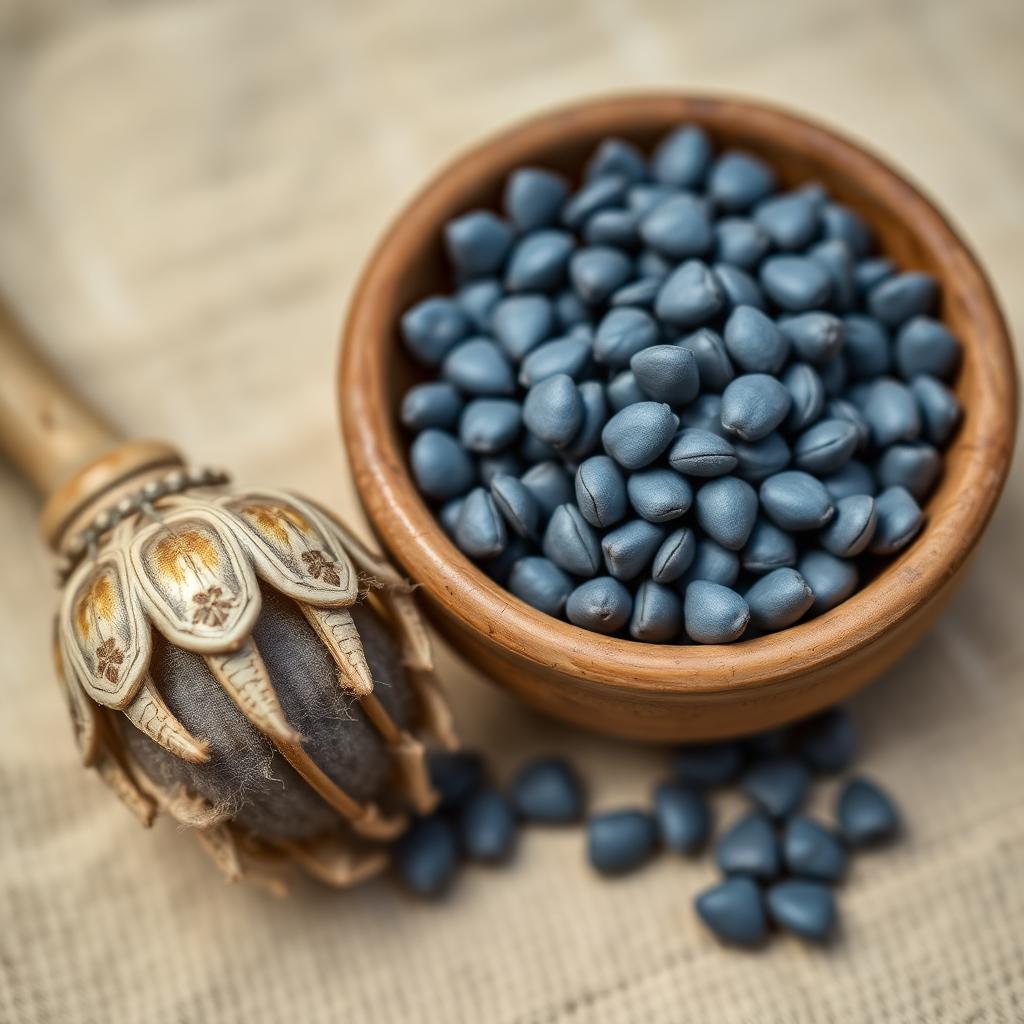
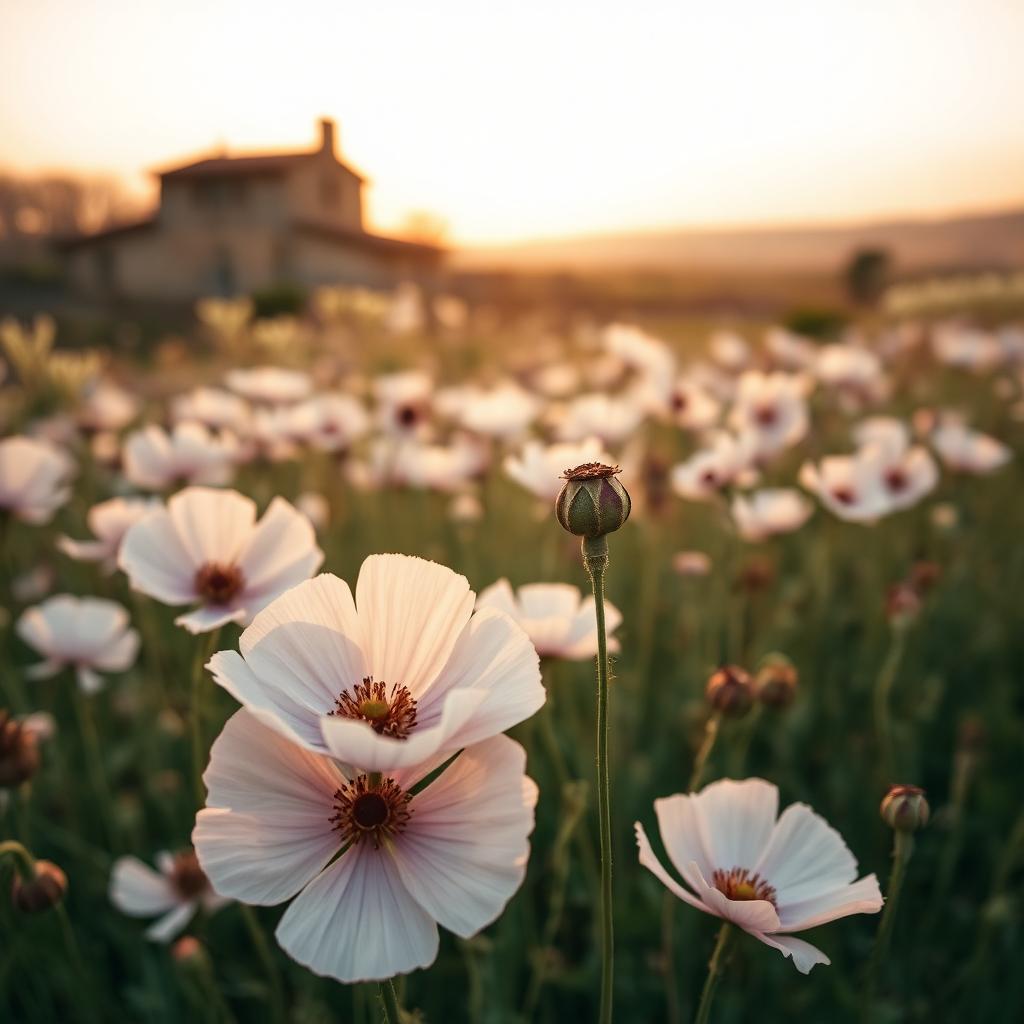
The seed is culinary — the alkaloid-bearing latex is in the unripe pod.
One of the densest plant sources of calcium and magnesium per gram — meaningful on a slice of bread.
The one real safety rule is the opiate drug test — culinary intake can produce a positive urine result for 24–48 hours.
Rinsing unwashed commercial seed lowers the trace morphine and codeine left on it by processing dust — but doesn't remove them completely.
Chapter 2 of 16
Getting to Know Poppy Seed
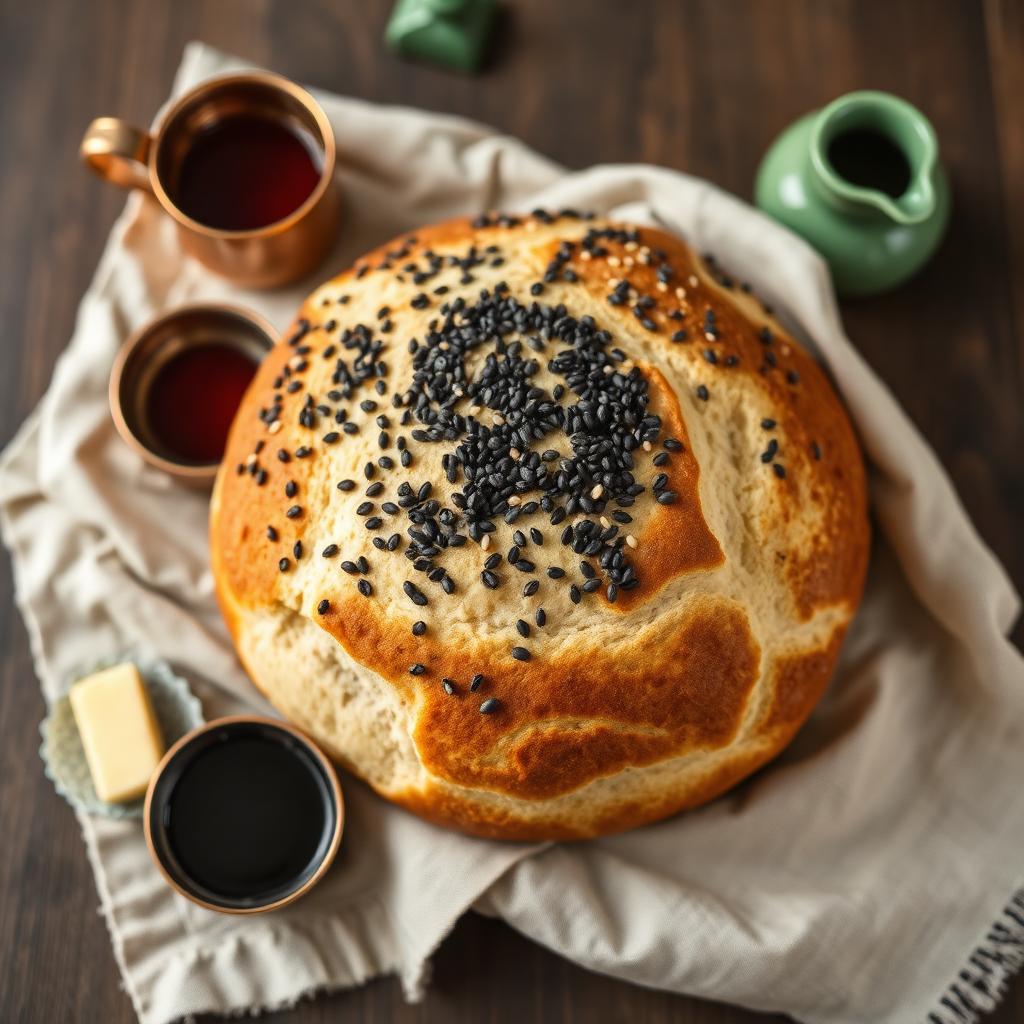
Poppy seeds — khashkhāsh — are the mature seeds of Papaver somniferum, the same plant that produces opium latex from its unripe capsule. The seeds themselves hold only trace alkaloids (strong plant compounds that act on the body even in small amounts) and are everyday food across Persia, the Levant, Central Europe, and India. A tablespoon (9 g) gives you roughly 120 mg of calcium, 30 mg of magnesium, and 5 g of the seed's characteristic linoleic/oleic-rich oil. Persian bakers scatter them over barbari and sangak in the classic seed-and-sesame pattern. The same seed goes into halva, over yogurt for evening calm, and into cardamom-sweetened Central-European pastries.
Chapter 3 of 16
Why It Matters
Poppy seed brings three quiet things to the Persian table: calcium and magnesium for bones, a gentle evening ritual (traditional pre-sleep spoon in yogurt), and the seeded bread crust at the heart of breakfast. The regulatory detail is real but simple. Follow one household rule (pause before opiate testing), and the seed stays exactly where it belongs.
After 50, poppy seed can support three quiet needs: plant calcium density (bone maintenance for older adults reducing dairy), evening calm (magnesium + tryptophan-yogurt ritual), and a stable linoleic-rich oil that fits the Mediterranean-plus-Persian eating pattern rewarded in longevity data. Keep one household rule in mind — a 72-hour pause before opiate testing — and the seed stays exactly where it belongs.
Magnesium supports blood vessels, sleep quality, and calm muscles and nerves.
B vitamins support steady energy metabolism.
The seed's oil oxidises less readily than flax or chia — a stable topping in the pantry.
Chapter 4 of 16
What It Contains
Primary compounds
Calcium (~120 mg per Tbsp) and phosphorus — an unusual mineral density for a small seed.
Magnesium (~30 mg per Tbsp): cofactor for GABA/NMDA balance and vascular (relating to the blood vessels) tone.
Linoleic (ω-6) and oleic (ω-9) acids — the seed is ~45–50% oil by weight.
Other Constituents
Trace morphine and codeine is a fraction of what the pod's latex carries, but non-zero on unwashed commercial seed, and the reason for the drug-test caution.
B vitamins (thiamin, folate) and manganese — supportive of nerve and enzyme function. Polyphenols (protective plant compounds) and tocopherols — contribute the seed's oxidative stability and gentle antioxidant profile.
Vitamins
Riboflavin (B2), Vitamin E
Other notable constituents
Minerals: Iron, Zinc, Copper
Chapter 5 of 16
What Studies in People Show
What studies in people show
Culinary poppy-seed intake produces detectable urine morphine and codeine for 24–48 hours after consumption, with concentrations high enough to exceed workplace opiate screening cutoffs.Moderate evidence
Washing/rinsing commercial poppy seed with cool water before eating it lowers — but doesn't eliminate — the morphine and codeine on the seed.Moderate evidence
Concentrated unwashed poppy-seed tea (as distinct from culinary seed) has caused fatal opioid overdoses. The US FDA has issued repeated public safety warnings.Moderate evidence
Poppy-seed oil (linoleic-rich vegetable oil) fits within heart and blood vessel dietary-fat guidance for replacement of saturated fat, in line with other high-linoleic seed oils.Moderate evidence
Chapter 6 of 16
Preparation and Kitchen Use
Rinse commercial seed in a fine sieve under cool water, then pat dry, to lower residual alkaloid (strong plant compounds that act on the body even in small amounts) load from processing dust.
Grind fresh in a small spice mill just before use — the whole seed is stable in the pantry but the ground seed oxidises within days.
Toast briefly (30–60 seconds) in a dry pan to bloom the aroma before folding into halva or pastries.
Keep cold-pressed poppy-seed oil refrigerated. Use within 3 months of opening.
Dust the top of freshly-shaped barbari or sangak dough with poppy + sesame in the classical striped pattern before baking.
Other Ways to Use It
Stir 1 tsp into a small evening bowl of strained yogurt with a teaspoon of honey — the household pre-sleep spoon.
Grind fresh with a little sugar and cardamom for halva-ye khashkhāsh or makowiec-style filling.
Top morning noodles, salads, and roasted vegetables with a pinch for calcium and crunch.
Rinse commercial unwashed seed under cool water in a fine sieve if concentrated intake is planned before an opiate drug test window.
Chapter 7 of 16
Medicines and Interactions
Medication interaction:
Opiate drug screens (workplace, athletic, forensic, methadone-programme urine testing) — Culinary poppy-seed intake reliably produces detectable urine morphine (and often codeine) for 24–48 hours after eating a seeded bread, halva, or pastry. This is the single real interaction of the food. Pause for 72 hours before any regulated opiate screen; document poppy-seed consumption if a positive result appears. (moderate concern)
Medication interaction:
Opioid analgesics, benzodiazepines, alcohol, other CNS depressants — Culinary seed carries no clinically meaningful CNS depressant load. Concentrated poppy-seed 'tea' or wash of unwashed pod material is an entirely different substance and is additive with opioid depression — don't consume in any household using opioid analgesia. (high concern)
More Interactions to Know
Medication interaction:
MAO inhibitors (phenelzine, tranylcypromine, linezolid) — Culinary poppy seed has no clinically important MAOI interaction. Concentrated unwashed poppy preparations should be avoided. (low concern)
Medication interaction:
Warfarin (a blood-thinning medicine), DOACs, antiplatelet (medicines that stop blood cells sticking together, such as aspirin) therapy — No clinically important interaction at culinary doses; the seed's vitamin K load is modest and stable. Concentrated cold-pressed poppy-seed oil supplements have mild antiplatelet activity — discontinue 1–2 weeks before elective surgery. (low concern)
Chapter 8 of 16
Who Should Be Careful
Children:
Neonates and infants under 12 months: avoid concentrated intake (halva, ground fillings); the immature liver clears trace alkaloids poorly and clinical case reports describe apnoea.
General caution:
Rinse commercial unwashed seed before high-volume culinary use (e.g. concentrated halva or pastry filling) — reduces residual alkaloid dust.
Medication interaction:
Do not confuse the culinary seed with concentrated poppy-seed tea/wash — the tea and wash of unwashed pod material carry pharmacologically meaningful morphine and have caused fatal overdoses.
Ground seed oxidises quickly
General caution:
Ground seed oxidises quickly — grind fresh, store cold, discard any bitter or musty batch.
Allergy:
Known poppy-seed allergy — rare but documented, sometimes cross-reactive with kiwi, hazelnut, sesame, and buckwheat.
General caution:
Do not consume unwashed poppy-seed 'tea' or infusion (a drink made by steeping the plant in hot water) of unwashed seed — the pharmacology is unpredictable and has caused respiratory-depression fatalities.
Chapter 9 of 16
Pregnancy, Children and Older Adults
General
Children:
Whole seeds are a choking risk for very young children — offer in cooked bread crust or yogurt, not by the spoonful.
Pregnancy and breastfeeding
Pregnancy and breastfeeding:
Culinary poppy seed on Persian breads and in occasional halva is generally regarded as safe during pregnancy and breastfeeding — the alkaloid (strong plant compounds that act on the body even in small amounts) load of a bread crust is negligible. Concentrated poppy-seed halva, pastry filling, or ground-seed spoons at daily volume should be moderated in the third trimester (case reports of positive neonatal opiate screens from heavy maternal intake). Do not consume any unwashed poppy-seed tea or wash in pregnancy or lactation.
Children
Children:
Poppy seed on bread crust is appropriate from ~12 months as part of ordinary bread. Concentrated ground-seed preparations (halva-ye khashkhāsh, heavy pastry fillings) aren't appropriate for infants — case reports describe apnoea in neonates from high maternal or infant intake. Whole seeds are a choking risk under age 4 when offered by the spoonful; the bread-crust context is safe. Traditional warm-milk poppy decoctions (a drink made by simmering the plant in water) for wakeful infants belong to a different century — a modern paediatrician should replace them.
Chapter 10 of 16
Pregnancy, Children and Older Adults: A Few More Points
Older adults
Older adults:
One of the quiet Persian evening rituals for older adults: a small teaspoon of freshly ground khashkhāsh into strained yogurt with honey, in the last hour before sleep, delivers plant calcium, magnesium, and the gentle nervous calm the classical texts always attributed to the seed. Rinse commercial unwashed seed for the daily household jar. The single non-negotiable is the drug-test pause — many older adults are on chronic pain-management programmes with regular urine screening; a 72-hour pause avoids a distressing false positive.
Chapter 11 of 16
Traditional Persian Perspective
Persian temperament: Cool & Moist (2nd degree seed. Cold-pressed oil warm & moist 1st degree). Persian medicine classifies khashkhāsh as cold and moist (bārid raṭb) in the 2nd degree — muhaddi' (a calmer of nervous heat), munawwim (a mild sleep-inducer at traditional doses), and murattib (moistening for dry constitutions). Ibn Sīnā notes the seed as the culinary, food-side member of the plant, distinct from the medicinal latex of the pod.
Chapter 12 of 16
Traditional Persian Perspective: In the Household
Ibn Sīnā, Aghili Khorasani, and Jorjani talk about the seed and latex as two separate things. The seed (bazr al-khashkhāsh) is cool and moist in the 2nd degree, used as food and a calmative for warm constitutions and dry summers. The latex (of the unripe capsule) is a different medicinal narcotic that classical texts explicitly leave to physicians. At home, the seed belongs on bread crust, in halva, or in a traditional pre-sleep spoon of yogurt with honey.
In practice, people used the cooling, calming seed for warm constitutions and restless summer nights. The latex was never a household remedy.
Warm-milk decoction (a drink made by simmering the plant in water) of the seed for feverish, wakeful children (traditional. A modern paediatrician should replace this in the 21st-century household).
Older Uses
It was used: halva-ye khashkhāsh: celebration sweet across Iran, Turkey, and the Levant. Bread-crust dusting on barbari and sangak — the seed's most public daily appearance.
Traditional evening spoon in yogurt is the household calmative Persian medicine has always recognised.
Chapter 13 of 16
Traditional Persian Perspective: In the Kitchen
Poppy seed / Papaver somniferum semen documented in Ibn Sīnā's Al-Qānūn fi'l-Ṭibb as a cool, moist culinary and calmative food, kept distinct from the medicinal latex of the pod. Rated: traditional observation.
USDA FoodData Central: poppy seed nutrient reference: unusually dense in calcium (~1,438 mg per 100 g), phosphorus, and magnesium, with ~45% linoleic/oleic seed oil. Rated: traditional observation.
You probably know poppy seed best from the blue-slate crust of fresh Persian barbari, where poppy and sesame form the striped pattern seen across Iranian bakeries. The same seed sweetens Persian halva-ye khashkhāsh and tops sangak. Across the diaspora, it also fills the cardamom-sweet makowiec and mohnkuchen of Central-European Jewish kitchens. Few seeds on the Persian shelf have travelled so quietly and so widely.
Chapter 14 of 16
Questions People Ask
Will a barbari with poppy seeds make me fail a drug test?
A single bread crust is unlikely to cross most workplace cutoffs, but heavy consumption (halva, pastry filling, or several seeded loaves) will produce detectable urine morphine and codeine for 24–48 hours. Pause all poppy-seed foods for 72 hours before any regulated opiate screen — this is the one real household rule with the seed.
Is poppy seed the same thing as opium?
They come from the same plant, but they aren't the same substance. Opium is the dried latex of the unripe seed pod and carries pharmacologically potent morphine and codeine. The mature seed is a food and carries only trace alkaloids — Ibn Sīnā already made this distinction a thousand years ago.
Should I rinse commercial poppy seed?
For everyday bread-crust use it isn't necessary. For a concentrated preparation — halva-ye khashkhāsh, a heavy pastry filling, or a household jar used by the tablespoonful — rinsing unwashed commercial seed under cool water in a fine sieve lowers residual processing-dust alkaloids meaningfully.
Processing effects on poppy-seed opiate content — washing lowers residual alkaloids — Drug Test Anal, PubMed 30014820. https://pubmed.ncbi.nlm.nih.gov/30014820/
FDA warning on unwashed poppy-seed tea — US Food and Drug Administration Safety Communication. https://www.fda.gov/food/alerts-advisories-safety-information/fda-warns-consumers-about-serious-risks-consuming-unwashed-poppy-seeds
PUFA replacement of SFA and CV events RCT meta-analysis — PLoS Med, PubMed 20351774. https://pubmed.ncbi.nlm.nih.gov/20351774/
USDA FoodData Central: poppy Seed — US Department of Agriculture. https://fdc.nal.usda.gov/.
Ibn Sīnā: al-Qānūn fi'l-Ṭibb, Book II, bazr al-khashkhāsh — World Digital Library facsimile. https://www.wdl.org/en/item/9662/.
Office of Dietary Supplements: nuts & Seeds — US National Institutes of Health (NIH). https://ods.od.nih.gov/factsheets/list-all/.
Chapter 16 of 16
Sources (continued)
FoodData Central: uS Department of Agriculture. https://fdc.nal.usda.gov/.