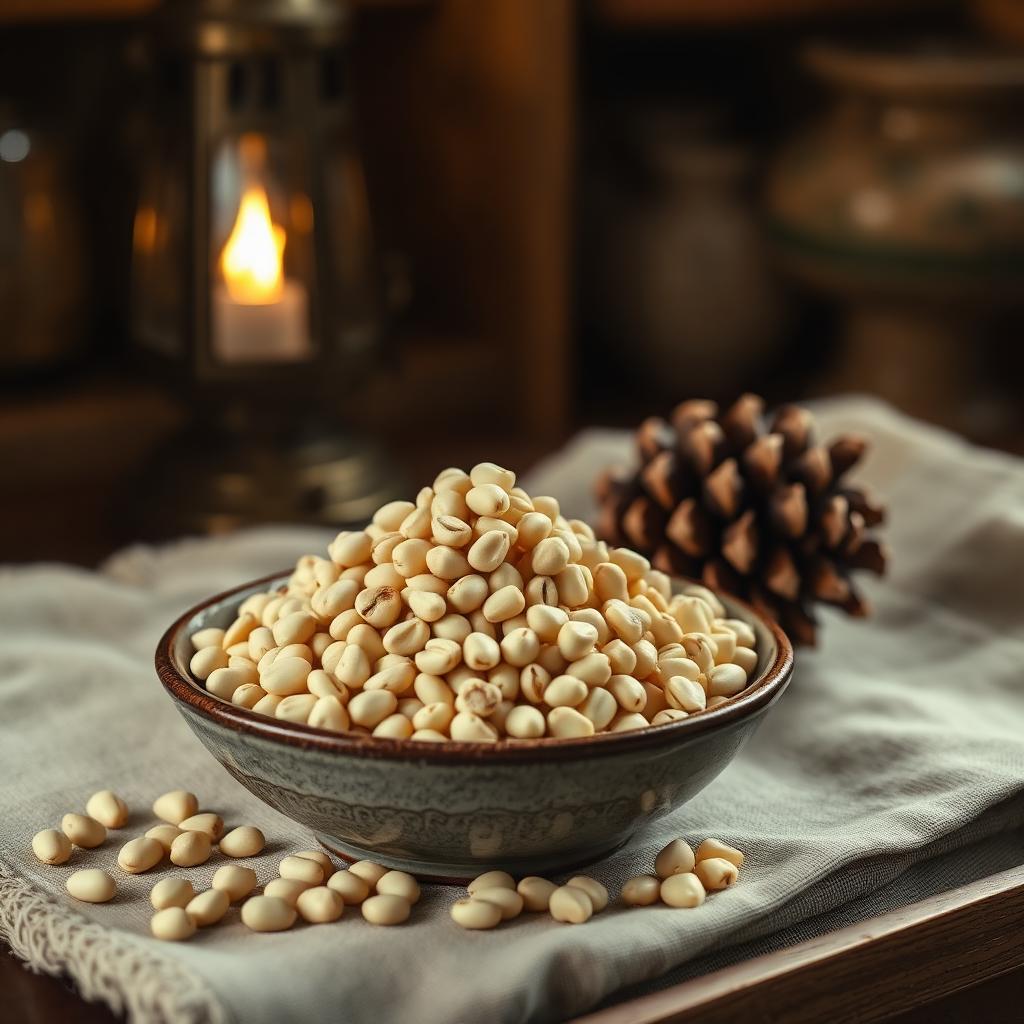
The signature source of pinolenic acid — a fat found only in pine seeds, studied for fullness and for raising CCK, one of the body's fullness hormones.
Dense in zinc, magnesium, and vitamin K in a small serving.
A classical Persian restorative — warm and moist for stamina and the chest.
Culinary doses are small (1–2 tablespoons). Harvest and storage matter for freshness.
Chapter 2 of 14
Getting to Know Pine Nut
Chelghuz are the tender kernels picked out of the cones of Pinus pinea (Mediterranean stone pine) and Pinus koraiensis (Korean pine) — slow, fiddly work, which is why they have always been a little precious on Persian, Levantine, Mediterranean, and Northeast Asian tables. Their fat is unusual: it's built around pinolenic acid, an 18:3 fat found only in pine seeds and studied for helping you feel full, with zinc, magnesium, and vitamin K in a small buttery package. Classical Persian medicine treats them as a warming, moistening food for rebuilding strength, and modern trials back up the fullness effect and their place in a Mediterranean way of eating.
Chapter 3 of 14
Why It Matters
How well you handle appetite, how much zinc you carry, and how the lungs and immune system hold up are three quiet drivers of aging. Pine nuts touch all three — their pinolenic acid nudges up the fullness hormone CCK, they pack more zinc per calorie than almost any other nut, and Persian and Mediterranean kitchens have leaned on their warming, moistening nature for recovery for centuries.
What That Means Day to Day
Pine nuts touch four things that quietly matter after 60: a natural nudge to fullness from pinolenic acid, so appetite stays steady without going hungry. Plenty of zinc, which aging quietly drains from immunity, taste and wound healing.
Magnesium and vitamin K for sleep, blood vessels and bones. And the old Persian recovery role that makes them useful in exactly the moments — after illness, after surgery, a thin constitution — when an older adult most needs a gentle building food.
Pinolenic acid triggers cholecystokinin release — studied for helping you feel full after a meal.
Vitamin K helps keep calcium in bones and out of blood-vessel walls.
Vitamin E and lutein (a yellow pigment linked to eye health) help protect your cells and eyes.
Chapter 4 of 14
What It Contains
Primary compounds
Pinolenic acid (all-cis-5,9,12-18:3) — a pine-specific polyunsaturated fatty acid that triggers cholecystokinin (CCK) release and appears to adjusts appetite in small human trials.
Zinc (~1.8 mg per oz) — one of the densest zinc:calorie ratios among nuts. Supports taste, skin, and immunity.
Magnesium (~71 mg per oz): vascular (relating to the blood vessels) tone, neuromuscular calm, and sleep.
Other Constituents
Vitamin K (~15 µg per oz) — bone and vascular (relating to the blood vessels) calcification balance.
Vitamin E tocopherols and small lutein (a yellow pigment linked to eye health) fraction — antioxidant reserve.
Plant sterols: modest additional LDL (the kind of cholesterol that can build up in artery walls) contribution.
Chapter 5 of 14
What It Contains: The Rest of the Picture
Arginine: nitric-oxide precursor for endothelial function (how well the thin lining inside your blood vessels works).
Vitamins
Thiamin (B1), Niacin (B3)
Other notable constituents
Minerals: Manganese, Iron, Phosphorus · Healthy Fats: Monounsaturated fats, Linoleic acid · Protein: ~4 g per 1 oz
Fiber: ~1 g per 1 oz
Chapter 6 of 14
What Studies in People Show
Strong evidence
Mediterranean dietary pattern rich in mixed nuts (including pine nut) reduced major heart and blood vessel events by ~30% in the PREDIMED randomised trial.Strong evidence
Moderate evidence
Pine-mouth (pine-nut syndrome) is a self-limited taste distortion of 1–14 days most often linked to Pinus armandii kernels. Onset 12–48 h after ingestion, harmless resolution.Moderate evidence
Early research
Korean pine (Pinus koraiensis) nut fatty acids raised satiety (the feeling of being full) hormones cholecystokinin and GLP-1 and reduced prospective food intake by ~37% at 4 hours in overweight women.Emerging evidence
Pine-nut supplementation improved fasting lipid profile (total and LDL cholesterol) in a controlled feeding study.Emerging evidence
Chapter 7 of 14
Preparation and Kitchen Use
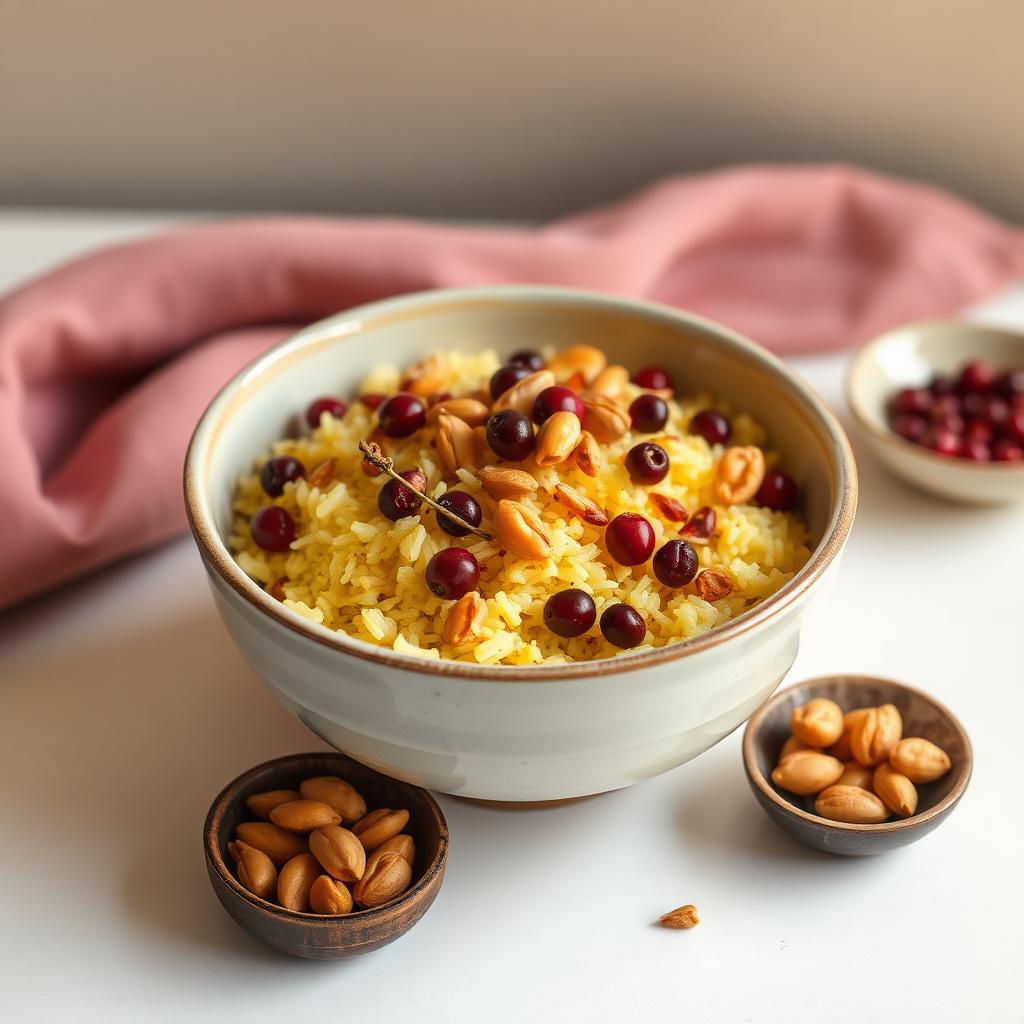
A culinary 1–2 tablespoons daily — toasted onto saffron rice at lunch, folded into pesto at dinner, or scattered over yogurt at breakfast. The classical convalescent preparation is a small handful of soaked chelghuz in warm milk with honey at bedtime for the recovering, the elderly, or the thin, dry, easily-tired constitution.
Other Ways to Use It
Raw kernels, lightly toasted for aroma.
Blend into fresh pesto with basil, olive oil, garlic, and pecorino.
In the kitchen: stirred into shirin polo, tahdig, and dolma. Blended with honey into a chest tonic for dry cough. Toast a tablespoon gently and scatter over saffron rice, dolma, or roasted vegetables.
Fold into stuffed grape leaves (dolma) with rice, herbs, and currants.
Crush over labneh or yogurt with a drizzle of honey for a quick Levantine breakfast.
Chapter 8 of 14
Medicines and Interactions
Medication interaction:
Warfarin — Vitamin K in pine nut is modest but real — a stable culinary tablespoon doesn't swing INR (the blood test that shows how fast your blood clots), but a sudden very-large intake shift can. Keep the daily portion steady. (low concern)
Medication interaction:
Antihypertensives (ACE inhibitors, ARBs, CCBs) — Magnesium and arginine contribute a modest additive blood-pressure lowering at culinary doses — a food-scale effect that layers gently. (low concern)
More Interactions to Know
Medication interaction:
Zinc-sensitive medications (penicillamine, quinolones, tetracyclines, integrase inhibitors) — Concentrated zinc from a pine-nut-heavy meal can modestly reduce absorption of these drugs. Separate by ≥ 2 hours from a pine-nut-heavy pesto or hashweh serving. (moderate concern)
Medication interaction:
Levothyroxine, bisphosphonates — Divalent minerals from a pine-nut-heavy meal can bind and reduce absorption. Space by ≥ 2 hours from thyroid or osteoporosis dosing. (moderate concern)
Chapter 9 of 14
Who Should Be Careful
General caution:
'Pine-mouth' (pine-nut syndrome) — a temporary bitter or metallic taste distortion lasting up to 2 weeks after eating certain Pinus armandii pine nuts; buy from reputable Mediterranean (P. pinea) or Korean (P. koraiensis) sources to minimise.
General caution:
Rancidity is common — the polyunsaturated fraction oxidises quickly; refrigerate and taste before use.
General caution:
Energy-dense — culinary quantities (1–2 tbsp) are the intended serving.
Allergy:
Confirmed tree-nut / pine-nut IgE allergy — pine nut is botanically a seed but is grouped with tree-nut allergens for cross-reactivity testing.
Chapter 10 of 14
Pregnancy, Children and Older Adults
General
Children:
Whole pine nuts are a choking hazard for children under age 4 — use finely crushed.
Pregnancy and breastfeeding
Pregnancy and breastfeeding:
A daily 1–2 tablespoon culinary serving of pine nuts (toasted, unsalted, ideally Mediterranean P. pinea or Korean P. koraiensis) is safe and useful throughout pregnancy — a plant source of zinc, magnesium, vitamin K, and healthy fats. The classical Persian convalescent preparation of soaked pine nuts with honey and warm milk is a traditional post-partum restorative and remains compatible with nursing. Confirmed nut allergy and rancid or off-tasting kernels are the only stops. Avoid unlabeled bulk Chinese pine nuts to sidestep pine-mouth taste distortion, which — while harmless — is unpleasant in the first trimester.
Children
Children:
Finely crushed pine nut can be introduced from around 8–9 months once solids and other seeds are established, watching for tree-nut reaction. Whole kernels wait until age 4 due to choking risk. A small spoon of chelghuz with saffron rice is a classical Persian first-birthday plate. Pine-nut-honey majūn is reserved for after age 1 (honey rule). Pine-mouth taste distortion is reported in children too and is harmless.
Chapter 11 of 14
Pregnancy, Children and Older Adults: A Few More Points
Older adults
Older adults:
One of the more useful daily nuts after 60: dense zinc (immune, taste, wound healing), magnesium (sleep, vascular tone), vitamin K (bone and vascular balance), and a satisfying buttery texture that works well when appetite is small. The classical Persian convalescent preparation — soaked chelghuz in warm milk with honey and cardamom — remains one of the gentlest post-illness restoratives for a thin, dry, easily-tired older constitution. Refrigerate opened bags; rancidity is the practical enemy.
Chapter 12 of 14
Traditional Persian Perspective
Persian and Galenic sources read chelghuz as warm and moist (2nd degree) — something that rebuilds stamina, helps the lungs, moistens a dry constitution, and strengthens the reproductive system. Ibn Sīnā gives soaked pine nuts (chelghuz-e khis-karda) after a long illness and to dry, thin, easily-tired patients. Aghili Khorasani puts sanawbar among the classic recovery foods and pairs it with honey as a chest tonic.
Convalescence after long illness and physical exhaustion.
Dry cough and dry-chest patterns (with honey).
Restoring reproductive and vital-force strength (classical tonic).
Chelghuz sit on top of Persian saffron-rice pilafs and shirin polo, run through Lebanese kibbeh and hashweh, hold together the pesto Genovese of Liguria, crown Turkish and Levantine baklava, and show up in Chinese and Korean festival breads and cold-tossed dishes. Not many foods travel the Silk Road this gracefully.
Chapter 13 of 14
Questions People Ask
Why are pine nuts so expensive?
Each cone yields only a small handful of kernels, harvested by hand over multi-year cone maturation. The labour — and the tradition — earn the cost.
How should I store pine nuts?
Refrigerate opened bags and use within a few weeks. The polyunsaturated pinolenic fraction oxidises quickly. A rancid taste means it's time to replace them.
Can pine nuts really help appetite control?
Small human trials with Pinus koraiensis pine-nut oil show a rise in cholecystokinin (a satiety hormone) after a dose, with modest reductions in subsequent food intake. It's a real mechanism, but the effect size is gentle — treat pine nuts as a satisfying food.
Chapter 14 of 14
Sources
Pinus koraiensis seed oil and appetite regulation via CCK — RCT — PubMed indexed literature. https://pubmed.ncbi.nlm.nih.gov/18345348/
Pinus pinea and Pinus koraiensis: about Herbs monograph — Memorial Sloan Kettering — Integrative Medicine. https://www.mskcc.org/cancer-care/diagnosis-treatment/symptom-management/integrative-medicine/herbs.
Nuts, pine nuts, dried (FDC ID 170591) — USDA FoodData Central. https://fdc.nal.usda.gov/
The Canon of Medicine: entries on ṣanawbar (pine nut) — Avicenna (Ibn Sīnā), 11th century.