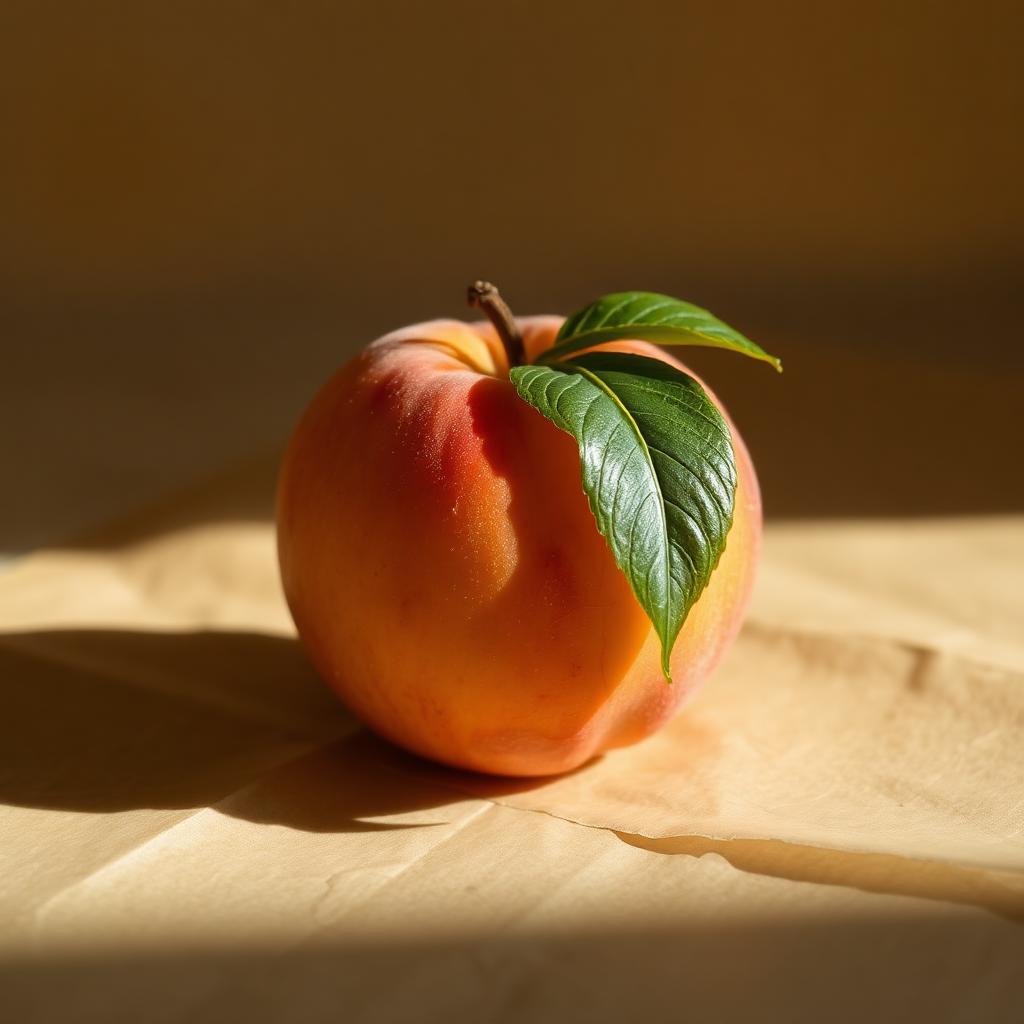
Skin left on carries most of the polyphenols (protective plant compounds) and chlorogenic acid.
Peach pit and kernel contain amygdalin — flesh is safe, crushed pit isn't.
Conventional peaches carry a heavy pesticide load — organic preferred where possible.
What Else to Know
Prunus persica is the Latin name carries the story of the peach's long journey from China, through Persia, and into the Mediterranean. On an Iranian summer afternoon, holu comes cold from the icebox, peeled by hand, or spooned into a bowl of mast with a little honey and mint. Traditional Persian medicine reads it as cool and moist and kind to a summer-heated stomach. Modern nutrition sees a water-rich stone fruit with moderate fibre and plenty of chlorogenic acid.
Chapter 2 of 11
Why It Matters
A single ripe peach at the afternoon table cools and hydrates a summer-tired body while adding chlorogenic acid to the day. It's simple Persian summer wellness, with no supplement or special routine needed.
Peach earns its place in Persian healthy aging each summer. It's soft when ripe, hydrating, rich in potassium and carotenoids (the orange and yellow plant pigments your body can use), and gentle enough for many older adults to enjoy through the hot months.
Vitamin C, beta-carotene, and vitamin E in food form.
Chlorogenic acid and other polyphenols (protective plant compounds) support the gut and calm inflammation.
Naturally sweet is a real alternative to refined summer sweets.
Chapter 3 of 11
What It Contains
Primary compounds
Chlorogenic acid is the polyphenol (protective plant compounds) behind the gut and inflammatory-marker literature.
Beta-carotene, lutein (a yellow pigment linked to eye health), zeaxanthin — skin, mucosal, and eye support.
Vitamin C and vitamin E: everyday antioxidant coverage in food form.
Other Constituents
Potassium is the food-dose lever for blood pressure.
Amygdalin (pit/kernel only) — the reason flesh is safe and crushed pit isn't.
Other notable constituents
Minerals: Copper, Manganese · Fiber: ~2 g per medium fruit
Chapter 4 of 11
What Studies in People Show
Strong evidence
Dietary potassium from fruit is linked to modest blood-pressure reductions across meta-analyses (a study that pools the results of many trials).Strong evidence
Early research
Peach polyphenols (protective plant compounds) show favourable effects on metabolic-syndrome markers in preclinical and small human studies.Emerging evidence
Chlorogenic acid intake is linked to modest improvements in glucose and inflammatory markers in controlled trials.Emerging evidence
Chapter 5 of 11
Preparation and Kitchen Use
Fresh ripe holu at the peak of summer — mid-morning or afternoon, at room temperature, ideally on an empty stomach. Preserved shaftalu compote in cold months.
Eat ripe holu at room temperature, skin on, for full polyphenol (protective plant compounds) content.
Grill halved peaches brushed with honey for a summer dessert.
Simmer with cardamom and rosewater into a shaftalu compote for cold months.
Skin and mash ripe fruit for infants from ~8 months.
Chapter 6 of 11
Medicines and Interactions
Medication interaction:
Antihypertensives (ACE inhibitors, ARBs) — Peach's food-dose potassium is additive and generally welcome; watch total daily potassium load in advanced kidney disease or on potassium-sparing diuretics. (low concern)
Medication interaction:
Warfarin — Peach is low in vitamin K and stable in normal food amounts. (low concern)
Medication interaction:
Antidiabetic medication (insulin, sulfonylureas) — Fresh peach is moderate in sugar; coordinate portions at heavy dried-peach or peach-juice intake. (low concern)
Chapter 7 of 11
Who Should Be Careful
General caution:
Peach pit and kernel contain cyanogenic amygdalin — never crush or consume the pit.
Allergy:
Rosaceae oral-allergy syndrome — birch-pollen sensitivity may cause reactions to raw peach (often tolerated cooked).
General caution:
Conventional peaches carry a heavy pesticide load — organic preferred.
General caution:
Unripe firm peaches can aggravate cold-dry-pattern digestion.
General caution:
Never consume crushed peach pit or kernel at any age (cyanogenic).
Allergy:
Known Rosaceae / birch-pollen oral allergy — cooked forms often tolerated.
General caution:
Choose organic where possible given pesticide load.
Chapter 8 of 11
Pregnancy, Children and Older Adults
Pregnancy and breastfeeding
Pregnancy and breastfeeding:
Fresh ripe peach is safe and traditional in pregnancy as a cooling, hydrating summer fruit. Kernels are avoided at any dose.
Children
Children:
Soft ripe peach, skinned and mashed, from ~8 months. Small pieces from ~12 months. Never offer peach pit or kernel to children at any age.
Older adults
Older adults:
One of the kindest Persian summer fruits for older adults — soft when ripe, cooling for over-warmed indoor bodies, hydrating without effort. Skin left on for polyphenols (protective plant compounds) when tolerated.
Chapter 9 of 11
Traditional Persian Perspective
Persian temperament: Cool & Moist (1st–2nd degree). Persian medicine reads ripe holu as cool and moist — refreshing, cooling for summer heat, and gentle on the stomach on an empty stomach. Unripe firm fruit is avoided in cold-dry-pattern constitutions.
Summer heat and thirst (fresh ripe holu at room temperature).
In the Household
It was used: restlessness of hot weather (sliced holu over cool mast). Cold-season restorative (shaftalu compote with cardamom and rosewater).
Holu shares the Persian summer fruit bowl with khiar (cucumber), angur (grapes), and hendevaneh (watermelon) — four cooling companions in the July courtyard. Grilled shaftalu brushed with honey makes an easy summer dessert. Sliced holu over cool mast with mint and rose petals is one of the oldest simple Persian summer plates.
Chapter 10 of 11
Sources
Sad Giah Hezar Darman (صد گیاه و هزار درمان) — One Hundred Plants and One Thousand Remedies — Dr. Hossein Erfani, 4th edition (1375 / 1996–1997). Primary traditional Persian herbal reference cited throughout this platform. Presented as traditional knowledge, not as modern medical proof.
Office of Dietary Supplements: fact Sheets — US National Institutes of Health (NIH). https://ods.od.nih.gov/factsheets/list-all/.
Herbal Database: memorial Sloan Kettering Cancer Center. https://www.mskcc.org/cancer-care/diagnosis-treatment/symptom-management/integrative-medicine/herbs.
Herbs at a Glance: uS NIH National Center for Complementary and Integrative Health (NCCIH). https://www.nccih.nih.gov/health/herbsataglance.
FoodData Central: searchable nutrient database — US Department of Agriculture (USDA). https://fdc.nal.usda.gov/.
Chapter 11 of 11
Sources (continued)
The Nutrition Source: harvard T.H. Chan School of Public Health. https://www.hsph.harvard.edu/nutritionsource/.
PubMed — peer-reviewed biomedical literature — US National Library of Medicine. https://pubmed.ncbi.nlm.nih.gov/