You eat the seeds, which is why the fibre is so high.
Very high in vitamin C and vitamin A for such a small fruit. Passionflower tea (the flower) and passion fruit (the fruit) aren't the same thing.
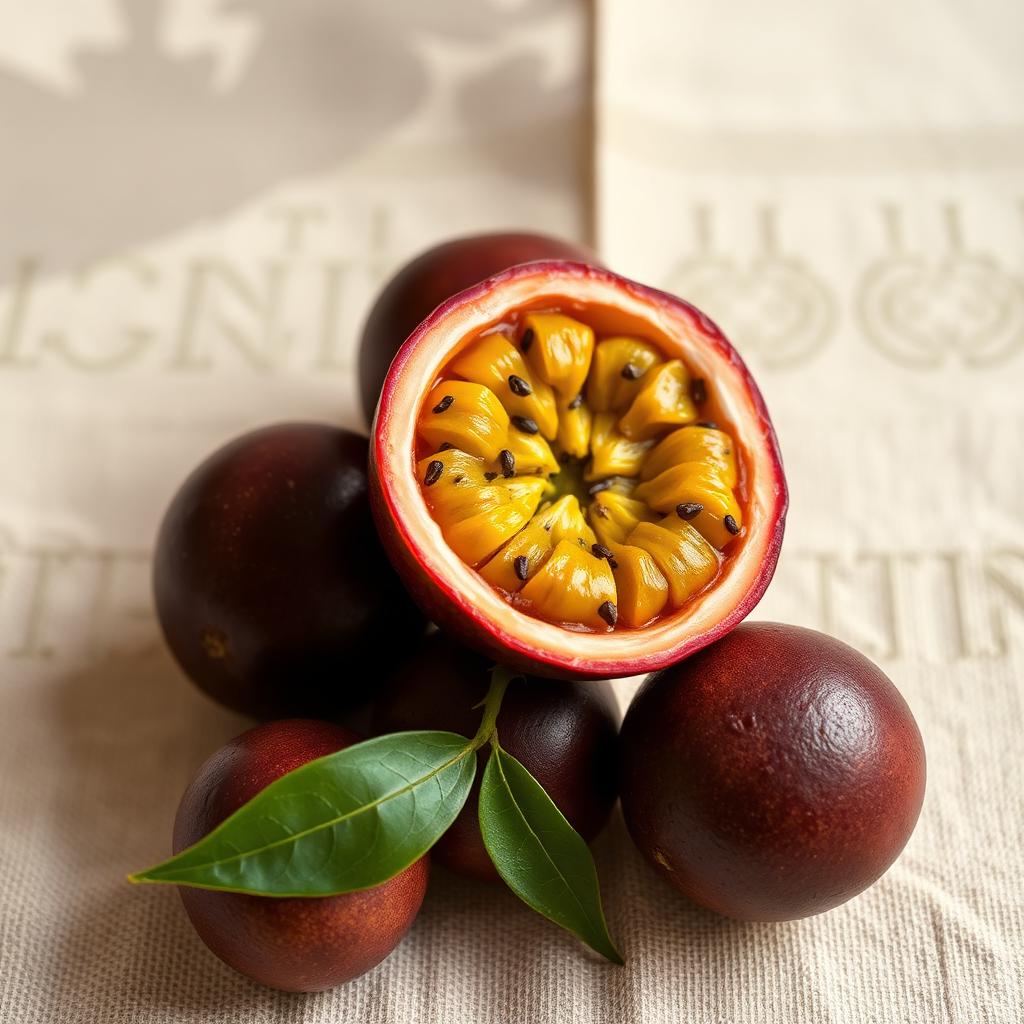
Passion fruit hardly looks like food until you crack it open. Inside is a spoonful of orange jelly packed with black seeds, sharply sour and deeply perfumed. A little goes a long way. Two things are worth knowing. Because you eat the seeds, a few fruits can carry more fibre than a bowl of oats. And the fruit isn't the same remedy as the flower: passionflower, the dried vine flower, is the well-known calming herb. Passion fruit is food, not a sedative (medicines that make you sleepy).
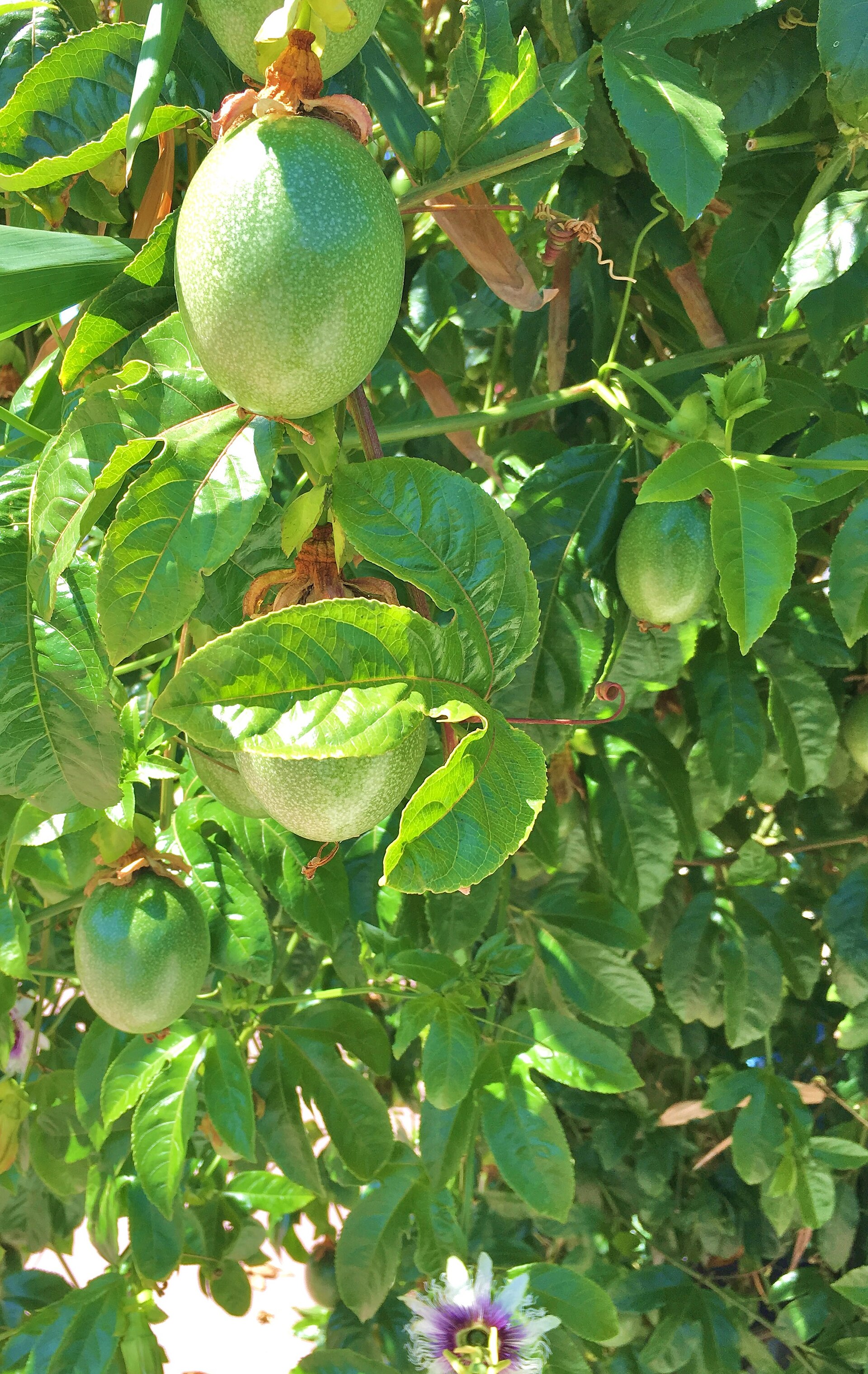
Known to botanists as Passiflora edulis.
Chapter 2 of 14
Why It Matters
Strong flavour can make healthy food easier to enjoy. Spoon one passion fruit over plain yogurt and something ordinary suddenly gets finished. You also get fibre, vitamin C, and colour from a fruit small enough to carry in your pocket.
Taste can dull with age, making once-familiar food seem bland. An intensely flavoured fruit like this can make plain, healthy staples such as yogurt appealing again, while bringing real fibre along with it.
Very high fibre because the seeds are eaten.
It was used: vitamin A from the orange pulp. Potassium and iron in useful amounts for a small fruit.
Passion fruit is a round or egg-shaped fruit with a hard purple or yellow shell. Inside there's no flesh in the usual sense — just a mass of orange, jelly-like sacs, each wrapped around a crunchy black seed. It grows on a fast-climbing vine with an extraordinary flower, the same plant family whose dried flower is used as a calming tea.
Family: Passifloraceae (passionflower family).
Chapter 4 of 14
What It Contains
Primary compounds
Beta-carotene. Polyphenols (protective plant compounds). Piceatannol (in the seed).
Vitamins
Vitamin A, Riboflavin, Niacin
Other notable constituents
Minerals: Potassium, Iron, Magnesium, Phosphorus · Fiber: ~2 g per single fruit, seeds included
Chapter 5 of 14
What Studies in People Show
What studies in people show
Passiflora incarnata extract improved sleep quality measures in a small randomised trial.Emerging evidence
Passion fruit is a substantial source of dietary fibre, largely in the edible seeds.Strong evidence
Chapter 6 of 14
Using It in the Kitchen
In the kitchen: straight from the shell with a teaspoon — no preparation at all. Strained juice, pressed through a sieve to remove the seeds.
Spooned whole over yogurt so the seeds stay for crunch and fibre.
Frozen pulp in cubes, kept for out-of-season drinks.
Other Ways to Use It
In the kitchen: halved and eaten with a spoon. Pulp spooned over yogurt, labneh, or rice pudding.
Juice strained and mixed into cold drinks.
In the kitchen: whisked into a dressing with olive oil for fruit or salad and spoon over plain yogurt or ice cream instead of syrup.
Stir the pulp into cold water with a little honey.
Chapter 7 of 14
Medicines and Interactions
Medication interaction:
Sedatives (medicines that make you sleepy) and sleeping tablets — Passiflora leaf extracts have a mild sedative effect and can add to prescribed sedatives. The fruit pulp itself isn't the concern. (moderate concern)
Medication interaction:
Blood thinners — Passionflower extract has been reported to lengthen clotting time in isolated cases. Mention any supplement before surgery. (low concern)
Chapter 8 of 14
Who Should Be Careful
General caution:
Very sour on its own — most people need it paired with something creamy or sweet.
General caution:
The seeds are hard; people with dental work may prefer the strained juice.
General caution:
A smooth, shiny fruit is unripe and will be unpleasantly sharp.
Allergy:
Rare latex-fruit allergy cross-reaction.
Chapter 9 of 14
Pregnancy, Children and Older Adults
Pregnancy and breastfeeding
Pregnancy and breastfeeding:
The fruit is an ordinary food and safe in normal amounts. Passionflower leaf tea and extracts are avoided in pregnancy because they can stimulate the uterus.
Children
Children:
The seeds are edible and children generally enjoy the crunch. Very sour fruit is easier taken stirred into yogurt than eaten from the shell.
Older adults
Older adults:
Soft, needs no chewing and carries useful fibre in the seeds. If you take sleeping tablets, keep to the fruit and leave the leaf preparations alone.
Chapter 10 of 14
Traditional Uses in South America
Persian temperament: Cold & Moist (1st degree). Brazilian and Andean practice reads the pulp as calming and the leaf as a sedative. Persian medicine has no entry for it.
Passion fruit comes from South America, so you'll not find it in classical Persian medicine. Brazilian and Peruvian folk practice used the juice as a cooling, calming drink in the heat. The leaf and flower — not the fruit — were the recognised remedies for restlessness and poor sleep. This reflects traditional use, not a modern medical recommendation. Passionflower supplements sold for sleep are concentrated preparations of the flower, not the fruit, and can add to the effect of sedatives — ask a doctor before combining them with medication.
Fresh fruit for appetite in heat.
The name comes from Spanish missionaries in South America, who saw symbols of the Passion of Christ in the flower. In Iran, the fruit is a recent arrival, more at home in juice bars and desserts than traditional cooking.
Chapter 11 of 14
What It Goes With
Dairy:
Yogurt
Two spoons of pulp stirred through yogurt is the simplest use. And the fat softens the acid.
Pairing:
Mango
Mango is sweet and thick, passion fruit sharp and loose. Each fixes what the other lacks.
Honey:
Honey
A little honey takes the edge off very sour fruit without burying the perfume.
Pairing:
Banana
Spoon the pulp over sliced banana. It's a breakfast, and it takes a minute.
Chapter 12 of 14
Through the Year
Spring:
Spring
Imported fruit, often smooth-skinned and underripe. Leave it on the counter until the shell wrinkles.
Summer:
Summer
Good months. The pulp is at its most fragrant and needs nothing but a spoon.
Autumn:
Autumn
The main southern-hemisphere crop arrives. Buy heavy fruit. Light ones have dried inside.
Winter:
Winter
Frozen pulp is honest here, and better value than tired fresh fruit.
Chapter 13 of 14
Questions People Ask
How do I know when it's ripe?
When the shell is wrinkled and dull. A smooth, glossy passion fruit isn't ready and will be harshly sour. Leave it on the counter for a few days.
Will passion fruit help me sleep?
No. That's passionflower — the dried flower and leaf of the same plant family, used as a calming tea. The fruit is a food and has no sedative (medicines that make you sleepy) effect.
Chapter 14 of 14
Sources
Passiflora edulis: composition and health effects — Food Research International. https://pubmed.ncbi.nlm.nih.gov/33292988/
Dietary fibre and all-cause mortality is the Lancet. https://pubmed.ncbi.nlm.nih.gov/30638909/.