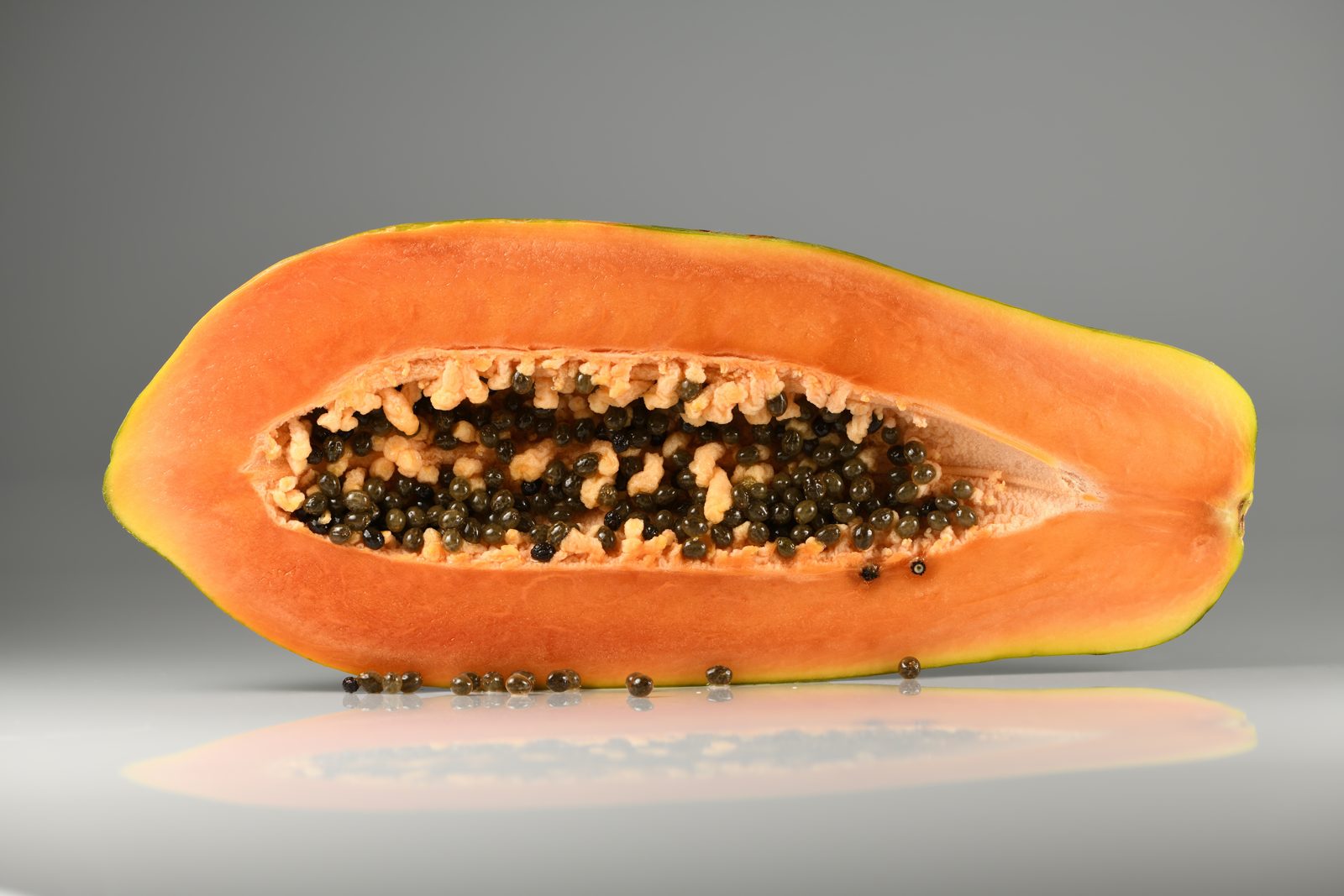
Papain digests protein, which is why half a papaya after a rich week is an old and sensible habit.
The orange flesh carries both beta-carotene and lycopene (the red pigment in tomatoes), an unusual combination.
Green, unripe papaya is a different food: stronger, medicinal, and traditionally avoided in pregnancy.
Papaya reached Iranian markets in the twentieth century, so it belongs more to the modern breakfast bowl than old tradition. What makes it worth knowing is papain, the protein-digesting enzyme in the fruit and its leaf, along with a carotenoid (the orange and yellow plant pigments your body can use) load few fruits can match.
Known to botanists as Carica papaya.
Chapter 2 of 14
Why It Matters
You get enzyme help, carotenoids (the orange and yellow plant pigments your body can use), and vitamin C from a fruit that takes ten seconds to prepare. If your gut has slowed or your appetite is small, that combination is hard to beat.
Later in life, a slow bowel and food sitting heavily are both common complaints. Ripe papaya addresses them gently, while its carotenoids (the orange and yellow plant pigments your body can use) bring a quiet bonus for eyes working harder every year.
Papain helps break down protein, which shows up as less heaviness after a rich meal.
A trial in chronic indigestion and constipation found a papaya preparation improved both.
Beta-carotene and lycopene together support eye and skin, and lycopene is rare outside the tomato.
Vitamin C is exceptionally high per gram, above orange.
The soft fibre moves a slow bowel without cramping.
Chapter 3 of 14
What It Contains
Primary compounds
Papain and chymopapain, the protein-digesting enzymes of the fruit and leaf.
Lycopene (the red pigment in tomatoes), the same red carotenoid (the orange and yellow plant pigments your body can use) as in tomato.
Beta-cryptoxanthin and beta-carotene in the orange flesh.
Vitamins
Vitamin C, Vitamin A, Folate, Vitamin E
Other notable constituents
Minerals: Potassium, Magnesium · Fiber: About 2.5 g per cup
Chapter 4 of 14
What Studies in People Show
Moderate evidence
A papaya preparation improved chronic indigestion and constipation in a randomised trial.Moderate evidence
Early research
A papain-based ointment improved healing of chronic wounds in controlled clinical use.Emerging evidence
Chapter 5 of 14
Preparation and Kitchen Use
Morning, with lime, especially after a stretch of rich eating.
Ripen at room temperature until the skin turns mostly yellow and gives to a thumb.
The black seeds are edible and peppery. Most people discard them.
Lime isn't decoration here: without it the flesh tastes soapy to many people.
Green papaya must be peeled and grated, and is treated as a vegetable.
Other Ways to Use It
Halve, scoop out the seeds, squeeze lime over, and eat with a spoon.
Cubes in a fruit salad with pineapple and mint after a heavy dinner.
Blend with yogurt and honey for a breakfast drink.
Serve after a heavy protein meal rather than before it.
Half a ripe papaya with lime at breakfast, eaten with a spoon straight from the skin.
Chapter 6 of 14
Medicines and Interactions
General cautions
General caution:
Papain slows nothing down on its own, but the fibre does. Keep an hour between papaya and a thyroid tablet or an iron tablet.
Specific medicines
Medication interaction:
Warfarin and other blood thinners — Papain in large or supplemental amounts may add a mild thinning effect. Fruit portions aren't a concern. (low concern)
Medication interaction:
Levothyroxine — High-fibre fruit slows absorption. Keep an hour between the tablet and breakfast. (low concern)
Chapter 7 of 14
Who Should Be Careful
General caution:
Papaya carries natural latex in the sap. If latex gloves, banana, avocado or kiwi cause you trouble, treat papaya carefully.
Pregnancy and breastfeeding:
Unripe green papaya stimulates the uterus and is traditionally avoided in pregnancy.
General caution:
Large amounts of papaya seed are peppery and can upset the stomach.
General caution:
Overripe fruit ferments quickly and tastes of drains. If it smells wrong, it's wrong.
Allergy:
Documented papaya or latex allergy.
Chapter 8 of 14
Pregnancy, Children and Older Adults
Pregnancy and breastfeeding
Pregnancy and breastfeeding:
Ripe papaya in ordinary portions is generally considered safe. Green, unripe papaya and papaya-seed preparations are the ones traditionally avoided, and that caution is worth keeping.
Children
Children:
Soft, sweet and needing no chewing, ripe papaya suits a young child well. Skip the seeds, which are peppery.
Older adults
Medication interaction:
Among the easiest fruits to eat with poor teeth or a dry mouth, and one of the most reliable for a slow bowel. Half a fruit at breakfast is the usual dose.
Chapter 9 of 14
How It Is Traditionally Used
Persian temperament: Warm & Moist (1st degree). Digestive and opening when ripe. Stimulating and medicinal when green.
Papaya came from tropical America and spread along colonial trade routes to Asia and the Gulf.
In the Household
Papain has been extracted commercially since the nineteenth century, first as a meat tenderiser.
Green papaya preparations were used traditionally for parasites and for hard digestion across South and Southeast Asia.
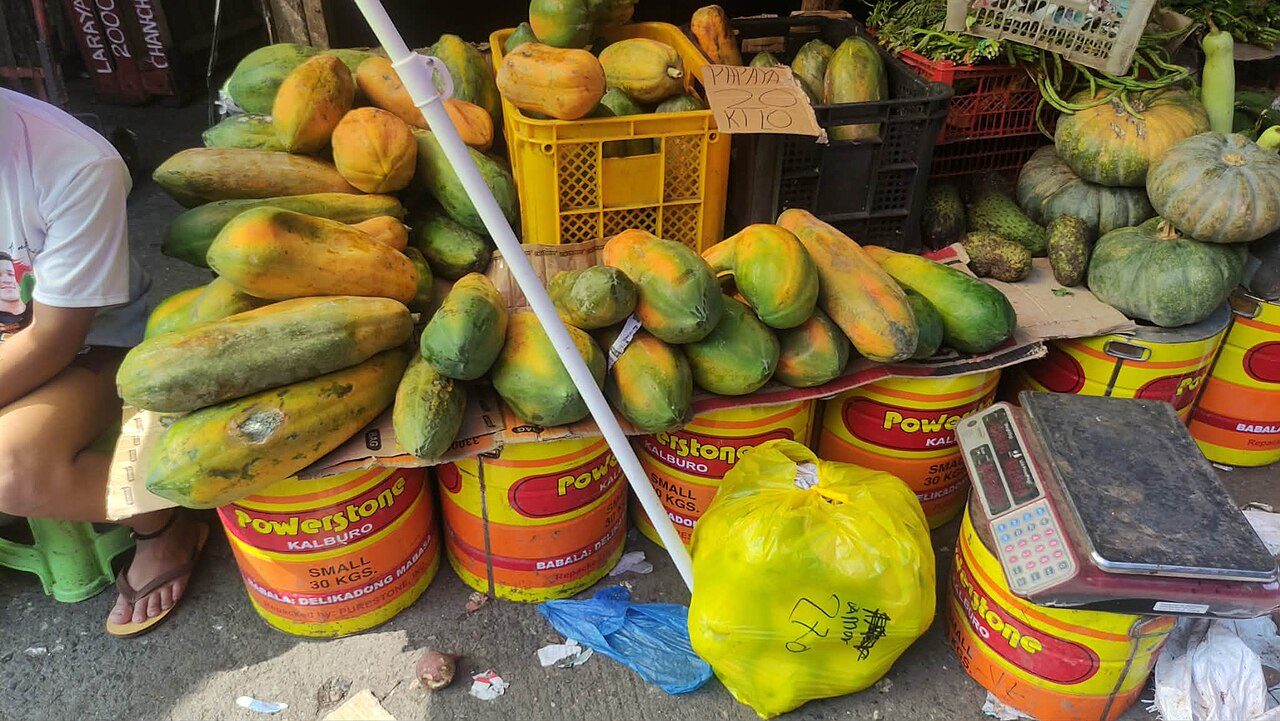
Papaya belongs to the modern Iranian breakfast table rather than the old pantry. On the imported-fruit stalls of Tehran and the Gulf, it sits beside mango and pineapple as the sign of a well-stocked shop.
Chapter 10 of 14
What It Goes With
Fruit:
Lime
The one pairing that's not optional. Lime turns papaya from soapy to bright.
Dairy:
Yogurt
Cubes stirred through yogurt at breakfast, with honey if it needs it.
Herb:
Mint
In a fruit salad with pineapple. Two enzymes and one cool herb.
Honey:
Honey
A little over an underripe fruit rescues it.
Chapter 11 of 14
Through the Year
Spring:
Spring
Imported fruit is reliable and reasonably priced in spring.
Summer:
Summer
Best chilled, at breakfast, before the day gets hot.
Autumn:
Autumn
A good month to start the breakfast habit as heavier food returns to the table.
Winter:
Winter
Available, though often shipped too green. Give it several days on the counter.
Chapter 12 of 14
Questions People Ask
Why does papaya taste soapy to me?
Some people are sensitive to one of its enzymes, and underripe fruit is worse. Lime fixes it for most. If it still tastes wrong, it may not be your fruit.
Is papaya safe in pregnancy?
Ripe fruit in normal amounts, yes. Green unripe papaya, no — that's the one with the traditional warning and the reasoning behind it.
How do I pick one?
Mostly yellow skin, giving to gentle pressure, and a sweet smell at the stem. Green all over means several days of waiting.
Chapter 13 of 14
Sources
Sad Giah Hezar Darman (صد گیاه و هزار درمان) — One Hundred Plants and One Thousand Remedies — Dr. Hossein Erfani, 4th edition (1375 / 1996–1997). Primary traditional Persian herbal reference cited throughout this platform. Presented as traditional knowledge, not as modern medical proof.
Office of Dietary Supplements: fact Sheets — US National Institutes of Health (NIH). https://ods.od.nih.gov/factsheets/list-all/.
Herbal Database: memorial Sloan Kettering Cancer Center. https://www.mskcc.org/cancer-care/diagnosis-treatment/symptom-management/integrative-medicine/herbs.
Herbs at a Glance: uS NIH National Center for Complementary and Integrative Health (NCCIH). https://www.nccih.nih.gov/health/herbsataglance.
FoodData Central: searchable nutrient database — US Department of Agriculture (USDA). https://fdc.nal.usda.gov/.
Chapter 14 of 14
Sources (continued)
The Nutrition Source: harvard T.H. Chan School of Public Health. https://www.hsph.harvard.edu/nutritionsource/.
PubMed — peer-reviewed biomedical literature — US National Library of Medicine. https://pubmed.ncbi.nlm.nih.gov/