A concentrated source of protein and calcium in a small portion.
Brined cheese keeps for weeks without spoiling — real value before refrigeration.
Sheep's milk cheese is naturally higher in fat and calcium than cow's milk cheese.
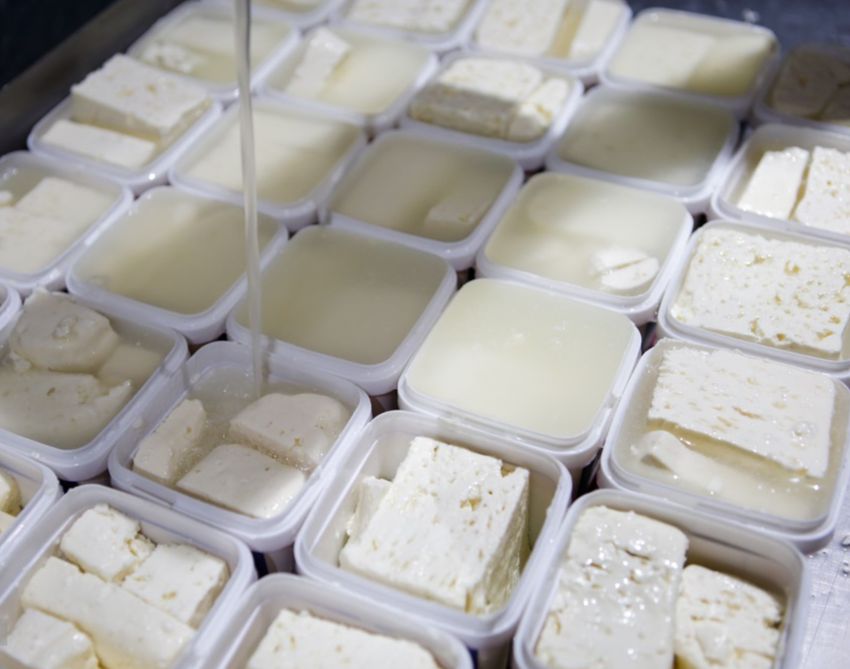
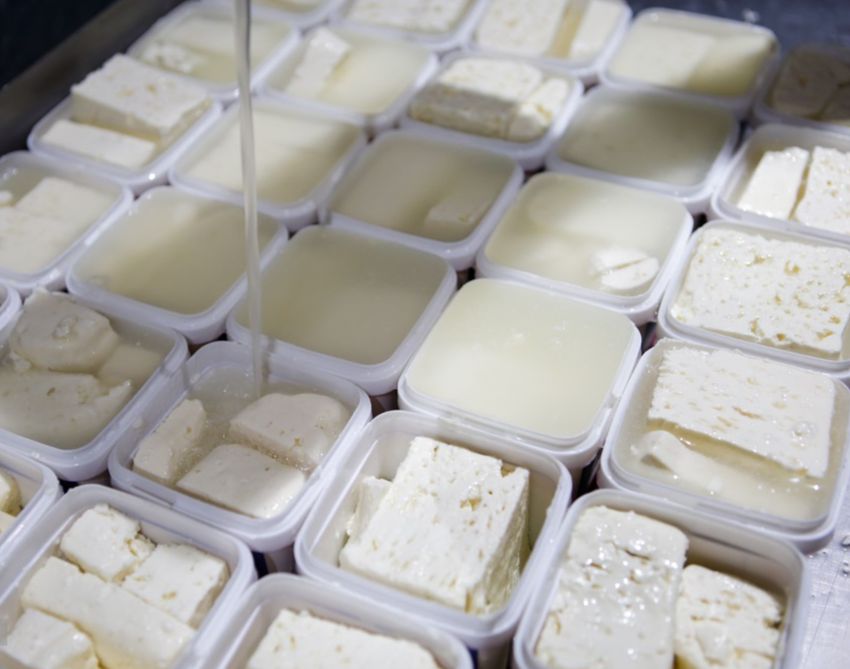
Panir is simply white cheese kept in salt water, but every part of that description matters. Iran's best-known kind comes from Lighvan, a village near Tabriz, where sheep's milk cheese ages in brine for months until it's firm, crumbly and sharply salty. Greek-style feta is a good stand-in. The salt preserves the cheese rather than seasoning it at the end, so a small piece goes a long way. Panir is rarely cooked. You put it on the table in cubes or slabs and eat it with bread, herbs and walnuts.
Eaten with herbs and walnuts it makes a complete meal with no cooking at all.
Before refrigerators, milk had to be turned into something that would last. Salt water was the answer. The cheese is pressed, then left to sit in brine for weeks or months.
Two things happen in that bath. Salt pulls water out of the curd, so it firms up and crumbles instead of bending. And salt keeps spoilage bacteria out, which is why a block can keep for a long time in a cool place.
This is why panir tastes strong. The salt is doing a job, not decorating the plate. A small piece goes a long way.
Vitamins
Vitamin B12, Riboflavin, Vitamin A
Other notable constituents
Protein: ~4 g per ounce (28 g) · Minerals: Calcium, Phosphorus, Sodium, Zinc
Chapter 3 of 12
Using It in the Kitchen
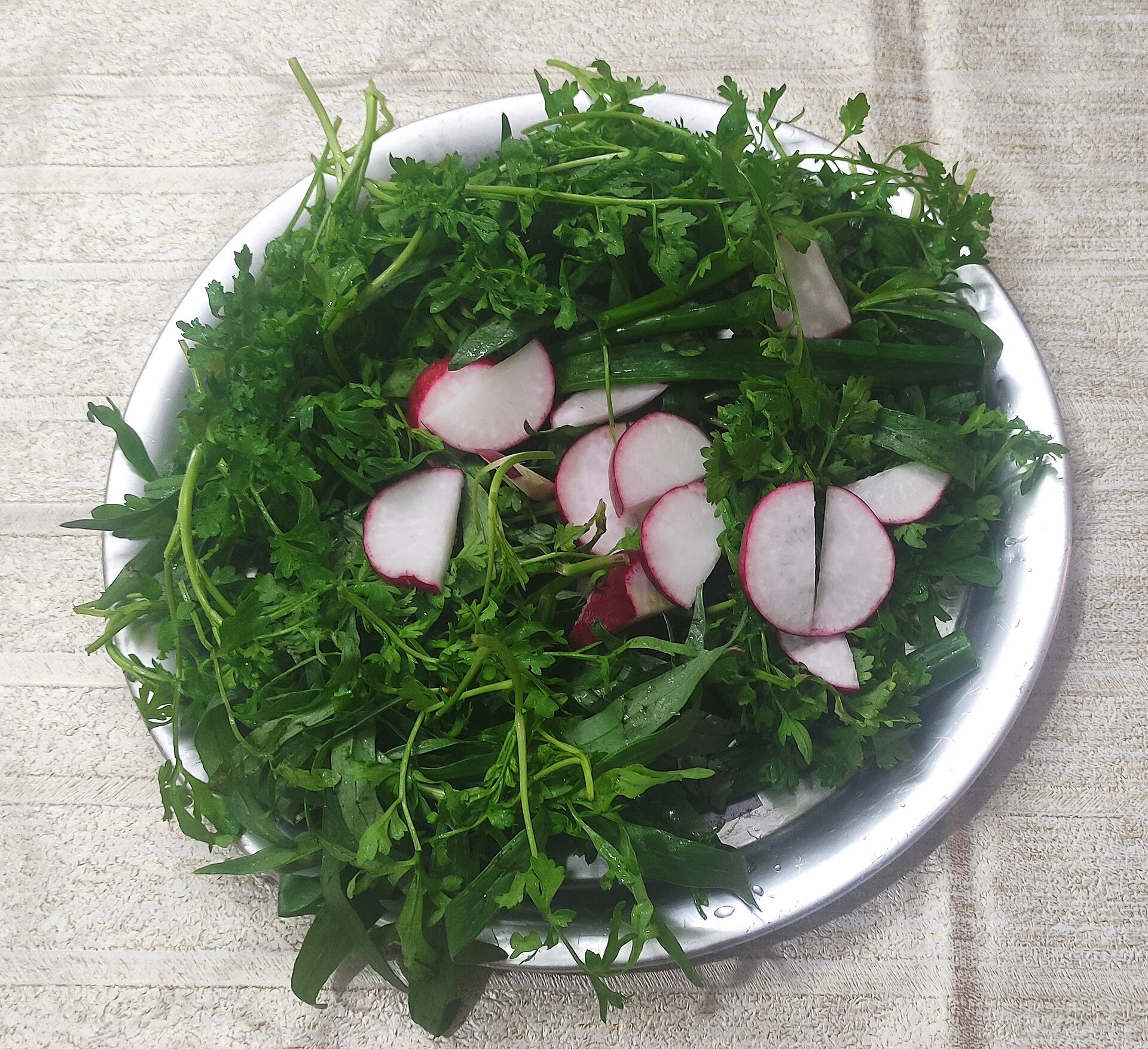
In the kitchen: panir-o-sabzi: bread, a piece of cheese, fresh mint and tarragon, and a walnut half on top. Cube it into a salad of cucumber, tomato and lemon.
Soak an over-salty piece in cool water for 20–30 minutes before serving.
Crumble over warm rice or roasted vegetables at the very end.
Keep it in its brine in the fridge. Cheese left dry in a box hardens and turns sharp.
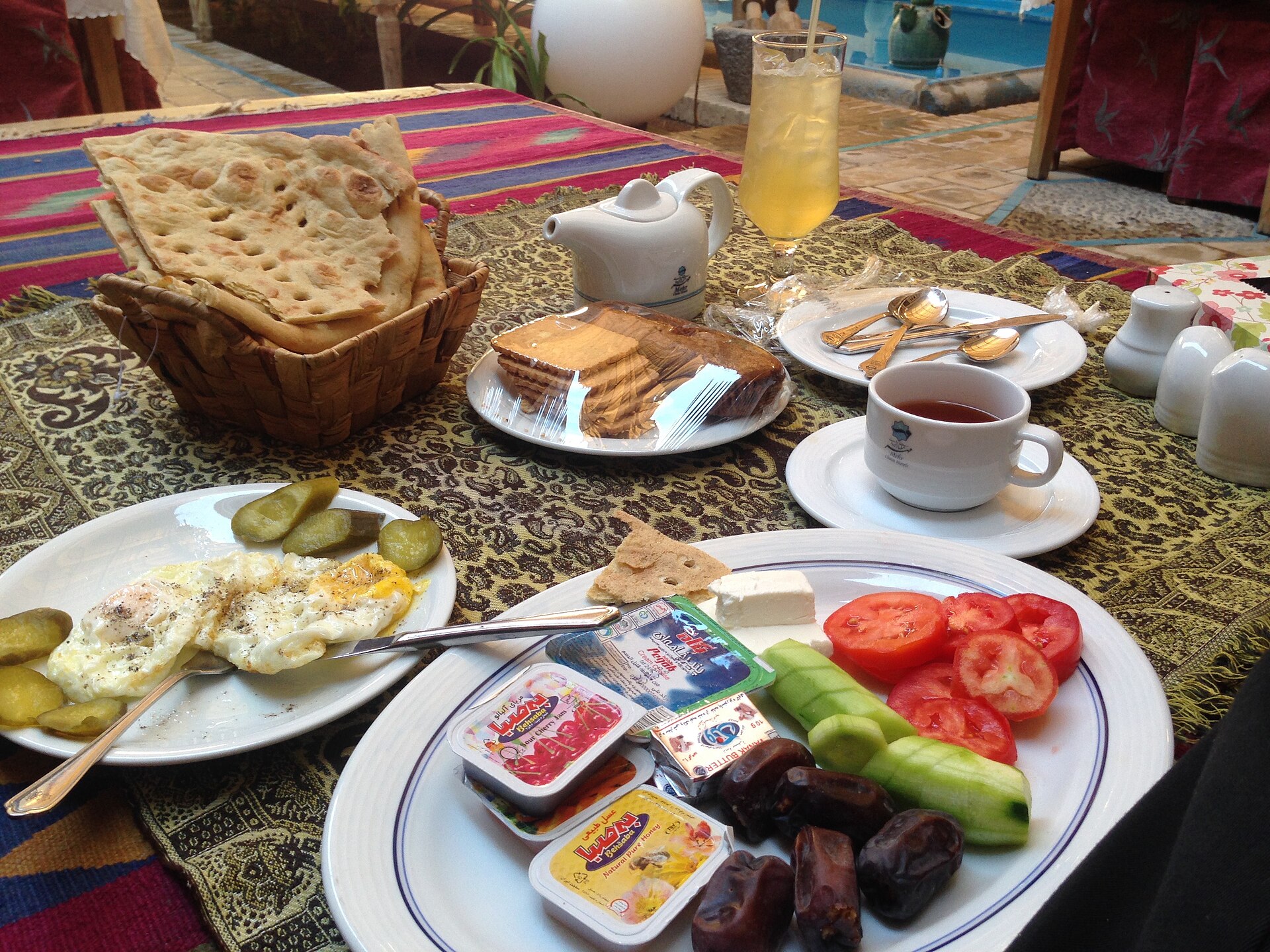
Panir is almost never cooked. It arrives on the table in a dish, cut into cubes or slabs, next to warm bread and a glass of tea.
Around it go whatever the house has: walnuts, fresh herbs, cucumber, tomato, jam, sometimes a boiled egg. Nobody eats a plate of cheese on its own — it's one salty note in a table of milder ones.
Chapter 5 of 12
Fresh Homemade Panir Is a Different Food
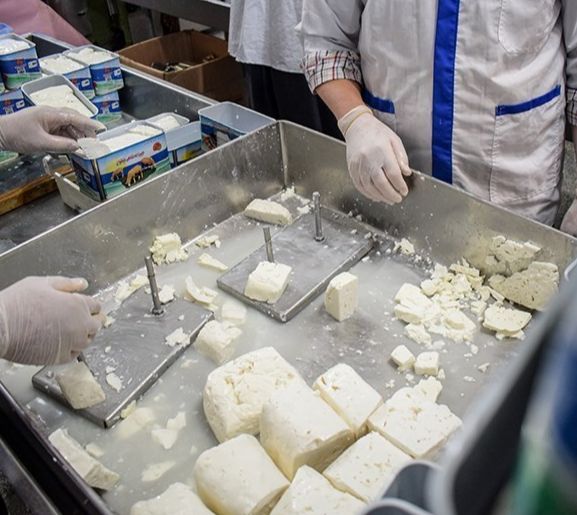
Home cheese is milk warmed, curdled, drained and eaten within a few days. It's soft, mild and barely salted — closer to a fresh curd than to the sharp block sold in brine.
Both are called panir, and they aren't interchangeable. Fresh curd is gentle enough to eat by the bowl. Aged brined cheese is a seasoning as much as a food.
If salt is a concern, fresh cheese is the version to look for.
The most famous Persian panir comes from Lighvan, a village near Tabriz. It's made from sheep's milk and aged in tins, and it's firm, dry and sharply salty.
Look for a block that holds together but crumbles when you press it, with a clean milky smell. Very wet, rubbery, bright-white blocks are usually young industrial cheese. They taste flat next to an aged one.
Keep it in its brine in the fridge. If you pour the brine away, the block dries out and hardens at the edges within a few days.
Chapter 7 of 12
Salt, Raw Milk and Portion
General caution:
Very high in salt. If you're watching blood pressure, count panir as a salty food, not a neutral one.
Pregnancy and breastfeeding:
Soft and raw-milk cheeses can carry listeria. Pregnant people should choose pasteurised cheese only.
General caution:
It is a dairy food — not suitable if you avoid milk protein, and hard on some people with lactose trouble.
General caution:
Cheese is calorie-dense. A slab the size of a matchbox is a portion, not a starter.
Persian medicine reads fresh cheese as cold and moist. That's why warm, dry companions — mint, tarragon, basil, walnuts, and hot tea — nearly always sit beside it. It's the traditional way to help a cold food sit well.
The combination isn't decorative. The herbs and the walnut soften the salt and the bite of the cheese, and the bread carries all of it. Taken apart, each piece is plain. Together they're the flavour most Iranians would call home.
In the Household
Panir-o-sabzi: cheese with fresh herbs — may be the simplest and most familiar Iranian breakfast: barbari or sangak bread, white cheese, mint and tarragon, walnuts, and tea. The same plate comes back at dinner beside rice and stew, and travels well on long journeys because nothing needs cooking.
Chapter 9 of 12
What It Goes With
Pairing:
Walnut
The traditional third element of the plate — fat and bitterness against salt.
Herb:
Mint
Fresh mint is the standard herb beside cheese, and eases a heavy stomach.
Pairing:
Tarragon
Sharp and anise-like — the other constant on the Persian herb plate.
Chapter 10 of 12
What It Goes With: More Pairings
Grain:
Barbari bread
Warm ridged bread from the morning bakery is the classic base.
Pairing:
Cucumber
Cool and watery — it settles the salt of the cheese.
Pairing:
Persian chai
Hot black tea is drunk alongside, never after, this breakfast.
Chapter 11 of 12
Sources
Sad Giah Hezar Darman (صد گیاه و هزار درمان) — One Hundred Plants and One Thousand Remedies — Dr. Hossein Erfani, 4th edition (1375 / 1996–1997). Primary traditional Persian herbal reference cited throughout this platform. Presented as traditional knowledge, not as modern medical proof.
Office of Dietary Supplements: fact Sheets — US National Institutes of Health (NIH). https://ods.od.nih.gov/factsheets/list-all/.
Herbal Database: memorial Sloan Kettering Cancer Center. https://www.mskcc.org/cancer-care/diagnosis-treatment/symptom-management/integrative-medicine/herbs.
Herbs at a Glance: uS NIH National Center for Complementary and Integrative Health (NCCIH). https://www.nccih.nih.gov/health/herbsataglance.
FoodData Central: searchable nutrient database — US Department of Agriculture (USDA). https://fdc.nal.usda.gov/.
Chapter 12 of 12
Sources (continued)
The Nutrition Source: harvard T.H. Chan School of Public Health. https://www.hsph.harvard.edu/nutritionsource/.
PubMed — peer-reviewed biomedical literature — US National Library of Medicine. https://pubmed.ncbi.nlm.nih.gov/