One of the densest dietary sources of quercetin — a long-life flavonoid (a family of protective plant compounds).
Studied for blood pressure, cholesterol, and blood-sugar balance.
Prebiotic (fibre that feeds the helpful bacteria in your gut) inulin (a fibre that feeds the helpful bacteria in your gut) feeds a healthy gut microbiome.
Used daily across the world's longest-lived cultures.
Healthy blood vessels and a diverse gut microbiome are two of the strongest signs of long-term health. Onion supports both quietly, costs very little, and already fits into everyday cooking. That's the kind of aging-well habit that lasts.
May help lower LDL (the harmful type of cholesterol) cholesterol and triglycerides (a type of fat in the blood).
Chapter 2 of 20
What It Contains
Primary compounds
Organosulfur compounds (allyl sulfides, thiosulfinates) — formed when onion is cut and rested. Carry the antimicrobial (slows the growth of germs) and lipid-friendly effects.
Inulin (a fibre that feeds the helpful bacteria in your gut) and fructo-oligosaccharides — soluble prebiotic (fibre that feeds the helpful bacteria in your gut) fibres that feed Bifidobacterium and Lactobacillus in the colon.
Other Constituents
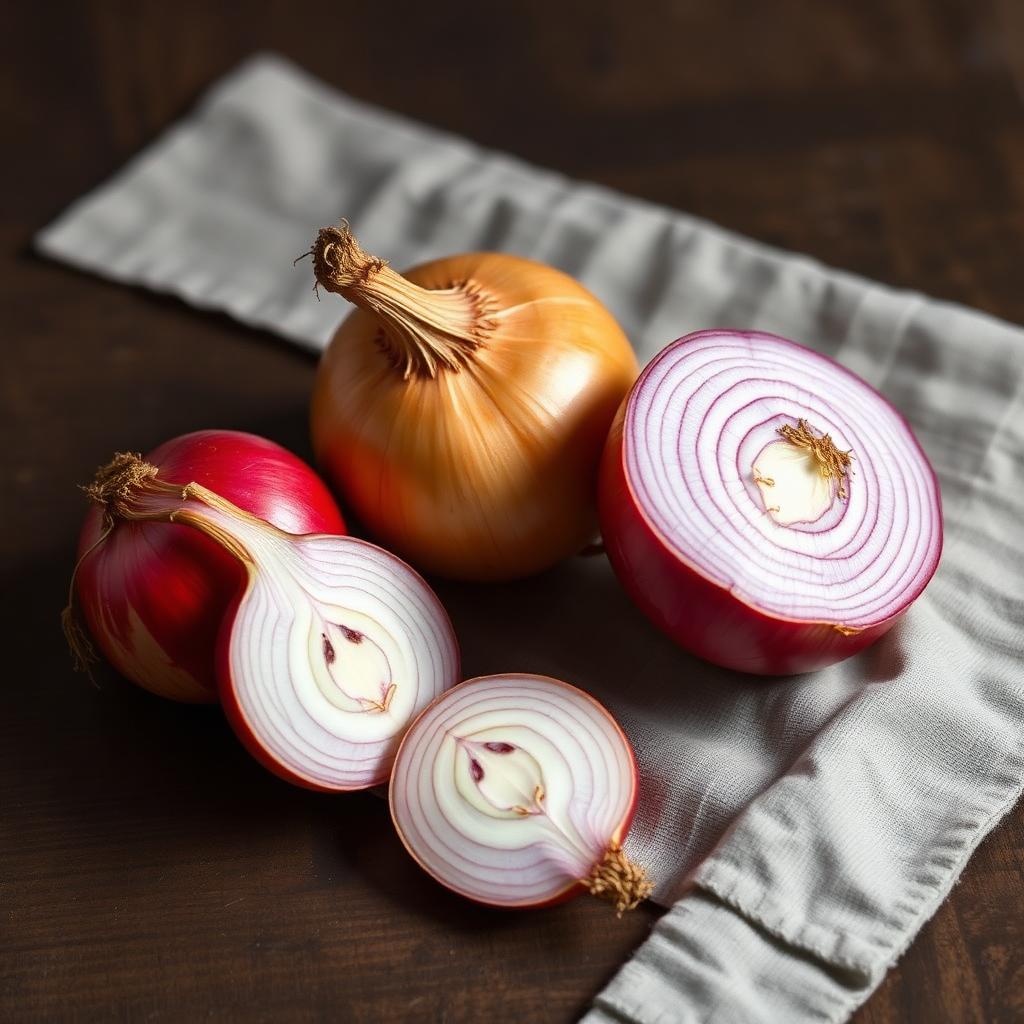
Anthocyanins (red onion): additional polyphenols (protective plant compounds) concentrated in the outer purple layers. Vitamin C, B6, folate, manganese, potassium — the everyday nutrient scaffolding of a daily culinary staple.
Other notable constituents
Minerals: Copper
Chapter 3 of 20
In the Laboratory
From laboratory work, not from people taking it
Onion inulin (a fibre that feeds the helpful bacteria in your gut) and fructo-oligosaccharides selectively increase Bifidobacterium and short-chain-fatty-acid production in the colon, a mechanism linked to metabolic and immune resilience with aging. Rated: moderate evidence.
Chapter 4 of 20
What Studies in People Show
Moderate evidence
Meta-analysis (a study that pools the results of many trials) of onion intake finds modest but consistent reductions in systolic blood pressure and improvements in lipid profile in adults with elevated risk.Moderate evidence
Quercetin (a plant compound found in onions, apples and tea) supplementation (a flavonoid of which onion is one of the densest dietary sources) lowers systolic blood pressure at doses ≥500 mg/day in hypertensive adults.Moderate evidence
Early research
Higher habitual Allium (onion + garlic) intake is linked to lower fasting glucose and improved glycaemic control in observational (based on watching what people already do) and small interventional studies.Emerging evidence
Chapter 5 of 20
Preparation and Kitchen Use
Everyday cooking base: piaz dagh at the start of the noon or evening stew. Raw sumac-onion beside grilled meat. Onion-honey syrup at bedtime for a cold-season cough.
Slice and let rest 5–10 minutes before cooking to develop allyl sulfides.
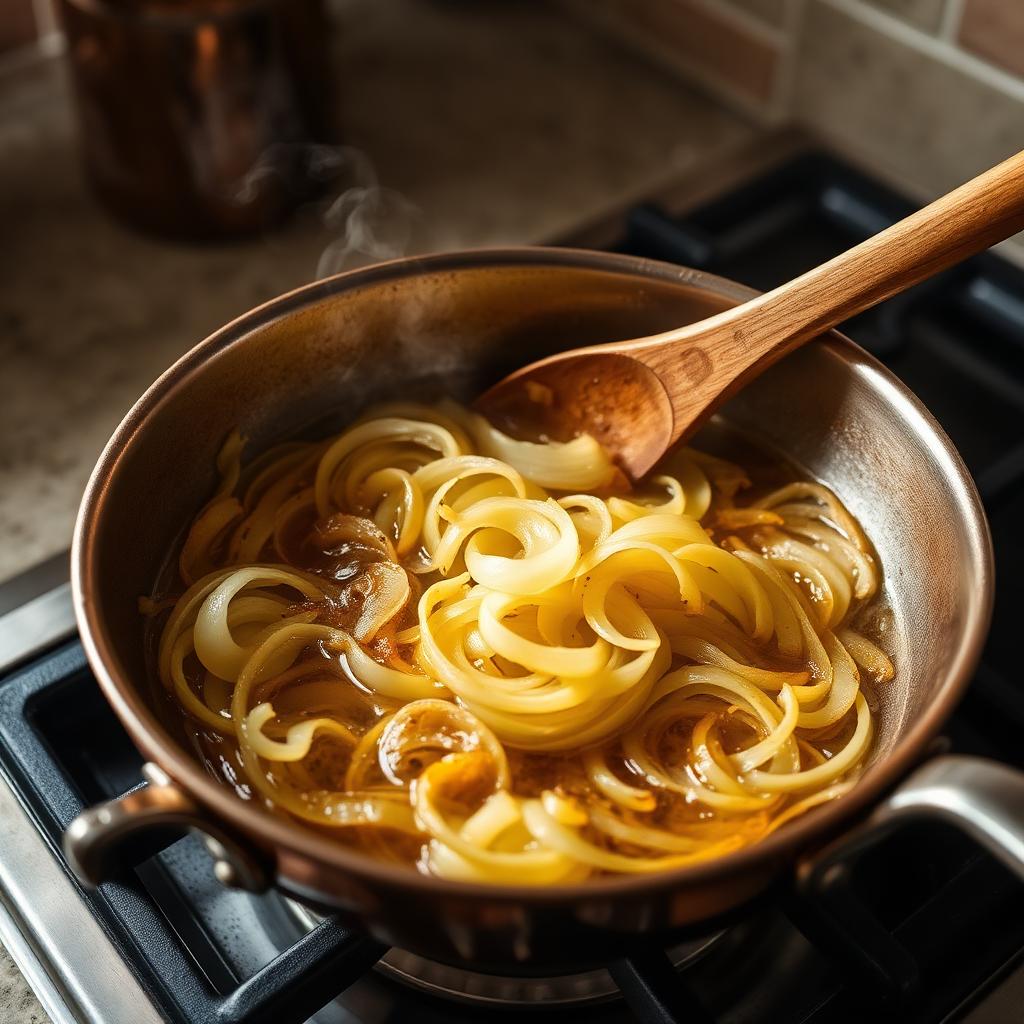
Caramelize on low heat 30–45 minutes for deepest flavor.
Other Ways to Use It
Use raw red onion for the highest quercetin (a plant compound found in onions, apples and tea) content.
Onion-honey syrup: layer sliced onion with raw honey overnight, strain, take 1 tsp.
Caramelize slowly in olive oil as the base of stews and soups.
Chapter 6 of 20
Preparation and Kitchen Use: Further Preparations
Slice raw red onion with sumac as the classic Persian kebab side.
Add chopped onion to salads, omelets, and lentil dishes.
Roast whole with olive oil for a sweet, jammy side.
Slice raw red onion with sumac and serve with grilled meats or salads.
Layer into omelets, lentil dishes, and roasted vegetables.
Chapter 7 of 20
Medicines and Interactions
Medication interaction:
Warfarin (a blood-thinning medicine) and vitamin K antagonists — Onion contains modest vitamin K and mild antiplatelet (medicines that stop blood cells sticking together, such as aspirin) quercetin (a plant compound found in onions, apples and tea)/thiosulfinates. Culinary amounts are safe if intake stays steady; large sudden increases (or concentrated onion extracts) can nudge INR — keep a consistent daily portion. (low concern)
Medication interaction:
Antihypertensives (ACE-I, ARBs, diuretics, calcium blockers) — Daily onion contributes to modest blood-pressure lowering via quercetin (a plant compound found in onions, apples and tea) and dietary potassium. Usually welcome and additive; monitor for symptomatic hypotension when combined with multiple agents. (low concern)
Chapter 8 of 20
Medicines and Interactions: More Interactions to Know
Medication interaction:
Antidiabetic medications (metformin, insulin, sulfonylureas) — Onion's soluble fibre and organosulfur compounds gently improve fasting glucose in small trials. Very large intakes or concentrated extracts alongside insulin/sulfonylureas warrant glucose monitoring. (low concern)
Medication interaction:
Antiplatelets (medicines that stop blood cells sticking together, such as aspirin) and anticoagulants (aspirin, clopidogrel, DOACs) — Onion has mild antiplatelet activity through allyl sulfides. Culinary use isn't clinically significant; avoid concentrated onion extracts around surgery. (low concern)
General caution:
Lithium — The mild diuretic (makes you pass more urine) effect of very large onion intake could theoretically raise lithium levels — keep culinary use moderate and stable if lithium is prescribed. (low concern)
Chapter 9 of 20
Who Should Be Careful
General caution:
May worsen reflux (GERD) in sensitive people.
General caution:
FODMAP-sensitive people (IBS) may need to limit intake.
General caution:
Strong odor — chew parsley or mint after.
General caution:
Raw onion can irritate the gut in some people.
Chapter 10 of 20
Pregnancy, Children and Older Adults
Pregnancy and breastfeeding
Pregnancy and breastfeeding:
Culinary onion — raw, caramelized, or in cooked stews — is safe and traditional throughout pregnancy. Its folate, quercetin (a plant compound found in onions, apples and tea), and prebiotic (fibre that feeds the helpful bacteria in your gut) fibre quietly support the workload of the growing body. Reflux-heavy trimesters may prefer well-cooked or caramelized onion over raw. Avoid concentrated onion extracts and skip the honey-onion syrup in the first year of the baby's life (honey botulism risk).
Children
Children:
Well-cooked onion is a natural first food after eight to ten months, folded into family stews and lentil soups. Raw onion is usually pushed away by young children — save it for age four and up, when the palate opens. The traditional onion-and-honey cough syrup isn't for babies under a year, because honey itself is unsafe that young. For older children with a lingering cold-season cough, it's a gentle, traditional home remedy.
Chapter 11 of 20
Pregnancy, Children and Older Adults: A Few More Points
Older adults
Medication interaction:
A quietly powerful daily habit after 60 — modest blood-pressure lowering, prebiotic (fibre that feeds the helpful bacteria in your gut) support for the aging microbiome, and one of the densest dietary sources of quercetin (a plant compound found in onions, apples and tea), a polyphenol (protective plant compounds) repeatedly linked to vascular (relating to the blood vessels) flexibility. A half-cup of cooked onion in daily meals is the low-friction Persian answer to healthy vascular aging. Skip only in advanced GERD or when a clinician has flagged interactions.
Chapter 12 of 20
Traditional Persian Perspective
Persian temperament: Hot & Dry (2nd degree). Persian medicine considers onion warming and drying — opening the chest, stirring sluggish digestion, and thinning cold-pattern phlegm. Pair with cooling yogurt, cucumber, or sumac when the constitution already runs warm.
Persian medicine reads onion as hot and dry, a household opener used raw beside heavy meat, cooked into winter soup for a cold, damp chest, or layered with sugar or honey overnight for a stubborn cough. Raw onion was considered sharp and better suited to cold constitutions, sluggish appetites, and winter. Long cooking softened it for everyone else, turning the heat into nourishment. The same pungency that makes your eyes water was understood to clear the chest.
Chapter 13 of 20
Traditional Persian Perspective: In the Household
It was used: onion juice with honey for cough and sore throat (Persian household remedy). Sliced raw onion eaten with bread and cheese to awaken appetite.
Antimicrobial (slows the growth of germs) sulfur compounds traditionally used for colds.
Caramelized onion is the flavour backbone of khoresh stews, kabab koobideh, and ash. Raw onion with sumac sits beside grilled meats, while fried onion crowns ash reshteh. It's everywhere because it earns its place.
Chapter 14 of 20
What It Goes With
§ More Pairings
Pairing:
Garlic
Deliver overlapping quercetin (a plant compound found in onions, apples and tea), allicin (the compound formed when garlic is crushed), and prebiotic fibres that quietly support blood pressure and the gut microbiome. Onion and garlic together — the two Allium cornerstones of Persian cooking.
Spice:
Sumac
Raw red onion under a heavy dusting of sumac is the iconic kebab side — sumac's tart cooling brightness balances onion's warming bite.
Herb:
Mint
Dried mint on raw onion with a squeeze of lemon settles the bite and eases digestion after heavy meat.
Pairing:
Tomato
Onion + tomato + lime is the Shirazi salad trio. That makes it a daily hydrating, quercetin-and-lycopene (the red pigment in tomatoes) bowl at the Persian lunch table.
Chapter 15 of 20
What It Goes With: A Few More Pairings
Pairing:
Olive oil
Slow caramelizing sliced onion in extra-virgin olive oil is the piaz dagh foundation — polyphenol-rich fat carrying quercetin (a plant compound found in onions, apples and tea) into every stew.
Dairy:
Yogurt
Chopped raw onion folded into thick yogurt with mint (mast-o-piaz) turns a sharp bulb into a cool, digestive side.
Honey:
Honey
Sliced onion layered in raw honey, rested overnight, becomes the traditional Persian cough syrup (a teaspoon at a time for cold-season throats).
Chapter 16 of 20
Through the Year
Spring:
Spring
New-season spring onions — slim, sweet, mild — go raw into salad Shirazi and kuku sabzi for the Nowruz table.
Summer:
Summer
Thin-sliced red onion with sumac on grilled kebab is the summer ritual — the raw sting balanced by lemon, mint, and cold doogh.
Autumn:
Autumn
The season of piaz dagh — deeply caramelized onion becomes the flavour foundation of every khoresh as the stove comes back to life.
Winter:
Winter
Onion-and-honey syrup (a jar of sliced onion layered with raw honey, rested overnight) is the traditional Persian household cough remedy through the cold months.
Chapter 17 of 20
Questions People Ask
Are red onions healthier than yellow?
Red onions contain additional anthocyanin (the natural colour pigments that make fruit red, purple or blue) antioxidants in their purple skin, but yellow and white onions still deliver quercetin, inulin (a fibre that feeds the helpful bacteria in your gut), and sulfur compounds. Variety is best.
Why do onions make us cry?
Cutting releases syn-propanethial-S-oxide, which irritates the eyes. Chilling onions 15 minutes before cutting, using a sharp knife, and cutting near running water reduce the effect.
Does onion really lower blood pressure?
Meta-analyses (a study that pools the results of many trials) of quercetin — a plant compound also found in apples and tea, and the main one in onions — suggest modest reductions in systolic blood pressure, especially at doses above 500 mg/day. Eating onion every day contributes meaningfully to how much quercetin you get.
Chapter 18 of 20
Sources
Onion (Allium cepa) and heart and blood vessel risk factors — Meta-analysis — Phytotherapy Research (PubMed). Https://pubmed.ncbi.nlm.nih.gov/31168881/
Quercetin and blood pressure: meta-analysis of RCTs — Journal of the American Heart Association. https://www.ahajournals.org/doi/10.1161/JAHA.115.002713.
Allium vegetables and heart and blood vessel disease — Systematic review — American Journal of Clinical Nutrition (PubMed). Https://pubmed.ncbi.nlm.nih.gov/30649227/
Quercetin and heart and blood vessel health — Systematic review — Nutrients (NIH PMC). Https://www.ncbi.nlm.nih.gov/pmc/articles/PMC7019700/
Allium cepa (onion): health effects and bioactive compounds — Journal of Food Science (PubMed). https://pubmed.ncbi.nlm.nih.gov/30923597/.
Onion intake and risk of heart and blood vessel disease — Meta-analysis — Phytotherapy Research (PubMed). Https://pubmed.ncbi.nlm.nih.gov/30058201/
Onion: foodData Central — US Department of Agriculture (USDA). https://fdc.nal.usda.gov/.
Chapter 19 of 20
Sources (part 2 of 3)
Sad Giah Hezar Darman (صد گیاه و هزار درمان) — One Hundred Plants and One Thousand Remedies — Dr. Hossein Erfani, 4th edition (1375 / 1996–1997). Primary traditional Persian herbal reference cited throughout this platform. Presented as traditional knowledge, not as modern medical proof.
Office of Dietary Supplements: fact Sheets — US National Institutes of Health (NIH). https://ods.od.nih.gov/factsheets/list-all/.
Herbal Database: memorial Sloan Kettering Cancer Center. https://www.mskcc.org/cancer-care/diagnosis-treatment/symptom-management/integrative-medicine/herbs.
Herbs at a Glance: uS NIH National Center for Complementary and Integrative Health (NCCIH). https://www.nccih.nih.gov/health/herbsataglance.
FoodData Central: searchable nutrient database — US Department of Agriculture (USDA). https://fdc.nal.usda.gov/.
Chapter 20 of 20
Sources (part 3 of 3)
The Nutrition Source: harvard T.H. Chan School of Public Health. https://www.hsph.harvard.edu/nutritionsource/.
PubMed — peer-reviewed biomedical literature — US National Library of Medicine. https://pubmed.ncbi.nlm.nih.gov/