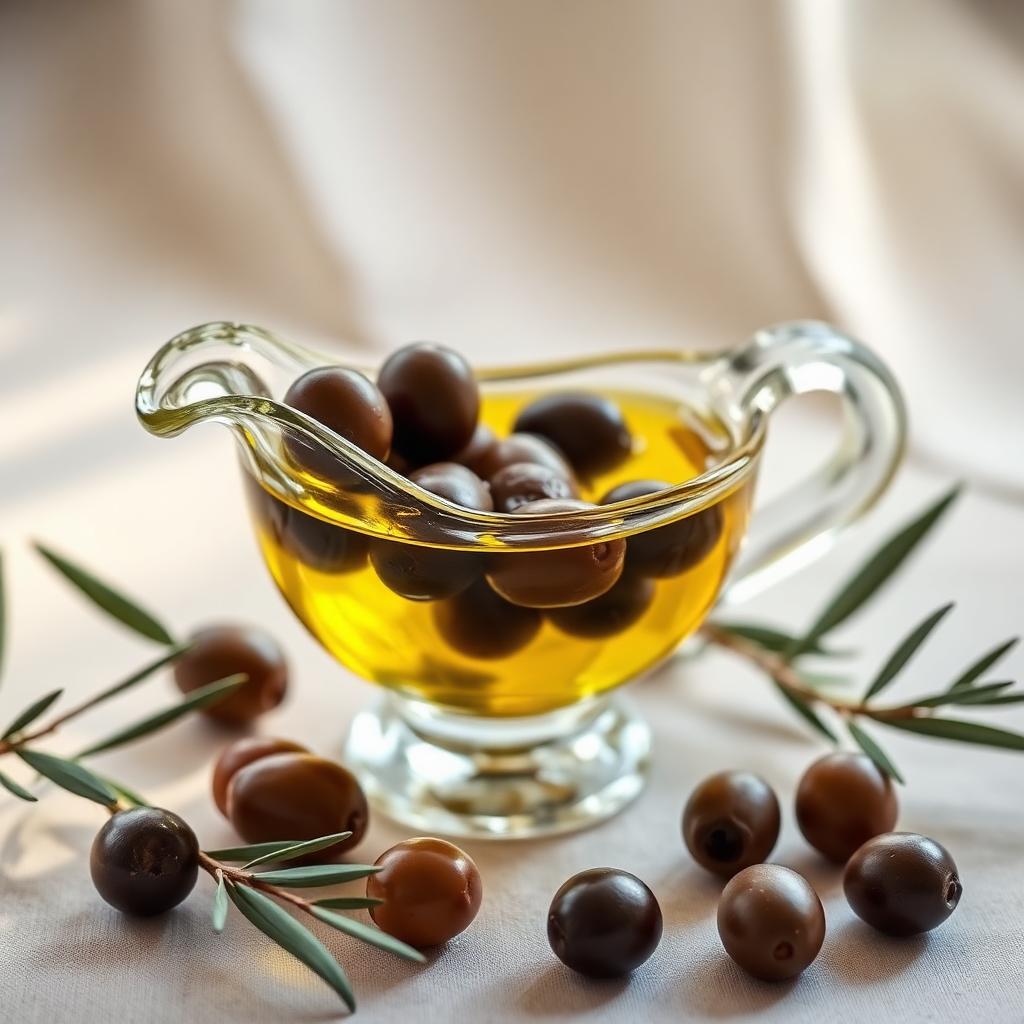
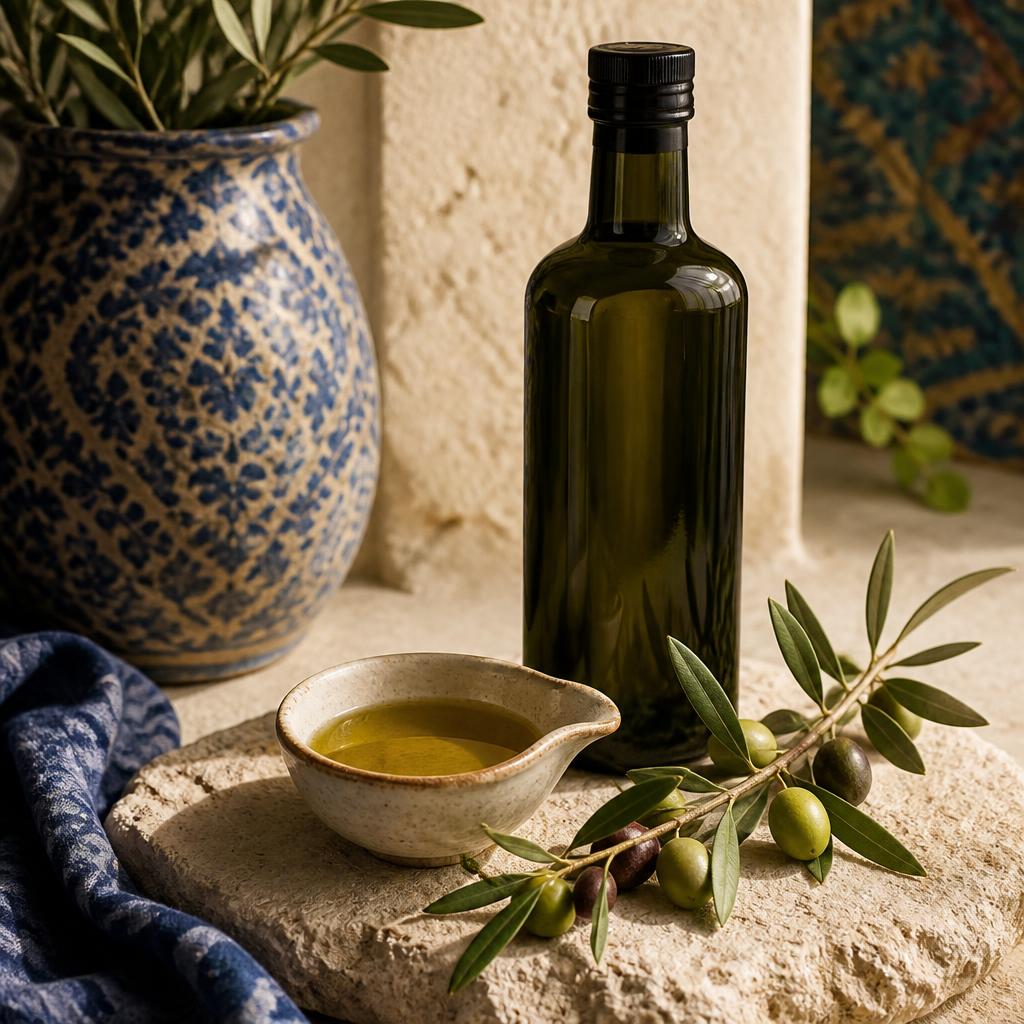
Two tablespoons of extra-virgin olive oil a day is one of the most durably studied habits for heart and brain aging.
The polyphenol (protective plant compounds) oleocanthal — the peppery bite in fresh EVOO — behaves biochemically like a low-dose ibuprofen.
Freshness matters more than country of origin: buy a bottle with a harvest date within the last twelve months.
What Else to Know
EVOO is more heat-stable than often claimed. Its antioxidants protect it through everyday sautéing.
If there's one everyday fat at the heart of Mediterranean eating, it's olive oil, especially extra-virgin (EVOO). This is one of the best-supported dietary patterns for heart health and longevity, and much of the benefit comes from monounsaturated fats and polyphenols (protective plant compounds) such as oleocanthal.
Known to botanists as Olea europaea.
Chapter 2 of 18
Why It Matters
Look at almost any landmark trial of a heart-healthy way of eating — PREDIMED, PREDIMED-PLUS, the Lyon Heart Study — and olive oil is at its centre. When your vegetables, herbs, and fish are carried by a living, polyphenol-rich oil rather than a refined seed oil, the effect on blood vessels, blood sugar, and long-term memory and thinking can add up to years of healthy life. Very few daily choices are this well documented.
What That Means Day to Day
The 2022 update of the PREDIMED cohort found that people consuming more than half a tablespoon of extra-virgin olive oil daily had roughly a 20 percent lower risk of heart and blood vessel death and 29 percent lower risk of neurodegenerative-disease death than those who rarely used it. Very few single foods have evidence at that scale. That small green bottle beside the stove is more than a condiment.
Calms inflammation through its polyphenols (protective plant compounds).
Helps your body absorb the fat-soluble vitamins in your food.
Associated with healthy aging in Blue Zones.
Chapter 3 of 18
What It Contains
Oleic acid is the monounsaturated fat that dominates olive oil and reshapes cell membranes toward less inflammation.
Oleocanthal: polyphenol (protective plant compounds) responsible for the peppery throat catch. A natural COX inhibitor at low doses.
Hydroxytyrosol & tyrosol: small phenolic molecules with strong antioxidant activity in vascular (relating to the blood vessels) tissue.
Squalene & vitamin E (α-tocopherol): fat-soluble antioxidants that also protect the oil itself from oxidation.
Chapter 4 of 18
What Studies in People Show
Strong evidence
In the PREDIMED trial (n≈7,447), a Mediterranean diet supplemented with extra-virgin olive oil reduced major heart and blood vessel events by ~30% compared with a low-fat diet over 5 years.Strong evidence
In pooled Nurses' Health Study and Health Professionals Follow-up Study data (n≈92,000, 28 years), consumption of more than ~½ Tbsp/day of olive oil was associated with ~19% lower heart and blood vessel mortality and ~29% lower neurodegenerative-disease mortality.Strong evidence
Moderate evidence
Oleocanthal in fresh extra-virgin olive oil inhibits cyclooxygenase in a manner comparable to low-dose ibuprofen — offering a plausible biochemical basis for olive oil's anti-inflammatory effect.Moderate evidence
In the PREDIMED-Plus and MIND-diet cohorts, higher olive-oil intake is linked to slower cognitive (to do with thinking and memory) decline in older adults.Moderate evidence
Chapter 5 of 18
Preparation and Kitchen Use
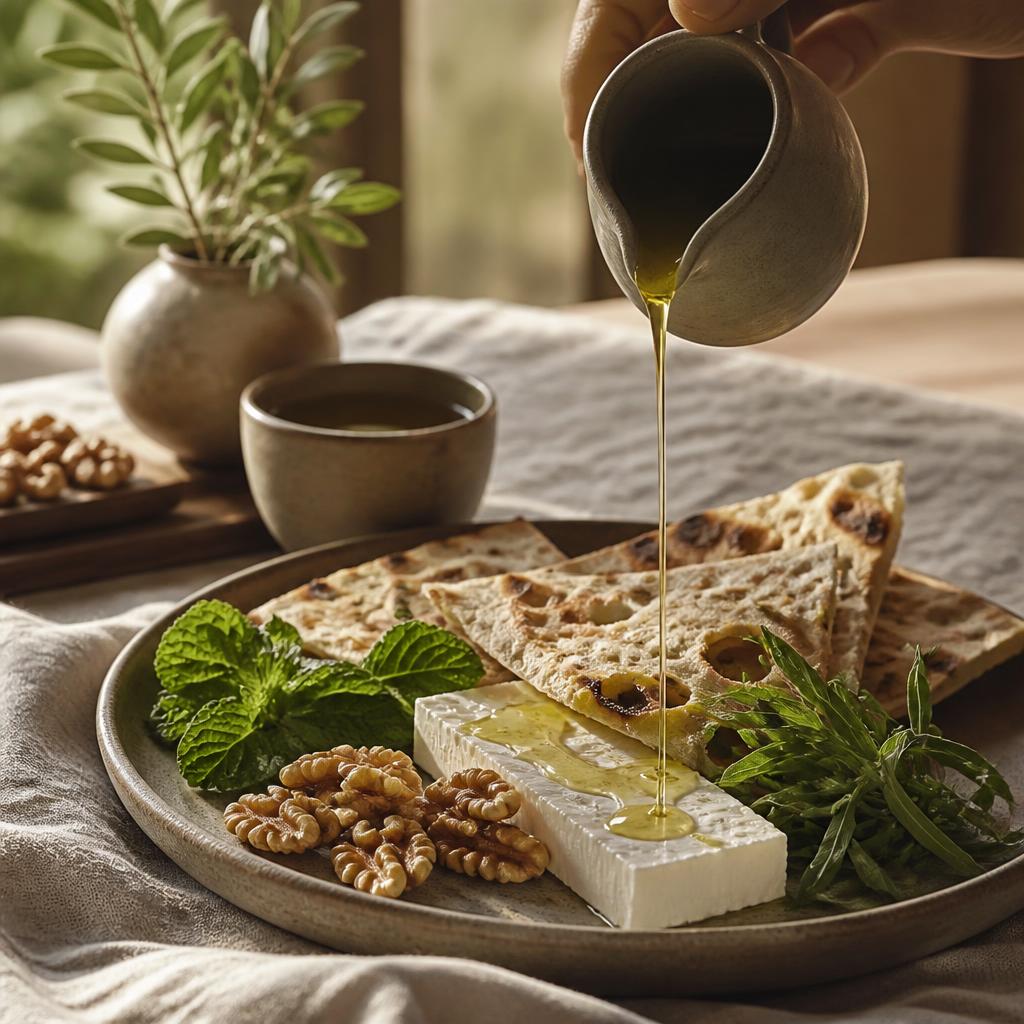
Drizzle uncooked onto the finished plate at the largest meal of the day — lunch in the Persian rhythm. That's where polyphenols (protective plant compounds) survive intact and where fat helps absorb the vegetables around them.
Drizzle 1–2 tablespoons of extra-virgin olive oil, unheated, over the finished plate — this is where the polyphenols (protective plant compounds) land.
Warm gently with garlic and dried mint for kashk-e bademjan or as a finishing oil for lentil soups.
In the kitchen: infused with rosemary or thyme for a herbal table oil (1 sprig per cup, 2 weeks). Whisk with lemon, sumac, and a pinch of salt for a five-second Persian dressing.
Drizzle 1–2 Tbsp daily over salads, soups, and grain bowls.
Light sautéing is fine; EVOO is more stable than often claimed.
Pair with herbs (rosemary, thyme, garlic) for flavored oils.
Cook everyday meals in it: sautéing at medium heat is well within EVOO's stability range.
Chapter 6 of 18
Medicines and Interactions
Medication interaction:
Antihypertensives (ACE inhibitors, ARBs, diuretics) — Regular EVOO can add a small blood-pressure-lowering effect; welcome for most people, but monitor if you already run low. (low concern)
Medication interaction:
Warfarin (a blood-thinning medicine) and other anticoagulants — Vitamin K content is minimal and daily culinary olive oil is generally safe; large sudden changes in intake are the only concern. (low concern)
Medication interaction:
Statins — No known negative interaction; olive oil complements statins in reducing heart and blood vessel events in trials. (low concern)
Medication interaction:
Diabetes medications — May slightly improve insulin sensitivity; monitor glucose when increasing intake alongside insulin or sulfonylureas (a common type of diabetes tablet). (moderate concern)
Chapter 7 of 18
Who Should Be Careful
General caution:
Active gallstones — large boluses (e.g. olive-oil 'liver flushes') can trigger biliary colic.
General caution:
Calorie-dense; measure if managing weight.
General caution:
Buy fresh and store dark to preserve polyphenols (protective plant compounds).
Medication interaction:
Severe hypotension on multiple antihypertensives — coordinate, as olive oil can mildly lower blood pressure further.
Adulteration
General caution:
Diabetes on tight glycemic control — pair with carbohydrate, not alone, to avoid hypoglycemia (blood sugar dropping too low).
General caution:
Adulteration — many supermarket 'extra-virgin' oils fail authenticity testing; buy from a trusted source with a harvest date.
Chapter 8 of 18
Pregnancy, Children and Older Adults
Pregnancy and breastfeeding
Pregnancy and breastfeeding:
Extra-virgin olive oil is a central fat of the Mediterranean diet studied in pregnancy and consistently linked to better outcomes for the mother's blood pressure and the baby's neurodevelopment. Everyday culinary use isn't only safe but encouraged. Avoid unregulated high-dose 'olive-oil cleanses' or 'liver flushes.'
Children
Children:
Olive oil is one of the first fats introduced in traditional Persian infant feeding — a small spoon stirred into vegetable purées from around six months. Through childhood, it's the household's default cooking and finishing oil.
Older adults
Older adults:
For older adults, extra-virgin olive oil is arguably the single most impactful dietary swap: it replaces refined seed oils and butter with a fat linked to lower heart and blood vessel, cancer, and Alzheimer-related mortality. Small, regular doses drizzled over already-prepared food are easiest on chewing, digestion, and appetite.
Chapter 9 of 18
Traditional Persian Perspective
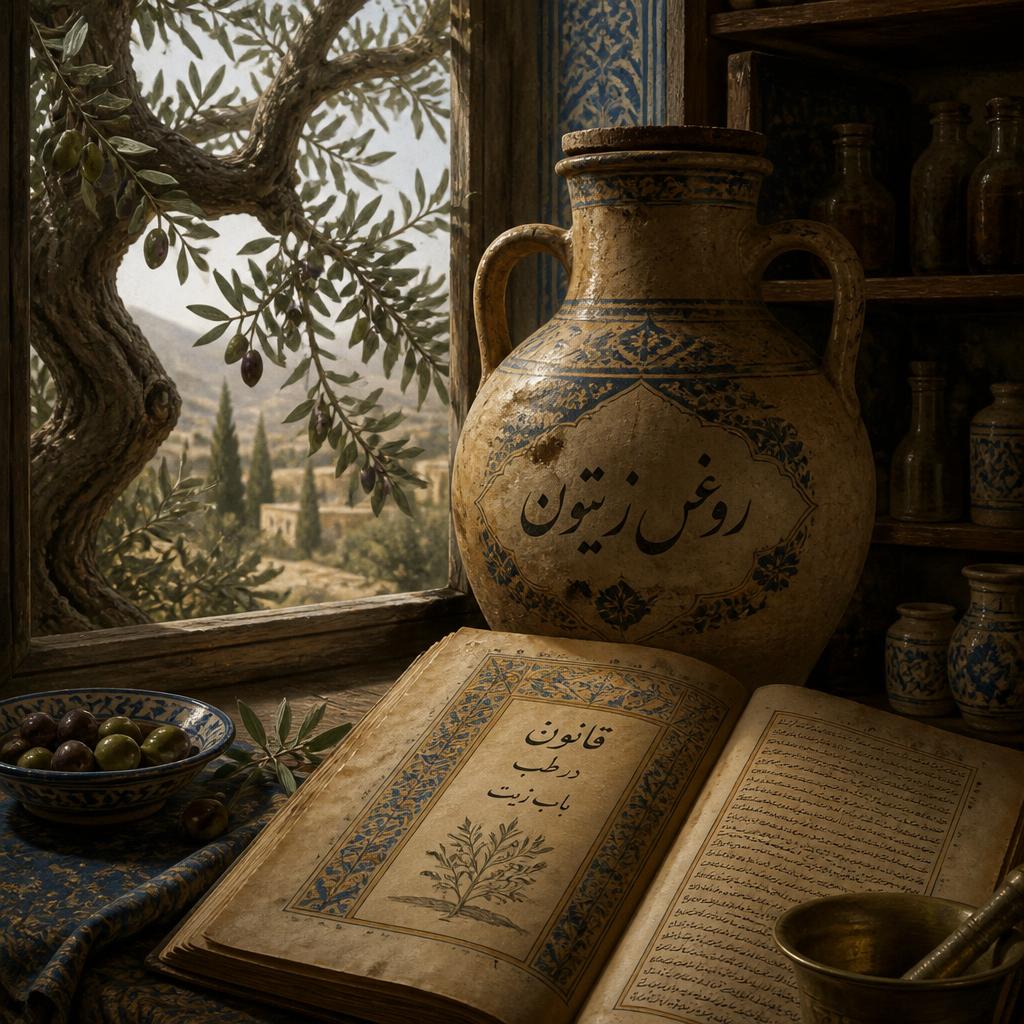
Persian temperament: Warm & Moist (1st degree). Classical Persian sources call fresh olive oil (zayt) warm and moist in the first degree — softening for dry, cold constitutions, quieting for inflamed joints, and 'polishing' for the vessels of the heart. Green (unripe) oil is slightly more astringent (tightens tissue and leaves a dry feeling in the mouth) and drying. The everyday cooking oil should be the ripe, golden-green pressing.
In the Household
The olive tree is one of the oldest cultivated plants in the wider Persian and Mediterranean world. Avicenna gives zayt (olive oil) a full chapter in the Canon, distinguishing green (unripe, cool and drying) from ripe (warm and moistening) pressings and using fresh oil for cough, joint stiffness, and dry skin.
Persian medicine considers extra-virgin olive oil warm and moist in the first degree — a food-medicine said to soften dry constitutions, quiet inflamed joints, and 'polish' the vessels of the heart.
Warm scalp and hair oil for dryness and hair strength.
Base for warming herbal infusions (rosemary, thyme, garlic).
Chapter 10 of 18
In Persian Life
Across northern Iran: from Rudbar in Gilan to the terraces of Manjil — olive orchards still frame the landscapes described in Ferdowsi's Shahnameh. At the table, olive oil, cracked green olives cured with pomegranate and walnut (zeytun parvardeh), and warm bread with olive oil, feta, and mint remain a defining Persian breakfast.
Chapter 11 of 18
What It Goes With
Pairing:
Rosemary
Rosemary polyphenols (protective plant compounds) dissolve into olive oil. The pair supports circulation and mental clarity, and is a natural preservative for the oil itself.
Herb:
Thyme
Meets olive oil on warm bread. A daily Levantine and Persian breakfast for immunity and mood. Za'atar — thyme, sumac, sesame.
Pairing:
Garlic
Warmed briefly (not fried) in olive oil, garlic's allicin (the compound formed when garlic is crushed) becomes gentler and the pair is one of the most-studied combinations for blood-vessel health.
Chapter 12 of 18
What It Goes With: More Pairings
Spice:
Turmeric
Turmeric's curcumin (the yellow compound that gives turmeric its colour) is fat-soluble. A spoon of olive oil in a lentil soup dramatically improves its absorption.
Pairing:
Tomato
Cooking tomatoes with olive oil multiplies the bioavailability (how much of it your body can actually absorb) of lycopene (the red pigment in tomatoes) several-fold. A heart-healthy pair even beyond either alone.
Pairing:
Walnuts
The two central fats of a Persian-Mediterranean plate — monounsaturated olive fat plus omega-3 from walnuts — cover complementary lipid needs.
Chapter 13 of 18
What It Goes With: A Few More Pairings
Dairy:
Feta cheese
The Persian breakfast trio — bread, olive oil, feta, walnuts, and mint — is a small daily masterclass in slow, satisfying fat.
Pairing:
Lentils
A spoon of olive oil stirred into finished lentil soup smooths the texture and multiplies the absorption of fat-soluble nutrients.
Chapter 14 of 18
Through the Year
Spring:
Spring
Drizzle over the first tender herbs of the Persian sabzi plate — parsley, tarragon, radish — as digestion re-awakens.
Summer:
Summer
Whisk with lemon, sumac, and mint over cucumber and tomato salads. Olive oil helps carry lycopene (the red pigment in tomatoes) and beta-carotene from summer produce.
Autumn:
Autumn
Warm briefly with garlic and dried mint as a finishing oil for pumpkin and lentil soups (āsh).
Winter:
Winter
Rub a spoonful into dry hands, elbows, and scalp after a hot bath — a small piece of Persian home medicine on cold evenings.
Chapter 15 of 18
Questions People Ask
Can I cook with olive oil?
Yes. Extra-virgin olive oil's smoke point (~375°F) covers most home cooking, and its antioxidants protect it during heat.
How do I tell a real extra-virgin oil?
Look for a harvest date within the past year, a dark glass bottle, and a peppery bite at the back of the throat when tasted plain — that pepper is the polyphenol (protective plant compounds) oleocanthal.
Is olive oil better than fish oil for the heart?
They work differently. Olive oil's benefits come mostly from displacing worse fats and delivering polyphenols (protective plant compounds) daily. Fish oil contributes long-chain omega-3s. In practice, most Persian and Mediterranean tables lean on olive oil daily and fish two to three times a week.
Does light or refined olive oil work the same?
No. Refining strips the polyphenols (protective plant compounds) and much of the aroma — you keep the calories and lose most of the medicine. Save refined oils for high-heat cooking only if needed and pour the extra-virgin over the plate.
Chapter 16 of 18
Sources
PREDIMED: primary prevention of CVD with Mediterranean diet + EVOO — New England Journal of Medicine. https://www.nejm.org/doi/full/10.1056/NEJMoa1800389.
Oleocanthal: a phenolic with anti-inflammatory activity like ibuprofen — Nature. https://www.nature.com/articles/437045a
Olive oil intake and risk of total and cause-specific mortality — Journal of the American College of Cardiology. https://www.jacc.org/doi/10.1016/j.jacc.2021.10.041
International Olive Council — composition and health benefits — International Olive Council. https://www.internationaloliveoil.org/
PREDIMED trial: primary prevention of heart and blood vessel disease with a Mediterranean diet supplemented with extra-virgin olive oil or nuts — Estruch et al., NEJM, 2018 — PubMed 29897866. Https://pubmed.ncbi.nlm.nih.gov/29897866/.
Chapter 17 of 18
Sources (part 2 of 3)
Consumption of olive oil and risk of total and cause-specific mortality — Nurses' Health Study & Health Professionals Follow-up Study — Guasch-Ferré et al., JACC, 2022 — PubMed 35065707. https://pubmed.ncbi.nlm.nih.gov/35065707/
Oleocanthal, a natural anti-inflammatory agent from extra-virgin olive oil — Beauchamp et al., Nature, 2005 — PubMed 16136122. https://pubmed.ncbi.nlm.nih.gov/16136122/
Sad Giah Hezar Darman (صد گیاه و هزار درمان) — One Hundred Plants and One Thousand Remedies — Dr. Hossein Erfani, 4th edition (1375 / 1996–1997). Primary traditional Persian herbal reference cited throughout this platform. Presented as traditional knowledge, not as modern medical proof.
Office of Dietary Supplements: fact Sheets — US National Institutes of Health (NIH). https://ods.od.nih.gov/factsheets/list-all/.
Herbal Database: memorial Sloan Kettering Cancer Center. https://www.mskcc.org/cancer-care/diagnosis-treatment/symptom-management/integrative-medicine/herbs.
Herbs at a Glance: uS NIH National Center for Complementary and Integrative Health (NCCIH). https://www.nccih.nih.gov/health/herbsataglance.
Chapter 18 of 18
Sources (part 3 of 3)
FoodData Central: searchable nutrient database — US Department of Agriculture (USDA). https://fdc.nal.usda.gov/.
The Nutrition Source: harvard T.H. Chan School of Public Health. https://www.hsph.harvard.edu/nutritionsource/.
PubMed — peer-reviewed biomedical literature — US National Library of Medicine. https://pubmed.ncbi.nlm.nih.gov/