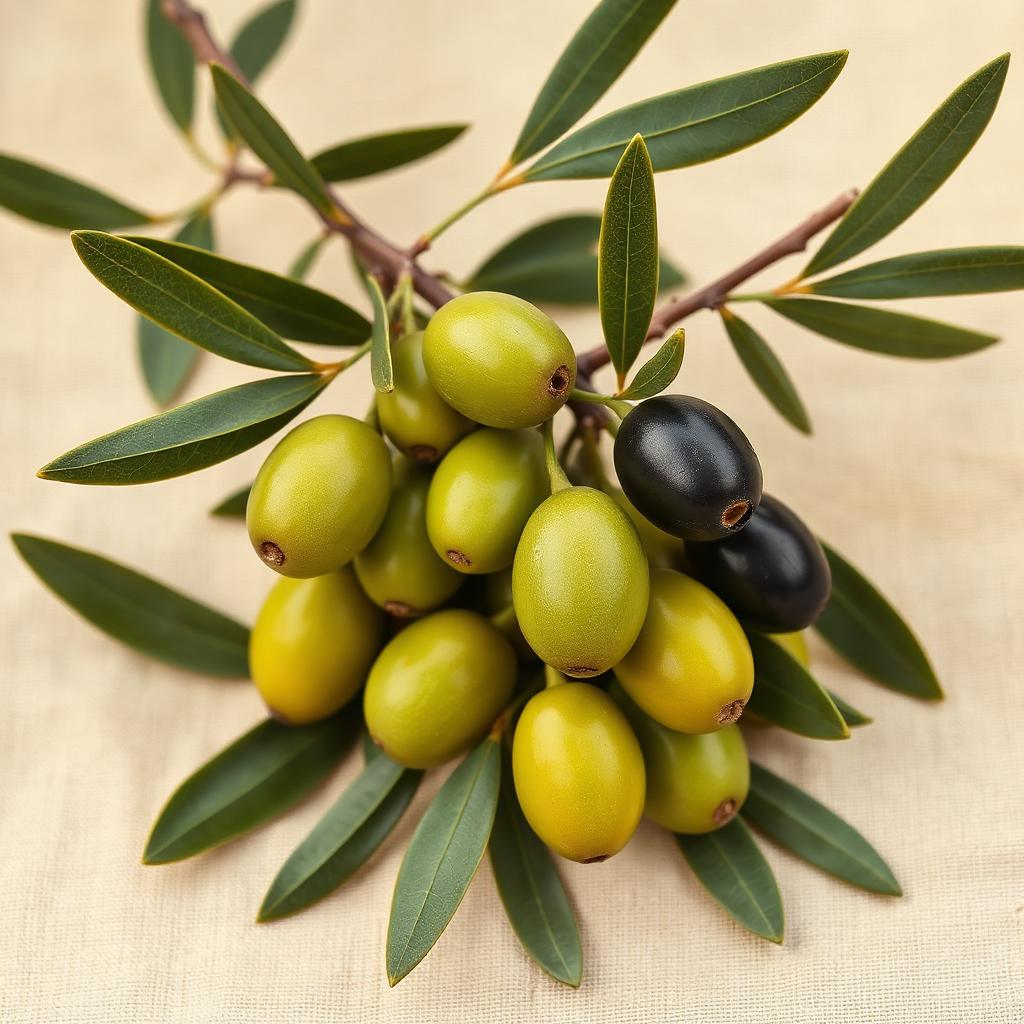
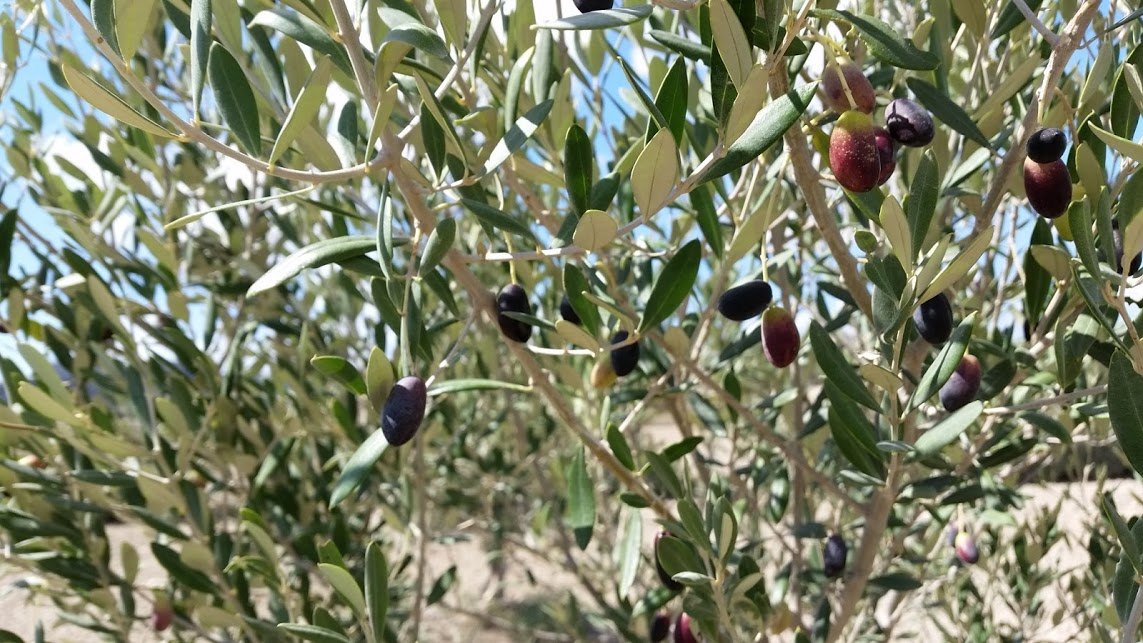
Try an olive straight from the tree and you'll understand why nobody eats it that way. It needs weeks in brine or salt before the bitterness gives way.
You get the same fat family found in olive oil, along with fibre and a portion you can see in your hand. The trade is salt, so think of a small dish rather than a large bowl.
Olives make the Mediterranean fat pattern easy to enjoy every day. For older adults, the salt matters more than the fat. Five or six good olives, rinsed, is the right habit.
What That Means Day to Day
It was used: rich in monounsaturated fat, the Mediterranean-diet fat family. Hydroxytyrosol and oleuropein, well-studied olive polyphenols (protective plant compounds). Fat and fibre together, so a few olives satisfy.
An olive is a small stone fruit with one hard pit. It grows green and turns purple then black as it ripens. Straight from the tree it's painfully bitter. Every olive you have eaten was cured first.
Family: Oleaceae (olive family).
Chapter 3 of 13
What It Contains
Primary compounds
Oleic acid. Vitamin E.
Other notable constituents
Minerals: Sodium (high, from curing), Iron, Copper, Calcium · Fiber: ~1 g per 10 olives
Chapter 4 of 13
What Studies in People Show
What studies in people show
A Mediterranean diet with extra-virgin olive oil reduced major heart and blood vessel events in a large randomised trial.Strong evidence
Olive polyphenols (protective plant compounds) including hydroxytyrosol protect LDL (the harmful type of cholesterol) particles from oxidation in human feeding studies.Moderate evidence
Chapter 5 of 13
Preparation and Kitchen Use
Home curing: slit each olive, soak in daily-changed water for a week or more, then keep in salt brine.
Rinse shop olives before serving to cut the salt.
In the kitchen: dress with walnut, pomegranate paste, mint and garlic for the Gilani style. Cured olives, whole, as part of a meze table.
Other Ways to Use It
In the kitchen: rinsed and chopped into rice, salad or bread dough. A small dish of olives with bread and cheese. Zeytoon parvardeh: olives dressed with walnut, pomegranate and mint. Chopped through a salad instead of adding extra salt.
Chapter 6 of 13
Medicines and Interactions
Medication interaction:
Blood pressure medicine — The problem is salt, not the fruit. Cured olives are very salty and a daily bowl can undo what the tablet is doing. (moderate concern)
Medication interaction:
Blood thinners — Olive oil in food amounts isn't a concern. High-dose olive leaf supplements are unstudied here and are best avoided. (low concern)
Medication interaction:
Diabetes medicine — Olive leaf extract may lower blood sugar. The fruit and oil don't, but the supplement is a different product. (low concern)
Chapter 7 of 13
Who Should Be Careful
General caution:
Cured olives are salty. With high blood pressure, heart failure or kidney disease, keep servings small and rinse them.
General caution:
Unpitted olives can crack a tooth — warn guests.
General caution:
Jet-black soft olives are usually green olives darkened with ferrous gluconate.
Chapter 8 of 13
Pregnancy, Children and Older Adults
Pregnancy and breastfeeding
Pregnancy and breastfeeding:
Olives and olive oil are ordinary foods in pregnancy and the oil is a good fat to cook with. Watch the salt if you're swelling, and skip olive leaf supplements.
Children
Children:
Most children spit the first olive out and eat the tenth. Whole olives with stones are a choking risk under four, so pit and chop them.
Older adults
Older adults:
Olive oil is the single easiest change in an older kitchen: it replaces harder fats, helps food go down, and has the best evidence behind it of any cooking oil. The cured fruit is the salty part to keep an eye on.
Chapter 9 of 13
Traditional Persian Perspective
Persian temperament: Warm & Dry (1st degree). Cured olives were read as warming and drying, and the oil as gently warming and moistening — which is why the oil, not the fruit, went on the skin.
In Persian medicine, the olive is warm and dry and valued as a strengthening food for a weak appetite. The oil was also applied to dry skin and joints. Bitter unripe olives were considered more drying than ripe black ones.
Olive oil rubbed on dry skin and stiff joints — the oil.
Chapter 10 of 13
What It Goes With
Pairing:
Walnut
Zeytoon parvardeh is olives crushed with walnut and pomegranate. And it's one of the great dishes of northern Iran.
Fruit:
Pomegranate
Pomegranate molasses turns cured olives from salty to sweet, sour and dark all at once.
Pairing:
Feta
Salt on salt should not work, but with bread and herbs it's the standard Persian breakfast plate.
Pairing:
Garlic
One crushed clove in the marinade changes the whole jar by the second day.
Chapter 11 of 13
Through the Year
Spring:
Spring
The trees flower. Nothing to pick, and last year's cured jars are what the kitchen is living on.
Summer:
Summer
Green fruit is forming and hard. Some households pick early for green table olives.
Autumn:
Autumn
Harvest. Northern Iran cures its olives now and the first pressing of oil is made.
Winter:
Winter
The best month for fresh oil, which still tastes peppery. Cured olives are on every table.
Chapter 12 of 13
Questions People Ask
Are green and black olives different fruits?
No. Green olives are picked unripe. Black ones ripened on the tree.
Why can't I eat one off the tree?
Oleuropein makes it bitter enough to be inedible. Curing washes it out.
How many is a normal serving?
About five or six olives. Rinse them first if you're watching salt.
Chapter 13 of 13
Sources
Table olives: composition, processing and health effects — Critical Reviews in Food Science and Nutrition. https://pubmed.ncbi.nlm.nih.gov/28524697/
Olive polyphenols and heart and blood vessel risk — Nutrients. Https://pubmed.ncbi.nlm.nih.gov/31035445/