High water and potassium make it genuinely cooling in hot weather.
The orange flesh carries carotenoids (the orange and yellow plant pigments your body can use) for skin and eyes.
A medium fruit is about 60 calories with 2 g of fibre: sweet without consequence.
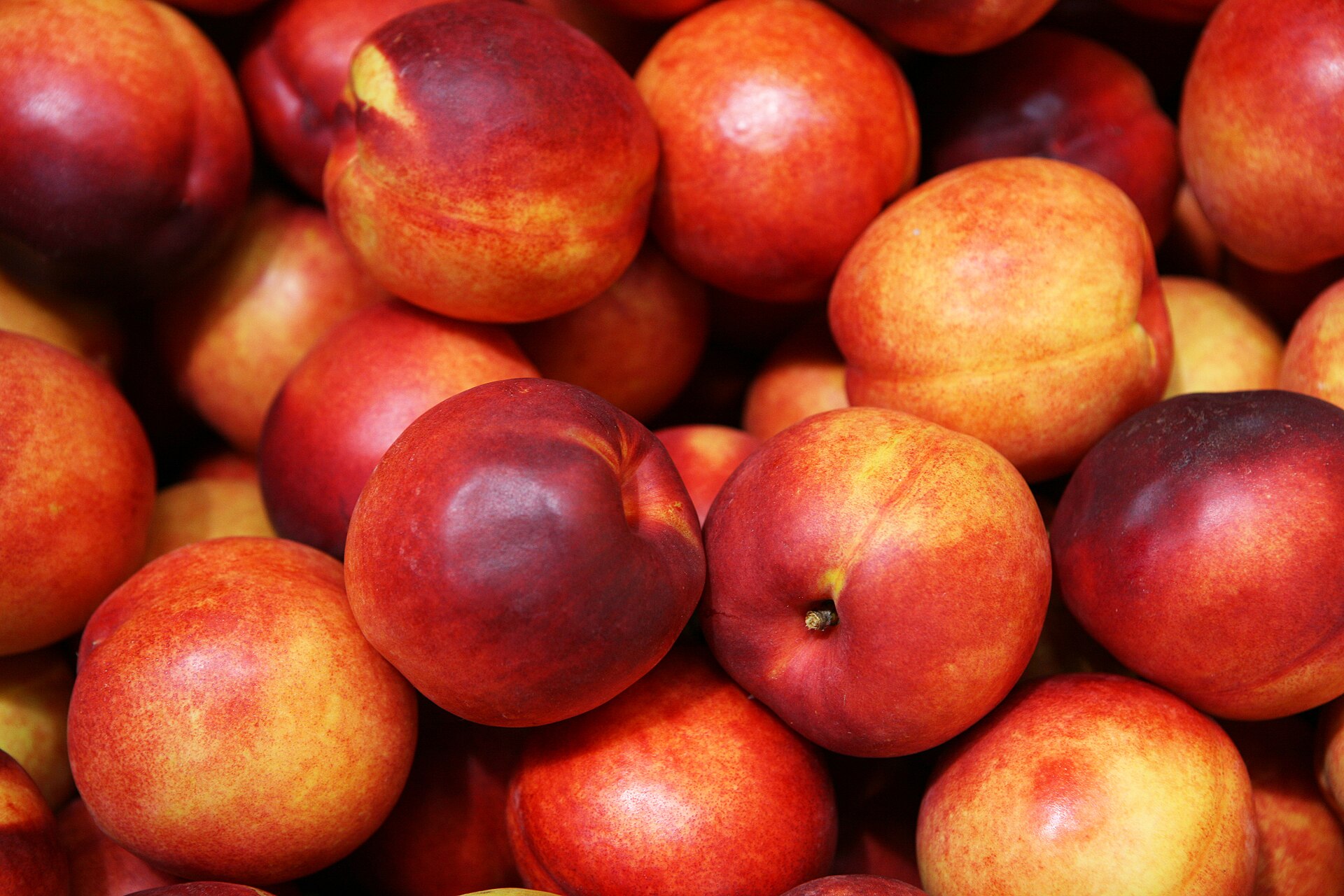
A nectarine is simply a peach with one gene switched off — the one that makes the fuzz. Iran has grown both for over a thousand years. Shalil reaches the market with the worst of the summer heat, and eating one chilled in the afternoon is the standard answer to it.
Known to botanists as Prunus persica var. nucipersica.
Chapter 2 of 13
Why It Matters
Summer appetite often drops just when your body needs hydration and potassium most. A fruit that's mostly water, brings both, and asks for no preparation easily earns its place in the hot months.
Older adults feel thirst less acutely and dehydrate faster in summer. A fruit that's mostly water, soft to chew, and easy to enjoy is a practical answer. Its carotenoids (the orange and yellow plant pigments your body can use) also make a small, steady contribution to eye health across the years.
The water and potassium content helps you hold hydration and blood pressure steady in the heat.
Vitamin C at ordinary portions, roughly 7 mg per fruit.
The fibre is gentle, which is why it suits a summer stomach that refuses heavy food.
Chapter 3 of 13
What It Contains
Primary compounds
Chlorogenic acid, the same polyphenol (protective plant compounds) studied in coffee, is the main antioxidant in the flesh.
Beta-cryptoxanthin is a carotenoid (the orange and yellow plant pigments your body can use) with cohort links to lung and joint health.
Potassium runs about 280 mg per fruit, useful in hot weather.
Vitamins
Vitamin C, Vitamin A (from carotenoids), Vitamin K
Other notable constituents
Minerals: Copper · Fiber: About 2.4 g per medium fruit
Chapter 4 of 13
What Studies in People Show
What studies in people show
Stone-fruit polyphenols (protective plant compounds) reduced markers of metabolic syndrome (a group of problems including high blood sugar, blood pressure and waist size) in animal and pilot human studies.Emerging evidence
Higher carotenoid (the orange and yellow plant pigments your body can use) intake was associated with better skin and eye outcomes in observational (based on watching what people already do) research.Emerging evidence
Chapter 5 of 13
Preparation and Kitchen Use
July and August afternoons, straight from the fridge.
Ripen at room temperature, then refrigerate. A ripe shalil gives slightly at the seam.
Wash just before eating, not before storing, or the skin spoils faster.
To poach: simmer halves 5 minutes in water with honey and a splash of rose water · To grill: cut side down, 2 minutes on a hot pan, no oil needed.
Eat chilled out of hand in the afternoon heat.
Slice over yogurt with honey when you want it to be dessert.
Halve and grill briefly, then serve with thick yogurt and cardamom.
Poach halves in light rose syrup for a dinner-party dessert.
Chapter 6 of 13
Who Should Be Careful
Allergy:
A small number of people with Prunus pollen allergy get an itchy mouth from raw nectarines. Cooked fruit is usually fine.
General caution:
Very unripe fruit is astringent (tightens tissue and leaves a dry feeling in the mouth) and can cramp a sensitive stomach. Let it ripen.
Allergy:
Documented Prunus or latex-fruit allergy with swelling.
Chapter 7 of 13
Pregnancy, Children and Older Adults
Pregnancy and breastfeeding
Pregnancy and breastfeeding:
A good summer fruit in pregnancy: hydrating, with folate and vitamin C in modest amounts. Wash well, since it's eaten with the skin on.
Children
Children:
Children prefer it to the peach once the fuzz is gone from the equation. Slice it for small children, and mind the stone in fruit you hand over whole.
Older adults
Older adults:
Ripe shalil is soft, fragrant and easy to chew, and the juice itself helps on hot days when drinking feels like a chore. Choose fruit that gives at the seam; hard fruit disappoints.
Chapter 8 of 13
Traditional Persian Perspective
Persian temperament: Cool & Moist (1st degree). Cooling and thirst-quenching in high heat. Light on the stomach.
Hakims read shalil as cool and moist: it quenches thirst, cools a hot liver, and sits gently on the stomach. Classical texts make it a fruit of choice at the peak of summer, preferred over anything heavy when the heat suppresses appetite.
In the Household
Peaches and their smooth-skinned form travelled from China along the Silk Road and were cultivated on the Iranian plateau over a thousand years ago.
The name nectarine comes from 'nectar', a later European naming. The fruit itself is far older in Persian orchards.
Classical Persian household advice lists shalil among the cooling fruits for feverish summers.
Shalil belongs to the summer trio of the Persian fruit table, alongside grapes and melons. Visit an Iranian home in August and you may be handed a plate of chilled fruit, with the shalil disappearing first.
Chapter 9 of 13
What It Goes With
Dairy:
Yogurt
Sliced shalil over yogurt with honey is the summer dessert that needs no recipe.
Honey:
Honey
A drizzle over the cut fruit. It turns a snack into something you would serve a guest.
Rose:
Rose Water
A teaspoon in the poaching syrup, or over sliced fruit. The pairing is old and it works.
Spice:
Cardamom
A pinch over grilled halves. Warm spice against cool fruit, the hakim's balance.
Chapter 10 of 13
Through the Year
Spring:
Spring
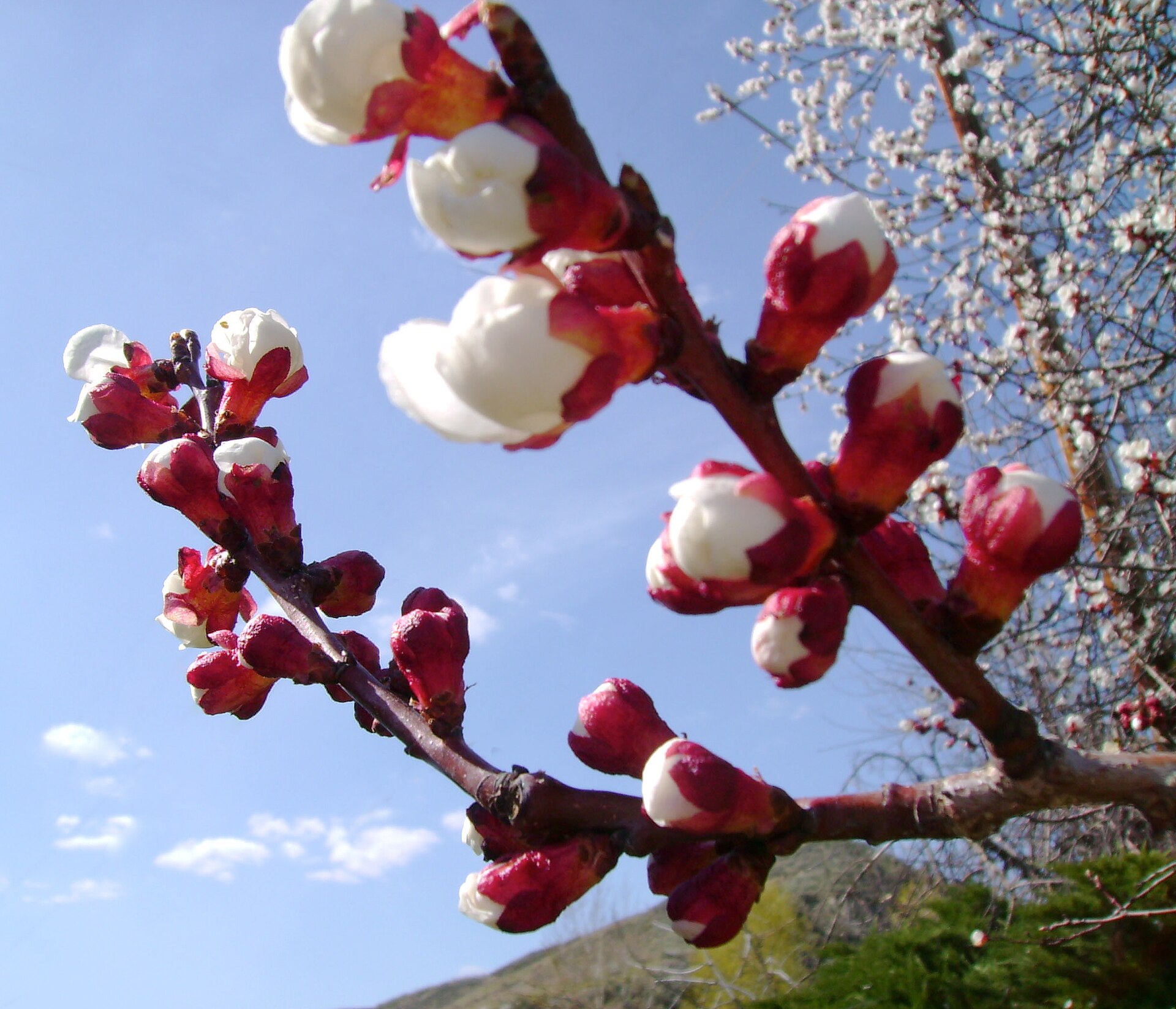
Not yet. Blossom is on the trees. The fruit belongs to summer.
Summer:
Summer
The season, July and August above all. Eat it daily while the local crop lasts.
Autumn:
Autumn
Late fruit appears into early autumn but loses perfume fast. Choose what smells ripe.
Winter:
Winter
Imported nectarines are picked hard and travel badly. Eat citrus and wait.
Chapter 11 of 13
Questions People Ask
Is a nectarine just a smooth peach?
Essentially yes. One recessive gene removes the fuzz. The same tree can even carry both fruits on different branches.
Should I eat the skin?
Yes. Much of the fibre and many of the polyphenols (protective plant compounds) sit in and under the skin. Just wash it.
How do I pick a ripe one?
Smell it. A ripe shalil smells of itself at the stem end and gives slightly when pressed at the seam. Colour alone lies.
Chapter 12 of 13
Sources
Sad Giah Hezar Darman (صد گیاه و هزار درمان) — One Hundred Plants and One Thousand Remedies — Dr. Hossein Erfani, 4th edition (1375 / 1996–1997). Primary traditional Persian herbal reference cited throughout this platform. Presented as traditional knowledge, not as modern medical proof.
Office of Dietary Supplements: fact Sheets — US National Institutes of Health (NIH). https://ods.od.nih.gov/factsheets/list-all/.
Herbal Database: memorial Sloan Kettering Cancer Center. https://www.mskcc.org/cancer-care/diagnosis-treatment/symptom-management/integrative-medicine/herbs.
Herbs at a Glance: uS NIH National Center for Complementary and Integrative Health (NCCIH). https://www.nccih.nih.gov/health/herbsataglance.
FoodData Central: searchable nutrient database — US Department of Agriculture (USDA). https://fdc.nal.usda.gov/.
Chapter 13 of 13
Sources (continued)
The Nutrition Source: harvard T.H. Chan School of Public Health. https://www.hsph.harvard.edu/nutritionsource/.
PubMed — peer-reviewed biomedical literature — US National Library of Medicine. https://pubmed.ncbi.nlm.nih.gov/