Everyday Persian mint is gentler than peppermint, fine for daily use.
Dried mint sautéed in oil (na'na dāgh) is a classic Persian flavor and digestive aid.
Trials suggest spearmint tea may support women's hormonal balance.
Spearmint — na'na — is the mint you meet all through Persian cooking: fresh in salads, dried in soups, and steeped in tea. It's gentler than peppermint, so it slips easily into an everyday routine.
Known to botanists as Mentha spicata.
Chapter 2 of 18
Why Herbalists Still Reach for It
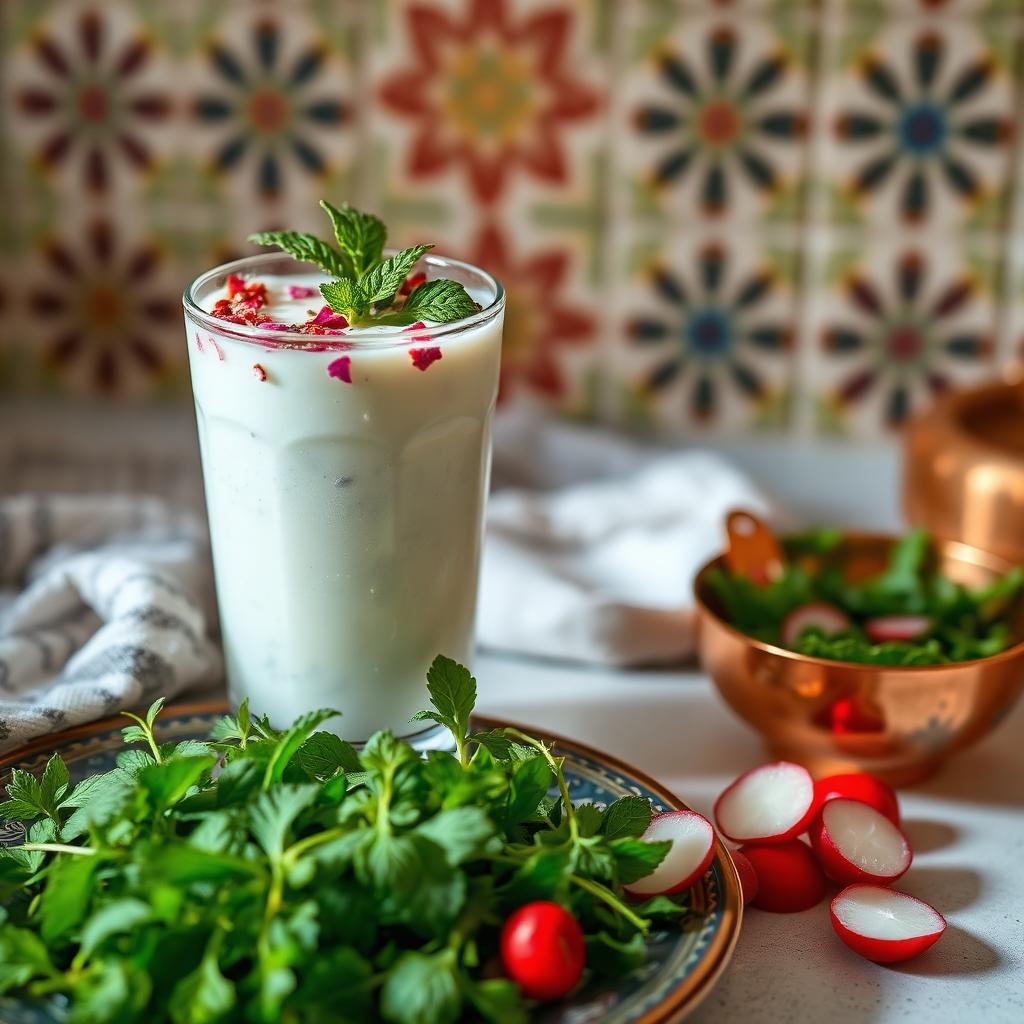
When your stomach feels slow, a meal sits heavily, or your focus turns dull, mint is an easy ingredient to reach for. A glass of doogh with mint, or dried mint over ash and stew, brings those uses into one familiar Persian habit.
Supporting digestion each day may ease post-meal inflammation and help your body draw nutrients from food — both matter quietly across the decades after 50. Spearmint's polyphenols (rosmarinic acid) also bring antioxidants without caffeine or much cost.
It was used: soothes occasional digestive upset, aromatic relief for tension headaches, and freshens breath naturally.
Chapter 3 of 18
The Plant Itself
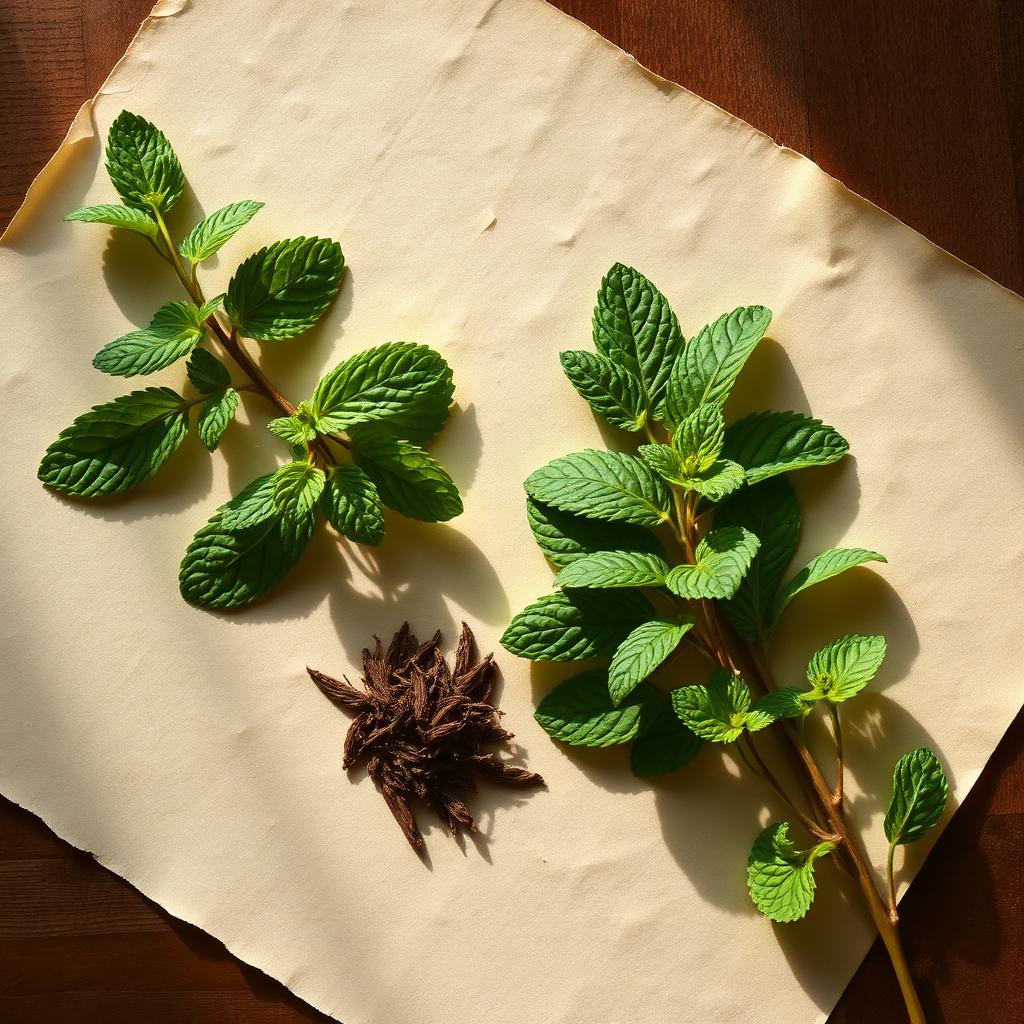
Spearmint is a fast-spreading perennial 30–100 cm tall with square stems, bright green lance-shaped serrated leaves, and pale pink-violet flower spikes in summer. The aerial parts, fresh or dried, are the medicinal portion. Unlike peppermint, spearmint contains very little menthol — its dominant aroma comes from carvone.
Family: Lamiaceae (mint family).
Chapter 4 of 18
What Is In It
Primary compounds
Carvone is the dominant aromatic ketone that gives spearmint its distinct sweet aroma.
Limonene is a monoterpene shared with citrus. Mild digestive and calming actions.
Rosmarinic acid is an antioxidant polyphenol (protective plant compounds) common to the Lamiaceae family.
Flavonoids (luteolin, apigenin glycosides) — traditional gentle anxiolytic (calms anxiety) and antioxidant support.
Vitamins
Vitamin A, Vitamin C, Folate
Other notable constituents
Minerals: Iron, Manganese
Chapter 5 of 18
What Studies in People Show
Moderate evidence
Enteric-coated peppermint oil (a close mint relative) is effective for global IBS symptoms in systematic review — the strongest mint-family evidence for functional gut disorders.Moderate evidence
Early research
Two cups of spearmint tea daily for 30 days significantly reduced free testosterone and improved hirsutism scores in women with mild PCOS-related hirsutism.Emerging evidence
Spearmint extract improved working memory and reduced sleep disturbances in older adults with age-associated memory impairment.Emerging evidence
Chapter 6 of 18
How It Is Prepared
Spearmint belongs to the after-meal hour — a small pot of tea, a sprinkle of na'nā-dāgh on the stew, or a glass of doogh alongside the plate. In summer, a cold-brew jar in the fridge is the Persian household reflex.
In the kitchen: fresh in salads and herb plates (sabzi-khordan). Dried sautéed in oil (na'na dāgh) as a finishing garnish for ash and stew.
Damkardeh: 1 Tbsp fresh leaves per cup, 5 min.
Other Ways to Use It
Cold infusion (a drink made by steeping the plant in hot water) in summer with cucumber and lemon.
Brew 1 Tbsp fresh leaves as a 5-minute after-meal tea.
Stir fresh leaves into yogurt, salads, and rice.
Sprinkle dried mint over soups, stews, and bean dishes.
Blend into doogh with yogurt, water, salt, and a pinch of dried rose.
Chapter 7 of 18
Medicines and Interactions
Medication interaction:
GERD / reflux (stomach acid rising into the throat) medication (PPIs, H2 blockers) — Spearmint can relax the lower esophageal sphincter and slightly worsen reflux in sensitive people — usually mild at culinary doses, more noticeable with concentrated oil. (low concern)
Medication interaction:
Antidiabetic medication (metformin, sulfonylureas, insulin) — Small clinical trials suggest spearmint tea may modestly lower fasting glucose; usually additive and gentle, but monitor readings if you use several cups a day. (low concern)
General caution:
Antiandrogen therapy (spironolactone, oral contraceptives with anti-androgen effect) — Spearmint tea has modest antiandrogen activity in women with mild hirsutism — additive, generally welcome, but relevant if you already take anti-androgens. (low concern)
General caution:
Iron supplements — Like all polyphenol-rich teas, spearmint tea taken with iron pills can slightly reduce iron absorption — separate by 1–2 hours. (low concern)
Chapter 8 of 18
Who Should Be Careful
General caution:
Severe GERD or hiatal hernia (mint can relax the lower esophageal sphincter and worsen reflux in sensitive people).
Allergy:
Lamiaceae (mint family) allergy.
Chapter 9 of 18
Pregnancy, Children and Older Adults
General
Children:
Avoid concentrated menthol-rich preparations in infants and small children.
Pregnancy and breastfeeding
Pregnancy and breastfeeding:
Culinary spearmint — fresh leaves in salads, yogurt drinks, and stews, or an occasional cup of weak tea — is broadly considered safe in pregnancy and has a long Persian tradition of easing morning nausea. Concentrated spearmint essential oil (the concentrated aromatic oil of the plant) and daily high-dose extracts are best avoided.
Children
Children:
Fresh spearmint in food and a weak after-meal infusion (a drink made by steeping the plant in hot water) are gentle and traditional for children. Do not give concentrated peppermint or spearmint essential oil internally, and never apply undiluted menthol-rich oils near the face or chest of infants — case reports link this to respiratory distress.
Older adults
Medication interaction:
Spearmint is one of the kindest daily herbs after 60 — a gentle digestive lift without caffeine, useful for post-meal heaviness and the mild low-grade nausea that some cardiac and diabetes medications can cause. Skip the concentrated oil if reflux (stomach acid rising into the throat), hiatal hernia, or a Barrett's diagnosis is in the picture.
Chapter 10 of 18
What Persian Medicine Says
Persian temperament: Warm & Dry (2nd degree). Persian medicine reads spearmint as gently warming and drying — refreshing to a heavy stomach and clearing to a dull head, without the strong cooling menthol of its cousin peppermint.
Persian medicine reads mint as warm and dry in a mild degree. It's the familiar choice when your stomach feels slow, a meal leaves you full or mildly nauseated, or your head feels heavy afterwards. Its gentle character explains why it appears everywhere — fresh on the sabzi khordan platter, dried and crumbled into ash and doogh, or steeped as a simple tea after dinner.
Chapter 11 of 18
What Persian Medicine Says: In the Household
The traditional caution is the reverse of that helpful quality: for people with reflux (stomach acid rising into the throat), mint can loosen the stomach's upper valve, so it's taken sparingly there.
It was used: sluggish digestion and post-meal heaviness. Foul breath and oral freshness. Calming the spirit after rich, heavy meals.
You'll find mint at the heart of the Persian sabzi-khordan herb plate, the doogh yogurt drink, and a bowl of ash reshteh soup.
Chapter 12 of 18
Traditional Formulas
Sharbat-e na'na: mint syrup made from fresh leaves, sugar, and lime — diluted in cold water for summer heat, nausea, and indigestion.
Three-herb digestive blend: equal parts spearmint + fennel + anise as a covered after-meal tea for bloating and post-meal heaviness.
Cooling head-tea: spearmint + rose petals + dried lime peel for tension headaches and overheated focus.
Chapter 13 of 18
What It Goes With
§ More Pairings
Herb:
Chamomile
The two together are a Persian bedtime tea for anxious digestion. Chamomile calms the nerves while mint calms the gut.
Spice:
Cardamom
Cardamom lifts mint's coolness and adds after-meal fragrance to a shared pot of tea.
Rose:
Rose
Dried mint and rose petals in the same doogh cup (one cools the belly, one softens the mood).
Dairy:
Yogurt
Dried mint stirred into plain yogurt is the classical Persian pairing (the two balance each other's coolness and heat).
Pairing:
Cucumber
Mast-o-khiar (yogurt-cucumber-mint) is the Persian summer salad — cooling, digestive, hydrating.
Chapter 14 of 18
What It Goes With: A Few More Pairings
Pairing:
Ash reshteh (Persian noodle soup)
A drizzle of na'nā-dāgh on top is what turns a bowl of ash into a meal rather than a soup.
Pairing:
Watermelon
Fresh spearmint over cold watermelon slices, which is a Persian street-fruit combination older than sugar.
Chapter 15 of 18
Through the Year
Spring:
Spring
Fresh mint arrives in Persian markets alongside the Nowruz herb plate — pile it high in sabzi-khordan and koukou-sabzi.
Summer:
Summer
Cold doogh whisked with dried mint and rose is the Persian answer to a hot afternoon.
Autumn:
Autumn
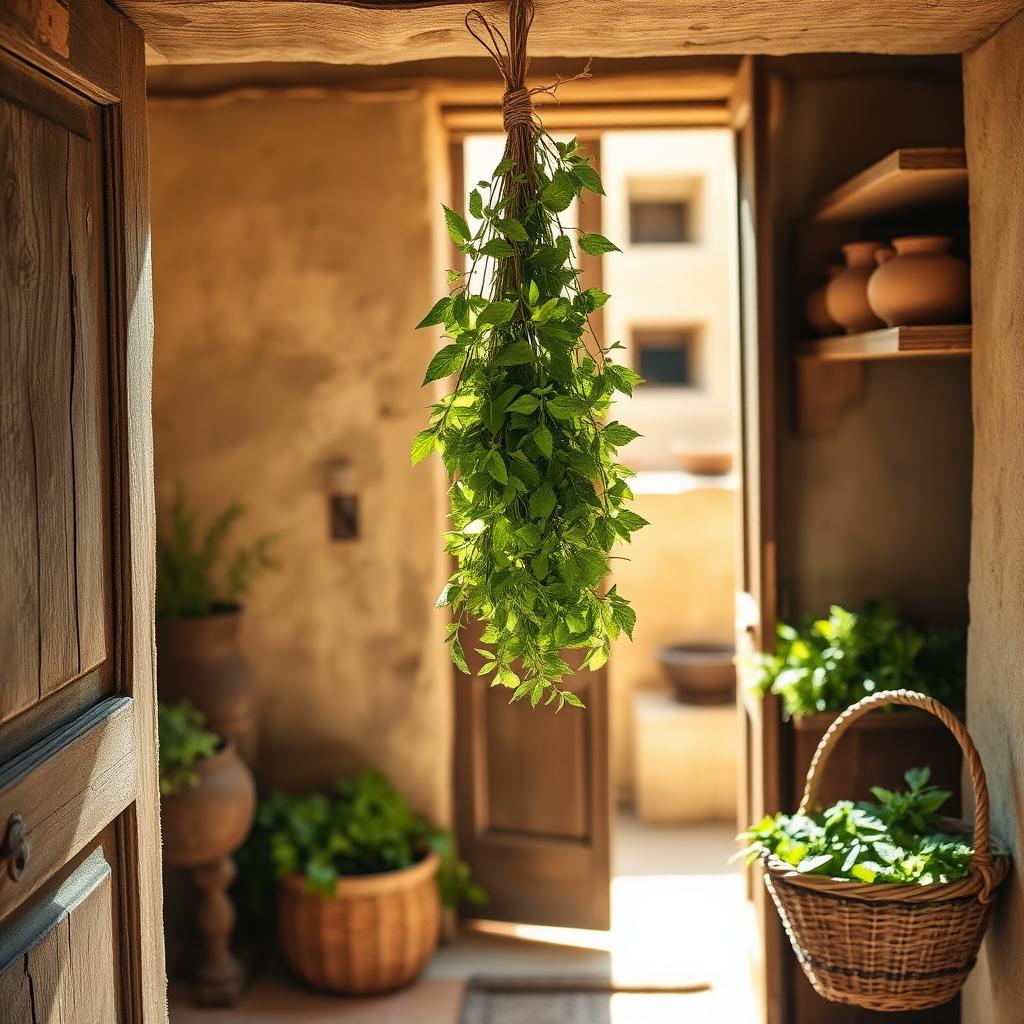
Dry the last of the summer harvest for the winter's na'nā-dāgh — the finishing garnish for ash and stew.
Winter:
Winter
A weak after-dinner spearmint tea softens the heavy Persian winter table without cooling the belly.
Chapter 16 of 18
Questions People Ask
Does spearmint really help with hormones?
Small clinical trials in women with mild hirsutism and PCOS found that two cups of spearmint tea daily for 30 days modestly lowered free testosterone and eased how the symptoms felt. It works best as a helpful companion to medical care.
Fresh, dried, or oil — what's best for daily use?
Fresh leaves in salads and yogurt and dried mint in soups and tea are the safest daily Persian forms. Reserve concentrated peppermint oil capsules for specific complaints like IBS, and only after talking to a clinician if you take other medications.
Chapter 17 of 18
Sources
Mentha spicata and digestive function: review — Phytotherapy Research (PubMed). https://pubmed.ncbi.nlm.nih.gov/16767798/.
Spearmint and oxidative stress in osteoarthritis — RCT — Journal of Medicinal Food (PubMed). https://pubmed.ncbi.nlm.nih.gov/30403555/
Peppermint and spearmint essential oils: antimicrobial activity — Journal of Essential Oil Research. https://www.tandfonline.com/journals/tjeo20.
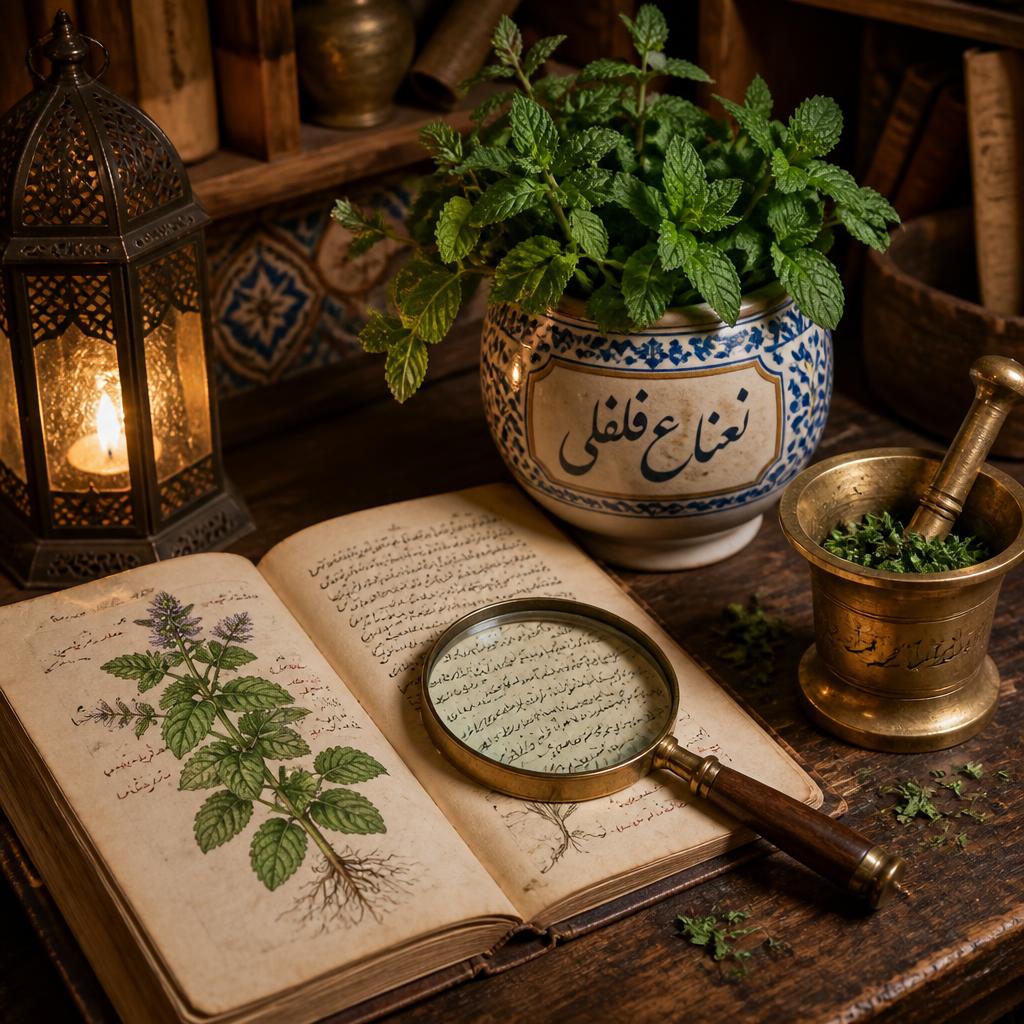
Sad Giah Hezar Darman (صد گیاه و هزار درمان) — One Hundred Plants and One Thousand Remedies — Dr. Hossein Erfani, 4th edition (1375 / 1996–1997). Primary traditional Persian herbal reference cited throughout this platform. Presented as traditional knowledge, not as modern medical proof.
Chapter 18 of 18
Sources (continued)
Office of Dietary Supplements: fact Sheets — US National Institutes of Health (NIH). https://ods.od.nih.gov/factsheets/list-all/.
Herbal Database: memorial Sloan Kettering Cancer Center. https://www.mskcc.org/cancer-care/diagnosis-treatment/symptom-management/integrative-medicine/herbs.
Herbs at a Glance: uS NIH National Center for Complementary and Integrative Health (NCCIH). https://www.nccih.nih.gov/health/herbsataglance.
FoodData Central: searchable nutrient database — US Department of Agriculture (USDA). https://fdc.nal.usda.gov/.
The Nutrition Source: harvard T.H. Chan School of Public Health. https://www.hsph.harvard.edu/nutritionsource/.
PubMed — peer-reviewed biomedical literature — US National Library of Medicine. https://pubmed.ncbi.nlm.nih.gov/