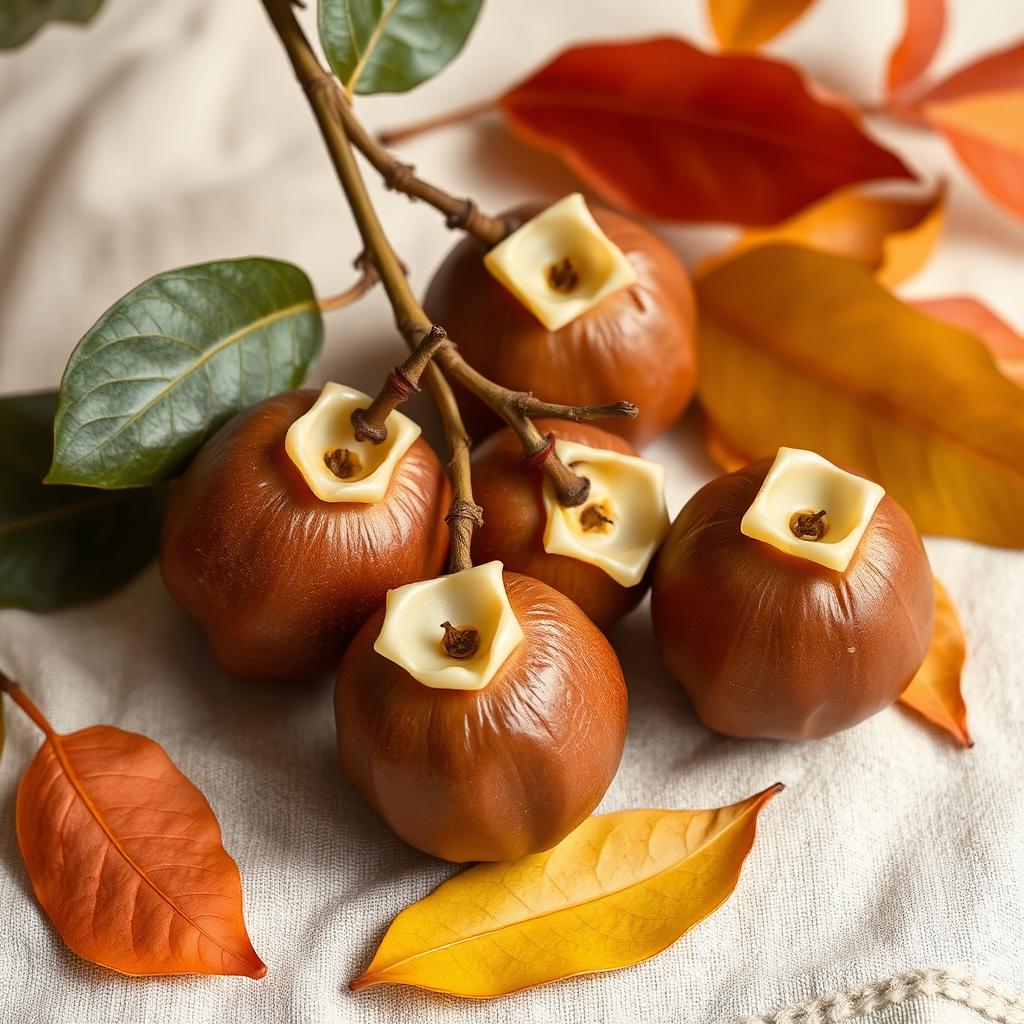
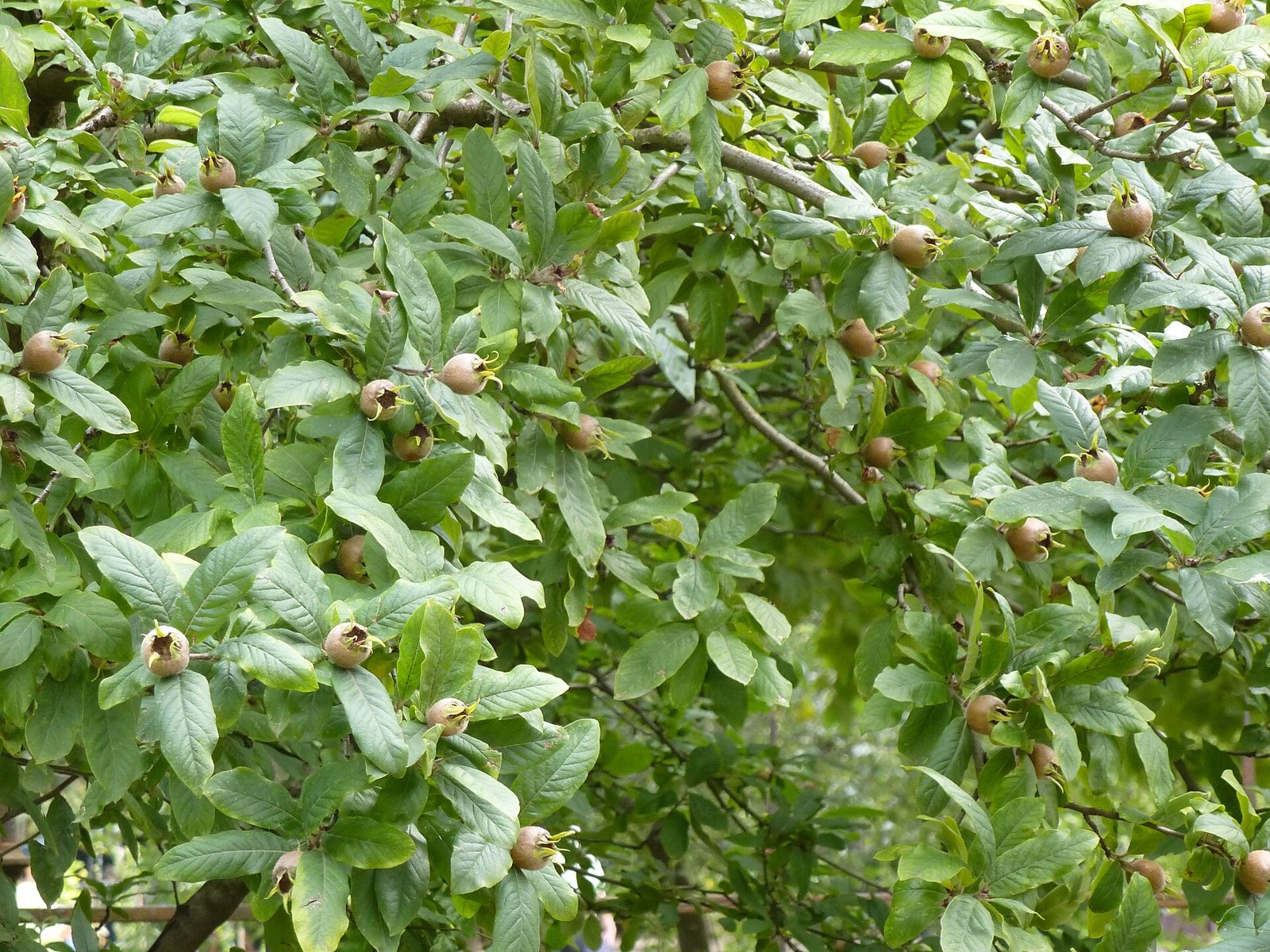
Medlar reminds us that the tree doesn't always finish the ripening. Some foods need time and patience after harvest, and this slow habit is worth keeping.
Soft, spoonable, and easy to eat, medlar suits anyone who finds hard fruit difficult. Its pectin and gentle sweetness make it a kind autumn choice for an older digestion.
Low in sugar for how sweet it tastes.
What That Means Day to Day
A medlar is a small russet-brown fruit, wider than it's tall, with a wide open crown at the base ringed by dried sepals. Hard and sour when picked, it's only eaten after it softens to a brown paste.
Family: Rosaceae (rose family).
Chapter 3 of 12
What It Contains
Primary compounds
Tannins (plant compounds that give a dry, puckering taste).
Pectin (a soft fibre in fruit that thickens jam). Vitamin C. Phenolic acids.
Other notable constituents
Minerals: Potassium, Calcium, Magnesium, Iron · Antioxidants: Chlorogenic acid, Catechins (plant compounds common in green tea)
Chapter 4 of 12
Preparation and Kitchen Use
In the kitchen: pick after the first frost, or freeze overnight. Lay it crown-down in straw or paper, somewhere cool. Ready in two to four weeks, when the skin wrinkles and the flesh browns. Bletted, eaten with a spoon from the skin. Sieved into jelly or a firm paste. Blet, then scoop the pulp out with a spoon.
Serve the pulp with walnuts and tea after a meal.
Chapter 5 of 12
Medicines and Interactions
Medication interaction:
Medicines taken by mouth — Very astringent (tightens tissue and leaves a dry feeling in the mouth) unripe fruit can slow absorption if eaten in quantity at the same time. Space them by an hour if you eat a lot. (low concern)
Medication interaction:
Diabetes medicine — Ripe medlar is sweeter than it looks. Count it as fruit rather than as a free food. (low concern)
Chapter 6 of 12
Who Should Be Careful
General caution:
Bletting is a controlled ripening, not spoilage — but mould or a sour smell means the fruit has gone over.
General caution:
Traditional stomach uses are folk practice; persistent digestive symptoms need a doctor.
General caution:
Unbletted fruit is astringent (tightens tissue and leaves a dry feeling in the mouth) enough to be unpleasant and can upset the stomach.
General caution:
The seeds, like apple and apricot seeds, should not be eaten or crushed.
Chapter 7 of 12
Pregnancy, Children and Older Adults
Pregnancy and breastfeeding
Pregnancy and breastfeeding:
An ordinary autumn fruit in food amounts. Only eat it fully bletted, because the hard unripe fruit is harsh enough to upset any stomach.
Children
Children:
The stones are large and hard, so the pulp must be sieved for young children. Most children find the brown appearance stranger than the taste.
Older adults
Older adults:
Soft, spoonable and needing no chewing, which makes it one of the easier fruits for anyone with poor teeth. Its old use for loose bowels still holds in practice.
Chapter 8 of 12
Traditional Persian Perspective
Persian temperament: Cold & Dry (2nd degree). Astringent (tightens tissue and leaves a dry feeling in the mouth) and drying while hard, softening as it blets. Old practice gave it for loose bowels.
Persian medicine reads azgil as cold and dry. It was used in small amounts to bind a loose stomach, quiet nausea, and strengthen a weak digestion rather than nourish the body.
Eaten in small quantities as an autumn digestive fruit.
In Gilan and Mazandaran, you'll see azgil on autumn fruit carts once the first cold nights have softened it. In medieval Europe, it was one of the few fresh fruits still available deep into winter.
Chapter 9 of 12
What It Goes With
Pairing:
Walnut
Spoon soft medlar straight onto toasted walnuts. The fruit is sweet and grainy and needs something with an edge.
Honey:
Honey
Half a spoon lifts a fruit that can taste flat once it has softened right through.
Spice:
Cinnamon
The spice is already half there in the flavour, so a pinch simply finishes what the fruit started.
Dairy:
Yogurt
Stirred through thick yogurt it becomes a winter breakfast rather than a curiosity.
Chapter 10 of 12
Through the Year
Spring:
Spring
Blossom only. The fruit is months away.
Summer:
Summer
Fruit swells but stays rock hard and inedible. Leave it on the tree.
Autumn:
Autumn
Picked after the first frost, then laid out to soften. Nothing about this fruit is quick.
Winter:
Winter
Now it's food. The flesh has gone brown and soft and tastes of spiced apple butter.
Chapter 11 of 12
Questions People Ask
Is bletting the same as rotting?
No. It's a controlled softening. Mould or a sour smell means the fruit has spoiled.
Why don't shops sell it?
It can't be sold ready to eat, and few people know how to wait for it.
Chapter 12 of 12
Sources
Mespilus germanica: phytochemistry and traditional use — Journal of Ethnopharmacology. https://pubmed.ncbi.nlm.nih.gov/28711636/
Changes during bletting of medlar fruit — Food Chemistry. https://pubmed.ncbi.nlm.nih.gov/26041192/