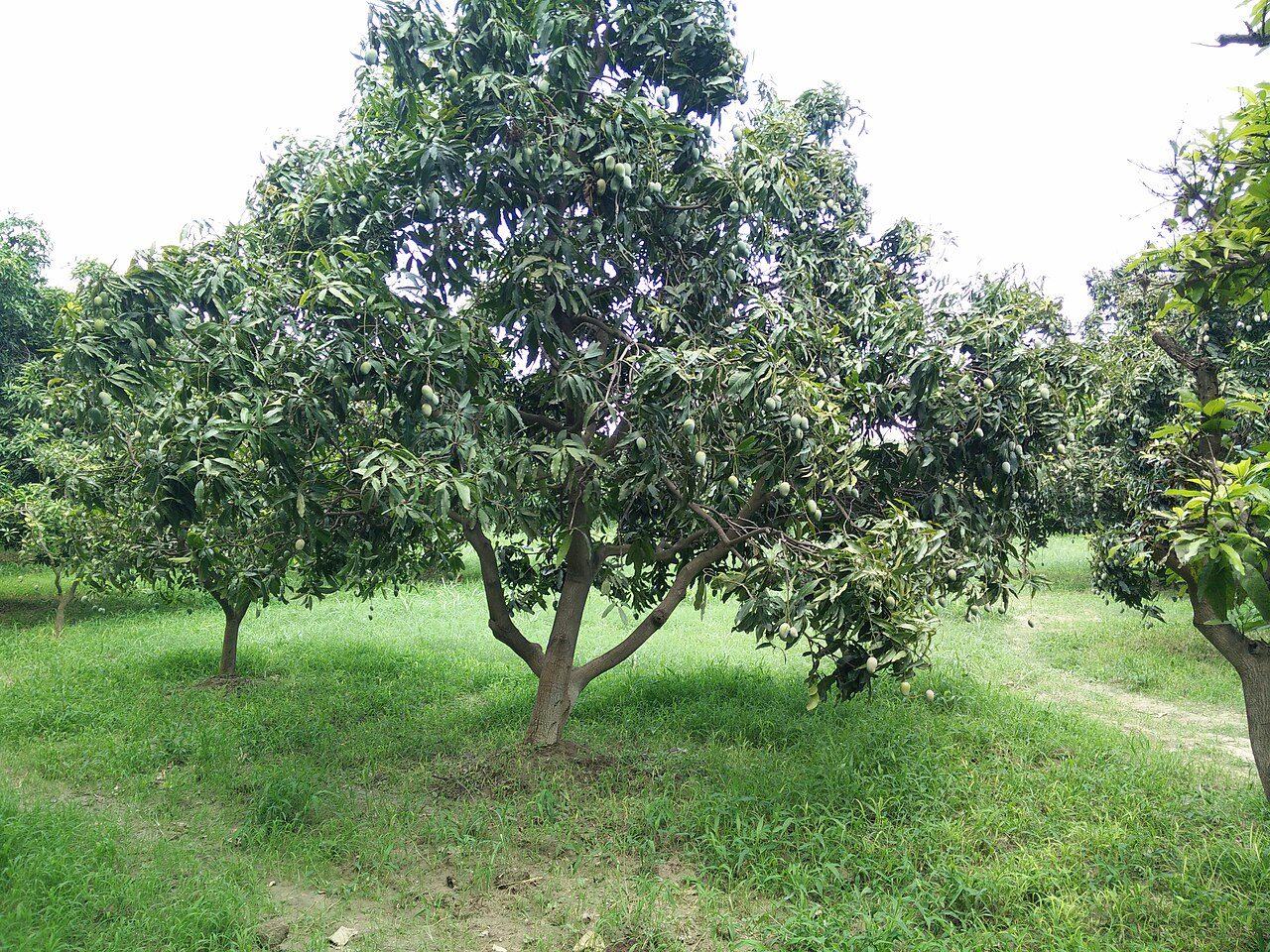
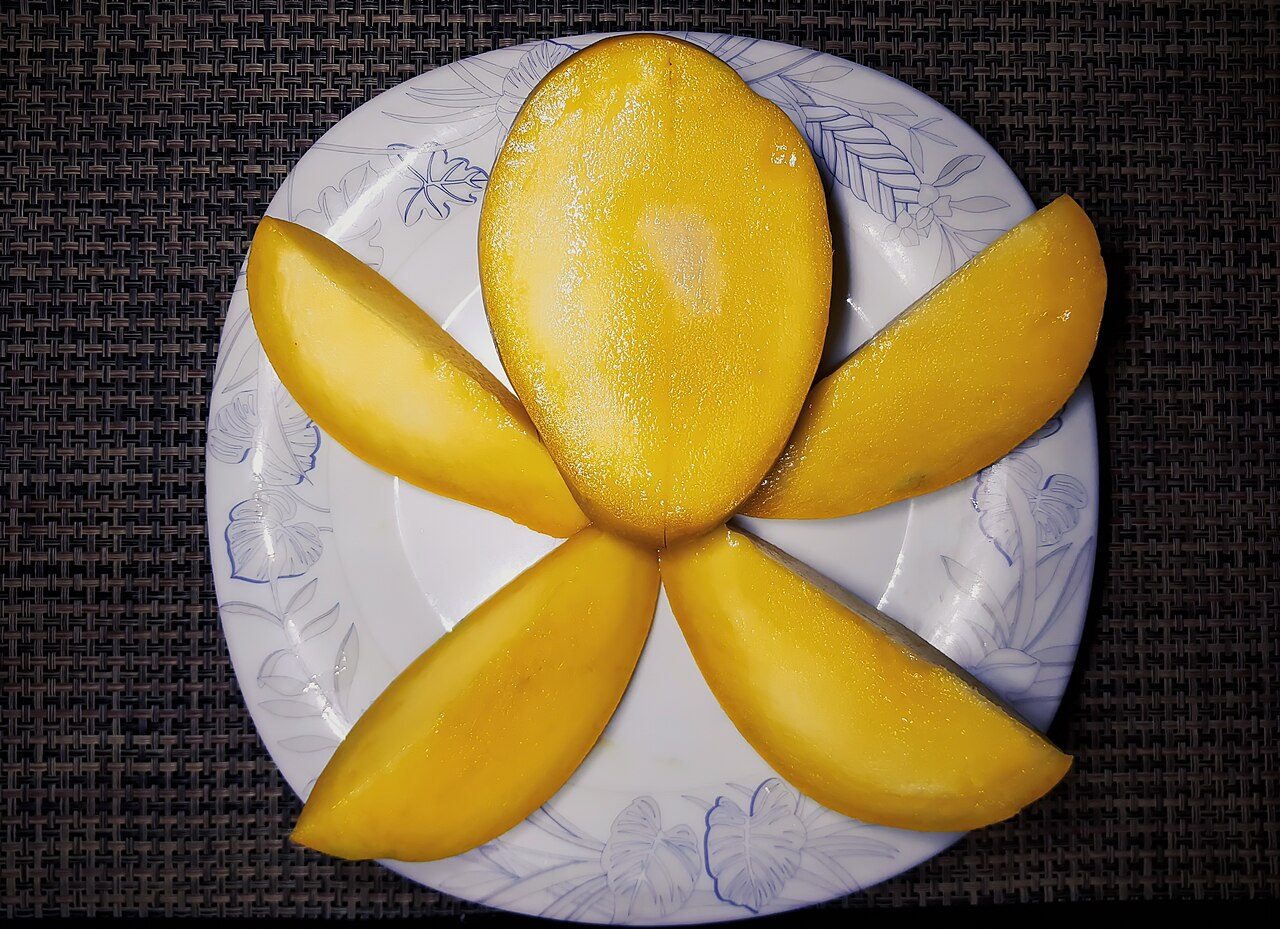
One mango covers most of a day's vitamin A, from the carotenoids (the orange and yellow plant pigments your body can use) that make the flesh orange.
Mangiferin, concentrated in the peel and the flesh near it, is the compound the research keeps returning to.
Ripe mango is sweet enough to matter: pair it with yogurt or nuts if your blood sugar is a concern.
Anbeh travelled up the Gulf on trading dhows and settled in Hormozgan and Sistan, where the trees now thrive in the local heat. In the south, it's really two foods: ripe fruit eaten cold in the afternoon, and hard green fruit cut into anbeh torshi, the Bandari pickle served beside rice and fish.
Known to botanists as Mangifera indica.
Chapter 2 of 15
Why It Matters
Mango brings vitamin A, a well-studied polyphenol (protective plant compounds), and real sweetness in one fruit. Its carotenoids (the orange and yellow plant pigments your body can use) quietly support older eyes and dry skin in a way no supplement copies as pleasantly.
Two things are worth remembering. Vitamin A intake tends to fall with age, often showing first in dry eyes and thin skin. And soft, sweet fruit can still tempt an appetite that has faded. Mango helps with both, provided the portion stays a portion.
Beta-carotene in the flesh converts to vitamin A, which the eye and the skin both need.
In trials, mangiferin calmed inflammation and helped the body handle glucose, though mostly at concentrated doses.
The fibre is soft, which suits a gut that finds raw vegetables hard work.
Enzymes in the ripe flesh help a heavy meal settle, which is the old reason it follows a rich dinner.
Chapter 3 of 15
What It Contains
Primary compounds
Mangiferin, a xanthone found in the peel and outer flesh. Beta-carotene, the pigment behind the deep orange colour. Quercetin (a plant compound found in onions, apples and tea) and gallic acid in smaller amounts.
Vitamins
Vitamin A, Vitamin C, Vitamin E, Folate
Other notable constituents
Minerals: Potassium, Copper, Magnesium · Fiber: About 3 g per cup
Chapter 4 of 15
In the Laboratory
From laboratory work, not from people taking it
Mangiferin showed anti-inflammatory and glucose-lowering effects in early human and animal studies, mostly at concentrated doses. Rated: early research.
Chapter 5 of 15
What Studies in People Show
What studies in people show
Regular mango intake improved glycaemic and inflammatory markers in randomised nutrition trials.Emerging evidence
Higher dietary carotenoid (the orange and yellow plant pigments your body can use) intake was associated with better eye and skin outcomes in cohort studies (a study that follows a group of people over time).Emerging evidence
Chapter 6 of 15
Preparation and Kitchen Use
In the kitchen: summer afternoons, straight from the fridge. Ripen at room temperature until it smells sweet at the stem, then chill. Score the cheeks in a grid and push the skin inside out.
For lassi: one mango, 200 g yogurt, a little water, a pinch of cardamom · For torshi: green mango in salt for a day, then packed with turmeric, chilli and vinegar.
Other Ways to Use It
Eat ripe and chilled, cut into cheeks and scored.
Cube into a salad with lime, mint and cucumber.
A chilled mango cut over the sink in the afternoon heat, which is how the south eats it.
Green mango pickled with turmeric and salt, a spoonful beside rice, for the days the appetite needs waking.
Chapter 7 of 15
Medicines and Interactions
Medication interaction:
Diabetes medicines — A whole ripe mango raises blood glucose noticeably. Portion it and check readings rather than avoiding the fruit. (low concern)
Medication interaction:
Blood-pressure medicines that hold potassium — Mango carries moderate potassium, around 280 mg a fruit. That is no concern at ordinary portions, but if you're on a potassium-sparing diuretic (makes you pass more urine) or an ACE inhibitor and eating several a day in season, mention it at your next blood test. (low concern)
Medication interaction:
Warfarin (a blood-thinning medicine) and other blood thinners — Mango has no meaningful vitamin K and no established interaction with anticoagulants (blood-thinning medicines). Ordinary portions need no adjustment. (low concern)
Chapter 8 of 15
Who Should Be Careful
General caution:
The skin and sap carry compounds from the poison-ivy family. If poison ivy or cashew shell affects you, peel it and don't chew the skin.
General caution:
A ripe mango is high in sugar. If you're diabetic, half a fruit with yogurt sits much better than a whole one alone.
General caution:
Green mango is very sour and can irritate an ulcer or reflux (stomach acid rising into the throat).
Allergy:
Documented mango or urushiol allergy with swelling.
Chapter 9 of 15
Pregnancy, Children and Older Adults
Pregnancy and breastfeeding
Pregnancy and breastfeeding:
Ripe mango is a good pregnancy fruit: folate, vitamin C and easy to eat when nothing else appeals. Wash the skin before cutting.
Children
Children:
Children take to mango immediately. Cut it off the stone for small ones; the stone is slippery and the flesh around it clings.
Older adults
Older adults:
Soft, sweet and needing no chewing, mango suits a tired appetite. Keep the portion to half a fruit if blood sugar is being watched.
Chapter 10 of 15
Traditional Persian Perspective
Persian temperament: Warm & Moist (1st degree). Nourishing and blood-building when ripe. Sour and heating when green.
Mango travelled from India to the Persian Gulf coast with the monsoon trade, long before it reached Europe.
Southern Iranian households pickled the green fruit as a way to keep the crop through the year.
Unani physicians prescribed ripe mango during convalescence, for weight and for colour in the face.
Anbeh torshi is one of those flavours that tells you at once you're in a Bandari kitchen. In Minab and Bandar Abbas, pickle jars sit out through summer, while a guest may be handed ripe fruit instead of tea when the afternoon is simply too hot.
Chapter 11 of 15
What It Goes With
Dairy:
Yogurt
Blended into lassi, or simply spooned beside the fruit. The sourness balances the sweetness.
Fruit:
Lime
A squeeze over cut mango. Southern kitchens do this without thinking about it.
Spice:
Cardamom
A pinch in the lassi. Warm spice with sweet fruit is the standard Persian move.
Herb:
Mint
Torn into a mango and cucumber salad, which turns dessert into a side dish.
Chapter 12 of 15
Through the Year
Spring:
Spring
The southern crop begins. Early fruit is firmer and better for salad than for eating alone.
Summer:
Summer
The season. This is when a cold mango is the best thing in the house.
Autumn:
Autumn
Late fruit and imported fruit. Judge by smell.
Winter:
Winter
Out of season. The pickle carries the flavour through until the trees come back.
Chapter 13 of 15
Questions People Ask
Can I eat the skin?
Better not. It carries the same compound family as poison ivy and tastes of turpentine besides.
How do I know it's ripe?
Smell the stem end. A ripe mango announces itself. Colour tells you the variety.
Is mango too sugary to be healthy?
It's sweet, and it also brings fibre, vitamin A and potassium. Half a fruit with yogurt is a sensible portion if you're watching glucose.
Is Iranian mango different?
Southern Iranian fruit is smaller and more fibrous than the big imported varieties, and many people prefer its perfume.
Chapter 14 of 15
Sources
Sad Giah Hezar Darman (صد گیاه و هزار درمان) — One Hundred Plants and One Thousand Remedies — Dr. Hossein Erfani, 4th edition (1375 / 1996–1997). Primary traditional Persian herbal reference cited throughout this platform. Presented as traditional knowledge, not as modern medical proof.
Office of Dietary Supplements: fact Sheets — US National Institutes of Health (NIH). https://ods.od.nih.gov/factsheets/list-all/.
Herbal Database: memorial Sloan Kettering Cancer Center. https://www.mskcc.org/cancer-care/diagnosis-treatment/symptom-management/integrative-medicine/herbs.
Herbs at a Glance: uS NIH National Center for Complementary and Integrative Health (NCCIH). https://www.nccih.nih.gov/health/herbsataglance.
FoodData Central: searchable nutrient database — US Department of Agriculture (USDA). https://fdc.nal.usda.gov/.
Chapter 15 of 15
Sources (continued)
The Nutrition Source: harvard T.H. Chan School of Public Health. https://www.hsph.harvard.edu/nutritionsource/.
PubMed — peer-reviewed biomedical literature — US National Library of Medicine. https://pubmed.ncbi.nlm.nih.gov/