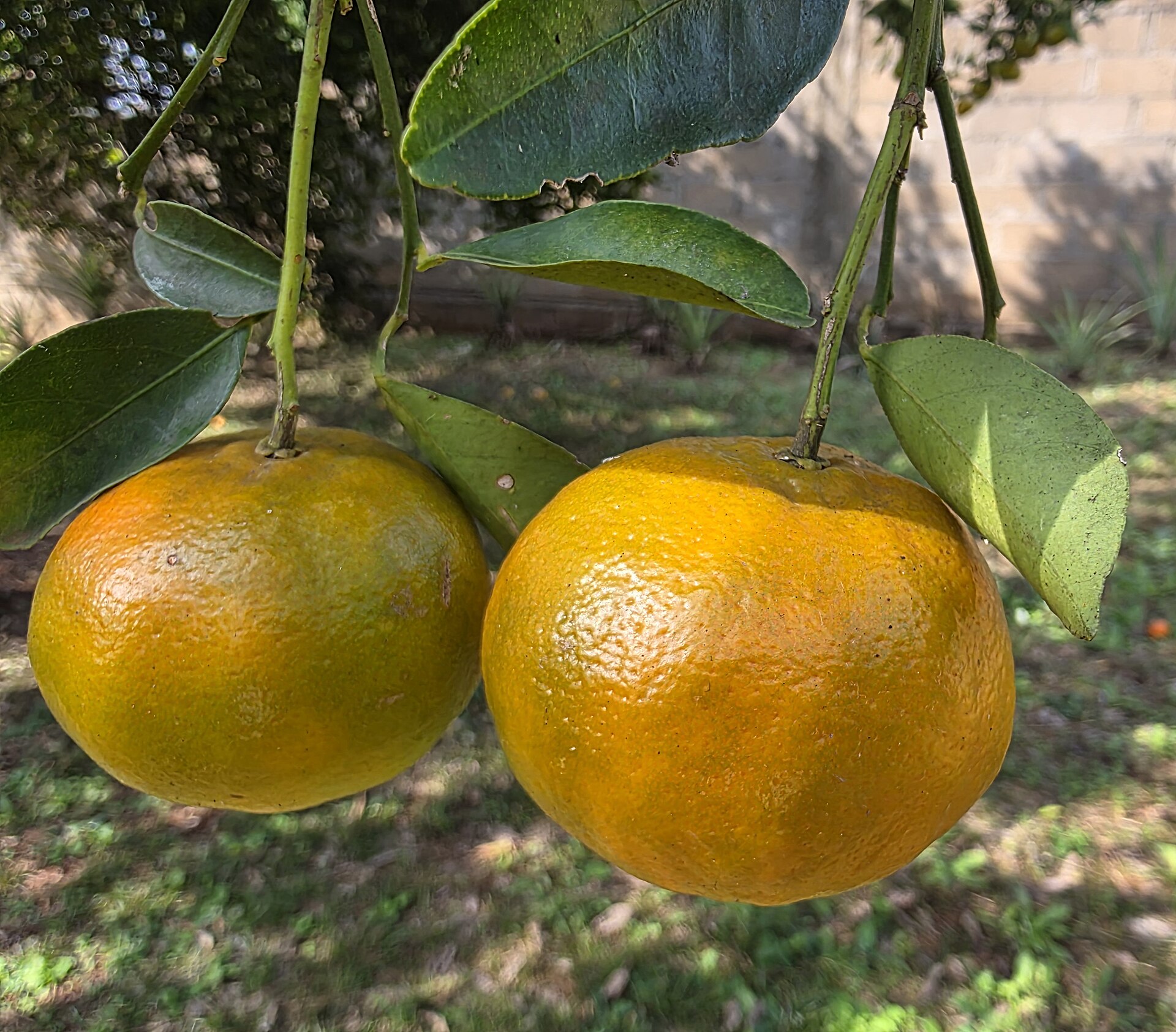
The peel holds nobiletin and tangeretin, the two most-studied citrus flavonoids (a family of protective plant compounds).
Persian medicine treats the flesh as cooling and the peel as warming, in one fruit.
Buy unwaxed fruit if you plan to use the zest.
Nārengi grows along the Caspian, and from Āzar onward you'll find it on tables across the country: a bowl by the korsi, peeled by hand, filling the room with its scent before anyone takes a bite. Persian cooks don't waste the peel. Grated into rice, it makes polo-ye nārengi. Simmered in water, it becomes a winter tea. The peel also carries flavonoids (a family of protective plant compounds) the flesh doesn't have in the same amount.
Known to botanists as Citrus reticulata.
Chapter 2 of 15
Why It Matters
Mandarin may be the easiest fruit in the house to eat. You need no knife or plate, and there's hardly any mess, so people actually reach for it. The vitamin C, fibre, and flavonoids (a family of protective plant compounds) in the zest all follow from a fruit that removes every excuse.
Vitamin C intake often drops later in life because fruit can take effort to prepare. A mandarin takes almost none. Citrus flavonoids have consistent trial evidence for blood vessel function, and the soft fruit is easy to manage with poor teeth.
Vitamin C for immunity and for collagen repair.
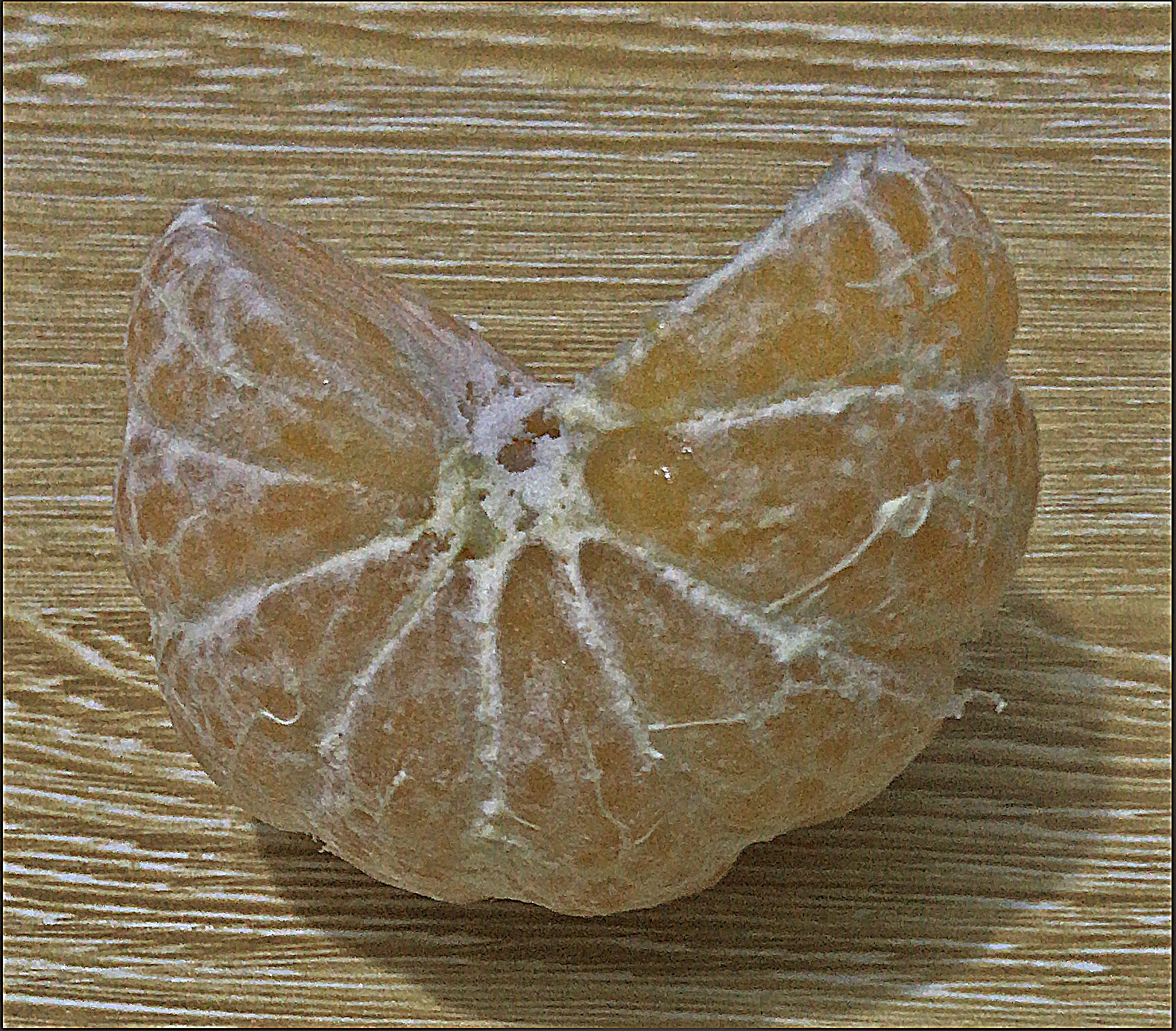
The pith and segment walls carry fibre most people peel away.
The oil in the zest lifts a flat winter mood, which is the part every Iranian household already knows.
Chapter 3 of 15
What It Contains
Primary compounds
Hesperidin is the main citrus flavonoid, concentrated in the pith and peel rather than the juice.
Nobiletin and tangeretin are peel-only compounds, and they carry most of the metabolic research.
Limonene is the aromatic oil you smell when the peel breaks.
Vitamin C sits at around 25 mg per fruit.
Vitamins
Folate, Vitamin A
Other notable constituents
Minerals: Potassium, Copper · Fiber: About 1.5 g per fruit, most of it in the white pith
Chapter 4 of 15
In the Laboratory
From laboratory work, not from people taking it
Nobiletin from citrus peel improved lipid and glucose handling in animal models of metabolic disease. Rated: early research.
Chapter 5 of 15
What Studies in People Show
What studies in people show
Citrus flavonoids, mainly hesperidin, improved blood vessel function in randomised trials.Moderate evidence
Higher citrus intake is linked to lower stroke risk in prospective cohorts.Moderate evidence
Chapter 6 of 15
Preparation and Kitchen Use
Mid-morning through the winter, and any evening the peel goes into the teapot.
Peel by hand, warm fruit peels more easily than cold.
Zest before peeling, with a fine grater, avoiding the white pith.
Dry the peel on a tray near a radiator for three days, then store in a jar.
In the kitchen: candy strips of peel in sugar syrup for polo-ye nārengi. Grate the zest into rice, cake or syrup before you throw the peel away. Squeeze fresh juice with a touch of rose water.
Simmer dried peel into a warming winter tea.
Chapter 7 of 15
Medicines and Interactions
Medication interaction:
Statins (cholesterol-lowering medicines) and other CYP3A4 (a liver enzyme that breaks down many medicines) medicines — Mandarin doesn't carry the furanocoumarins (a compound found in grapefruit that blocks that enzyme) that cause the grapefruit problem. It is the safe citrus if you take a statin. (low concern)
Chapter 8 of 15
Who Should Be Careful
General caution:
Citrus sets off reflux (stomach acid rising into the throat) in some people. If it burns, eat it with food rather than alone.
General caution:
Commercial fruit is often waxed and sprayed. Buy unwaxed or scrub it well if you're going to use the peel.
General caution:
Peel and zest are potent. Culinary amounts are fine; don't treat them as a supplement.
Allergy:
Known citrus allergy.
Chapter 9 of 15
Pregnancy, Children and Older Adults
Pregnancy and breastfeeding
Pregnancy and breastfeeding:
Safe and useful. Folate, vitamin C and fluid in a fruit that stays down in early nausea. The smell of the peel is one of the standard household answers to morning sickness.
Children
Children:
Easy for small hands and popular for that reason. Take the pips out for anyone under four, and separate the segments so they aren't swallowed whole.
Older adults
Medication interaction:
Soft, needs no cutting, and easy to manage with weak hands or poor teeth. Unlike grapefruit, it doesn't interfere with statins (cholesterol-lowering medicines) or blood pressure drugs, which makes it the citrus to keep in the bowl.
Chapter 10 of 15
Traditional Persian Perspective
Persian temperament: Cool & Moist (1st degree). The flesh is cool and moist. The peel and zest are warm and dry. One fruit, two temperaments.
Persian medicine sees two sides to the fruit. The flesh is cool and moist: it cools liver heat, quenches thirst, and lifts a heavy mood. The peel is warm and dry: it cuts phlegm, settles the stomach, and opens the appetite. A hakim treating a cold, phlegmatic constitution would use the peel and go easy on the flesh.
In the Household
Candied peel was made in Caspian households every winter and kept for rice and pastry.
Dried peel was simmered into a tea for coughs and heavy chests.
Peel oil was used to scent rooms and linen through the cold months.
Picture a Persian winter evening and there's often a bowl of nārengi beside the korsi. In the north, polo-ye nārengi — rice scented with candied peel and saffron — is one of the classical wedding dishes.
Chapter 11 of 15
What It Goes With
Spice:
Saffron
Zest and saffron together are the base of polo-ye nārengi.
Pairing:
Walnuts
The standard Persian winter plate: citrus, nuts and tea.
Tea:
Black Tea
A strip of dried peel in the pot changes the whole cup.
Spice:
Cinnamon
A warm spice for a cool fruit. And the pair works in tea or in a syrup.
Chapter 12 of 15
Through the Year
Spring:
Spring
The season is over. What is left in the market is soft and dry.
Summer:
Summer
Out of season in Iran. Sour citrus suits the heat better anyway.
Autumn:
Autumn
The first Caspian fruit arrives in Ābān, sharp and green-shouldered.
Winter:
Winter
The season. Keep a bowl on the table from Āzar to Esfand and dry the peel as you go.
Chapter 13 of 15
Questions People Ask
Is mandarin as risky as grapefruit with medication?
No. Grapefruit's problem comes from furanocoumarins (a compound found in grapefruit that blocks that enzyme), and mandarins carry almost none. It's the citrus most pharmacists point people toward.
Should I eat the white pith?
Yes, as much as you can stand. Most of the hesperidin and much of the fibre sits in the pith and the segment walls.
How do I dry the peel?
Cut it into strips, lay them on a tray somewhere warm and dry for two or three days until they snap, then keep them in a sealed jar.
What is the difference from a tangerine?
Not much. Tangerine is one type of mandarin, named after Tangier. In an Iranian market they're all nārengi.
Chapter 14 of 15
Sources
Sad Giah Hezar Darman (صد گیاه و هزار درمان) — One Hundred Plants and One Thousand Remedies — Dr. Hossein Erfani, 4th edition (1375 / 1996–1997). Primary traditional Persian herbal reference cited throughout this platform. Presented as traditional knowledge, not as modern medical proof.
Office of Dietary Supplements: fact Sheets — US National Institutes of Health (NIH). https://ods.od.nih.gov/factsheets/list-all/.
Herbal Database: memorial Sloan Kettering Cancer Center. https://www.mskcc.org/cancer-care/diagnosis-treatment/symptom-management/integrative-medicine/herbs.
Herbs at a Glance: uS NIH National Center for Complementary and Integrative Health (NCCIH). https://www.nccih.nih.gov/health/herbsataglance.
FoodData Central: searchable nutrient database — US Department of Agriculture (USDA). https://fdc.nal.usda.gov/.
Chapter 15 of 15
Sources (continued)
The Nutrition Source: harvard T.H. Chan School of Public Health. https://www.hsph.harvard.edu/nutritionsource/.
PubMed — peer-reviewed biomedical literature — US National Library of Medicine. https://pubmed.ncbi.nlm.nih.gov/