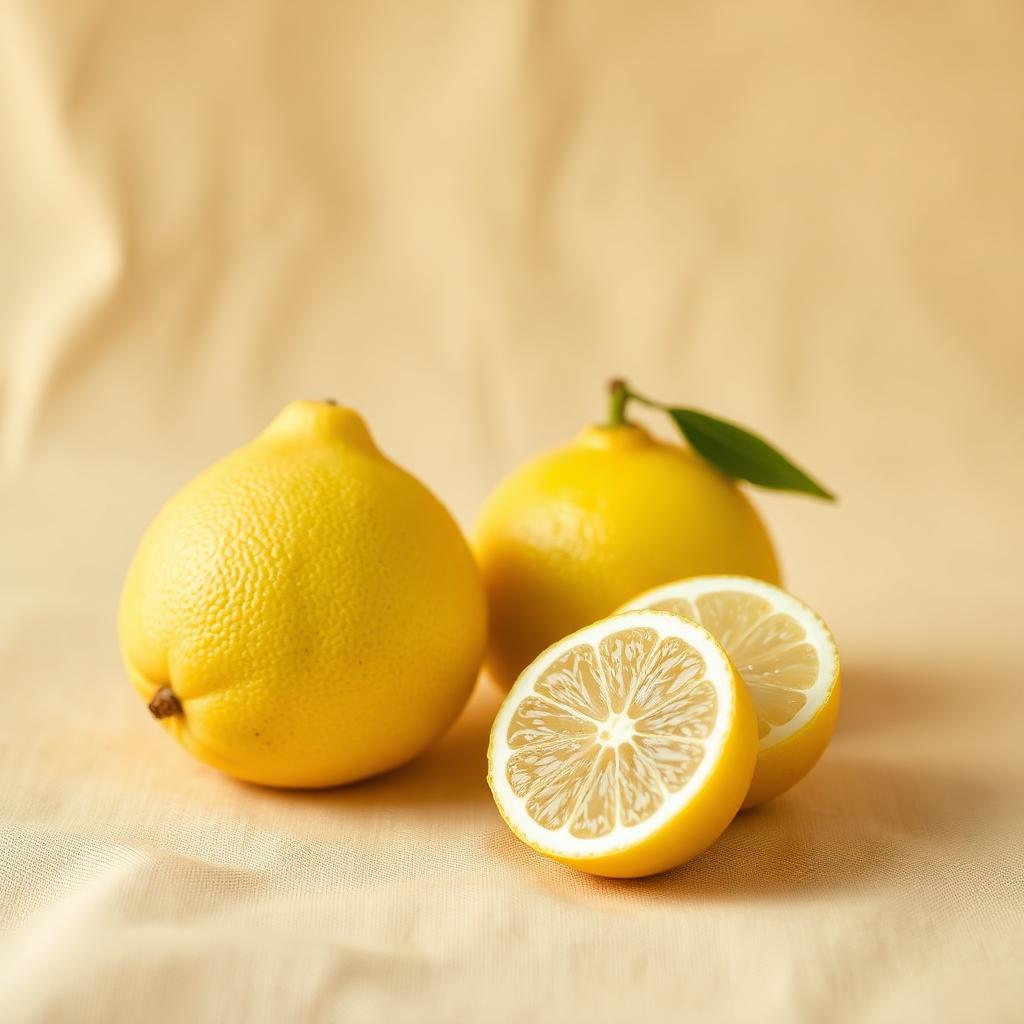
In winter, you'll find limu shirin in homes across Iran, often squeezed into a glass for someone who feels unwell. It's mild and easy on the stomach.
Known to botanists as Citrus limetta (the scientific name for sweet lemon).
Chapter 2 of 13
Why It Matters
When your throat is sore or your stomach feels queasy, sour citrus can be hard to take. Limu shirin gives you citrus vitamin C and fluid without the sharp acid, which is why it suits days when little else appeals.
Limu shirin brings fluid and vitamin C without the acid burn. For older adults with reflux or a delicate stomach, it may be the one citrus that sits comfortably.
Chapter 3 of 13
What It Contains
Primary compounds
Limonene (the citrus-scented oil in the peel). Hesperidin (a plant compound found in citrus peel that acts as an antioxidant).
Naringenin (a plant compound found in citrus fruit that supports blood vessel health).
Citric acid (low).
Vitamins
Folate, Vitamin B6
Other notable constituents
Minerals: Potassium, Calcium, Magnesium · Fiber: ~0.5 g per fruit (juice has almost none)
Chapter 4 of 13
In the Laboratory
From laboratory work, not from people taking it
Citrus limetta juice is a meaningful source of vitamin C and flavonoids (plant compounds with antioxidant activity) in compositional analyses. Rated: moderate evidence.
What studies in people show
Vitamin C taken with a plant-iron meal increases iron absorption. Rated: strong evidence.
Chapter 5 of 13
Preparation and Kitchen Use
Halve and squeeze by hand. The juice turns bitter if it stands.
Warm the glass, don't boil the juice.
Peel and segment like an orange for eating whole.
Freshly squeezed, drunk within minutes.
Warm, with honey, during a cold.
Segments eaten plain as a mild winter fruit.
Squeeze fresh and drink it slightly warm.
Cut into wedges and eat like an orange.
Serve with a spoon of honey when someone has a cough.
Chapter 6 of 13
Medicines and Interactions
Medication interaction:
Statins (cholesterol-lowering medicines) and calcium-channel blockers — Sweet lime has shown some CYP3A4 (a liver enzyme that breaks down many medicines) activity in laboratory work, less than grapefruit but not zero. Ask a pharmacist before drinking large daily amounts. (moderate concern)
Medication interaction:
Blood pressure medication — Potassium in juice quantities adds up if you're drinking several glasses a day. (low concern)
Chapter 7 of 13
Who Should Be Careful
General caution:
Squeezed juice goes bitter within the hour — drink it fresh.
General caution:
Juice on its own carries sugar without fibre; the whole fruit is better.
Children:
Honey isn't for infants under one year.
Allergy:
Rare citrus allergy.
General caution:
Juice isn't a treatment for infection; a fever that persists needs medical care.
Chapter 8 of 13
Pregnancy, Children and Older Adults
Pregnancy and breastfeeding
Pregnancy and breastfeeding:
Persian sweet lemon is suitable as a drink during pregnancy. It is mild enough for nausea, provides fluid, and its vitamin C helps the body absorb iron from lentils or greens.
Children
Children:
Its mild taste may be easier for children to accept than sour lemon. For children under three, dilute the juice and serve it in a cup rather than a bottle because even mild fruit acid can remain on the teeth.
Older adults
Older adults:
It may be easier to tolerate than sour citrus and can help older adults maintain fluid intake during winter.
Chapter 9 of 13
Traditional Persian Perspective
Persian temperament: Cool & Moist (1st degree). Cooler and wetter than the sour lemon, which is why hakims gave it in fevers and dry coughs rather than for heavy digestion.
Persian medicine describes limu shirin as cool, moist, and especially gentle. People gave it during fever to cool the body and keep fluids up, offered it for a hot, dry cough, and used it to settle nausea. They chose it over sour lemon because it doesn't irritate in the same way.
In Iran, this is care in fruit form. You bring a bag of limu shirin when a relative is unwell, and winter street vendors squeeze it into a glass while you wait.
Chapter 10 of 13
What It Goes With
§ More Pairings
Honey:
Honey
Warm juice with a spoon of honey is the standard Iranian answer to a cold night and a raw throat.
Herb:
Mint
A few leaves in the juice make it taste like something rather than merely mild.
Spice:
Ginger
The fruit is cooling and ginger isn't. Which is exactly why the pairing works for a cold constitution.
Rose:
Rose Water
Half a teaspoon in a glass of the juice. This is a dessert drink.
Chapter 11 of 13
Through the Year
Spring:
Spring
The season closes. What is left in the market is dry inside and worth juicing rather than eating.
Summer:
Summer
Out of season in Iran. Skip it and take the sour citrus instead.
Autumn:
Autumn
The northern crop starts coming down from Mazandaran. Early fruit is mildest.
Winter:
Winter
The fruit and the season fit each other. Every cold-season household in northern Iran keeps a bowl of it out.
Chapter 12 of 13
Questions People Ask
Does it cure a cold?
No. It gives fluid, comfort and some vitamin C. It doesn't shorten an infection.
Why does the juice turn bitter?
Pith compounds (bitter compounds in citrus pith) turn bitter soon after squeezing. Drink it fresh.
Is it the same as a sweet lime from India?
Close. Mosambi and limu shirin are the same species, grown in different places, and they taste slightly different for the same reason two apples do.
Chapter 13 of 13
Sources
Citrus limetta: phytochemistry and pharmacology — Journal of Ethnopharmacology. https://pubmed.ncbi.nlm.nih.gov/33212180/
Vitamin C for the common cold — Cochrane Database. https://pubmed.ncbi.nlm.nih.gov/23440782/