Standardized extracts (~300–600 mg/day) improve mild anxiety and sleep onset in trials.
Topical (put on the skin) lemon-balm cream shortens cold-sore (HSV-1) outbreaks when applied early. Mild thyroid-suppressing effect at high doses — monitor with hypothyroidism.
Lemon balm — badranjbuyeh — was one of Avicenna's most celebrated mufarriḥ (heart-gladdening) herbs. Its lemon-scented leaves have soothed anxious hearts, restless sleep and irritable digestion for over a thousand years, and modern trials back up what Persian physicians were describing all along.
Known to botanists as Melissa officinalis.
Chapter 2 of 16
Why Herbalists Still Reach for It
Most calming herbs make you dull. Lemon balm was described for a thousand years as lifting the spirits rather than flattening them, and the small modern trials on mood and alertness point the same way. That's an unusual combination, and it's why the herb has lasted.
Sleep quality and emotional balance are two of the things that most shape how well we age. Lemon balm addresses both at the same time, with strong safety and trial data — and it has been the Persian evening tea for over a thousand years for exactly this reason.
It was used: trial-supported for mild anxiety, calms IBS-pattern gut tension, and topical (put on the skin) antiviral for cold sores.
Chapter 3 of 16
The Plant Itself
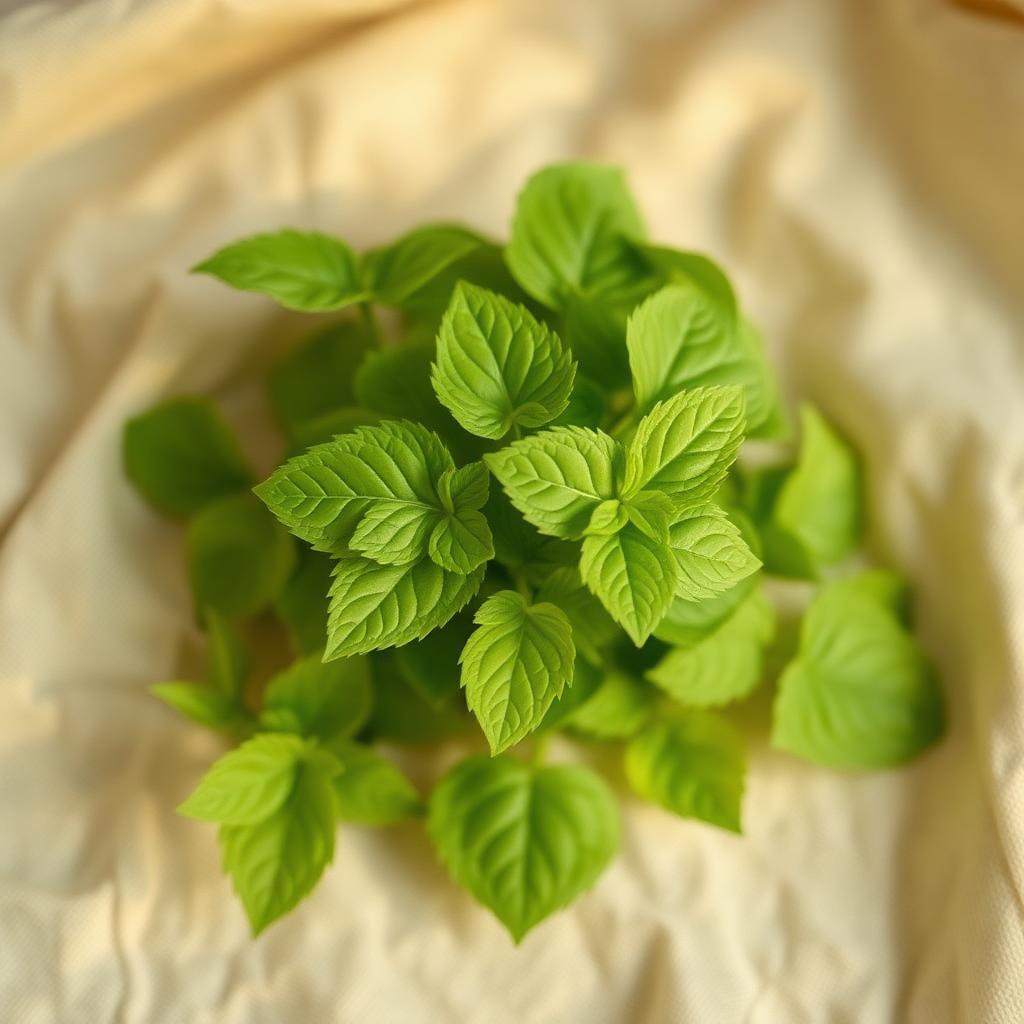
A bushy lemon-scented perennial 30–80 cm tall with square stems and bright-green crinkled heart-shaped leaves. Small whitish flowers attract bees — the genus name Melissa is Greek for 'honey bee.' The aromatic leaves carry citronellal, geranial, and rosmarinic acid, the chemistry behind lemon balm's calming, antiviral, and gut-soothing effects.
Family: Lamiaceae (mint family).
Chapter 4 of 16
What It Holds and What Studies Show
Primary compounds
Geranial and neral. Caffeic acid. Triterpenes.
Other notable constituents
Notable: Volatile lemon-aromatic oils
From laboratory work, not from people taking it
Lemon balm extract improved mood and calmness ratings under laboratory stress in healthy adults. Rated: moderate evidence.
Chapter 5 of 16
What Studies in People Show
What studies in people show
A lemon balm and valerian combination improved sleep quality in adults with mild insomnia in a small trial.Emerging evidence
Topical lemon balm cream shortened healing time in recurrent herpes labialis in controlled trials.Moderate evidence
Chapter 6 of 16
How It Is Prepared
Damkardeh-ye badranjbuyeh: 1–2 tsp dried leaves steeped 5 min, after dinner or 30 min before bed · Sleep blend: lemon balm + rose petals + chamomile in equal parts, 1 tsp per cup.
Cold-sore cream — apply 1% lemon-balm cream at the first tingle, 4× daily for 5 days.
Capsules and standardised extracts carry many times the amount you get from food, which is why the cautions below matter more here.
Tincture — 2–3 mL of a 1:5 alcohol tincture 2–3× daily for anxiety.
Chapter 7 of 16
Medicines and Interactions
General cautions
Medication interaction:
Surgery — discontinue 2 weeks prior (CNS depressant effect).
Specific medicines
Medication interaction:
Sedatives (medicines that make you sleepy) and sleeping tablets — Lemon balm adds to drowsiness. Taken with a benzodiazepine or a sleeping tablet it can make you groggier than expected. (moderate concern)
Medication interaction:
Thyroid medicines (levothyroxine) — Lemon balm may interfere with thyroid hormone signalling. Anyone treated for an underactive thyroid should avoid concentrated extracts. (moderate concern)
Medication interaction:
Alcohol — The combined drowsiness is stronger than either alone. Do not drive after both. (moderate concern)
Chapter 8 of 16
Who Should Be Careful
Pregnancy and breastfeeding:
Avoid medicinal doses in pregnancy without guidance.
Medication interaction:
Hypothyroidism — may suppress TSH at medicinal doses.
Pregnancy and breastfeeding:
Pregnancy — culinary use fine; reserve concentrated tinctures (a liquid extract made with alcohol) for clinician supervision.
Chapter 9 of 16
Pregnancy, Children and Older Adults
Pregnancy and breastfeeding
Pregnancy and breastfeeding:
A cup of the tea now and then is generally considered fine. Concentrated extracts and daily high-dose capsules have not been studied in pregnancy and should be left alone, particularly given the thyroid question.
Children
Children:
Weak lemon balm tea has a long tradition of use for a restless or colicky child, and small trials in children have found it acceptable. Keep it weak, keep it occasional, and speak to a doctor before giving it to an infant.
Older adults
Medication interaction:
Useful in the evening where sleep has become shallow, and gentler than most alternatives. The drowsiness matters more here: anyone already on a sedative (medicines that make you sleepy) or getting up at night should be careful of the combination.
Chapter 10 of 16
What Persian Medicine Says
Persian temperament: Warm & Dry (1st degree). Mildly warming, and read in Persian practice as lifting to a heavy mood rather than sedating.
Classical Persian medicine reads lemon balm as warm and dry in the first degree — lifting for melancholy, strengthening for the heart, soothing for a tense stomach. Avicenna called it 'the herb that makes the heart merry.'
It was used: anxiety, restless overthinking, and grief. Difficulty falling asleep (especially with racing thoughts). Heart palpitations from stress.
Persian sleep teas nearly always include badranjbuyeh, usually with rose petals and chamomile in the evening pot.
Chapter 11 of 16
Traditional Formulas
Joulab-e badranjbuyeh: avicenna's heart-gladdening decoction (a drink made by simmering the plant in water) of lemon balm, rose, and licorice.
Damnoosh-e khwāb: persian sleep tea: lemon balm + rose petals + chamomile + a pinch of lavender.
Carmelite Water: 17th-century European tonic: lemon balm + lemon peel + nutmeg + angelica in alcohol or honey.
Chapter 12 of 16
What It Goes With
Herb:
Chamomile
The standard evening pot in a Persian house: equal parts, ten minutes, lid on.
Rose:
Rose
A few dried petals with the leaf. The tea turns faintly pink and much softer.
Honey:
Honey
Stirred in after the tea has cooled a little, so the honey isn't cooked.
Herb:
Lavender
A pinch only. Lavender overwhelms lemon balm if you use as much of it.
Chapter 13 of 16
Through the Year
Spring:
Spring
The best leaf of the year. Pick before flowering, when the lemon scent is strongest.
Summer:
Summer
Grows fast and turns coarse. Cut it back and it gives tender leaf again.
Autumn:
Autumn
Dry the last cutting for winter tea. It loses scent quickly, so store it sealed.
Winter:
Winter
Dried leaf in the evening pot, often with chamomile and rose.
Chapter 14 of 16
Questions People Ask
Fresh leaf or dried?
Fresh has more scent and makes a brighter tea. Dried is what most households keep, and it works well if it was dried in shade and stored sealed.
Will it make me sleepy during the day?
On its own, rarely — most people describe it as settling rather than sedating. Combined with a sleeping tablet or alcohol it's a different story.
How quickly does it work for anxiety?
Acute calming is usually felt within 30–60 minutes of a strong cup. For trait anxiety, trials show meaningful improvement after 2–4 weeks of daily use.
Chapter 15 of 16
Sources
Sad Giah Hezar Darman (صد گیاه و هزار درمان) — One Hundred Plants and One Thousand Remedies — Dr. Hossein Erfani, 4th edition (1375 / 1996–1997). Primary traditional Persian herbal reference cited throughout this platform. Presented as traditional knowledge, not as modern medical proof.
Office of Dietary Supplements: fact Sheets — US National Institutes of Health (NIH). https://ods.od.nih.gov/factsheets/list-all/.
Herbal Database: memorial Sloan Kettering Cancer Center. https://www.mskcc.org/cancer-care/diagnosis-treatment/symptom-management/integrative-medicine/herbs.
Herbs at a Glance: uS NIH National Center for Complementary and Integrative Health (NCCIH). https://www.nccih.nih.gov/health/herbsataglance.
FoodData Central: searchable nutrient database — US Department of Agriculture (USDA). https://fdc.nal.usda.gov/.
Chapter 16 of 16
Sources (continued)
The Nutrition Source: harvard T.H. Chan School of Public Health. https://www.hsph.harvard.edu/nutritionsource/.
PubMed — peer-reviewed biomedical literature — US National Library of Medicine. https://pubmed.ncbi.nlm.nih.gov/