One of the world's oldest continuously used medicines — with modern trials to match Persian tradition on cough and wound care.
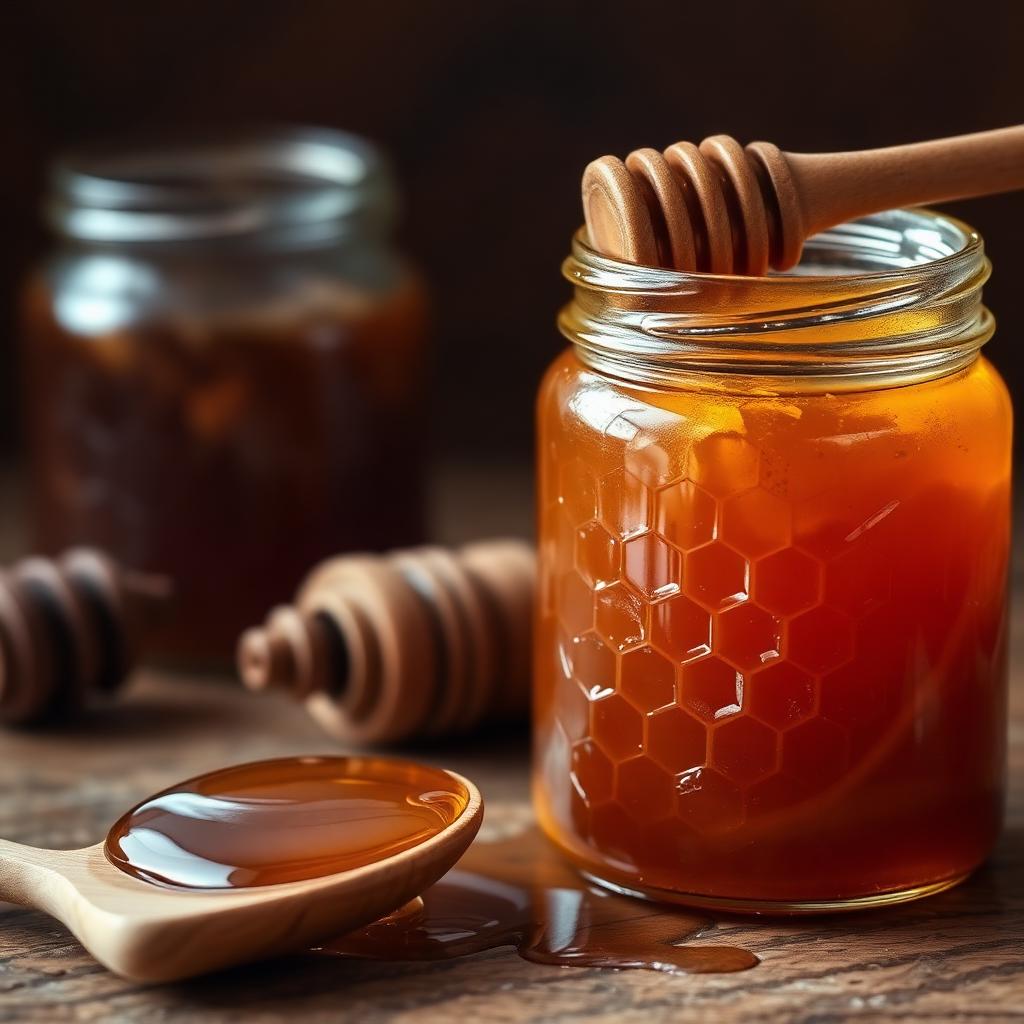
Raw, unheated honey preserves the enzymes, phenolic compounds, and propolis traces that give it its edge over refined sugar.
Never for infants under 12 months — a rare but serious infant-botulism risk. Still sugar. Modest daily servings. Not a free food for anyone with diabetes.
Chapter 2 of 21
Honey: What It Is and Which Part Is Used
Persian households have used raw honey as medicine for more than three thousand years. You'll find it stirred into warm water at dawn, layered over walnuts on the tea table, mixed into majūn preparations with black seed or ginger, and made into cough syrup with sliced onion or garlic. Avicenna gave asal a full chapter in the Canon, covering cough, wounds, weakness, and care in old age.
What It Is and Which Part Is Used: A Little More Background
Modern research now supports much of that tradition: raw and medical-grade honeys have well-understood antimicrobial (slows the growth of germs) activity, can ease coughs in children over one, and help wounds heal when used on the skin.
Known to botanists as Mel: from Apis mellifera.
Chapter 3 of 21
Why Herbalists Still Reach for It
Refined sugar is one of the strongest everyday drivers of metabolic aging. Traditional Persian households reached for a spoon of raw honey instead. Research supports honey for nighttime cough in children over one, care of wounds and burns on the skin, and a modest dose of protective antioxidants. Keep it raw and modest, and a daily teaspoon becomes one of those small Persian pantry swaps that's easy to repeat.
What That Means Day to Day
Swap refined sugar for a modest daily teaspoon of raw honey and you get a sweetener with protective antioxidants, trace enzymes, and a gentler effect on blood sugar. It can't undo a diet built around sugar. But alongside a Persian pattern (walnuts, yogurt, tea), it's a simple healthy-aging habit you can actually keep.
It was used: calms coughs in children over one and in adults — supported by clinical trials. Topical (put on the skin) wound and burn healing recognised by mainstream burn units (medical-grade).
Chapter 4 of 21
What Is In It
Primary compounds
Glucose and fructose (~80%) is the sweet, energy-dense base.
Glucose oxidase is the enzyme that generates hydrogen peroxide, honey's main antimicrobial (slows the growth of germs) mechanism.
Phenolic acids and flavonoids (pinocembrin, chrysin, caffeic acid) — antioxidant and mildly anti-inflammatory.
Methylglyoxal is concentrated in Manuka honey. Carries its strongest antimicrobial (slows the growth of germs) activity.
Propolis and pollen traces: small but meaningful phytochemical (natural chemicals made by plants) richness in raw, unfiltered honey.
Other Constituents
Low pH (~3.9) and high osmolarity — physical mechanisms that make honey an inhospitable environment for most microbes.
Other notable constituents
Notable: Oligosaccharide prebiotics (fibre that feeds the helpful bacteria in your gut)
Chapter 5 of 21
In the Laboratory
From laboratory work, not from people taking it
Manuka and other medical-grade honeys have well-characterised antimicrobial (slows the growth of germs) activity against a broad range of pathogens including antibiotic-resistant strains, driven by low pH, high osmolarity, hydrogen peroxide, and methylglyoxal. Rated: moderate evidence.
Chapter 6 of 21
What Studies in People Show
Strong evidence
A single dose of honey before bed reduces nighttime cough frequency and improves sleep quality in children over one with upper-respiratory infection, compared with placebo or no treatment.Strong evidence
Moderate evidence
Topical (put on the skin) honey (including medical-grade Manuka) accelerates healing of partial-thickness burns and reduces infection compared with conventional dressings in randomised trials.Moderate evidence
Early research
Regular consumption of honey (in place of an equal quantity of refined sugar) is linked to modestly improved lipid and inflammatory markers in small randomised trials, though effect sizes are modest and honey remains concentrated carbohydrate.Emerging evidence
Chapter 7 of 21
How It Is Prepared
First light is a teaspoon in warm lemon water is the classical Persian morning tonic. A second small serving at bedtime for cold-season cough (age 1+).
Always stir into liquids below 40 °C / 105 °F — high heat kills the enzymes and phenolics.
Layer with sliced onion or garlic overnight to draw out a household cough syrup.
Other Ways to Use It
Blend with black seed, ginger, or turmeric into a spoonable majūn.
Medical-grade honey as a topical (put on the skin) dressing on minor burns and slow-healing wounds — under clinician guidance.
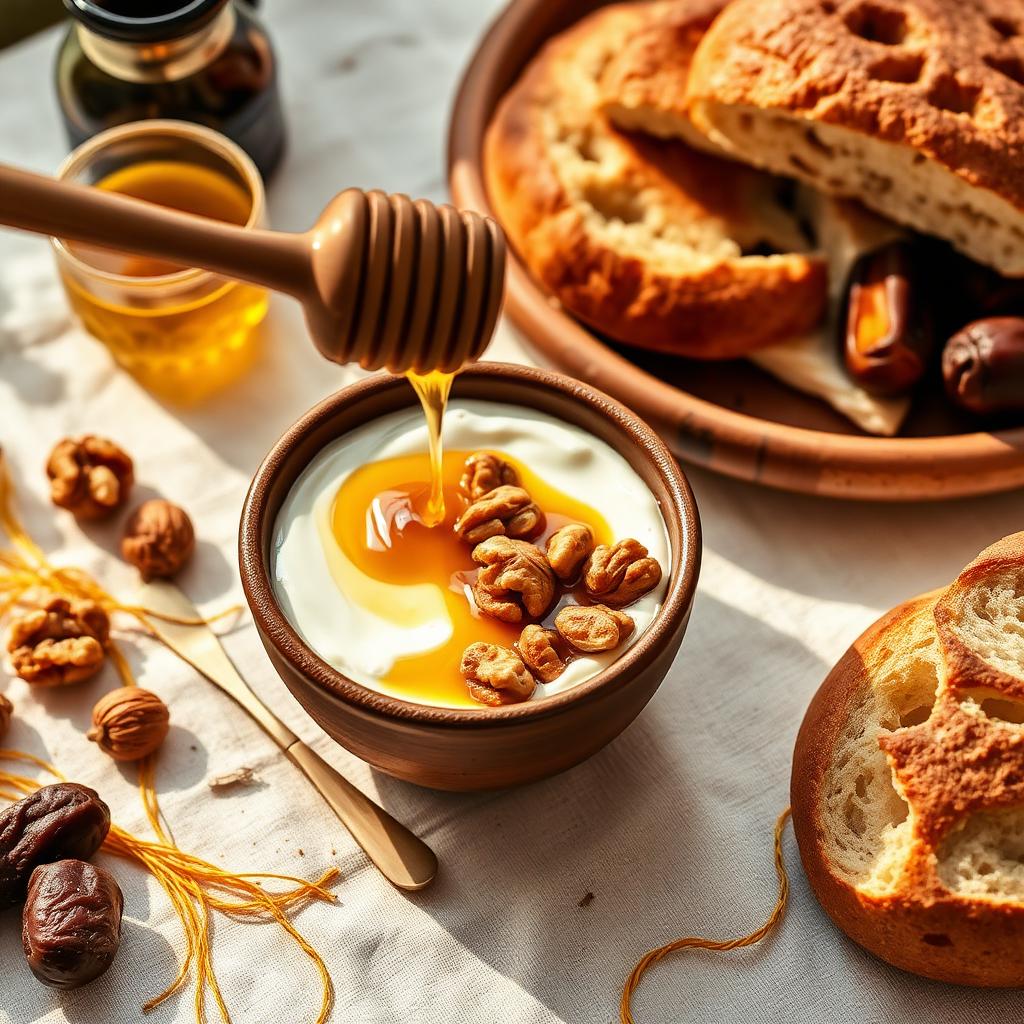
Drizzle over plain yogurt, walnuts, or oatmeal — the Persian breakfast.
Stir into herbal teas only after they cool below 40 °C / 105 °F to preserve enzymes.
1–2 tsp raw honey layered over yogurt and walnuts as an afternoon energy snack.
Chapter 8 of 21
Medicines and Interactions
Medication interaction:
Insulin and sulfonylureas — Honey is concentrated carbohydrate — modest amounts fit into a planned diabetic diet, but larger daily habits can raise glucose and require dose adjustment. Never treat honey as a 'free' sugar substitute. (moderate concern)
Medication interaction:
Warfarin (a blood-thinning medicine) and vitamin K antagonists — Honey doesn't meaningfully affect INR (the blood test that shows how fast your blood clots). Manuka and dark honeys occasionally contain propolis-rich compounds with mild antiplatelet (medicines that stop blood cells sticking together, such as aspirin) activity; keep intake steady rather than swinging. (low concern)
More Interactions to Know
Medication interaction:
Phenytoin — Honey slightly increases phenytoin absorption in small studies. Keep the honey habit steady rather than sudden swings while phenytoin levels are being titrated. (low concern)
Medication interaction:
Antibiotics (topical) — Medical-grade honey used as a topical wound dressing is complementary to (not a replacement for) prescribed antibiotics in complex wounds. Coordinate with the wound-care team. (low concern)
Chapter 9 of 21
Who Should Be Careful
General caution:
Still sugar — modest daily servings; not a free food in diabetes.
General caution:
Choose raw, single-origin, unfiltered honey when possible — much supermarket honey is heat-treated and adulterated.
Allergy:
Bee-product allergy: rare but real — stop at any lip swelling or hives.
Blood Sugar
General caution:
Do not heat above 40 °C — high heat destroys enzymes and phenolics.
General caution:
Uncontrolled diabetes without dietary planning — honey is still concentrated carbohydrate.
Allergy:
Bee-product or pollen allergy.
General caution:
Fructose malabsorption or hereditary fructose intolerance.
Chapter 10 of 21
Pregnancy, Children and Older Adults
General
Children:
Never give honey to infants under 12 months (infant botulism from Clostridium botulinum spores).
Pregnancy and breastfeeding
Pregnancy and breastfeeding:
Honey is safe and traditional throughout pregnancy — the classical Persian morning tonic and cough syrup base. Adult digestion handles Clostridium botulinum spores without issue. Keep the daily amount modest, especially in pregnancies with gestational diabetes.
Children
Children:
Never before 12 months — the single most important safety rule. Infant botulism from Clostridium botulinum spores in raw honey is rare but serious. From the first birthday onward, honey is a wonderful family food and the traditional remedy of choice for night-time cough in children over one, supported by pediatric randomised trials.
Older adults
Older adults:
A daily teaspoon of raw honey — over yogurt, stirred into warm tea, layered with walnuts — is one of the classical Persian aging-well habits. It carries phenolics, replaces refined sugar in the diet, and lifts a low winter morning. Skip only in advanced diabetes without dietary planning.
Chapter 11 of 21
What Persian Medicine Says
Persian temperament: Hot & Dry (2nd degree). Persian medicine reads asal as warmly opening, drying, and lifting — the household answer to cold-pattern cough, winter fatigue, and post-illness weakness. Balance for hot, dry constitutions with cooling waters, rose, or fruit.
Persian medicine sees honey as hot and dry. Traditionally, people used it to warm cold constitutions, clear phlegm from the chest, lift a low winter mood, and rebuild strength in older people or after illness. Avicenna prescribed it in majūn (herb-and-honey preserves) for coughs, digestion, and weakness, and placed it on wounds and ulcers. For hot constitutions, the traditional balance is cooling water, rose, or fruit.
Chapter 12 of 21
What Persian Medicine Says: In the Household
It was used: topical (put on the skin) wound, burn, and skin-ulcer care. Winter tonic for cold, tired, or convalescent constitutions. Base for majūn preparations (with black seed, ginger, saffron, walnut).
Fights germs (hydrogen peroxide, natural acidity, protective plant compounds) — traditional for sore throats and wounds on the skin.
Honey-and-walnuts is the classical Persian breakfast for stamina and cold-season strength. Sholeh zard — saffron rice pudding sweetened partly with honey — celebrates Nowruz and religious festivals. Majūn preparations with honey are Iran's household pharmacy for cough, digestion, and vitality.
Chapter 13 of 21
Traditional Formulas
Majūn-e Asal va Gerdu: raw honey stirred through walnut halves, which is the classical Persian energy majūn for cold winter mornings.
Sharbat-e Piaz va Asal: sliced onion layered in honey overnight. That makes it the household cough syrup for cold-season nights.
Sholeh Zard: saffron rice pudding sweetened partly with honey (the Nowruz and festival celebration bowl).
Chapter 14 of 21
What It Goes With
Spice:
Cinnamon
Majūn-e darchin va asal (warmed cinnamon in raw honey) is the classical Persian winter tonic — both warming, both preservative, gently glycemic-friendly in modest amounts.
Spice:
Black Seed
The classical Prophetic and Persian majūn, which is a spoon of raw honey holding freshly ground black seed on an empty stomach, warming and gently antimicrobial (slows the growth of germs).
Chapter 15 of 21
What It Goes With: More Pairings
Spice:
Ginger
Majūn-e zanjabīl — grated ginger preserved in honey. That makes it a winter-morning spoon for cold hands, sluggish digestion, and the first sniffle of the season.
Spice:
Saffron
A few threads of saffron rested in raw honey for a week become a daily half-teaspoon mood tonic — gentle uplift for grey winter days.
Pairing:
Walnut
Honey drizzled over walnut halves is the classical Persian breakfast — omega-3s, protein, and a gentler glycaemic curve than jam on bread.
Chapter 16 of 21
What It Goes With: A Few More Pairings
Dairy:
Yogurt
A teaspoon of raw honey over plain yogurt turns a probiotic (live helpful bacteria) bowl into a Persian breakfast — probiotic ferment lifted by antimicrobial (slows the growth of germs) sweetness.
Pairing:
Onion
Onion sliced into raw honey overnight becomes the traditional Persian cough syrup (a teaspoon at a time through cold season).
Grain:
Bread
Warm bread with raw honey is the Persian farmhouse breakfast — simple, warming, sustaining.
Chapter 17 of 21
Through the Year
Spring:
Spring
A teaspoon of raw honey in a rose-and-mint infusion (a drink made by steeping the plant in hot water) at the Nowruz table — a gentle lift as the body opens to the new year.
Summer:
Summer
Honey with cold yogurt and rose water is a Persian breakfast that carries a hot morning gently — light warming inside a cool ferment.
Autumn:
Autumn
Majūn-e asal va gerdu (honey and walnut) returns to the tea table as the days shorten — an energy spoon for the cooler working hours.
Winter:
Winter
The classical season for asal — onion-honey syrup for cough, majūn-e siyāh dāneh (black-seed honey) at breakfast, sholeh zard for celebration.
Chapter 18 of 21
Questions People Ask
Is honey really healthier than sugar?
Kept modest and raw, yes — a spoon of raw honey carries protective antioxidants, trace enzymes, and a slightly gentler effect on blood sugar than an equal spoon of refined sugar. It isn't a free food and should not double your total sweetener intake.
Does heating honey ruin it?
Yes — heat above ~40 °C / 105 °F destroys enzymes and phenolic compounds. Sweeten hot tea only once it has cooled to sipping temperature.
Chapter 19 of 21
Questions People Ask: More Questions
Is Manuka honey worth the price?
Medical-grade Manuka has the highest documented antimicrobial (slows the growth of germs) activity and a real place in topical (put on the skin) wound care. For everyday eating, a good raw local or Persian mountain honey delivers most of the benefit at a fraction of the cost.
Is honey safe for diabetes?
Honey is still sugar and raises blood glucose. People with diabetes should treat honey like any added sugar — small amounts, paired with protein, fat, and fiber, and counted toward daily carbohydrate intake.
Chapter 20 of 21
Sources
Honey for acute cough in children — Cochrane Systematic Review — Cochrane Database of Systematic Reviews. https://www.cochranelibrary.com/cdsr/doi/10.1002/14651858.CD007094.pub5/full
Medical-grade honey for wound care: clinical review — Journal of Wound Care (PubMed). https://pubmed.ncbi.nlm.nih.gov/26075375/.
Honey: composition, biological properties, and health effects — Foods (NIH PMC). https://www.ncbi.nlm.nih.gov/pmc/articles/PMC8434853/
Avicenna's Canon of Medicine: uses of honey — Great Books of the Islamic World.
Sad Giah Hezar Darman (صد گیاه و هزار درمان) — One Hundred Plants and One Thousand Remedies — Dr. Hossein Erfani, 4th edition (1375 / 1996–1997). Primary traditional Persian herbal reference cited throughout this platform. Presented as traditional knowledge, not as modern medical proof.
Chapter 21 of 21
Sources (continued)
Office of Dietary Supplements: fact Sheets — US National Institutes of Health (NIH). https://ods.od.nih.gov/factsheets/list-all/.
Herbal Database: memorial Sloan Kettering Cancer Center. https://www.mskcc.org/cancer-care/diagnosis-treatment/symptom-management/integrative-medicine/herbs.
Herbs at a Glance: uS NIH National Center for Complementary and Integrative Health (NCCIH). https://www.nccih.nih.gov/health/herbsataglance.
FoodData Central: searchable nutrient database — US Department of Agriculture (USDA). https://fdc.nal.usda.gov/.
The Nutrition Source: harvard T.H. Chan School of Public Health. https://www.hsph.harvard.edu/nutritionsource/.
PubMed — peer-reviewed biomedical literature — US National Library of Medicine. https://pubmed.ncbi.nlm.nih.gov/