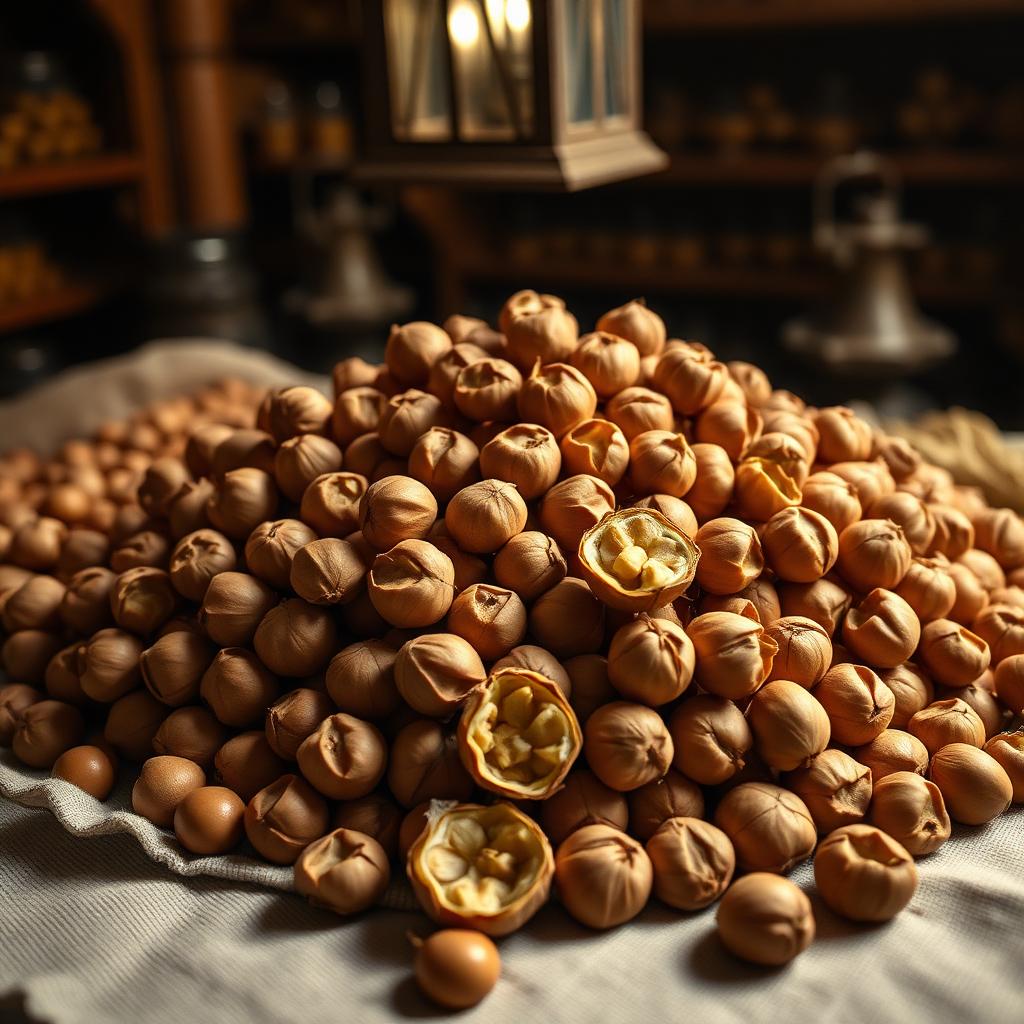
The single densest whole-food source of vitamin E among common tree nuts.
Its fats are mostly oleic acid, the olive-oil fat — and clinical trials (studies where people are randomly assigned to different groups) consistently show it lowers LDL (the harmful type of cholesterol).
Folate and magnesium look after blood vessels and nerves.
A daily 1 oz handful is the dose used across the clinical literature.
Chapter 2 of 14
Getting to Know Hazelnut
People have gathered Corylus avellana in the forests of the Caspian, Caucasus, and Mediterranean for over 9,000 years. An ounce of hazelnuts gives you more vitamin E (α-tocopherol) than any other common tree nut, along with the same heart-friendly fats found in olive oil, plus folate and manganese. Classical Persian medicine sees fandogh as a warm, drying food for the kidneys and nerves. On today's kitchen shelf, it's one of the few whole foods with trial evidence behind it for LDL (the kind of cholesterol that can build up in artery walls) and for how well the thin lining inside your blood vessels works.
Chapter 3 of 14
Why It Matters
Vitamin-E levels quietly fall with age. The same olive-oil-style fats that give Mediterranean and Persian kitchens their character are what give fandogh its measurable effect on cholesterol and on supple blood vessels. A small daily handful supports two things that can shape how the second half of life feels — your stock of cell-protecting antioxidants and how easily your arteries flex.
Highest vitamin-E density of any common tree nut — a cell-protecting reserve for skin and vessels.
Folate helps the body manage homocysteine, a blood marker tied to heart health.
Manganese and copper help your own antioxidant enzymes do their job.
Chapter 4 of 14
What It Contains
Primary compounds
Oleic acid (~9 g per oz) — the Mediterranean fat behind hazelnut's consistent LDL-lowering signal.
Skin proanthocyanidins (catechins, epicatechins) — polyphenols (protective plant compounds) concentrated in the brown seed coat.
Plant sterols (~34 mg per oz) — modest additional LDL (the harmful type of cholesterol) contribution alongside the oleic fats.
Chapter 5 of 14
What It Contains: Other Constituents
Folate (~32 µg per oz): supports homocysteine metabolism and endothelial (relating to the thin inner lining of your blood vessels) function.
L-arginine: nitric-oxide precursor tied to endothelial (relating to the thin inner lining of your blood vessels) flexibility.
Magnesium (~46 mg per oz): vascular (relating to the blood vessels) tone and neuromuscular calm.
A 4-week hazelnut-enriched Mediterranean diet lowered total and LDL (the harmful type of cholesterol) cholesterol vs the same diet without hazelnuts in a Turkish RCT. The difference was unlikely to be due to chance (researchers call this statistically significant).Moderate evidence
Hazelnut consumption lowered total cholesterol and LDL in a meta-analysis (a study that pools the results of many trials) of nine controlled trials, by a difference unlikely to be due to chance.Moderate evidence
A hazelnut-enriched diet improved flow-mediated dilation (endothelial function) alongside LDL (the harmful type of cholesterol) reduction in adults with elevated cholesterol.Moderate evidence
Daily hazelnut intake improved α-tocopherol status and antioxidant capacity in older adults across a 16-week trial.Moderate evidence
Chapter 7 of 14
Preparation and Kitchen Use
A daily 1 oz handful (~21 nuts) mid-morning or mid-afternoon with tea — the classical Persian ajīl moment. A small spoon of hazelnut butter on whole-grain toast at breakfast works equally well for those who find whole nuts hard to chew. Skin-on and lightly toasted is the household preparation.
In the kitchen: crushed over yogurt, salads, and roasted squash for a finishing crunch. Ground into homemade hazelnut–cacao spread with honey and a pinch of salt.
Cold-pressed hazelnut oil as a finishing drizzle — never used for frying.
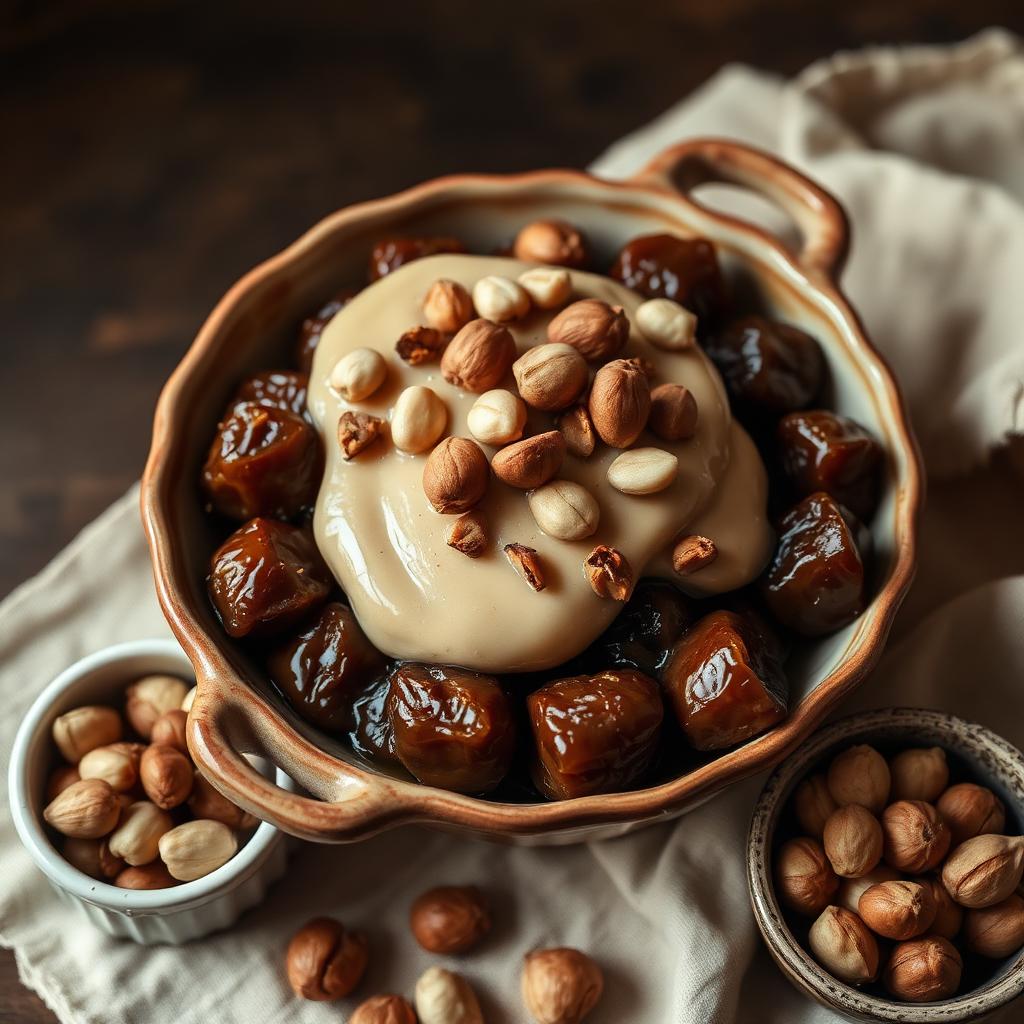
Stir into halva-e ardeh with sesame paste and saffron for the winter table.
Other Ways to Use It
1 oz (~21 nuts) daily — the amount used in heart and blood vessel trials.
Skin-on and lightly toasted retains the polyphenol-rich brown coat.
Crush over yogurt with rose petals and honey for a Persian breakfast.
Chapter 8 of 14
Medicines and Interactions
Medication interaction:
Statins — Plant sterols, oleic fat, and vitamin E in hazelnut are complementary to statin LDL (the harmful type of cholesterol) lowering (portfolio-diet trials). No pharmacokinetic interaction at a daily 1 oz handful. (low concern)
Medication interaction:
Antihypertensives (ACE inhibitors, ARBs, CCBs) — Magnesium, arginine, and oleic fat contribute a modest additive blood-pressure lowering at a daily 1 oz handful — a food-scale effect that layers gently with prescribed therapy. (low concern)
More Interactions to Know
Medication interaction:
Warfarin (a blood-thinning medicine) / DOACs — Vitamin K content is minor and stable at culinary doses; a daily handful doesn't swing INR (the blood test that shows how fast your blood clots). No meaningful pharmacokinetic interaction. (low concern)
Medication interaction:
Levothyroxine, bisphosphonates, tetracyclines, fluoroquinolones — Calcium and magnesium from a hazelnut-heavy meal can modestly bind these medications and reduce absorption. Separate the dose by ≥ 2 hours from a hazelnut-butter breakfast or halva serving. (moderate concern)
Chapter 9 of 14
Who Should Be Careful
General caution:
Concentrated hazelnut-extract or supplement pastes not appropriate in advanced kidney disease with dietary oxalate (a natural substance in some plants that can add to kidney stones) restriction without clinician review.
Allergy:
Tree-nut or seed allergies are common — avoid if affected.
General caution:
Energy-dense — measure portions if managing weight.
General caution:
Store shelled hazelnuts refrigerated; the oils oxidise on a warm shelf.
Allergy:
Confirmed tree-nut (hazelnut) IgE allergy — one of the top eight food allergens; cross-reactive with birch pollen.
Allergy:
Severe birch-pollen oral allergy syndrome with anaphylactic history to raw hazelnut — cooked/roasted may still trigger; test with an allergist before reintroduction.
Chapter 10 of 14
Pregnancy, Children and Older Adults
General
Children:
Whole nuts and seeds are a choking hazard for young children.
Children:
Whole hazelnuts are a choking hazard for children under age 4 — use finely ground or hazelnut butter.
Pregnancy and breastfeeding
Pregnancy and breastfeeding:
A daily 1 oz handful of raw or lightly toasted hazelnuts (skin-on, unsalted) is safe and useful throughout pregnancy — a dense source of vitamin E, folate, magnesium, and monounsaturated fat. Homemade hazelnut butter is compatible; commercial hazelnut-cocoa spreads are largely sugar and palm oil, not a hazelnut serving. Confirmed tree-nut allergy is the only true stop. Breastfeeding parents can continue the daily handful; the traditional Anatolian nursing food of ground fandogh in warm milk with a spoon of honey remains compatible.
Children
Children:
Ground hazelnut, hazelnut flour, and smooth hazelnut butter are appropriate from around 7–8 months once solids are established, introduced carefully as hazelnut is a common paediatric tree-nut allergen. Whole nuts wait until age 4 due to choking risk. In birch-pollen households, discuss first exposure with the paediatrician. A small square of home-made halva-e fandogh with sesame and honey (honey only after age 1) is a gentle Persian winter snack for older children.
Chapter 11 of 14
Pregnancy, Children and Older Adults: A Few More Points
Older adults
Older adults:
Among the highest-value daily nuts after 60: the densest food source of vitamin E, plus folate, magnesium, and an oleic-heavy fat profile that supports LDL (the harmful type of cholesterol) and endothelial function — three levers that quietly matter in the second half of life. For fragile chewing, ground hazelnut stirred into yogurt or oatmeal, or a spoon of homemade hazelnut butter on whole-grain toast, delivers the same nutrition without the crunch load. Refrigerate opened jars; oxidised hazelnut oil dulls quickly on a warm shelf.
Chapter 12 of 14
Traditional Persian Perspective
Persian temperament: Warm & Dry (1st degree). Ibn Sīnā and Aghili Khorasani classify fandogh as warm and dry (1st degree) — fortifying for the kidneys, strengthening for the senses, and grounding for cold-weak constitutions. Slightly heavier than almond on classical digestion, so soaked-and-peeled or lightly toasted is the household preparation for a delicate stomach.
In the Household
Persian and Galenic sources classify fandogh as warm and dry (1st degree). They describe it as a strengthening food for the kidneys and nerves, sharpening for the senses, fortifying in cold-damp winters, and useful for scholars and travellers. Ibn Sīnā notes hazelnut oil as a gentle ear-and-scalp application for cold-pattern headache. Aghili Khorasani places fandogh among the household ajīl nuts used to quiet a cold, weak constitution.
Older Uses
Cold, weak constitutions and winter fatigue.
Weak memory and mental fatigue among scholars (with warm milk).
Traditional warming food for scholars and winter constitutions.
Fandogh crowns Persian halva-e ardeh, turns up in Anatolian breakfast spreads and Turkish delight, and gives Piedmont's hazelnut-cacao gianduja its character. Across the wider Persian world, whole hazelnuts also belong on Nowruz and Yalda ajīl platters.
Chapter 13 of 14
Questions People Ask
Hazelnuts vs almonds for vitamin E?
Hazelnuts are the single densest whole-food source of α-tocopherol — even higher per ounce than almonds. Rotate both across the week for a fuller fat, mineral, and antioxidant profile.
How many hazelnuts a day?
Most heart and blood vessel trials use 1 oz (~21 whole nuts) daily, skin-on, as part of an otherwise Mediterranean diet.
Are skin-on or peeled hazelnuts better?
The brown skin concentrates the proanthocyanidin polyphenols (natural plant compounds studied for antioxidant activity), so skin-on gives the fullest antioxidant load. Peeled hazelnuts are gentler for very tannin-sensitive digestion.
Is hazelnut oil safe to cook with?
Cold-pressed hazelnut oil is a finishing oil — its polyunsaturated fraction oxidises with high heat. Use it drizzled at the end of cooking.
Chapter 14 of 14
Sources
Hazelnut consumption and heart and blood vessel risk factors — meta-analysis — Nutrients / PubMed indexed literature. Https://pubmed.ncbi.nlm.nih.gov/?term=hazelnut+heart and blood vessel
Corylus avellana: about Herbs monograph — Memorial Sloan Kettering — Integrative Medicine. https://www.mskcc.org/cancer-care/diagnosis-treatment/symptom-management/integrative-medicine/herbs.
Nuts, hazelnuts (FDC ID 170180) — USDA FoodData Central. https://fdc.nal.usda.gov/
The Canon of Medicine: entries on fandogh (hazelnut) — Avicenna (Ibn Sīnā), 11th century.
Makhzan al-Adwiya: entries on fandogh — Aghili Khorasani, 18th century.