Trials pooled together show modest reductions in total and LDL (the harmful type of cholesterol) cholesterol with daily green tea or its extracts.
Long-term studies following people in Japan and China link regular drinking (~3–5 cups/day) with lower heart and blood vessel mortality.
L-theanine + caffeine (roughly 2:1) produces calm, focused alertness — measurable on attention and reaction-time tasks.
Concentrated EGCG extracts (>800 mg/day) carry hepatotoxicity (liver damage) risk. The brewed leaf at cup doses doesn't.
Chapter 2 of 24
Green Tea: What It Is and Which Part Is Used
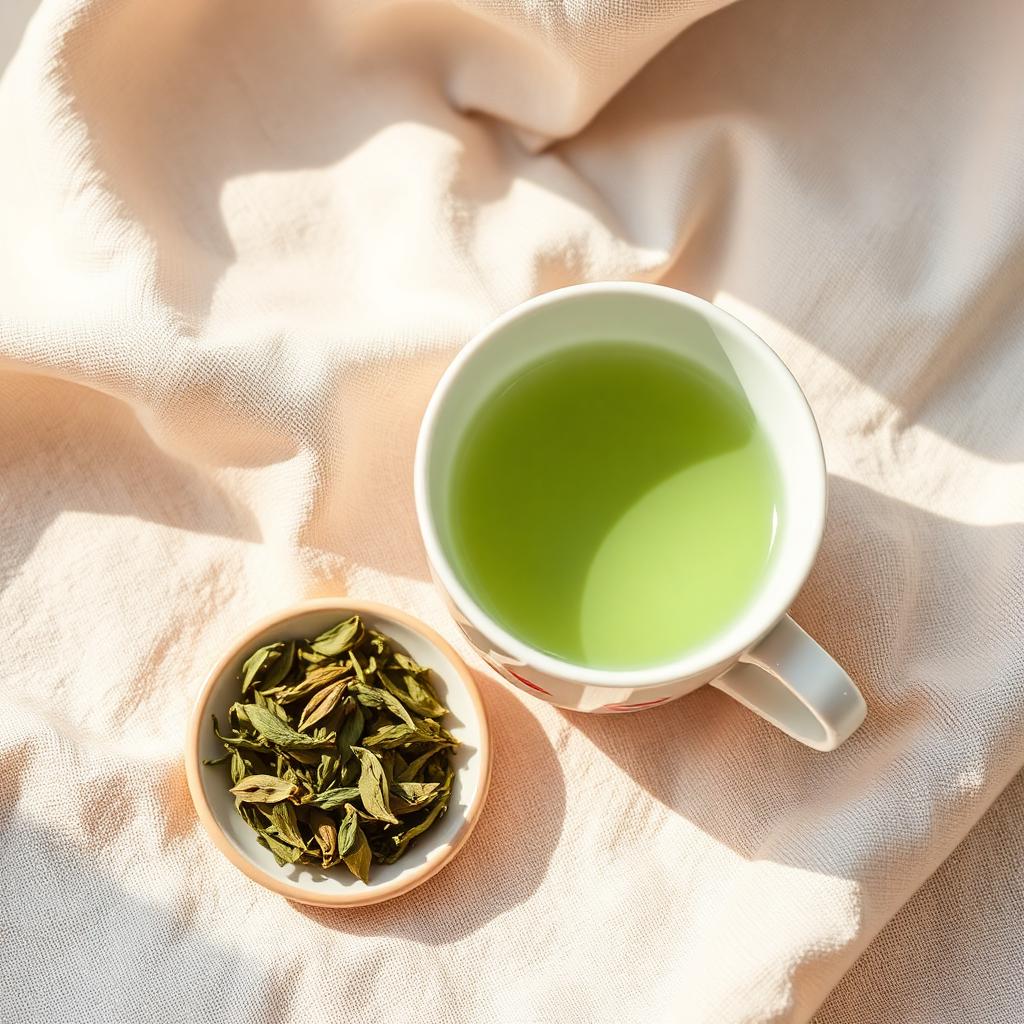
Green tea (Camellia sinensis) comes from young leaves that are gently steamed or pan-fired to arrest oxidation. This preserves the pale-jade infusion (a drink made by steeping the plant in hot water) and its signature catechins — chiefly epigallocatechin gallate (EGCG). It reached Persia and the wider Islamic world along the Silk Road and became a household ritual alongside black tea. Persian and Chinese traditions see it as cooling, drying, and clarifying — a natural companion to a rich meal, a long conversation, and a clear afternoon. Modern research finds modest but repeatable benefits when you drink it regularly: better lipid profiles, gentler post-meal glucose, calmer blood pressure, and — most distinctively — the L-theanine and caffeine pairing behind its unusual 'calm alertness.'
Chapter 3 of 24
Why Herbalists Still Reach for It
Green tea is a classic longevity drink: affordable, easy to store, shared across generations, and simple to weave into your day without a stimulant crash. It can replace a sugary drink, slow down a meal, and steady your attention. A few cups a day over decades is exactly the kind of small habit that can quietly protect the heart, the vessels, and the aging brain.
What That Means Day to Day
Long-running cohorts from Japan (Ohsaki) and China (China Kadoorie Biobank) associate ~3–5 cups/day of green tea with meaningful reductions in heart and blood vessel mortality across decades. There's no single dramatic effect. Instead, many small ones add up: modestly lower LDL (the harmful type of cholesterol), calmer post-meal glucose, gently lower blood pressure, better endothelial function, and — in observational (based on watching what people already do) data — slower cognitive (to do with thinking and memory) decline.
Chapter 4 of 24
Why Herbalists Still Reach for It: Blood Sugar
That's what makes the whole habit matter.
Attention trials: improved focus and reaction time from the L-theanine + caffeine combination.
Blood-sugar trials: small favourable effects on fasting glucose and HbA1c in adults with insulin resistance (when the body stops responding well to its own insulin).
Chapter 5 of 24
What Is In It
EGCG (epigallocatechin gallate): principal catechin (plant compounds common in green tea). Driver of most modern heart and blood vessel, metabolic, and antioxidant research.
Other catechins (plant compounds common in green tea): eGC, ECG, EC — additive antioxidant and lipid-lowering activity.
L-theanine: amino acid unique to Camellia sinensis. Produces calm alertness paired with caffeine.
Other Constituents
Caffeine (~25–45 mg/cup) — mild central stimulant, lower than coffee, softened by L-theanine.
Polyphenolic tannins (plant compounds that give a dry, puckering taste): astringent (tightens tissue and leaves a dry feeling in the mouth) mouthfeel. Contribute to iron-binding effect.
Small amounts of vitamin K and fluoride from the leaf matrix.
Chapter 6 of 24
In the Laboratory
From laboratory work, not from people taking it
Antioxidant activity of catechins (plant compounds common in green tea), measurable in the blood after drinking.
Laboratory and animal studies show EGCG adjusts lipid absorption, endothelial (relating to the thin inner lining of your blood vessels) nitric oxide, and inflammatory signalling — a plausible mechanism for the modest clinical effects, but not itself a clinical outcome in humans. Rated: early research.
Chapter 7 of 24
What Studies in People Show
Strong evidence
Prospective cohort (Ohsaki, ~40,000 adults, 11 years): green tea consumption is linked to lower heart and blood vessel and all-cause mortality, dose-response strongest at ~5 cups/day.Strong evidence
Moderate evidence
Meta-analysis (a study that pools the results of many trials) of RCTs: green tea consumption modestly reduces total and LDL cholesterol.Moderate evidence
Further Findings
China Kadoorie Biobank (~500,000 adults): regular tea drinking is linked to lower heart and blood vessel disease mortality.Moderate evidence
RCT: L-theanine + caffeine in the ratio present in green tea improves attention and reaction time on a demanding cognitive (to do with thinking and memory) task compared with placebo.Moderate evidence
Chapter 8 of 24
How It Is Prepared
Drink 2–4 cups spread across the day. Avoid the last cup within 6 hours of bedtime if caffeine disturbs your sleep.
Whole loose leaf: 1 tsp per cup, 70–80 °C water, 2–3 minutes. The reference form.
Matcha: 1–2 g whisked into 70 °C water. The full leaf, higher catechin (plant compounds common in green tea) and L-theanine dose.
Other Ways to Use It
Cold brew: 1 Tbsp leaf per litre of cold water, 6–8 hours in the fridge. Lower caffeine, sweeter, less bitter.
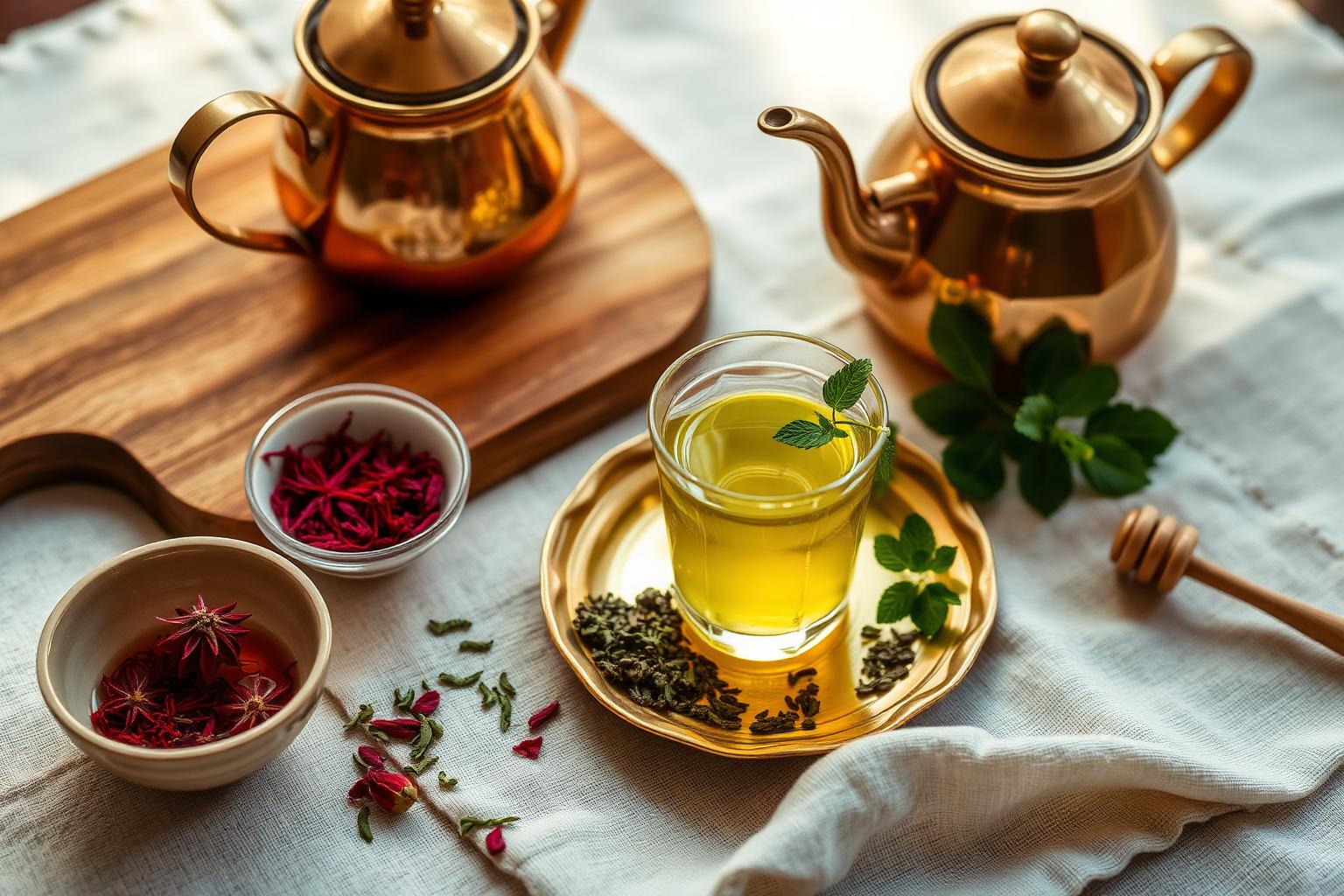
Persian household is brewed lightly with a small pinch of cardamom or rose, drunk without sugar.
Iced/cold-brew: a summer version, lower caffeine, gentler tannins (plant compounds that give a dry, puckering taste).
Between-meals timing to avoid tannin–iron interaction.
Chapter 9 of 24
How It Is Prepared: Further Preparations
Steep 1 tsp (2–3 g) of loose green tea in 200 ml water at 70–80 °C for 2–3 minutes — hotter water and longer steeps make it bitter and astringent (tightens tissue and leaves a dry feeling in the mouth).
Have a cup between meals, or 30–60 minutes after a rich meal, rather than with food (tannins can bind iron and reduce absorption of plant iron).
For a Persian variant, add a small pinch of dried rose petals or cardamom. For a Japanese one, whisk matcha into 70 °C water for 15 seconds.
Chapter 10 of 24
Medicines and Interactions
General cautions
Medication interaction:
Can interact with several medications (see interactions) via caffeine, tannins (plant compounds that give a dry, puckering taste), and vitamin K.
Specific medicines
Medication interaction:
Warfarin — Green tea contains vitamin K (small amounts in leaf, larger in extracts); a sudden change in intake can shift INR (the blood test that shows how fast your blood clots). Keep daily intake steady and avoid concentrated extracts. (moderate concern)
Medication interaction:
Stimulants (methylphenidate, amphetamines, decongestants) — Caffeine in green tea adds to central-nervous-system stimulation, raising anxiety, blood pressure, and heart rate. (moderate concern)
Medication interaction:
Iron supplements (ferrous sulfate/gluconate) & plant iron in food — Tannins (plant compounds that give a dry, puckering taste) reduce non-heme iron absorption significantly when consumed together. Separate tea and iron by 60–90 minutes. (moderate concern)
Chapter 11 of 24
Medicines and Interactions: More Interactions to Know
General caution:
Fluoroquinolone antibiotics (ciprofloxacin, ofloxacin) — Green tea (caffeine) plasma levels rise when metabolism is inhibited; increased jitter, insomnia, palpitations. (moderate concern)
Medication interaction:
Beta-blockers, ACE inhibitors, and antihypertensives — Caffeine may transiently raise blood pressure and blunt the effect of these drugs at very high intakes. (low concern)
Medication interaction:
Hepatotoxic drugs (isoniazid, methotrexate, high-dose acetaminophen) — Concentrated EGCG extracts add hepatic risk when combined with hepatotoxic drugs; brewed tea at cup doses doesn't. (moderate concern)
General caution:
Nadolol (beta-blocker) — Green tea catechins (plant compounds common in green tea) can reduce nadolol absorption via OATP transporters, blunting its blood-pressure effect. Separate by several hours. (moderate concern)
Chapter 12 of 24
Who Should Be Careful
General caution:
Caffeine (~25–45 mg/cup): can disturb sleep, aggravate anxiety, or raise blood pressure in sensitive people.
General caution:
Concentrated EGCG extracts (>800 mg/day, especially fasted) are linked to rare hepatotoxicity — prefer brewed leaf.
General caution:
Very hot tea (>65 °C) sipped daily is linked to higher risk of oesophageal cancer — let it cool briefly before drinking.
General caution:
Iron-deficiency anemia — avoid tea within 60 minutes of iron-rich meals or supplements.
Pregnancy and breastfeeding:
Pregnancy: keep total caffeine (all sources) under 200 mg/day; avoid EGCG extract supplements.
Chapter 13 of 24
Pregnancy, Children and Older Adults
Pregnancy and breastfeeding
Pregnancy and breastfeeding:
Pregnancy: green tea is compatible with pregnancy at 1–2 cups per day; keep total caffeine (all sources) under about 200 mg/day. High intakes have been linked in observational studies to reduced folate absorption and low birth weight, and concentrated EGCG extracts should be avoided entirely during pregnancy. Breastfeeding: 1–2 cups a day is generally fine; caffeine transfers into breast milk, so watch for fussiness or poor sleep in the baby and reduce accordingly. Avoid concentrated EGCG supplements during breastfeeding.
Children
Children:
Small children rarely need caffeinated tea. For children over 8, an occasional half-cup of dilute green tea after a rich meal is fine; avoid it near bedtime. Do not give concentrated EGCG extracts to children. In iron-deficient children specifically, avoid tea within an hour of meals.
Older adults
Older adults:
Green tea is one of the highest-leverage daily habits after 60 — cohort data associate 3–5 cups/day with lower heart and blood vessel and all-cause mortality. Watch for interactions with warfarin (keep intake steady) and beta-blockers such as nadolol, and be mindful of iron absorption in older adults prone to anemia. Sipping tea after it has cooled below about 65 °C reduces oesophageal risk associated with habitually very-hot beverages.
Chapter 14 of 24
What Persian Medicine Says
Persian temperament: Cool & Dry (1st–2nd degree). Cooling, drying, gently bitter, clarifying. Best after rich or oily meals and in hot, damp constitutions. Steadies attention and clears heat. Cold, damp constitutions may prefer it warm with a pinch of cardamom or ginger to soften the coolness. Excess in an already cold, weak digestion can dampen appetite.
Chinese traditional medicine describes green tea as cooling, drying, and gently bitter — a leaf used to clear heat, resolve phlegm, brighten the eyes, and ease the after-effects of rich or greasy food. It reached Persia through Silk Road trade, where Persian and Islamic physicians also classed it as cool and dry. They considered it useful after heavy meat dishes and for hot, damp constitutions.
Chapter 15 of 24
What Persian Medicine Says: In the Household
Persian households distinguish chāi-e sabz (green) from chāi-e siyāh (black): green tea is lighter and more clearing, taken alone or with a whisper of cardamom rather than as part of the sugared samovar ritual. The practical lesson is about who drinks it and when. Tradition recommends it after heavy, greasy meals and for hot, damp constitutions, well away from bedtime and never on an empty, nervous stomach.
Brightening the eyes and easing headaches in hot, damp constitutions.
Steadying attention during long study, work, or meditation.
Cooling companion in summer, iced or lightly chilled.
Chapter 16 of 24
In Persian Life
Green tea sits at the quiet centre of everyday life across half the world — in the Japanese tea room, the Chinese teahouse, Moroccan mint tea, and the Persian afternoon after a lunch of rice and stew. In each place, it's more than a drink. It's something warm in your hand, a moment to pause, and an invitation to sit. That daily ritual is closely tied to the long-term health pattern seen in cohort research.
Chapter 17 of 24
What It Goes With
Spice:
Cardamom
A single crushed cardamom pod in the pot. That makes it the Persian-Arab way to soften green tea's edge and add aromatic lift without sugar.
Spice:
Saffron
A thread or two of bloomed saffron in a cup of green tea makes a Persian afternoon mufarriḥ — mood-lifting and gently warming.
Spice:
Cinnamon
A short stick of Ceylon cinnamon in the pot for glucose-friendly sweetness.
Chapter 18 of 24
What It Goes With: More Pairings
Spice:
Ginger
A slice of fresh ginger warms green tea for cold-pattern constitutions and cold mornings — thermal balance kept intact.
Pairing:
Walnut
A small handful of walnuts with an afternoon cup — omega-3 kernels beside catechin-rich leaf, one of the great longevity snacks.
Fruit:
Pomegranate
Pomegranate arils on the side of a green tea break (two polyphenol powerhouses working the same vascular background).
Chapter 19 of 24
What It Goes With: A Few More Pairings
Pairing:
Olive Oil
The Mediterranean lunch of EVOO-dressed vegetables + a cup of green tea afterwards. Two of the strongest cohort-linked longevity habits stacked in one meal.
Pairing:
Dates — Persian mid-afternoon
a whisper of sweetness that the tannins (plant compounds that give a dry, puckering taste) keep from spiking. A single date beside a small cup of green tea.
Chapter 20 of 24
Through the Year
Spring:
Spring
The season green tea belongs to — a light, clearing daily cup as the body sheds winter heaviness and returns to lighter food.
Summer:
Summer
Cold-brewed or lightly chilled with a slice of cucumber and a mint sprig — cooling, hydrating, low-caffeine.
Autumn:
Autumn
Warmed slightly with a pinch of cardamom or dried rose, drunk between meals as the weather turns.
Winter:
Winter
A smaller role — warm the water gently, add cardamom or ginger to soften the coolness, and reach more often for black tea, ginger, or cinnamon.
Chapter 21 of 24
Questions People Ask
How many cups a day is best?
The long-term evidence for heart and blood vessel protection is strongest around 3–5 cups per day of brewed leaf. Two to four is a reasonable, well-tolerated target for most adults. More can push caffeine into sleep-disturbing territory or aggravate anxiety.
Is EGCG supplement better than drinking the tea?
No. The heart and metabolism findings in the research come from drinking the tea itself. High-dose concentrated EGCG extracts (>800 mg/day, especially on an empty stomach) have been linked to rare but real liver injury and aren't recommended as a shortcut to the tea itself.
Will green tea interfere with my iron?
Tannins (plant compounds that give a dry, puckering taste) in tea reduce absorption of non-heme (plant) iron. If you're iron-deficient or eating an iron-rich meal, leave 60–90 minutes between the meal or supplement and your cup. Heme iron from meat is far less affected.
Chapter 22 of 24
Sources
Green Tea (Camellia sinensis): memorial Sloan Kettering Integrative Medicine — MSKCC. https://www.mskcc.org/cancer-care/integrative-medicine/herbs/green-tea.
Green tea consumption and mortality due to heart and blood vessel disease, cancer, and all causes — Ohsaki study — Kuriyama et al., JAMA, 2006 — PubMed 16968850. Https://pubmed.ncbi.nlm.nih.gov/16968850/
Green tea catechins on lipid profile: systematic review and meta-analysis of RCTs — Zheng et al., Am J Clin Nutr, 2011 — PubMed 21715508. https://pubmed.ncbi.nlm.nih.gov/21715508/
Green tea and blood pressure: meta-analysis of RCTs — Peng et al., Br J Nutr, 2014 — PubMed 24775425. https://pubmed.ncbi.nlm.nih.gov/24775425/
L-theanine and caffeine improve attention during a demanding cognitive task — Owen et al., Nutr Neurosci, 2008 — PubMed 18681988. https://pubmed.ncbi.nlm.nih.gov/18681988/
Tea consumption and heart and blood vessel disease mortality — China Kadoorie Biobank — Wang et al., Eur J Prev Cardiol, 2020 — PubMed 31910637. Https://pubmed.ncbi.nlm.nih.gov/31910637/
Chapter 23 of 24
Sources (part 2 of 3)
Sad Giah Hezar Darman (صد گیاه و هزار درمان) — One Hundred Plants and One Thousand Remedies — Dr. Hossein Erfani, 4th edition (1375 / 1996–1997). Primary traditional Persian herbal reference cited throughout this platform. Presented as traditional knowledge, not as modern medical proof.
Office of Dietary Supplements: fact Sheets — US National Institutes of Health (NIH). https://ods.od.nih.gov/factsheets/list-all/.
Herbal Database: memorial Sloan Kettering Cancer Center. https://www.mskcc.org/cancer-care/diagnosis-treatment/symptom-management/integrative-medicine/herbs.
Herbs at a Glance: uS NIH National Center for Complementary and Integrative Health (NCCIH). https://www.nccih.nih.gov/health/herbsataglance.
FoodData Central: searchable nutrient database — US Department of Agriculture (USDA). https://fdc.nal.usda.gov/.
Chapter 24 of 24
Sources (part 3 of 3)
The Nutrition Source: harvard T.H. Chan School of Public Health. https://www.hsph.harvard.edu/nutritionsource/.
PubMed — peer-reviewed biomedical literature — US National Library of Medicine. https://pubmed.ncbi.nlm.nih.gov/