Sour when firm, sweet when ripe. Good fibre and vitamin C.
Early fruit cooks. Late fruit is eaten fresh.
Pick it early and a gooseberry is hard and mouth-puckering. Let it ripen and it turns soft and honeyed. It feels like two quite different fruits from the same bush.
Known to botanists as Ribes uva-crispa.
Chapter 2 of 12
Why It Matters
Ripeness changes food more than you might expect, and gooseberry makes that easy to see. The same berry, just two weeks apart, can be a sour cooking fruit or a sweet one for dessert.
Gooseberries are low in sugar, high in fibre, and a useful source of vitamin C. Cook them lightly with little added sugar and you get a sharp, satisfying fruit without too much sweetness.
It was used: soluble fibre as pectin (a soft fibre in fruit that thickens jam) and very low sugar when picked green.
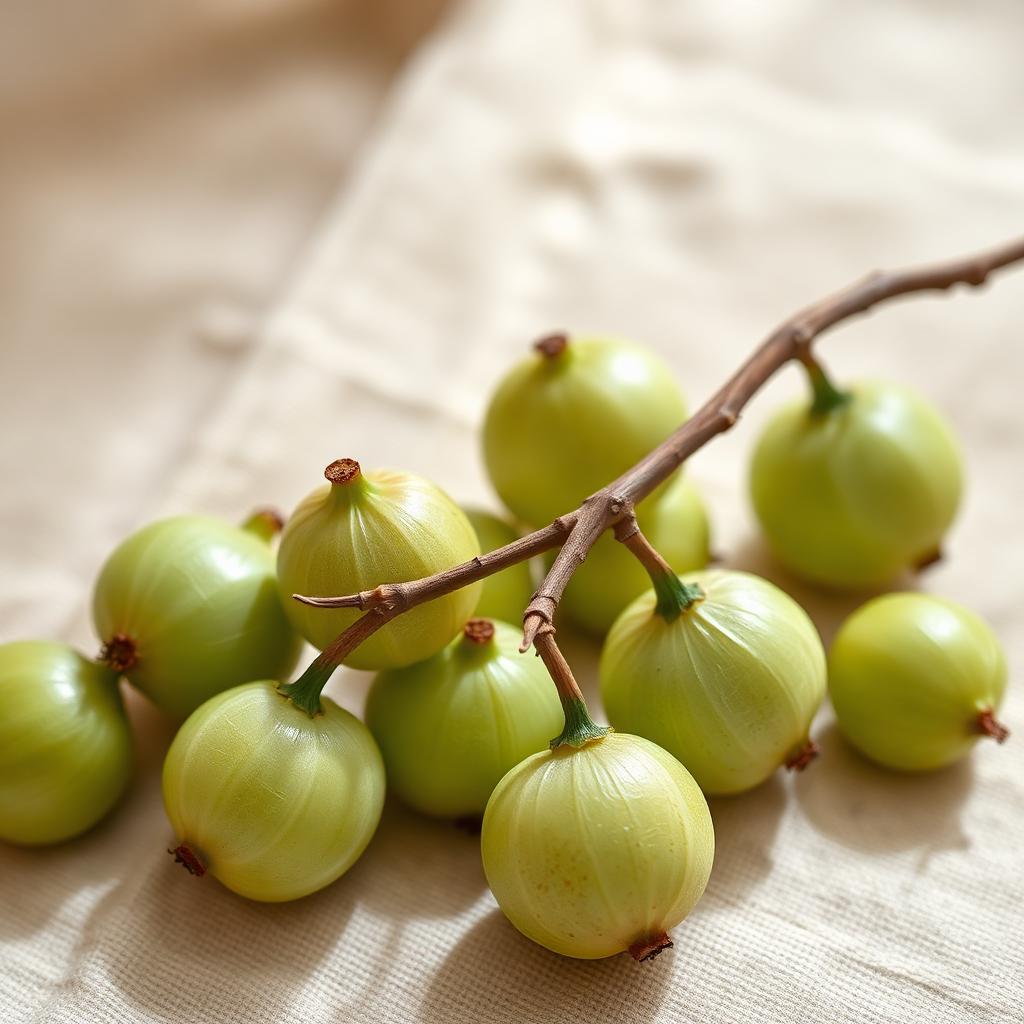
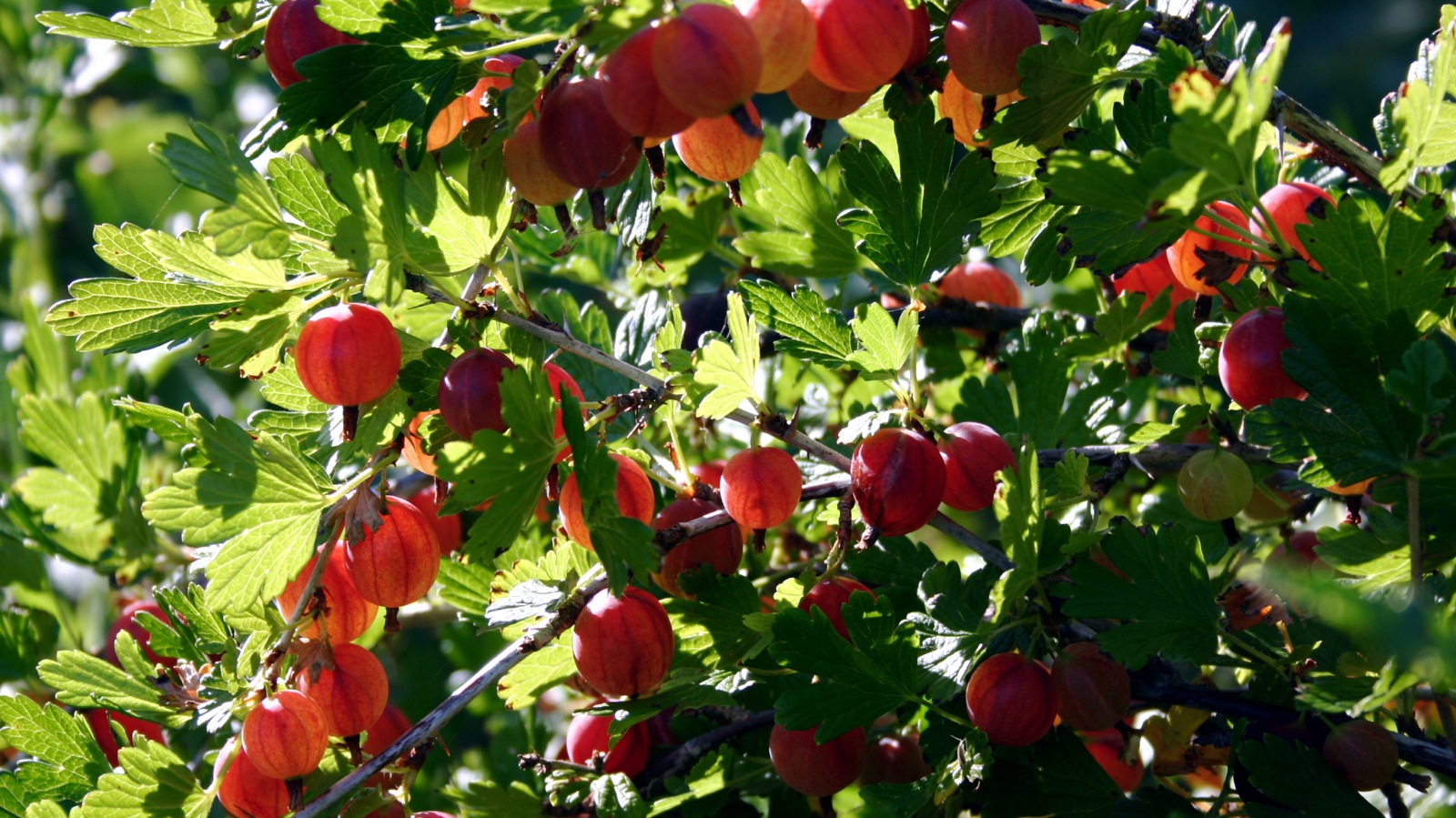
A gooseberry is a round berry the size of a grape, striped with fine pale veins, growing singly along a thorny bush. Green when unripe and sharply sour, it turns yellow, red, or purple as it ripens, and softens into something surprisingly sweet.
Ribes berries are high in vitamin C and polyphenols (protective plant compounds) in compositional analyses.Moderate evidence
Higher total fruit intake is linked to lower heart and blood vessel risk in pooled cohort data.Strong evidence
Chapter 5 of 12
Preparation and Kitchen Use
Snip off the stem and flower ends with scissors, then rinse the berries.
Simmer them only until they burst and thicken the pan. For freezing, spread the dry berries on a tray first, then bag them once firm.
Use the firm fruit for cooking and save soft, fully coloured berries for eating fresh. Freeze any extra whole for winter dishes.
Firm green gooseberries are sharp enough for compote, sauce, or a tart filling. Once the berries soften and colour, eat them raw. A few sour berries can also cut through a rich dish.
Chapter 6 of 12
Medicines and Interactions
Medication interaction:
Warfarin — There is some vitamin K here. The amount is modest, but a sudden change in how much fruit you eat matters more than the fruit itself. (low concern)
Medication interaction:
Blood-thinning medication generally — No clinical reports involve gooseberry, but large daily amounts of any polyphenol-rich fruit are worth mentioning to a prescriber. (low concern)
Chapter 7 of 12
Who Should Be Careful
General caution:
Traditional gooseberry cooking uses a lot of sugar; the fruit itself doesn't.
General caution:
Mind the thorns when picking.
General caution:
Very sour green fruit may aggravate reflux (stomach acid rising into the throat).
General caution:
Indian gooseberry (amla) is a different plant with different uses — don't treat advice about one as advice about the other.
Chapter 8 of 12
Pregnancy, Children and Older Adults
Pregnancy and breastfeeding
Pregnancy and breastfeeding:
Fine as food. The vitamin C is useful, and the sourness often sits well with early nausea. Wash the fruit; it grows low and close to the soil.
Children
Children:
Whole gooseberries are a choking size for toddlers, so crush or cook them for anyone under four. Older children usually meet them cooked and sweetened, which is a fair introduction.
Older adults
Older adults:
Sour fruit wakes up an appetite that has faded, and the skins add fibre. If the tartness is too much, cook them briefly with honey instead of skipping them.
Chapter 9 of 12
Traditional Uses in Europe and Persia
Persian temperament: Cool & Dry (1st degree). Sour and drying. Old practice used it against summer heat and a heated stomach, and kept it away from cold, weak digestions.
Persian and European practice both see the sour green fruit as cooling and drying. People used it to cut thirst, wake up a dull appetite, and lighten heavy, fatty meals. Once ripe, it was simply enjoyed as food rather than treated as a remedy.
Cooked with rich or oily food to lighten it.
Gooseberry has a long-standing place in northern European kitchen gardens, where competitive growers still weigh their heaviest berries each summer. In Iran, its name angur-e farangi — 'foreign grape' — is shared across the currant family.
Chapter 10 of 12
What It Goes With
Honey:
Honey
Sour fruit and honey is an old rule. Add the honey after cooking, not before, or you lose the aroma.
Dairy:
Yogurt
Crushed berries stirred through thick yogurt make a tart breakfast bowl that needs no sugar.
Pairing:
Almonds
Fat and sourness balance each other. A handful of almonds alongside makes the berries less bracing.
Herb:
Mint
Mint takes the sharp edge off and turns a bowl of sour berries into something you finish.
Chapter 11 of 12
Through the Year
Spring:
Spring
Bushes flower and the fruit sets hard and green. Nothing to pick yet.
Summer:
Summer
Early summer gives hard sour fruit for cooking. Late summer gives soft sweet fruit for eating raw. They're the same berry a month apart.
Autumn:
Autumn
The season is over. What remains is jam, and jam isn't the fruit.
Winter:
Winter
Out of season entirely.
Chapter 12 of 12
Sources
Ribes fruits: composition and antioxidant capacity — Food Chemistry. https://pubmed.ncbi.nlm.nih.gov/26041199/
Dietary fibre intake and heart and blood vessel disease — The Lancet. Https://pubmed.ncbi.nlm.nih.gov/30638909/