It doesn't prevent dementia in healthy people. A large six-year trial settled that.
In people with existing cognitive (to do with thinking and memory) decline, standardised extract shows small benefits in some trials.
It has evidence for improving walking distance in poor leg circulation.
It thins the blood. This is the single most important safety point.
Ginkgo is the world's most-studied herbal extract for memory and circulation, but the results are genuinely mixed. Large, careful trials — including the GEM study, which followed over three thousand older adults for six years — found that ginkgo did not prevent dementia in healthy people. That question has a clear answer: no.
What Else to Know
Other trials in people who already have mild cognitive (to do with thinking and memory) problems or dementia found small improvements in daily function with a standardised extract. There's also reasonable evidence that ginkgo helps people with poor circulation in the legs walk farther. Think of it as a possible aid for specific circulation problems.
Known to botanists as Ginkgo biloba.
Chapter 2 of 11
Why Herbalists Still Reach for It
Ginkgo shows why it matters to separate tradition from evidence. It's genuinely ancient and well studied, yet its biggest popular claim doesn't hold up. You deserve to hear that plainly. What does survive the scrutiny — possible help with circulation — is still worth knowing.
Here's the honest healthy-aging message: ginkgo won't keep a healthy brain from ageing. Believing it might can distract you from what actually helps — movement, blood pressure control, sleep, hearing aids, and company. It may have a place in circulation problems in the legs, but only alongside a doctor who knows every other medicine you take.
Improves pain-free walking distance in peripheral arterial disease (multiple trials).
Some evidence for tinnitus linked to poor circulation.
Chapter 3 of 11
The Plant Itself
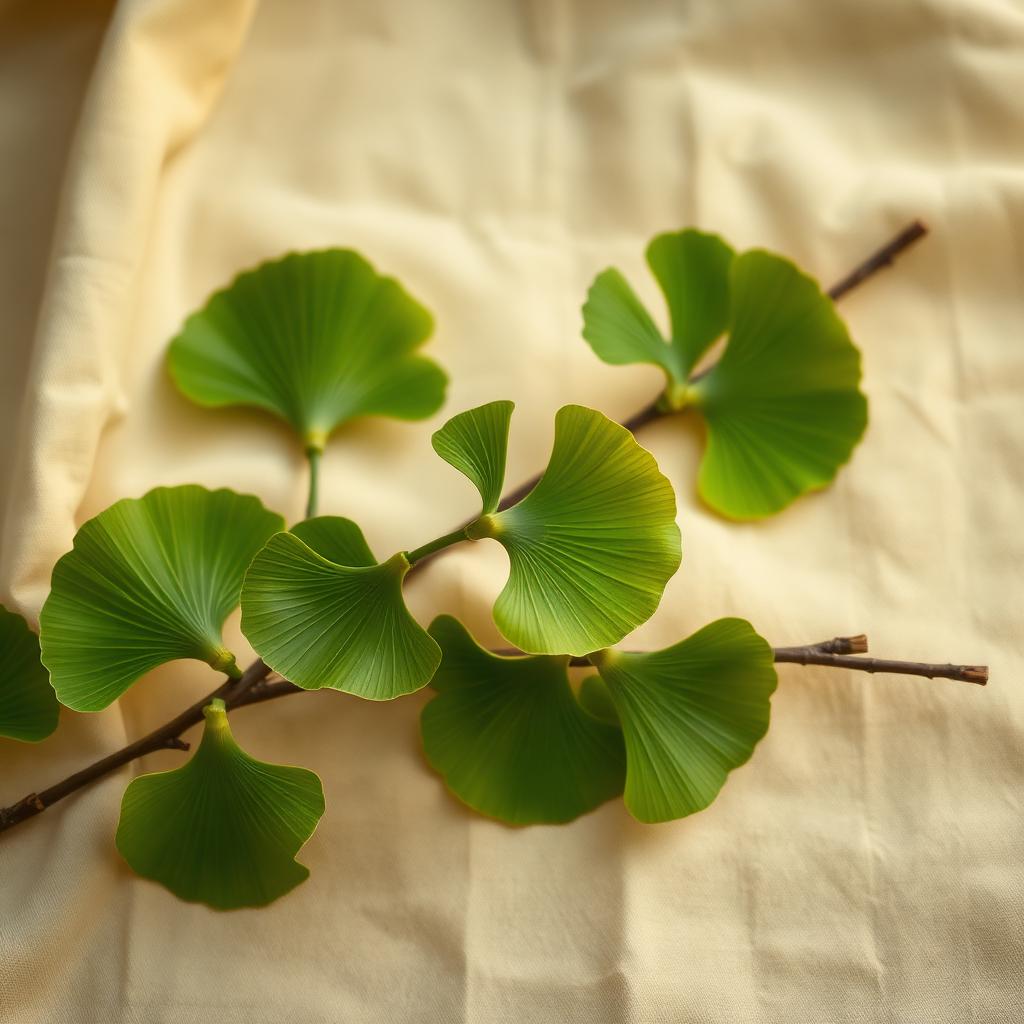
Ginkgo is the oldest tree species still living — its family has been on earth for over two hundred million years, and it has no close living relatives. The leaves are unmistakable: flat green fans, often split down the middle, turning bright gold in autumn. Medicine uses the leaf, gathered green and processed into a concentrated extract. The seed is a different substance and isn't the same thing at all.
Family: Ginkgoaceae (ginkgo family).
Chapter 4 of 11
What Is In It
Flavone glycosides: antioxidant compounds standardised to 24 percent in the clinical extract.
Terpene lactones including ginkgolides are standardised to 6 percent. They affect platelet activity and blood flow.
Bilobalide is a terpene studied for protective effects on nerve tissue.
Ginkgolic acids: irritant compounds that a properly made extract removes almost entirely.
Chapter 5 of 11
In the Laboratory
From laboratory work, not from people taking it
Antioxidant activity in laboratory work.
What studies in people show
Ginkgo is one of the most studied herbs, and the results are inconsistent. A Cochrane review judged the evidence for memory and dementia unreliable.
Chapter 6 of 11
How It Is Prepared
Roasted seed (Chinese culinary use) — strictly limited quantities. Not a home remedy.
Autumn leaf harvest is traditional collection of green leaves before they turn.
Give it time: trials ran for eight to twenty-four weeks before measuring anything.
Other Ways to Use It
Take with food to reduce stomach upset.
Homemade leaf tea isn't the studied product and isn't recommended.
Discuss it with your doctor first if you take any blood-thinning medicine.
Use it consistently for at least eight weeks before judging any effect.
Don't eat raw ginkgo seeds — they're a separate thing and are toxic in quantity.
Chapter 7 of 11
Extracts, Capsules and Concentrates
Capsules and standardised extracts carry many times the amount you get from food, which is why the cautions below matter more here.
Standardised extract capsules are the only form with meaningful clinical evidence.
Standardised extract: the researched form states 24 percent flavone glycosides and 6 percent terpene lactones.
Take a standardised leaf extract if a doctor agrees it suits your situation.
Chapter 8 of 11
Who Should Be Careful
General caution:
The blood-thinning effect is the main risk. Take this seriously.
General caution:
Never eat raw ginkgo seeds.
General caution:
It isn't a dementia preventive. The evidence is clear on this.
General caution:
Tell your doctor and pharmacist if you start taking it.
General caution:
Avoid if you have a bleeding disorder or a history of brain bleeding.
Pregnancy and breastfeeding:
Avoid in pregnancy and breastfeeding.
Blood Thinners and Surgery
Medication interaction:
It may lower the seizure threshold — avoid if you have epilepsy.
Medication interaction:
Ginkgo slows blood clotting. Do not combine it with warfarin (a blood-thinning medicine), aspirin, clopidogrel or other blood thinners without medical supervision.
Medication interaction:
Stop at least two weeks before any surgery or dental extraction.
Chapter 9 of 11
What Persian Medicine Says
Ginkgo's tradition is Chinese, not Persian. Chinese medicine has used the seed for centuries for cough and wheezing — not the leaf, and not for memory. The leaf extract used today was developed by German pharmacists in the twentieth century. So when you hear that ginkgo has been used for memory for thousands of years, that's not accurate history.
Cold hands and feet.
In the Household
It was used: ringing in the ears and poor concentration.
You can find ginkgo trees at temples across China, Korea and Japan, some more than a thousand years old. Several trees within two kilometres of the Hiroshima blast survived and are still alive, making ginkgo a symbol of endurance. In Iran, it's planted as an ornamental and sold as a modern pharmacy supplement.
Chapter 10 of 11
Questions People Ask
Will ginkgo protect my memory as I age?
No. The GEM study followed more than three thousand older adults for six years and found no reduction in dementia. If you're healthy and taking it for prevention, the evidence doesn't support that.
So is it useless?
Not at all. It has decent evidence for improving how far people with poor leg circulation can walk without pain, and mixed but real evidence in people who already have cognitive (to do with thinking and memory) problems.
Can I make tea from the leaves in the park?
Please don't. The clinical extract is carefully processed to remove irritant ginkgolic acids, and homemade preparations are neither standardised nor cleaned.
Chapter 11 of 11
Sources
Ginkgo biloba for prevention of dementia: the GEM randomized controlled trial — JAMA.
Ginkgo biloba for intermittent claudication: cochrane Database of Systematic Reviews.
Assessment report on Ginkgo biloba L., folium — European Medicines Agency (HMPC).