Among the best-evidenced natural remedies for nausea of every kind.
Warms cold, sluggish digestion — a Persian instinct now backed by trials that measure how quickly food moves through the stomach.
Modest but real effects on inflammation, joint pain, and glycemic control.
A daily kitchen ginger habit is safer and more sustainable than high-dose capsules.
Chapter 2 of 19
Ginger: What It Is and Which Part Is Used
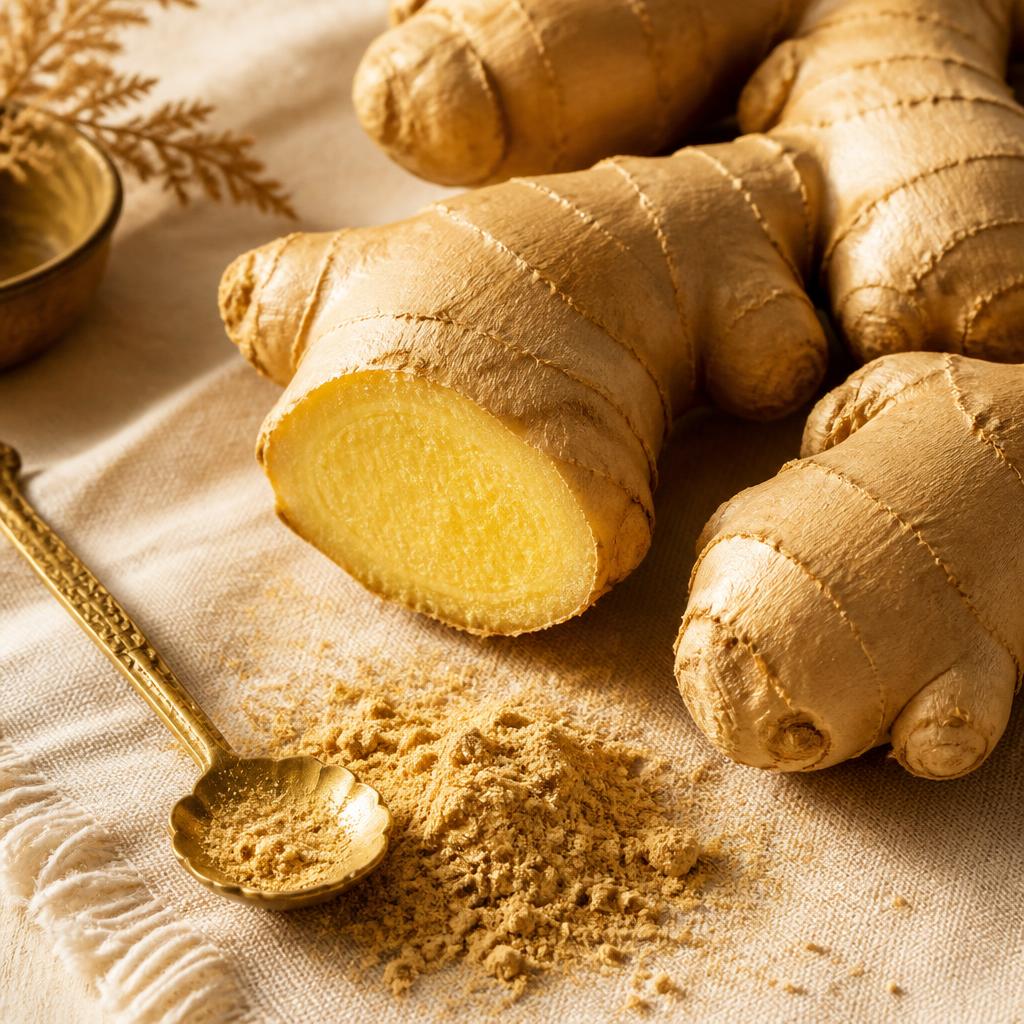
Ginger (Zingiber officinale) is one of the oldest kitchen medicines in the world. Persian physicians called it zanjabīl. They reached for it when the body felt cold, sluggish, or too full — a slow digestion, a stiff joint, a rainy-morning cough, or a queasy stomach. Modern research has measured what ginger's own compounds — gingerols, shogaols, and paradols — do for nausea, inflammation, blood-sugar control, and the tone of blood vessels. Few roots move so easily between the kitchen and the medicine shelf.
Chapter 3 of 19
Why Herbalists Still Reach for It
Digestion, circulation, and low-grade inflammation quietly shape how well you age. Ginger touches all three, and it doesn't ask much of you. Put a slice in your morning tea, grate a knob into dinner, or carry a piece of candied ginger for the trip. These are small habits that Persian families have kept without needing to make a ceremony of them.
After 60, digestion, circulation, and joint comfort can all start to shift, often quietly and at the same time. Ginger is one of the few kitchen medicines tested in randomized trials across these exact areas: comfort after meals, mild osteoarthritis pain, blood-glucose modulation, and vessel tone. A little ginger each day is an easy way to help the body stay warm, moving, and comfortable over time.
What That Means Day to Day
Reduces nausea from pregnancy, motion sickness, and chemotherapy.
Helps digestion run smoothly — food leaves the stomach more easily and bloating settles.
Gently improves how the body handles blood sugar and blood fats, by the measures used in metabolic trials.
Chapter 4 of 19
What Is In It
Primary compounds
Gingerols (especially 6-gingerol) are the primary fresh-ginger bioactive (parts of a food that act on the body). Anti-inflammatory and anti-nausea.
Shogaols (formed on drying / heating) — more warming and pungent than gingerols (the pungent compounds that make fresh ginger hot). Strong antioxidant activity.
Other Constituents
Paradols: additional anti-inflammatory phenolics.
Zingiberene and other volatile oils (the concentrated aromatic oil of the plant) are the aromatic notes that carry ginger's digestive effect.
Nausea and dysmenorrhea have Strong-level evidence from randomized trials and meta-analyses (a study that pools the results of many trials). Osteoarthritis and metabolic effects are Moderate. Traditional warming and digestive uses are consistent with modern motility and anti-inflammatory data.
Ginger reduces nausea and vomiting in pregnancy in multiple randomized trials and Cochrane review.
Ginger reduces chemotherapy-induced nausea and vomiting when added to standard antiemetic therapy.
Meta-analysis (a study that pools the results of many trials): ginger reduces menstrual pain comparable to NSAIDs in dysmenorrhea.
Ginger modestly reduces pain and disability in knee osteoarthritis.
Chapter 6 of 19
How It Is Prepared
Ginger's warmth suits mornings and colder months best. A fresh ginger tea before or after a rich meal is the highest-leverage single use.
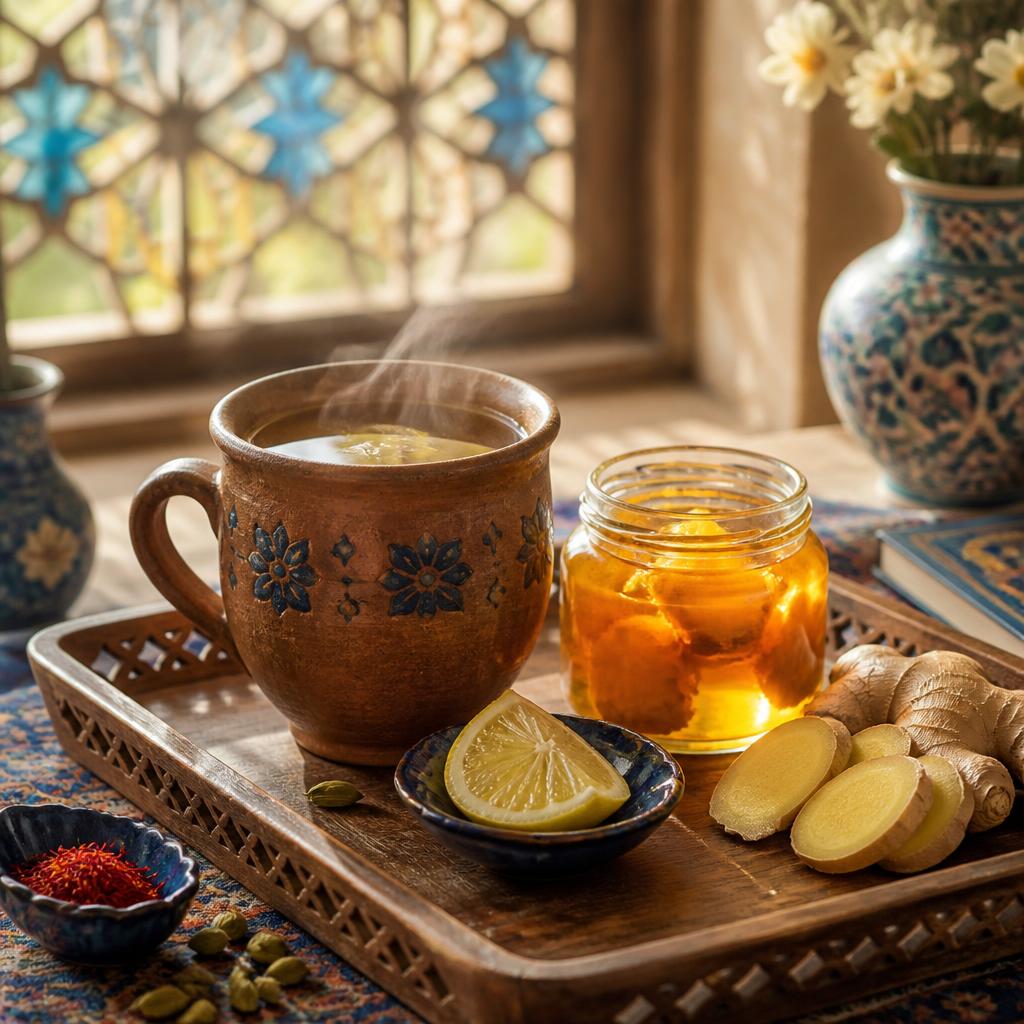
Fresh tea (dam-nūsh-e zanjabīl): 1" fresh root, simmered 10 minutes. The everyday form · Majūn-e zanjabīl: ginger, honey, sometimes cardamom. A spoon in cold months.
Other Ways to Use It
Grate it into stews, dressings, broths, and stir-fries when you want warmth without heaviness.
Keep candied ginger or ginger chews nearby for travel, motion sickness, and morning sickness.
Chapter 7 of 19
Extracts, Capsules and Concentrates
Capsules and standardised extracts carry many times the amount you get from food, which is why the cautions below matter more here.
Powdered ginger: 1–3 g/day in food, capsules, or baked goods · Standardized extract: 250 mg 2–4× daily for nausea in clinical protocols.
Capsules 250–1,000 mg/day for targeted use. Follow product label.
Standardized capsules (250–1,000 mg/day, split doses) are there when you need a stronger, more targeted amount.
Chapter 8 of 19
Medicines and Interactions
General cautions
Medication interaction:
Active bleeding disorders or scheduled surgery within two weeks.
Specific medicines
Medication interaction:
Warfarin (a blood-thinning medicine) / DOACs (apixaban, rivaroxaban) — High-dose ginger extracts may modestly potentiate anticoagulation. Culinary use is generally safe; discuss extract use with your clinician. (moderate concern)
Medication interaction:
Antiplatelets (aspirin, clopidogrel) — Additive antiplatelet effect at supplemental doses. Culinary amounts are fine. (moderate concern)
Medication interaction:
Antihypertensives — Ginger may add a small blood-pressure-lowering effect. Welcome for many; monitor if you already run low. (low concern)
Medication interaction:
Diabetes medications (metformin, sulfonylureas, insulin) — Supplemental ginger may modestly lower fasting glucose. Monitor if you're on tightly titrated therapy. (low concern)
Chapter 9 of 19
Who Should Be Careful
Medication interaction:
High doses can cause heartburn or reflux (stomach acid rising into the throat) in sensitive people.
Medication interaction:
Avoid very large doses (>4 g/day powder or extract) without clinical oversight.
General caution:
Severe GERD or peptic ulcer disease — culinary use only, avoid concentrated extracts.
General caution:
Gallstones (active) — ginger stimulates bile flow; discuss with a clinician.
Chapter 10 of 19
Pregnancy, Children and Older Adults
Pregnancy and breastfeeding
Medication interaction:
Culinary ginger and low-dose ginger (up to about 1 g/day of powdered root or a few cups of fresh tea) is one of the best-studied and best-tolerated remedies for morning sickness — recommended in many obstetric guidelines. Avoid concentrated extracts above 1 g/day, especially in the first trimester and near delivery, without your obstetrician's guidance.
Children
Children:
Small amounts of ginger in food and diluted ginger tea are safe and gentle for children over 2 for mild nausea and travel sickness. Honey-based majūn should never be given to infants under 12 months (botulism risk). Concentrated ginger extracts aren't typically needed for children.
Older adults
Medication interaction:
Ginger is one of the most useful daily kitchen herbs after 60: warmth for cold digestion, gentle joint support, and modest heart and blood vessel help. Watch for interactions with warfarin (a blood-thinning medicine), antiplatelets (medicines that stop blood cells sticking together, such as aspirin), and blood-pressure medications — culinary use is almost always safe, but talk with your clinician before adding a daily standardized extract.
Chapter 11 of 19
What Persian Medicine Says
Persian temperament: Hot & Dry (3rd degree). Assertively warming. Best for cold, damp, sluggish constitutions and cold-pattern illness (a cold, slow stomach. Cold hands. Winter aches). Use with care in already hot, dry, or inflamed constitutions — smaller amounts, or pair with cooling foods like yogurt, cucumber, or mint.
Classical Persian medicine classifies ginger as hot and dry, and uses it where the pattern is cold and stagnant rather than hot and inflamed: a stomach that feels heavy and slow, hands that stay cold, nausea from travel or early pregnancy, joints that ache more in damp weather.
Chapter 12 of 19
What Persian Medicine Says: In the Household
Because the warmth is the medicine, the texts pair it with cooling aromatics such as cardamom or rose for people who run hot, and advise a smaller amount taken more often instead of one strong dose — which is why it appears as a thin slice in tea rather than a spoonful of powder.
It was used: cold, sluggish digestion, bloating, and mild nausea. Convalescence after cold illness and low libido (classical). Ginger bridges Persian, Indian, Arab, and East Asian kitchens as both spice and household wellness tea.
Chapter 13 of 19
What It Goes With
Spice:
Turmeric
The Zingiberaceae siblings — turmeric brings deeper anti-inflammatory reach. Ginger brings the warmth and delivery. A pinch of each in warm milk is a classical joint tonic.
Spice:
Cinnamon
Warm, sweet, and gently glucose-modulating. Together in tea for cold mornings and steady energy.
Spice:
Cardamom
Cardamom lifts ginger's heavy edge and adds aromatic ease. That makes it the classical Persian chai pairing.
Chapter 14 of 19
What It Goes With: More Pairings
§ A Few More Pairings
Herb:
Chamomile
Chamomile softens ginger's fire — a calming after-dinner tea for anxious, cold-stomach reflux (stomach acid rising into the throat).
Honey:
Honey
Majūn-e zanjabīl — ginger preserved in honey, a spoon in winter mornings. Both warming, both preservative.
Fruit:
Pomegranate
A cup of pomegranate juice with a whisper of ginger balances pomegranate's cooling nature (a Persian heart tonic).
Dairy:
Yogurt
In summer, ginger's warmth is softened into cool yogurt (doogh) — carminative (traditionally used to settle gas and bloating) without over-heating.
Pairing:
Garlic
Ginger and garlic together are the two great daily heart-and-vessel foods across Persian, Chinese, and Ayurvedic traditions.
Chapter 15 of 19
Through the Year
Spring:
Spring
A light ginger-and-lemon tea in the morning wakes a spring-heavy digestion after winter's rich stews.
Summer:
Summer
Ease off strong ginger in a hot summer. A thin slice in mint tea, or paired with cooling yogurt (doogh), keeps its digestive help without over-warming.
Autumn:
Autumn
The season ginger belongs to. A daily fresh-ginger tea eases the shift into cool weather and steadies the immune system.
Winter:
Winter
Majūn-e zanjabīl by the teaspoon, ginger-and-honey tea, and a knob grated into every stew — the classical Persian winter cabinet.
Chapter 16 of 19
Questions People Ask
Does ginger really help nausea?
Yes. Clinical reviews consistently support ginger for nausea from pregnancy, motion sickness, and chemotherapy. Typical doses are 250 mg up to 4× daily, or a fresh ginger tea.
Fresh vs. powdered ginger — which is better?
Both work. Fresh is best for tea and cooking. Powdered is more concentrated by weight and convenient for capsules and baking. In the nausea trials, standardized dried ginger extracts have the strongest evidence behind them.
Is ginger safe in pregnancy?
Culinary and low-dose ginger (up to about 1 g/day) is one of the most-studied and well-tolerated options for morning sickness. Avoid concentrated extracts above 1 g/day in the first trimester without discussing with your obstetrician.
Can ginger really help heart health?
The strongest heart and blood vessel data is indirect — modest improvements in blood pressure, triglycerides (a type of fat in the blood), fasting glucose, and platelet aggregation. Not a replacement for medication, but a helpful daily thread in a broader Persian–Mediterranean pattern.
Chapter 17 of 19
Sources
Ginger — NIH NCCIH Health Information — US NIH NCCIH. https://www.nccih.nih.gov/health/ginger
Ginger for nausea and vomiting: systematic review — Nutrition Journal (NIH PMC). https://www.ncbi.nlm.nih.gov/pmc/articles/PMC4818021/.
Ginger and osteoarthritis: meta-analysis — Osteoarthritis and Cartilage (PubMed). https://pubmed.ncbi.nlm.nih.gov/25300574/.
Ginger: medlinePlus — US National Library of Medicine. https://medlineplus.gov/druginfo/natural/961.html.
Ginger — NCCIH — US National Center for Complementary and Integrative Health. https://www.nccih.nih.gov/health/ginger
Zingiber officinale: memorial Sloan Kettering Integrative Medicine — MSKCC. https://www.mskcc.org/cancer-care/integrative-medicine/herbs/ginger.
Chapter 18 of 19
Sources (part 2 of 3)
Sad Giah Hezar Darman (صد گیاه و هزار درمان) — One Hundred Plants and One Thousand Remedies — Dr. Hossein Erfani, 4th edition (1375 / 1996–1997). Primary traditional Persian herbal reference cited throughout this platform. Presented as traditional knowledge, not as modern medical proof.
Office of Dietary Supplements: fact Sheets — US National Institutes of Health (NIH). https://ods.od.nih.gov/factsheets/list-all/.
Herbal Database: memorial Sloan Kettering Cancer Center. https://www.mskcc.org/cancer-care/diagnosis-treatment/symptom-management/integrative-medicine/herbs.
Herbs at a Glance: uS NIH National Center for Complementary and Integrative Health (NCCIH). https://www.nccih.nih.gov/health/herbsataglance.
FoodData Central: searchable nutrient database — US Department of Agriculture (USDA). https://fdc.nal.usda.gov/.
Chapter 19 of 19
Sources (part 3 of 3)
The Nutrition Source: harvard T.H. Chan School of Public Health. https://www.hsph.harvard.edu/nutritionsource/.
PubMed — peer-reviewed biomedical literature — US National Library of Medicine. https://pubmed.ncbi.nlm.nih.gov/