One of the most studied foods for heart and immune support.
Crushing or chopping activates allicin — the protective sulfur compound.
A daily clove is a low-cost, evidence-supported aging-well habit.
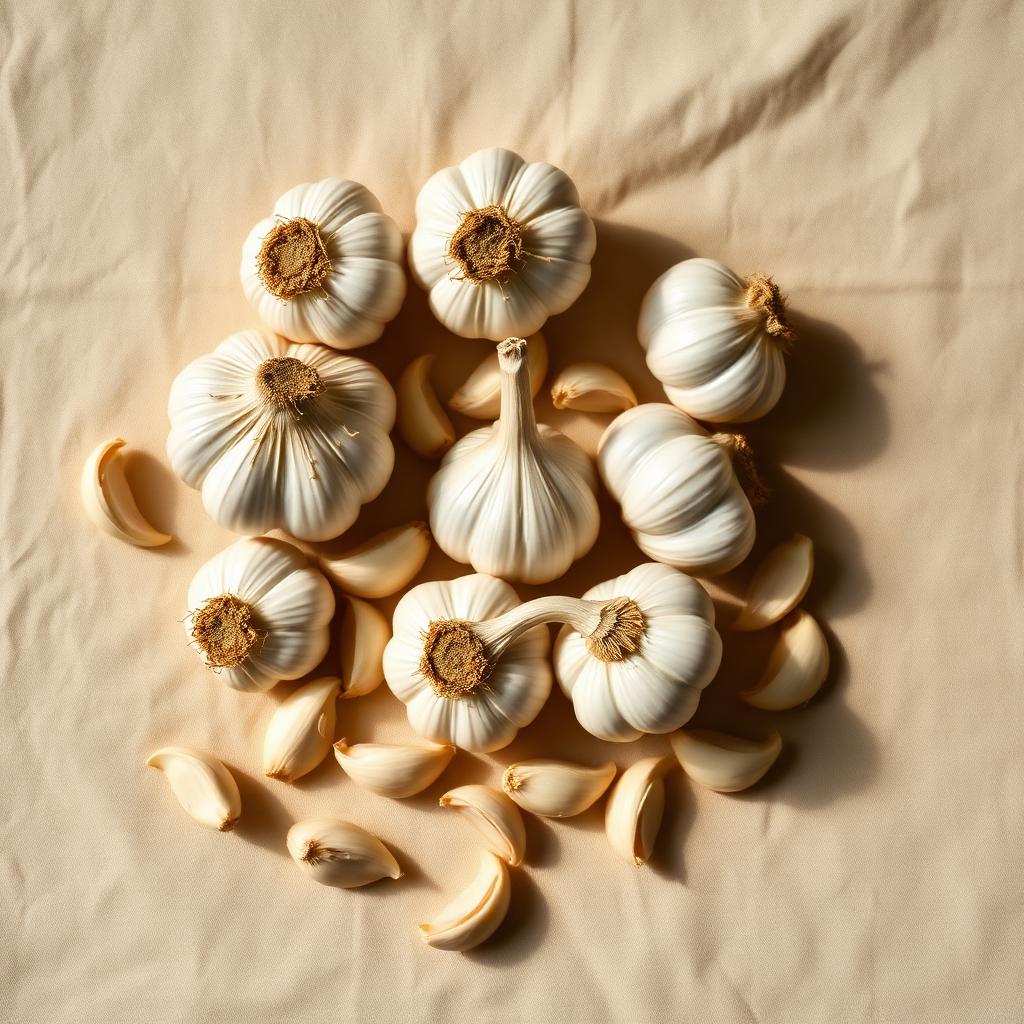
Garlic (Allium sativum) has earned a place in kitchens and medicine cupboards across many civilizations. Crush a clove and it releases allicin, one of the sulfur compounds behind both its strong flavour and its effects in the body. Modern research looks most closely at blood pressure, cholesterol, and immune function.
Chapter 2 of 19
Why Herbalists Still Reach for It
Heart disease and weak immunity can both get in the way of a long, energetic life. Garlic is one of the rare everyday foods studied for both over many years. The benefits are modest, but they're real, and a daily habit can add up over time.
After 50, a daily clove of garlic is one of the simplest and least expensive habits you can keep for heart and blood vessel and immune resilience. The PERSIAN cohort and multiple meta-analyses (a study that pools the results of many trials) link regular garlic intake to modestly lower blood pressure, better lipid profiles, and fewer respiratory infections. Each change is small, but together they can support more energetic years.
Helps keep cholesterol in healthy balance.
Brings antioxidant compounds that help protect your cells.
Chapter 3 of 19
What Is In It
Primary compounds
Crushing a raw clove releases allicin, its main sulfur compound.
S-allyl cysteine is the stable, water-soluble compound concentrated in aged garlic extract.
Diallyl sulfide, diallyl disulfide, ajoene — heart and blood vessel and antimicrobial (slows the growth of germs) sulfur compounds.
Fructans (inulin-type): prebiotic fibers that feed helpful gut bacteria.
Vitamins
Vitamin B6, Vitamin C
Other notable constituents
Minerals: Manganese, Selenium, Calcium · Antioxidants: Allicin-derived sulfur compounds, Flavonoids (a family of protective plant compounds) · Notable: Organosulfur compounds
Chapter 4 of 19
What Studies in People Show
Moderate evidence
Aged garlic extract modestly lowers systolic blood pressure (~7–9 mmHg) in adults with hypertension across meta-analysis (a study that pools the results of many trials) of 12 trials.Moderate evidence
MSK Integrative Medicine review of safety, interactions, and evidence for Allium sativum.Moderate evidence
Early research
Daily aged garlic extract reduced coronary plaque progression on cardiac CT over one year in adults with metabolic syndrome (a group of problems including high blood sugar, blood pressure and waist size).Emerging evidence
Garlic supplementation reduced the number of colds and duration of illness in a placebo-controlled (compared against a dummy treatment) winter trial.Emerging evidence
Chapter 5 of 19
How It Is Prepared
With meals, once daily. Crushed 10 minutes before it hits the pan preserves allicin (the compound formed when garlic is crushed). Adding to olive oil at the end of cooking keeps its heart and blood vessel benefit. Avoid a raw clove on an empty stomach — it can irritate a sensitive gut.
Raw crush — crush 1 clove, rest 10 min to maximize allicin (the compound formed when garlic is crushed), then stir into food.
Aged pickle: whole bulbs in vinegar, 1–7 years. Mellower, easier to digest.
Garlic-honey infusion (a drink made by steeping the plant in hot water) is peeled cloves submerged in raw honey 1–2 weeks as a winter syrup.
Chapter 6 of 19
How It Is Prepared: Other Ways to Use It
Garlic-infused olive oil: gentle warm infusion (refrigerate. Use within 4 days for safety).
Roast a whole head with olive oil, then spread the soft cloves on toast.
Add it to soups, stews, and sautéed greens as part of your daily cooking.
Chapter 7 of 19
Extracts, Capsules and Concentrates
Capsules and standardised extracts carry many times the amount you get from food, which is why the cautions below matter more here.
Aged garlic extract supplements: 600–1,200 mg/day in studies.
If raw garlic doesn't agree with you, aged garlic capsules (600–1,200 mg) are another option.
Chapter 8 of 19
Medicines and Interactions
General cautions
Medication interaction:
May increase bleeding risk — pause before surgery.
Specific medicines
Medication interaction:
Warfarin (a blood-thinning medicine), DOACs (apixaban, rivaroxaban), heparin — Additive antiplatelet (medicines that stop blood cells sticking together, such as aspirin) effect — increased bleeding risk with extract doses. (high concern)
Medication interaction:
Clopidogrel, aspirin, other antiplatelets — Additive bleeding risk, especially with aged garlic extract >600 mg/day. (moderate concern)
More Interactions to Know
Medication interaction:
HIV protease inhibitors (saquinavir) — Garlic supplements can lower drug plasma levels; avoid extracts. (high concern)
Medication interaction:
Antihypertensives (ACE inhibitors, ARBs) — Mild additive blood-pressure lowering — usually welcome; monitor if you run low. (low concern)
Medication interaction:
Metformin (a common diabetes medicine) and sulfonylureas — Modest additional blood-sugar lowering reported in some trials. (low concern)
Chapter 9 of 19
Who Should Be Careful
General caution:
Raw garlic can irritate the gut in sensitive people.
General caution:
Strong odor on breath and skin.
General caution:
Active gastritis (an irritated stomach lining) or peptic ulcer — avoid raw garlic on an empty stomach.
Allergy:
Allium allergy.
Chapter 10 of 19
Pregnancy, Children and Older Adults
Pregnancy and breastfeeding
Pregnancy and breastfeeding:
Culinary garlic — a clove or two a day in cooking — has been part of Persian pregnancy cuisine for centuries and is considered safe and nourishing. Concentrated garlic extract supplements aren't recommended during pregnancy or breastfeeding without clinician guidance, as they can cross into breast milk and change infant feeding preferences.
Children
Children:
Cooked culinary garlic is safe and beloved from the age of solid foods. Avoid raw garlic and garlic-honey syrup in infants under 12 months (honey risk). For toddlers and older, small amounts of well-cooked garlic in soups and stews are a gentle immune-supportive habit.
Older adults
Medication interaction:
Where blood pressure, cholesterol, and cold-season infections quietly weigh on the aging body, a daily clove of garlic — or 600–1,200 mg of aged garlic extract if the raw form isn't tolerated — is one of the highest-evidence, lowest-cost daily supports. If on blood thinners, coordinate with a clinician before adding extract doses.
Chapter 11 of 19
What Persian Medicine Says
Persian temperament: Hot & Dry (3rd–4th degree). One of the most warming foods in the Persian materia medica. Avicenna prescribed it for cold-damp constitutions, sluggish digestion, cold joints, and winter chills. Hot temperaments (mizaj-e garm) should use it sparingly, ideally cooked and paired with cooling foods like yogurt and cucumber.
In the Household
Persian, Greek, and Mediterranean physicians all class garlic as hot and dry in a high degree, which explains both its uses and its cautions. Because it's considered opening and thinning, it was given in cold, damp seasons, with heavy meat dishes, and to people whose circulation ran cold — and withheld from hot, dry constitutions, from anyone with an irritated stomach, and from those already prone to bleeding.
The traditional form matters: crushed and raw or briefly cooked for the medicinal effect, long-cooked when the aim is only flavour and gentleness.
It was used: joint stiffness and cold arthritic pain. Intestinal parasites and stagnant digestion.
Chapter 12 of 19
What Persian Medicine Says: Older Uses
Preventive immunity through colder months.
Topical (put on the skin) poultice (a soft paste held against the skin) for cold sores and fungal skin issues.
A traditional go-to for immune support through the cold seasons.
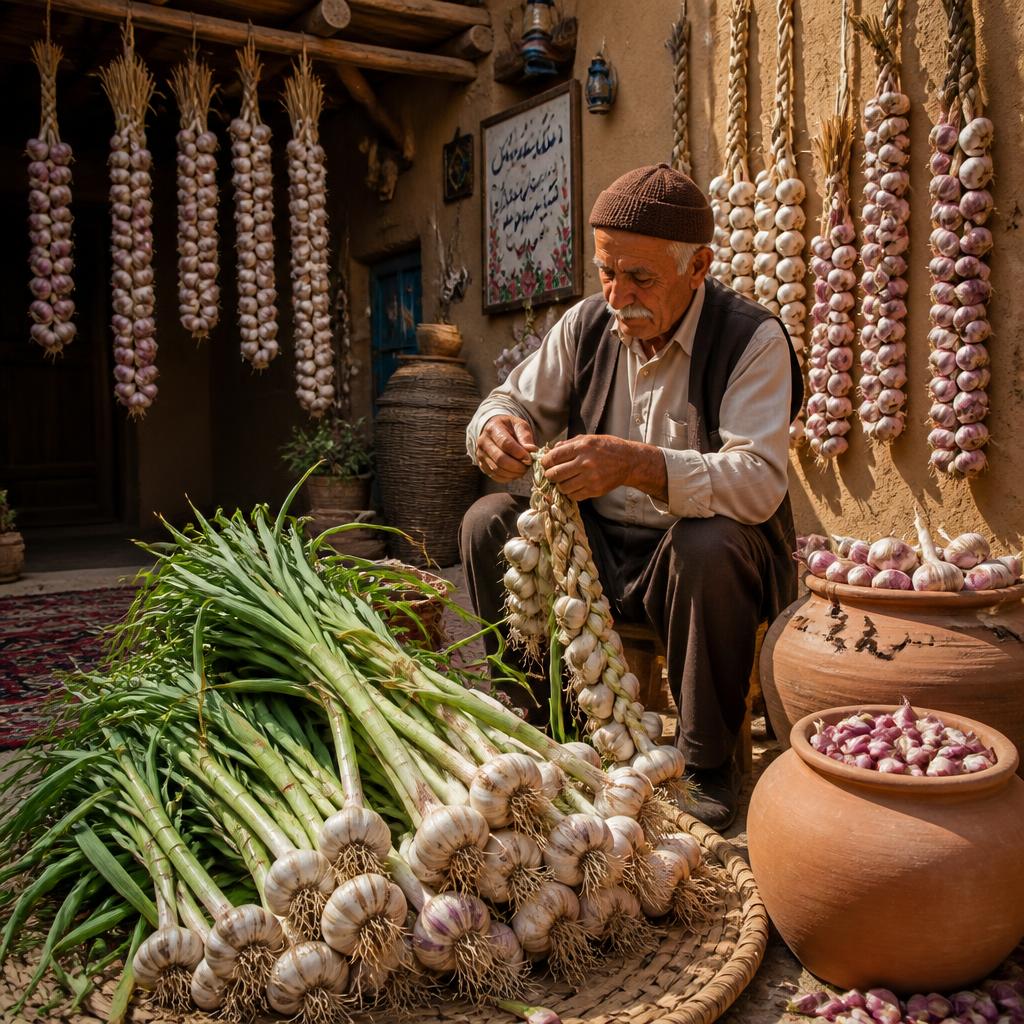
Garlic is a foundation flavor in torshi, soups, stews, and rustic breads, valued as much for protection and resilience as for taste.
Chapter 13 of 19
What It Goes With
§ More Pairings
Spice:
Ginger
Ginger + garlic is the two-great daily heart-and-vessel pair across Persian, Chinese, and Ayurvedic traditions.
Herb:
Thyme
Thyme's thymol amplifies garlic's antimicrobial (slows the growth of germs) reach — classic for winter respiratory support.
Pairing:
Rosemary
Rosemary + garlic in olive oil for roasting meats and vegetables is a heart-supportive Mediterranean pairing.
Pairing:
Olive oil
Warmed briefly (not fried) in olive oil, garlic's allicin (the compound formed when garlic is crushed) becomes gentler and the pair is one of the most-studied for blood-vessel health.
Dairy:
Yogurt
Mast-o-musir (yogurt + shallot) is the classical example. Cooling yogurt tempers garlic's heat.
Chapter 14 of 19
What It Goes With: A Few More Pairings
Pairing:
Lentils
Stir a crushed clove into finished adasi. It lifts the flavor and adds support for the blood vessels.
Fruit:
Pomegranate
Garlic in fesenjān's walnut base and a spoonful of pomegranate molasses is the Persian heart plate.
Chapter 15 of 19
Through the Year
Spring:
Spring
A crushed raw clove into salad dressings — spring garlic is milder and awakens a sluggish, damp winter digestion.
Summer:
Summer
Cook garlic well and pair with cooling yogurt (mast-o-musir) so its warmth doesn't overheat a hot constitution.
Autumn:
Autumn
Roast whole heads with olive oil as the weather cools — the classical Persian winter preparation.
Winter:
Winter
A daily raw or lightly warmed clove — Avicenna's preventive medicine against cold-damp illness and winter chills.
Chapter 16 of 19
Questions People Ask
Does garlic actually lower blood pressure?
Meta-analyses suggest aged garlic extract can lower systolic blood pressure modestly (about 7–9 mmHg) in people with hypertension. It isn't a replacement for prescribed medication.
Chapter 17 of 19
Sources
Aged garlic extract and blood pressure — Meta-analysis — Journal of Clinical Hypertension (PubMed). https://pubmed.ncbi.nlm.nih.gov/31486296/
Garlic and cholesterol: systematic review — Nutrition Reviews (PubMed). https://pubmed.ncbi.nlm.nih.gov/24035939/.
Garlic — NIH National Center for Complementary and Integrative Health — US NIH NCCIH. https://www.nccih.nih.gov/health/garlic
Allium sativum: A review of human studies — Journal of Nutrition (PubMed). https://pubmed.ncbi.nlm.nih.gov/16484570/
Garlic — NCCIH — US NIH National Center for Complementary and Integrative Health. https://www.nccih.nih.gov/health/garlic
Chapter 18 of 19
Sources (part 2 of 3)
Sad Giah Hezar Darman (صد گیاه و هزار درمان) — One Hundred Plants and One Thousand Remedies — Dr. Hossein Erfani, 4th edition (1375 / 1996–1997). Primary traditional Persian herbal reference cited throughout this platform. Presented as traditional knowledge, not as modern medical proof.
Office of Dietary Supplements: fact Sheets — US National Institutes of Health (NIH). https://ods.od.nih.gov/factsheets/list-all/.
Herbal Database: memorial Sloan Kettering Cancer Center. https://www.mskcc.org/cancer-care/diagnosis-treatment/symptom-management/integrative-medicine/herbs.
Herbs at a Glance: uS NIH National Center for Complementary and Integrative Health (NCCIH). https://www.nccih.nih.gov/health/herbsataglance.
FoodData Central: searchable nutrient database — US Department of Agriculture (USDA). https://fdc.nal.usda.gov/.
Chapter 19 of 19
Sources (part 3 of 3)
The Nutrition Source: harvard T.H. Chan School of Public Health. https://www.hsph.harvard.edu/nutritionsource/.
PubMed — peer-reviewed biomedical literature — US National Library of Medicine. https://pubmed.ncbi.nlm.nih.gov/