Among the fibre-densest common fruits are a natural, gentle laxative when soaked overnight and eaten on an empty stomach.
One of the highest-calcium fruits (dried) — meaningful for daily calcium in dairy-light diets.
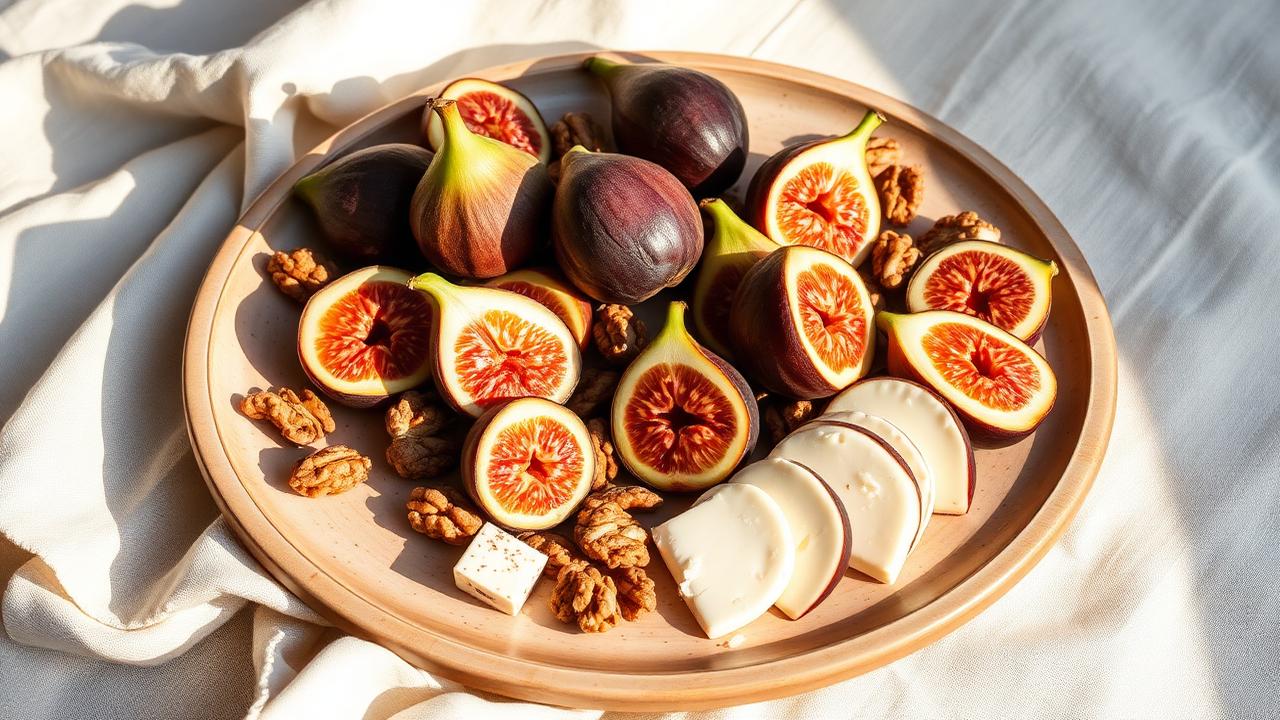
Fig + walnut is the classical Persian pairing — pectin (a soft fibre in fruit that thickens jam) and prebiotic (fibre that feeds the helpful bacteria in your gut) fibre from anjir, ω-3 ALA and polyphenols (protective plant compounds) from gerdoo.
The fresh fruit contains latex — sensitive skin may react to handling the stems and unripe fruit.
Chapter 2 of 12
What Figs Actually Is
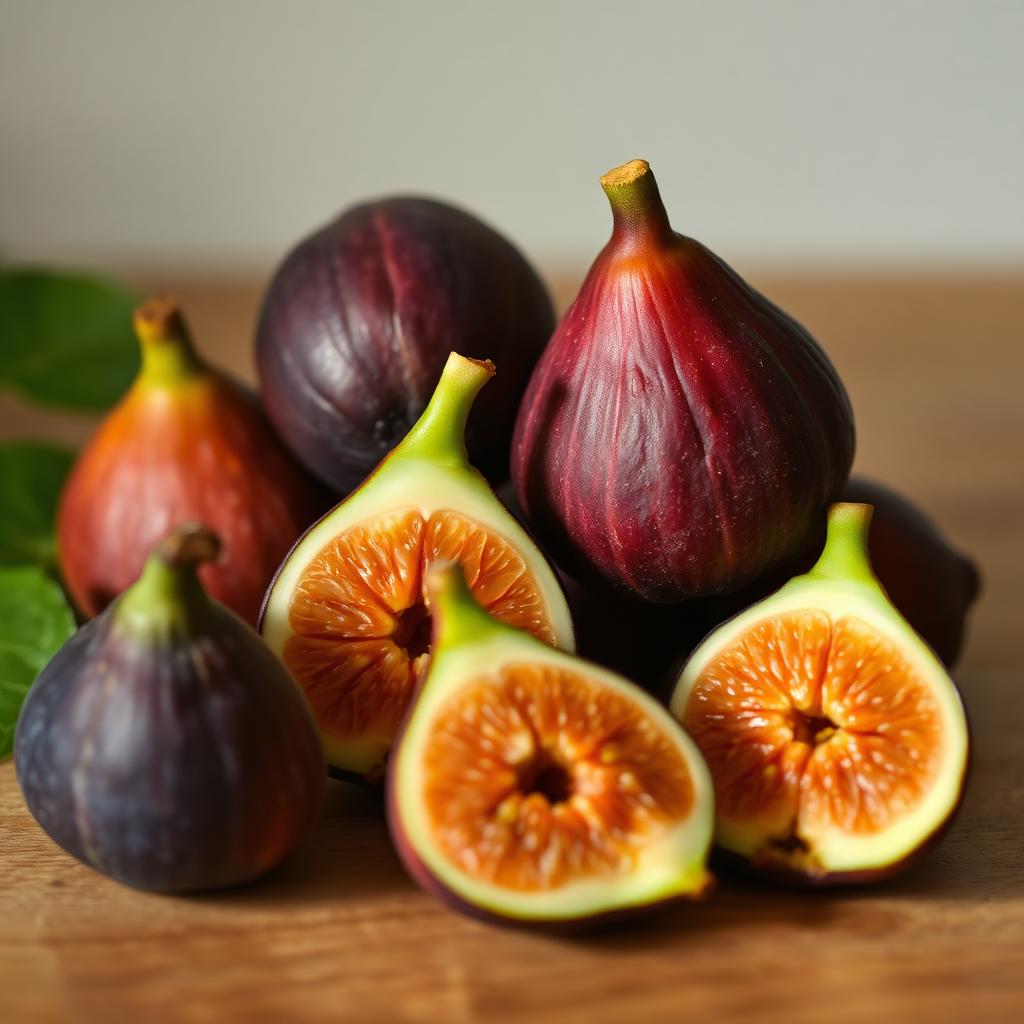
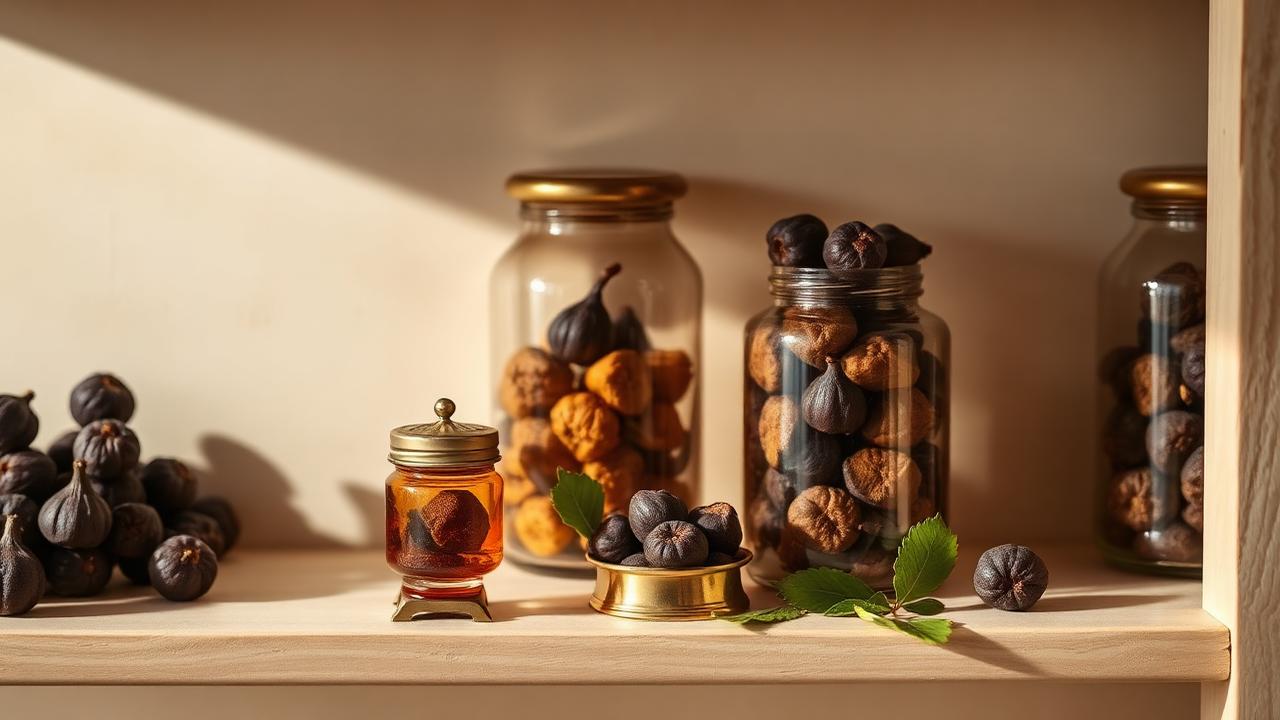
People have grown figs (Ficus carica) on the Iranian plateau for over five thousand years. Fresh figs (anjir tāzeh) arrive in late summer and dried figs (anjir khoshk) carry on through winter. Both give you plenty of fibre, potassium, calcium, and magnesium, wrapped in the honey-like sweetness that helped make the fig a sacred fruit in the Qur'an and Bible. Eating soaked figs on an empty stomach is also one of the oldest Persian household remedies for constipation still in use today.
Chapter 3 of 12
Why It Matters
Regular bowel movements, enough calcium, and a steady supply of plant polyphenols (protective plant compounds) all matter more as the years pass. Figs bring you all three in a food Persian families have kept on the breakfast table for millennia. Soaking a fig and pairing it with walnut is a simple longevity habit that asks very little of you.
Figs support four useful parts of healthy aging: gentle bowel regularity, plant-based calcium when dairy becomes harder to tolerate, prebiotic (fibre that feeds the helpful bacteria in your gut) fibre for a resilient microbiome, and plenty of polyphenols (protective plant compounds). Since they already feel at home on the Persian breakfast table, they are one of the easiest worthwhile fruits to keep eating after 60.
What That Means Day to Day
It was used: high fibre (both soluble and insoluble) — natural, gentle relief for constipation. Dense in potassium, calcium, and magnesium — a rare fruit contribution to bone-mineral density.
Polyphenols (protective plant compounds) and anthocyanins (the natural colour pigments that make fruit red, purple or blue) in the skin add antioxidant protection.
Chapter 4 of 12
What It Contains
Primary compounds
Soluble + insoluble fibre (pectin, cellulose, hemicellulose) — the mechanism behind the gentle laxative action.
Anthocyanins (the natural colour pigments that make fruit red, purple or blue), chiefly cyanidin-3-rutinoside — concentrated in the purple skin of Mission and Black Ismir figs.
Ficin is the proteolytic enzyme in fig latex. That's why handling unripe figs can irritate skin.
Phenolic acids (chlorogenic, gallic, syringic) — the antioxidant core.
Other Constituents
Furanocoumarins (a compound found in grapefruit that blocks that enzyme) in the leaf and latex — photosensitising. The reason traditional fig-leaf handlers avoid strong sun on freshly stained skin.
Vitamins
Vitamin K, Vitamin B6, Folate
Other notable constituents
Minerals: Copper, Manganese · Antioxidants: Quercetin (a plant compound found in onions, apples and tea)
Chapter 5 of 12
What Studies in People Show
Moderate evidence
Fig paste (Ficus carica) significantly improved chronic functional constipation, colonic transit, and stool consistency in a randomised placebo-controlled (compared against a dummy treatment) trial in adults.Moderate evidence
Early research
A meta-analysis (a study that pools the results of many trials) of Ficus carica clinical studies supports its role in glycaemic and lipid regulation and stomach and gut function.Emerging evidence
Fig-leaf decoction (a drink made by simmering the plant in water) reduced post-prandial insulin requirement in a small trial of insulin-dependent diabetes.Emerging evidence
Chapter 6 of 12
Using It in the Kitchen
Late summer for fresh anjir; through autumn and winter for soaked and stuffed dried figs. The classical Persian moment is breakfast — 2–3 soaked figs on an empty stomach with the soaking water — before tea and bread.
Simmer dried figs with cardamom, rose petals, and cinnamon into a warm winter compote.
Halve fresh figs and grill briefly; drizzle with honey and yogurt for a summer dessert.
Stuffed is dried fig opened and filled with walnut, almond, or pistachio.
Other Ways to Use It
Fig-and-honey syrup: decoction (a drink made by simmering the plant in water) of dried figs simmered with honey for dry cough.
Pair fresh figs with walnut halves and feta — the anjir-o gerdoo-o panir Persian breakfast.
Add chopped dried figs to oatmeal or aash for iron- and calcium-dense sweetness without added sugar.
Chapter 7 of 12
Medicines and Interactions
Medication interaction:
Antidiabetic medication (metformin, sulfonylureas, insulin) — Small clinical work with fig-leaf infusion (a drink made by steeping the plant in hot water) has shown mild fasting-glucose lowering; the dried fruit itself is a moderate glycaemic load and should be portioned. No pharmacokinetic interaction in normal food amounts. (low concern)
Medication interaction:
Antihypertensives — Dried figs are a meaningful potassium source (~180 mg per 3 figs). Additive and gentle at ordinary intake, but a person on a potassium-sparing diuretic (spironolactone) or ACE inhibitor with pre-existing hyperkalaemia should moderate large daily portions. (low concern)
Medication interaction:
Warfarin (a blood-thinning medicine) / DOACs — Figs carry modest vitamin K; a stable daily portion doesn't swing INR (the blood test that shows how fast your blood clots). Very large sudden increases (bowls of dried fig) can shift readings and warrant a check. (low concern)
Chapter 8 of 12
Who Should Be Careful
General caution:
Advanced kidney disease with strict potassium restriction — check with the renal dietitian.
General caution:
Dried figs are energy-dense — 3–4 per day is a moderate serving for most adults.
General caution:
The latex sap of unripe figs can irritate sensitive skin and mucosa — wash hands after handling.
General caution:
Sulphured commercial dried figs may trigger sulphite-sensitive asthma — buy sun-dried when possible.
Allergy:
Known Ficus / fig latex allergy or documented latex-fruit syndrome.
General caution:
Severe fructose malabsorption — figs are notably high in natural fructose.
Chapter 9 of 12
Pregnancy, Children and Older Adults
Pregnancy and breastfeeding
Pregnancy and breastfeeding:
Figs — fresh, dried, and soaked — are safe and traditionally recommended throughout pregnancy for constipation and for calcium/iron support. The soaked-fig-in-water breakfast is one of the classical Persian remedies for late-pregnancy constipation. Fig-leaf decoctions and concentrated leaf extracts are separately reserved for the non-pregnant window.
Children
Children:
Puréed cooked figs from around 8 months, whole soft fresh figs once the child chews confidently, small pieces of dried fig from toddlerhood (a choking-hazard for the youngest). Traditionally used as a gentle first-line for a child's constipation. Watch initial exposure in a household with latex or fig-leaf sensitivity.
Older adults
Older adults:
One of the most useful fruits after 65: gentle, reliable relief for age-related constipation without laxatives; a genuine calcium and magnesium contribution when dairy tolerance falls; steady prebiotic (fibre that feeds the helpful bacteria in your gut) fibre for microbiome resilience. The soaked-fig-and-walnut breakfast is a low-friction daily habit that hits three levers at once.
Chapter 10 of 12
Traditional Persian Perspective
Persian temperament: Warm & Moist (1st degree). Persian medicine reads anjir as warm and moist — nourishing, blood-building, chest-softening, and gently laxative for cold-dry constitutions. The dried fig is warmer and more concentrated than the fresh. The fresh fruit is more moistening.
It was used: anaemia and low weight (fig + walnut + date, the classical rebuilder ājeel). Topical (put on the skin) latex traditionally applied for warts. Traditionally nourishing for anaemia, low weight, and convalescence.
In the Household
The fig is one of only two fruits named in the Qur'an (Surah At-Tīn), and it appears in the earliest Persian, Greek, and Levantine cuisines. At a Persian breakfast, on the Nowruz table, or during Yalda night, you may be offered anjir-o gerdoo — a soaked fig stuffed with a walnut half. Dried Iranian anjir estahbanati (from Fars province) is also one of the country's export benchmarks.
Chapter 11 of 12
Sources
Sad Giah Hezar Darman (صد گیاه و هزار درمان) — One Hundred Plants and One Thousand Remedies — Dr. Hossein Erfani, 4th edition (1375 / 1996–1997). Primary traditional Persian herbal reference cited throughout this platform. Presented as traditional knowledge, not as modern medical proof.
Office of Dietary Supplements: fact Sheets — US National Institutes of Health (NIH). https://ods.od.nih.gov/factsheets/list-all/.
Herbal Database: memorial Sloan Kettering Cancer Center. https://www.mskcc.org/cancer-care/diagnosis-treatment/symptom-management/integrative-medicine/herbs.
Herbs at a Glance: uS NIH National Center for Complementary and Integrative Health (NCCIH). https://www.nccih.nih.gov/health/herbsataglance.
FoodData Central: searchable nutrient database — US Department of Agriculture (USDA). https://fdc.nal.usda.gov/.
Chapter 12 of 12
Sources (continued)
The Nutrition Source: harvard T.H. Chan School of Public Health. https://www.hsph.harvard.edu/nutritionsource/.
PubMed — peer-reviewed biomedical literature — US National Library of Medicine. https://pubmed.ncbi.nlm.nih.gov/