Raw berries, leaves and stems are toxic. Cook them.
Cooked syrup is the usual form.
Very high in dark-berry pigment.
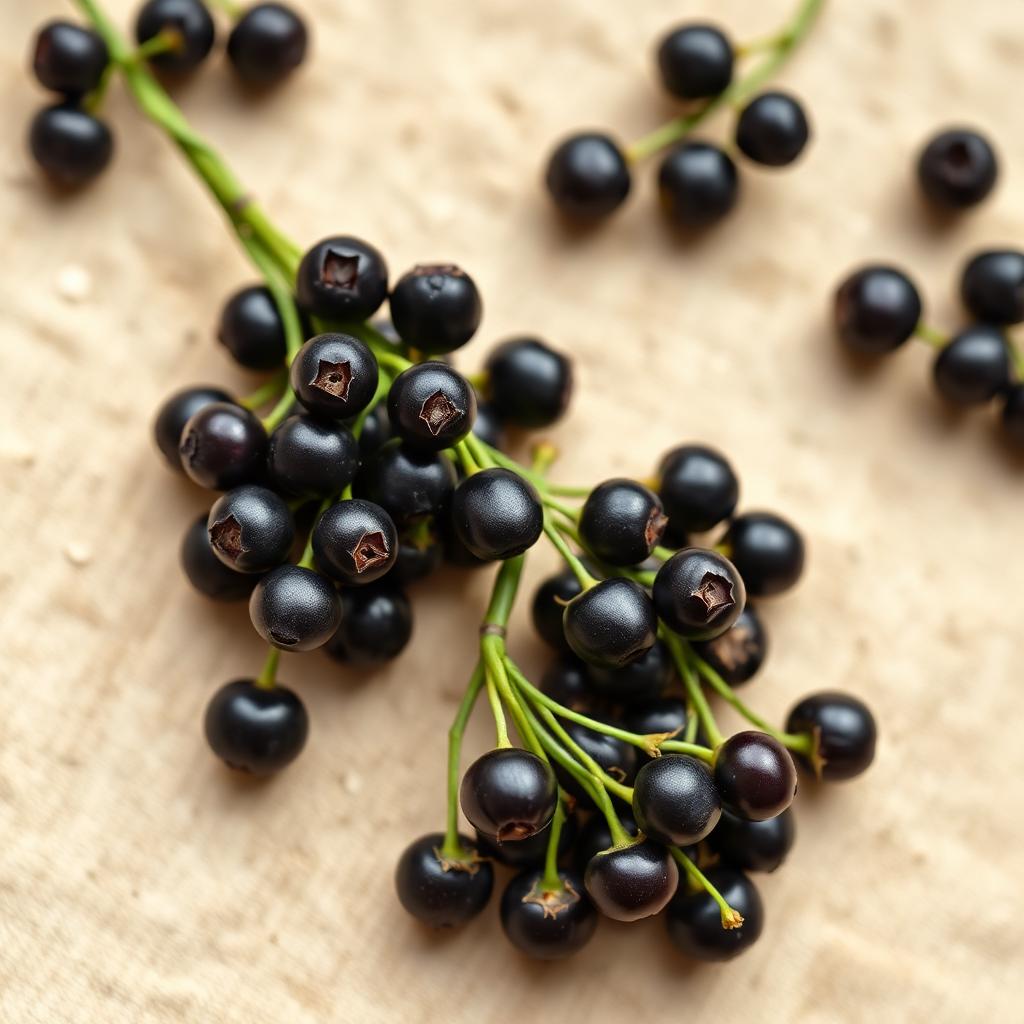
The berries are small, very dark, and never eaten raw. Cook them and they turn into the winter syrup everyone knows.
Known to botanists as Sambucus nigra.
What Else to Know
Elderberry is a clear example of why preparation can be about safety, not just taste. Cook it properly and it's a useful berry. Eat it raw from the bush and it can make you ill.
Elderberry makes a comforting winter tradition, and it brings plenty of natural pigment with it. Cook it, keep the sweetening modest, and never let it stand in for medical care — treated that way it's a pleasant seasonal habit rather than a remedy.
Chapter 2 of 13
If You Read Nothing Else: A Few Last Essentials
One of the richest common fruits in anthocyanins (the natural colour pigments that make fruit red, purple or blue).
Small trials on cooked elderberry syrup and cold symptoms are promising but limited.
Useful vitamin C and fibre once cooked.
Elder is a large shrub or small tree. In early summer it carries flat white flower heads. By late summer these become heavy, drooping clusters of small purple-black berries, each about the size of a peppercorn.
Family: Adoxaceae (moschatel family).
Chapter 3 of 13
What It Contains
Primary compounds
Quercetin (a plant compound found in onions, apples and tea). Sambucus lectins.
Other notable constituents
Minerals: Iron, Potassium, Phosphorus · Antioxidants: Rutin · Fiber: ~7 g per cup of cooked berries
Chapter 4 of 13
What Studies in People Show
What studies in people show
Elderberry extract shortened self-reported upper respiratory symptom duration in small randomised trials.Emerging evidence
Raw Sambucus berries, leaves and stems contain cyanogenic glycosides that cause vomiting and stomach and gut upset.Strong evidence
Chapter 5 of 13
Preparation and Kitchen Use
Strip berries from stems with a fork. Green stems carry the most toxin.
Simmer at least 20 minutes, then strain.
In the kitchen: sweeten after cooking. As a cooked syrup, a spoon at a time.
Cooked into jam or jelly, usually with apple for set.
Try adding cooked berries to apple in a pie or compote.
If you're not confident identifying the plant, buy a prepared syrup instead.
Chapter 6 of 13
Medicines and Interactions
Medication interaction:
Immune-suppressing medicine — Elderberry is often sold as an immune stimulant. If you take medicine that deliberately dampens your immune system, ask your specialist before using it daily. (moderate concern)
General caution:
Diuretics — Elderberry preparations have a mild diuretic (makes you pass more urine) reputation, so daily use alongside water tablets is worth mentioning to a prescriber. (low concern)
Medication interaction:
Diabetes medicine — Commercial syrups are mostly sugar. That matters more for blood glucose than the berry does. (low concern)
Chapter 7 of 13
Who Should Be Careful
General caution:
Red-berried elder (Sambucus racemosa) and dwarf elder (Sambucus ebulus) are different plants and aren't safe to use this way. Do not forage unless you can tell them apart.
General caution:
Concentrated elderberry supplements are far stronger than a kitchen syrup; the two aren't interchangeable.
General caution:
Commercial syrups are often mostly sugar. Read the label.
General caution:
Raw berries, leaves, bark, roots and stems contain cyanide-forming compounds and can cause vomiting and severe stomach upset. Cook the berries and discard everything else.
General caution:
Elderberry isn't a treatment for influenza or COVID-19. If you're unwell with fever, see a doctor.
Chapter 8 of 13
Pregnancy, Children and Older Adults
General
Children:
Not for children under one year old, because syrups are usually made with honey.
Pregnancy and breastfeeding
Pregnancy and breastfeeding:
Cooked berries in food amounts aren't a concern. Concentrated supplements are a different thing and have not been studied in pregnancy, so leave them alone and ask your midwife or doctor first.
Children
Children:
No honey-based syrup before the first birthday. Older children take it well, and a cooked spoonful is fine, but it's a comfort measure during a cold and not a medicine.
Older adults
Medication interaction:
A pleasant winter habit that costs nothing in salt or fat. If you're on several prescriptions, mention a daily syrup to your pharmacist, mainly because of the sugar.
Chapter 9 of 13
Traditional Uses in Europe and Persia
Persian temperament: Warm & Dry (2nd degree). Read as warming and drying, which is why the cooked berry belonged to winter rather than to hot weather.
Persian and European traditions both call elder warming and drying, and both reached for it in winter against coughs and chills. In Persian sources the plant aqti shows up mostly in purgative preparations made from bark and leaf. That's a different, harsher use, and not the same thing as eating the cooked berry.
In the Household
Elderflower cordial for hot, feverish feelings — the flower.
Bark and leaf preparations were purgatives, and aren't used today.
In Europe people often left the elder standing when they cut back the rest of the hedgerow, because folklore said a spirit lived in it. In plenty of households, flower cordial in June and berry syrup in September still mark the turning of the year.
Chapter 10 of 13
What It Goes With
Fruit:
Apple
Apple carries the pectin (a soft fibre in fruit that thickens jam) elderberry lacks, so a pie or jelly made with both actually sets.
Honey:
Honey
Stir it in after the pan comes off the heat. Boiled honey loses the aroma you paid for.
Spice:
Cinnamon
A stick simmered in the syrup gives the winter version its familiar smell.
Spice:
Ginger
Fresh ginger sharpens a syrup that can otherwise taste flat and jammy.
Chapter 11 of 13
Through the Year
Spring:
Spring
Nothing to pick. The tree is still in leaf and the cream flower heads have not opened.
Summer:
Summer
The flowers come first, and they're a separate ingredient. Cordial is made now. The fruit is still green and hard.
Autumn:
Autumn
This is the season. The clusters hang heavy and purple-black, and everything you'll use in winter is cooked and bottled in these few weeks.
Winter:
Winter
You are living off the syrup you made. A spoon at a time, usually when someone in the house has a cough.
Chapter 12 of 13
Questions People Ask
Can I eat them raw?
No. Raw elderberries cause vomiting and stomach upset. They must be cooked first.
Does the syrup cure colds?
No. A few small studies suggest slightly milder symptoms, but the evidence is limited and it isn't a cure.
Are the flowers the same thing?
No. Elderflower cordial is made from the cream blossom, a different preparation with different traditional uses.
Is shop syrup safe?
Yes — it's made from cooked berries. The danger is raw fruit, leaves and stems.
Chapter 13 of 13
Sources
Elderberry supplementation and upper respiratory symptoms: meta-analysis — Complementary Therapies in Medicine. https://pubmed.ncbi.nlm.nih.gov/30670267/
Cyanogenic glycosides in Sambucus species: journal of Agricultural and Food Chemistry. https://pubmed.ncbi.nlm.nih.gov/28230372/.