Dill is Persian medicine's quiet workhorse. It's paired with cool, heavy foods — fava, yogurt, fish — to make them easier to digest.
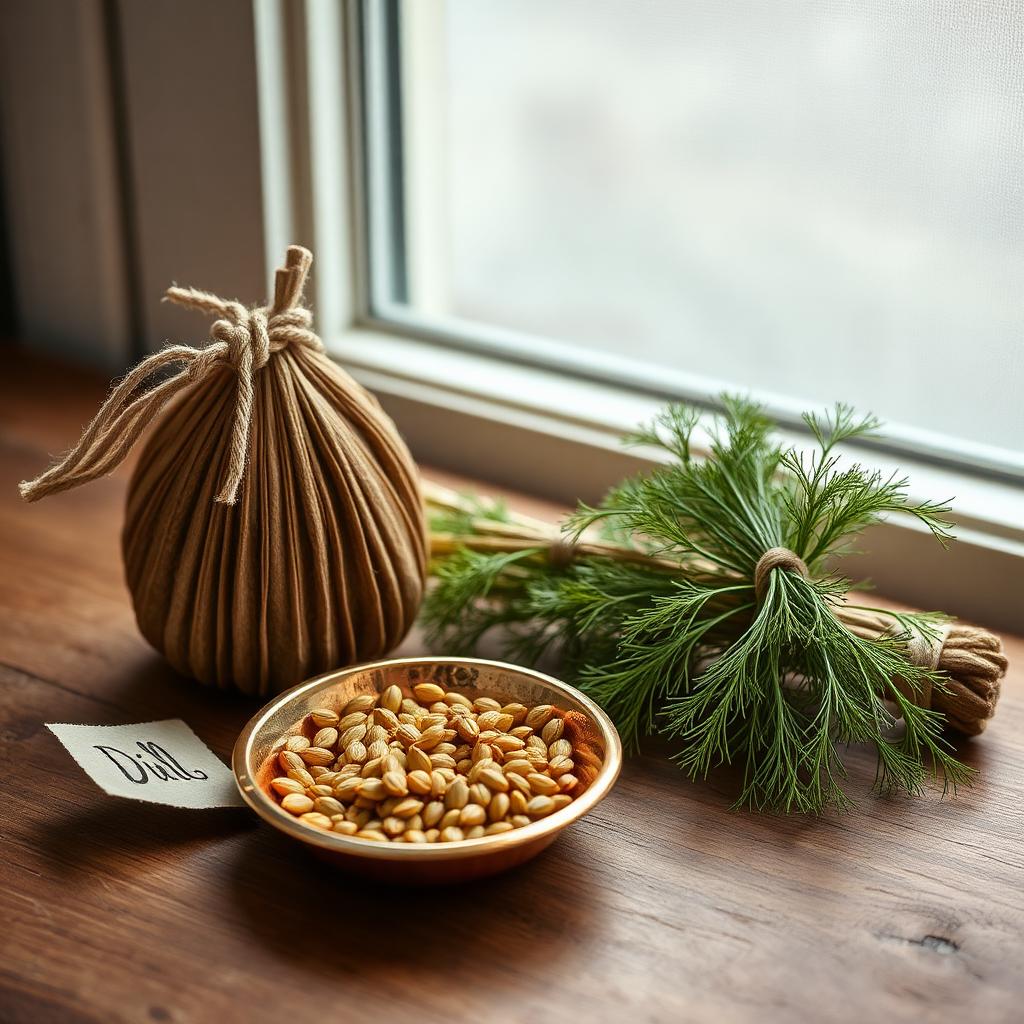
Match the part to the purpose. The seed is the stronger digestive. The leaf is the gentler culinary herb.
Add it at the end of cooking, since sustained heat destroys the volatile aroma. It's also a mild galactagogue, useful for nursing mothers when paired with fennel.
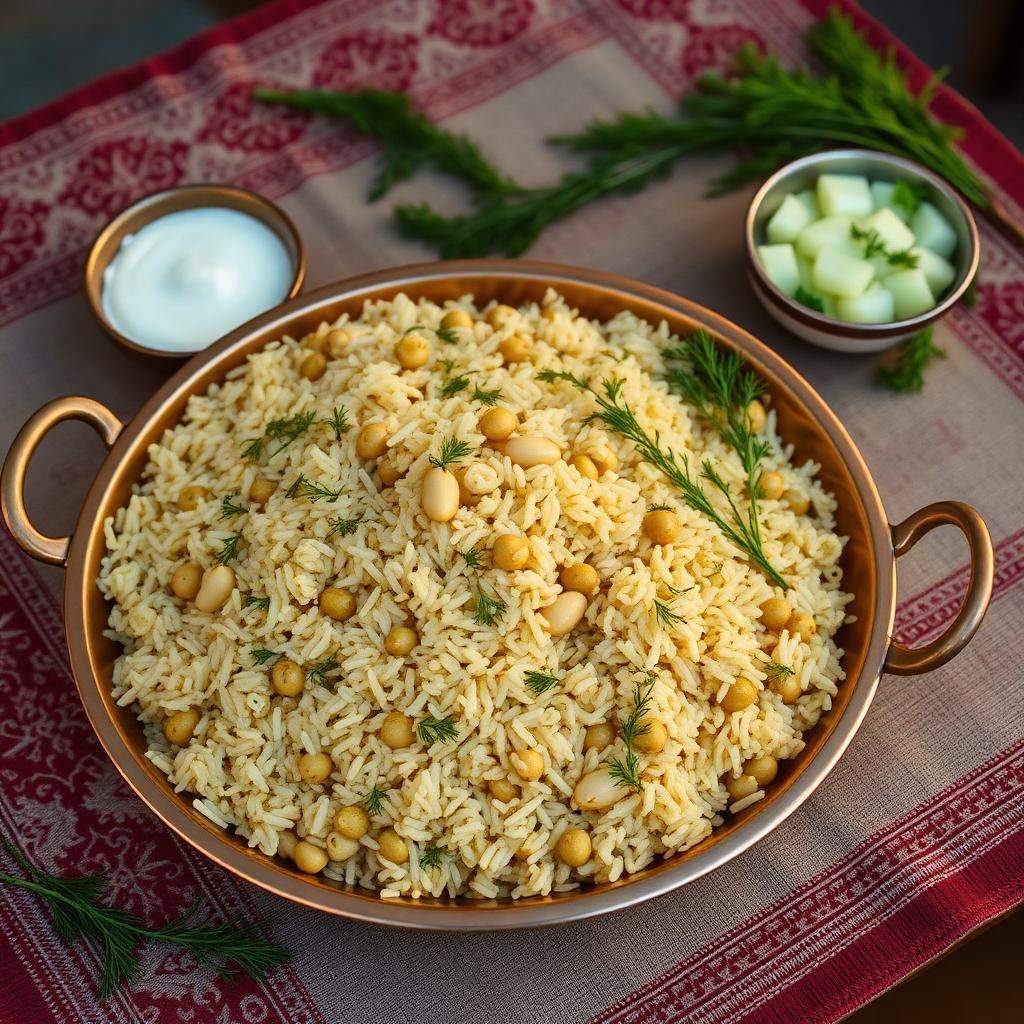
Dill, or shevid, runs through Persian cooking, from baghali polo (dill-fava rice) to mast-o-khiar yogurt salad. Its essential oils (the concentrated aromatic oil of the plant) gently help digestion and freshen your breath.
What Else to Know
Known to botanists as Anethum graveolens.
Healthy aging depends on a calm, efficient gut. Dill's carminative (traditionally used to settle gas and bloating) essential oils ease the gas and bloating that become more common with age, and its flavonoids (a family of protective plant compounds) add an antioxidant boost — all from a kitchen herb that needs no supplements.
Chapter 2 of 15
The Plant Itself
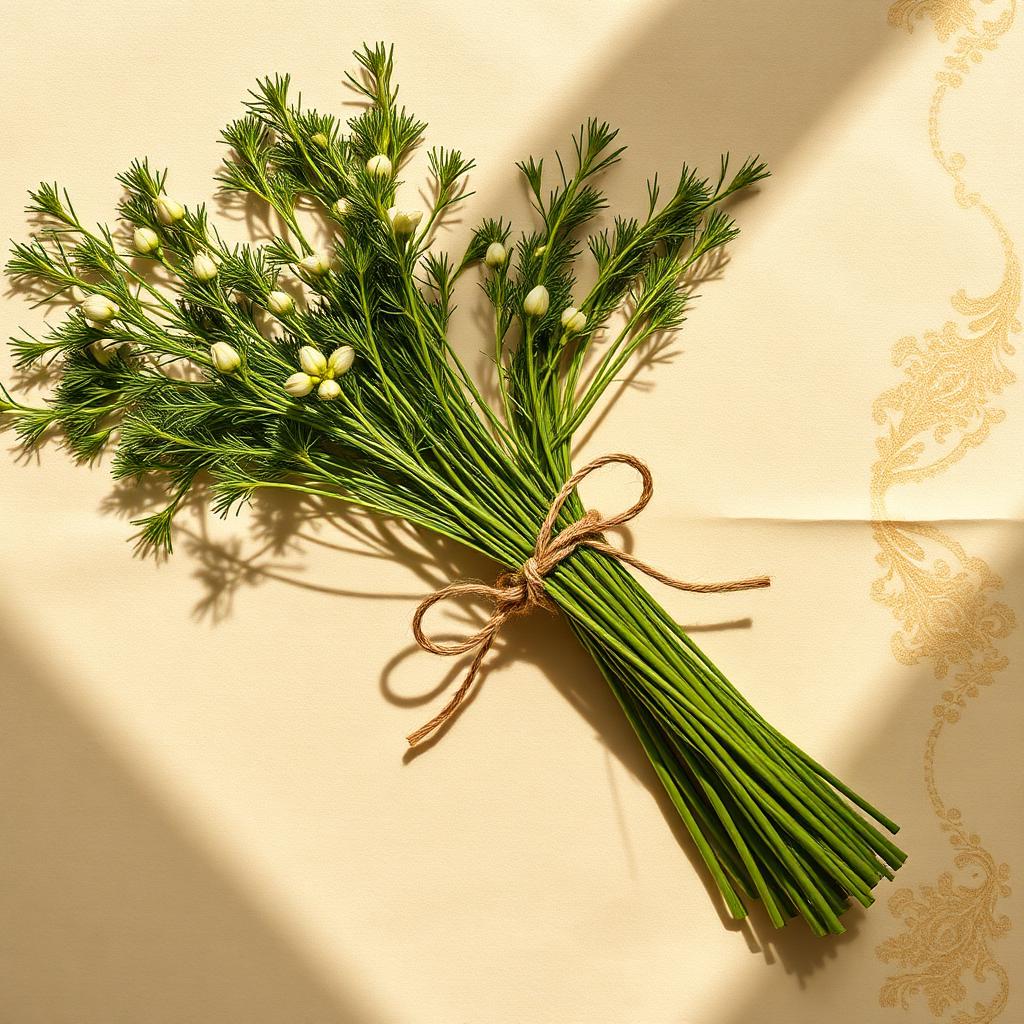
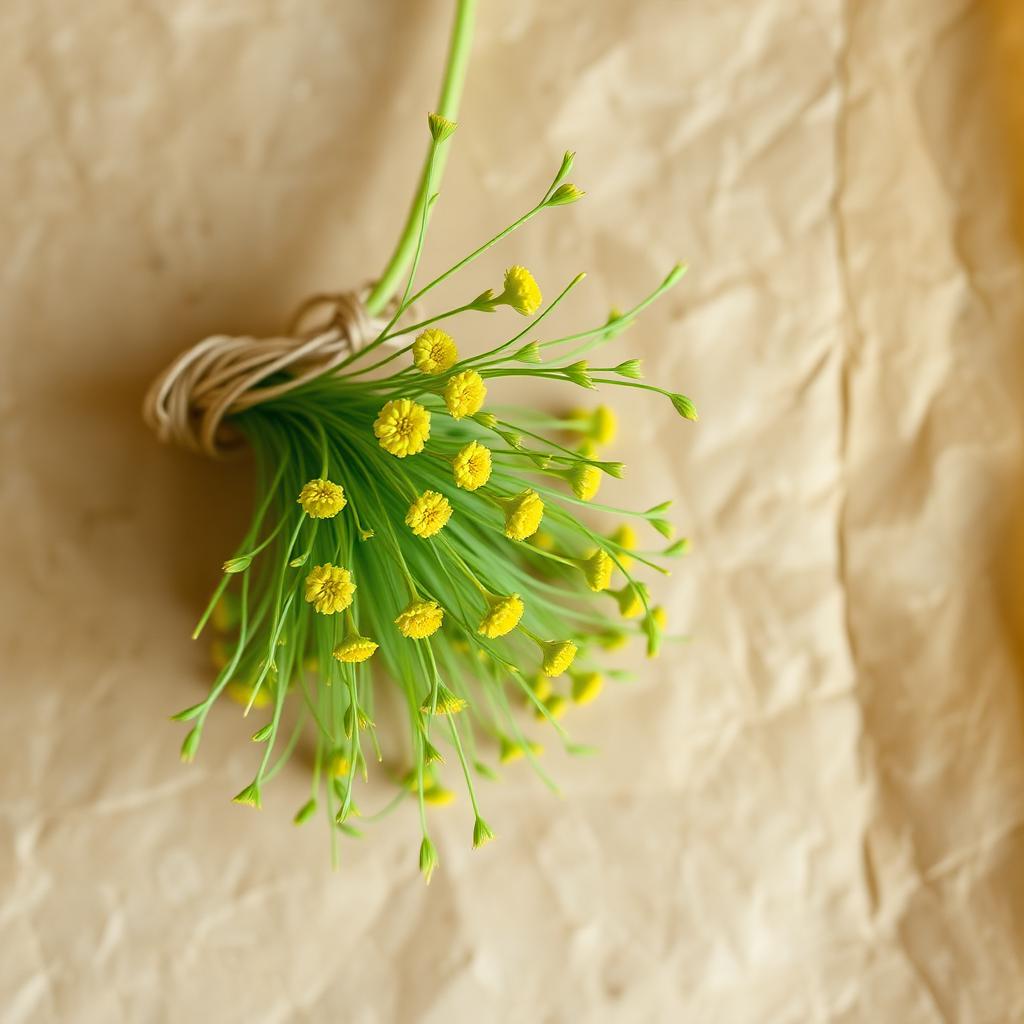
A slender annual 40–60 cm tall with hollow stems and feathery blue-green leaves divided into thread-like segments. Flat yellow umbel flowers give way to small oval ribbed seeds rich in carvone, limonene, and α-phellandrene — the essential oils responsible for dill's calming digestive aroma.
Family: Apiaceae (carrot/parsley family).
Chapter 3 of 15
What Is In It
Primary compounds
Carvone is the dominant carminative (traditionally used to settle gas and bloating) monoterpene ketone. Smooth-muscle relaxant on gut wall.
Limonene: citrus-note terpene. Digestive aromatic and mild anti-reflux (stomach acid rising into the throat) direction · α-phellandrene: spicy-warm terpene. Contributes antimicrobial (slows the growth of germs) breadth.
Other Constituents
Anethole (trace) is shared with fennel/anise, softens the aroma.
Quercetin (a plant compound found in onions, apples and tea), kaempferol, vitexin — flavonoid (a family of protective plant compounds) antioxidant load in the leaf.
Vitamins
Vitamin C, Vitamin A, Folate
Other notable constituents
Minerals: Calcium, Iron, Manganese
Chapter 4 of 15
In the Laboratory
From laboratory work, not from people taking it
Anethum graveolens essential oil shows broad antimicrobial (slows the growth of germs) activity against foodborne pathogens in laboratory studies. Rated: early research.
Chapter 5 of 15
What Studies in People Show
What studies in people show
Dill-seed extract may modestly lower fasting blood glucose and improve lipid profile over 8–12 weeks in adults with type 2 diabetes or metabolic syndrome (a group of problems including high blood sugar, blood pressure and waist size).Emerging evidence
Dill-leaf extract has shown mild diuretic (makes you pass more urine) and lipid-lowering activity in preclinical models. Human clinical data are limited.Emerging evidence
Chapter 6 of 15
How It Is Prepared
For the seed, lightly crush a teaspoon and steep it ten minutes. A much weaker version of the same tea is the gripe-water style, given a teaspoon at a time to fussy babies with practitioner guidance.
Fresh, dill goes in by the handful — baghali polo, mast-o-khiar, kuku sabzi. Add the stem and frond at the end of cooking to keep the aroma.
Use the fresh herb late in cooking, in yogurt, rice and salads. Steep the seed as a digestive tea.
Stir fresh dill into yogurt, salads and rice at the last moment. It belongs in ash reshteh and kuku sabzi too.
For digestion, brew the seeds as a tea.
Chapter 7 of 15
Medicines and Interactions
Medication interaction:
Diabetes medications (metformin, sulfonylureas, insulin) — Modest additive glucose-lowering with regular dill-seed extract — monitor glucose when adding a therapeutic daily habit on top of hypoglycaemic drugs. (low concern)
General caution:
Lithium — Mild diuretic action can theoretically raise serum lithium — space and monitor under prescribing-clinician oversight. (low concern)
Medication interaction:
Anticoagulants (warfarin) — Dill-seed extract contributes modest vitamin K and coumarin-like compounds — keep intake steady rather than swinging. (low concern)
Chapter 8 of 15
Who Should Be Careful
Allergy:
Cross-reactive with celery/carrot allergies.
Pregnancy and breastfeeding:
Avoid concentrated dill essential oil internally, especially in pregnancy and infants.
Allergy:
Apiaceae-family allergy (celery, carrot, anise) — possible cross-reactivity.
General caution:
Photosensitivity rare with topical (put on the skin) oil.
Chapter 9 of 15
Pregnancy, Children and Older Adults
Pregnancy and breastfeeding
Pregnancy and breastfeeding:
Culinary dill on Persian rice, in mast-o-khiar, and in ash reshteh is safe and traditional throughout pregnancy. Avoid concentrated dill essential oil internally and skip therapeutic seed-extract capsules given limited pregnancy data.
Children
Children:
Fresh dill in family food from weaning; very dilute traditional gripe-water style for fussy older babies only under pediatrician guidance; never essential oil. Weak dill-seed damkardeh for gas from around age 4.
Older adults
Older adults:
Dill on baghali polo, in mast-o-khiar, and steeped as a light after-dinner damkardeh is one of the lowest-friction daily digestive habits on the Persian table — especially for post-meal fullness that quietly reshapes appetite in the sixth and seventh decade.
Chapter 10 of 15
What Persian Medicine Says
Persian temperament: Warm & Dry (2nd degree — seed. 1st degree — leaf). Ibn Sīnā (Canon, Book II) and Aghili Khorasani class shevid as warm and dry — mufattih (opener), muhalli (dissolver of wind), muhaddi' (calmer). Classical Persian physicians paired dill with cool-and-heavy foods (fava beans, yogurt, fish) to balance the meal so it digests cleanly — the reason baghali polo always carries dill.
Persian medicine sees dill as warm and dry, and the kitchen shows you why. Cooks pair it with fava beans and rice because beans are considered cold and wind-producing, while the warm herb helps balance them. The same thinking uses weak dill-seed water for infant colic, dill for an adult's bloated belly, and the herb to encourage milk in nursing mothers.
Chapter 11 of 15
What Persian Medicine Says: In the Household
Since the balance depends on the pairing, tradition uses dill generously in cold, heavy dishes and more sparingly in dishes that are already warm.
Dill is the classic gripe-water herb, given for infant colic. Adults take the same seed for post-meal bloating and heaviness.
It's also used for mild restlessness at bedtime, for bad breath after meals, and — with fennel — as a mild galactagogue for low milk supply.
Older Uses
Dill soothes occasional gas and indigestion. It's the traditional remedy behind gripe water for infant colic.
Traditional dill and fennel gripe-water combinations have historical use for infant colic. Parents should use very dilute preparations and consult a pediatrician, especially for newborns. Rated: traditional observation.
At Nowruz, dill gives spring dishes their fresh green color and bright fragrance.
Chapter 12 of 15
Traditional Formulas
Baghali polo bā shevid: dill-fava rice — the warming dill balances cool, heavy fava beans so the dish digests cleanly.
Mast-o-khiar: yogurt-cucumber-dill salad — cooling for hot stomachs and summer thirst.
Damkardeh-ye shevid: 1 tsp crushed seeds steeped 10 min after dinner for gas and post-meal heaviness.
Chapter 13 of 15
Questions People Ask
Why is dill so loved in Persian rice?
Persian medicine pairs dill (warm, dry) with fava beans (cool, moist) to balance the dish so it doesn't sit heavily — that's why baghali polo always has dill.
Chapter 14 of 15
Sources
Anethum graveolens: A review of its botany, traditional uses, phytochemistry, pharmacology — Journal of Ethnopharmacology (PubMed). https://pubmed.ncbi.nlm.nih.gov/26342518/
Dill seed and lipid profile: clinical trial — Journal of Diabetes & Metabolic Disorders (NIH PMC). https://www.ncbi.nlm.nih.gov/pmc/articles/PMC4429711/.
Carminative activity of dill essential oil — Phytotherapy Research (PubMed). https://pubmed.ncbi.nlm.nih.gov/15852492/
Sad Giah Hezar Darman (صد گیاه و هزار درمان) — One Hundred Plants and One Thousand Remedies — Dr. Hossein Erfani, 4th edition (1375 / 1996–1997). Primary traditional Persian herbal reference cited throughout this platform. Presented as traditional knowledge, not as modern medical proof.
Office of Dietary Supplements: fact Sheets — US National Institutes of Health (NIH). https://ods.od.nih.gov/factsheets/list-all/.
Herbal Database: memorial Sloan Kettering Cancer Center. https://www.mskcc.org/cancer-care/diagnosis-treatment/symptom-management/integrative-medicine/herbs.
Chapter 15 of 15
Sources (continued)
Herbs at a Glance: uS NIH National Center for Complementary and Integrative Health (NCCIH). https://www.nccih.nih.gov/health/herbsataglance.
FoodData Central: searchable nutrient database — US Department of Agriculture (USDA). https://fdc.nal.usda.gov/.
The Nutrition Source: harvard T.H. Chan School of Public Health. https://www.hsph.harvard.edu/nutritionsource/.
PubMed — peer-reviewed biomedical literature — US National Library of Medicine. https://pubmed.ncbi.nlm.nih.gov/