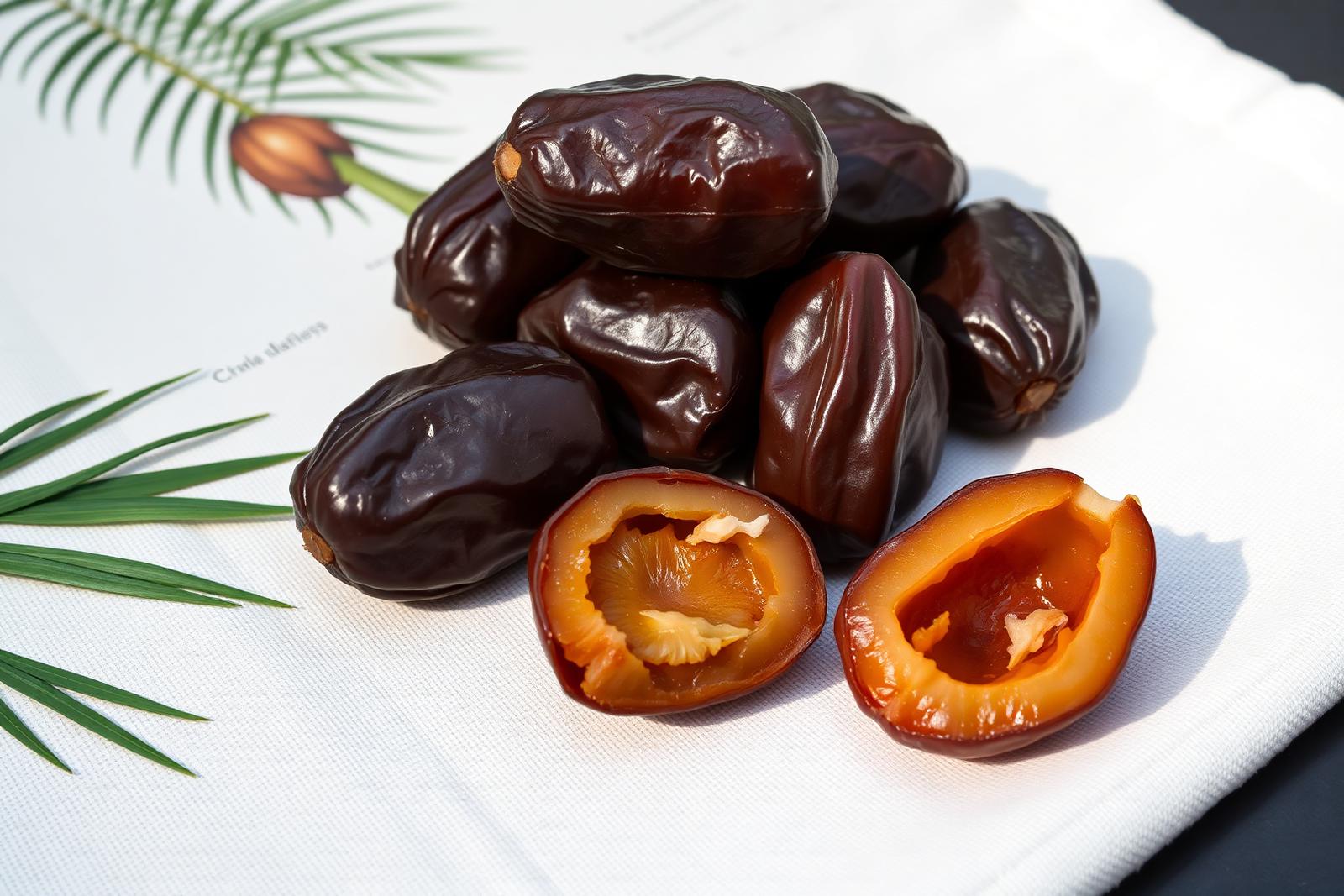
Whole-food sweetener with fiber, potassium, and magnesium.
Lower glycemic impact than refined sugar when paired with nuts.
Easy daily swap for candy and processed snacks.
Refined sugar drives much of today's chronic disease. One easy, lasting change is to swap a sweet snack for 1–2 dates and a few walnuts, which can support steadier energy, metabolic health, and aging well.
What Else to Know
You don't need a complicated change here. Replacing 1–2 daily servings of refined sugar with a date and a small handful of nuts lowers the glycemic load, adds potassium and magnesium, and feeds the gut without leaving you feeling deprived. Keep that simple swap going across the decades, and it can become a meaningful support for healthy aging.
Quick, sustained energy from natural sugars + fiber.
Chapter 2 of 14
What It Contains
Glucose + fructose in roughly balanced measure — a natural sugar profile that behaves gentler than sucrose when eaten with fiber and fat.
Soluble and insoluble fiber (~7 g per 100 g) — feeds the gut microbiome and blunts the glycemic curve.
Potassium and magnesium: heart and blood vessel and neuromuscular minerals often low in modern diets.
Iron and copper: cofactors for haemoglobin synthesis. Part of the tradition of dates for anaemia and convalescence.
Polyphenols (β-carotene, phenolic acids, flavonoids) — antioxidant load higher than most other dried fruits.
Chapter 3 of 14
In the Laboratory
From laboratory work, not from people taking it
Date fruit is a rich dietary source of phenolic antioxidants and dietary fibre, with in-vitro and short human trials showing improvements in lipid oxidation and bowel regularity. Rated: early research.
Chapter 4 of 14
What Studies in People Show
What studies in people show
In a randomised study of 154 women, 6 dates daily in the final 4 weeks of pregnancy was associated with more favourable cervical status at admission, shorter latent labour, and lower rates of oxytocin augmentation.Moderate evidence
In a randomised trial of 210 nulliparous women, date consumption during late pregnancy was associated with better Bishop score at admission and less need for augmentation, with no adverse outcomes.Moderate evidence
Despite their sweetness, dates have a low-to-medium glycaemic index (GI ≈ 42–55) in healthy adults, and pairing with nuts further blunts the glycaemic response.Moderate evidence
Chapter 5 of 14
Preparation and Kitchen Use
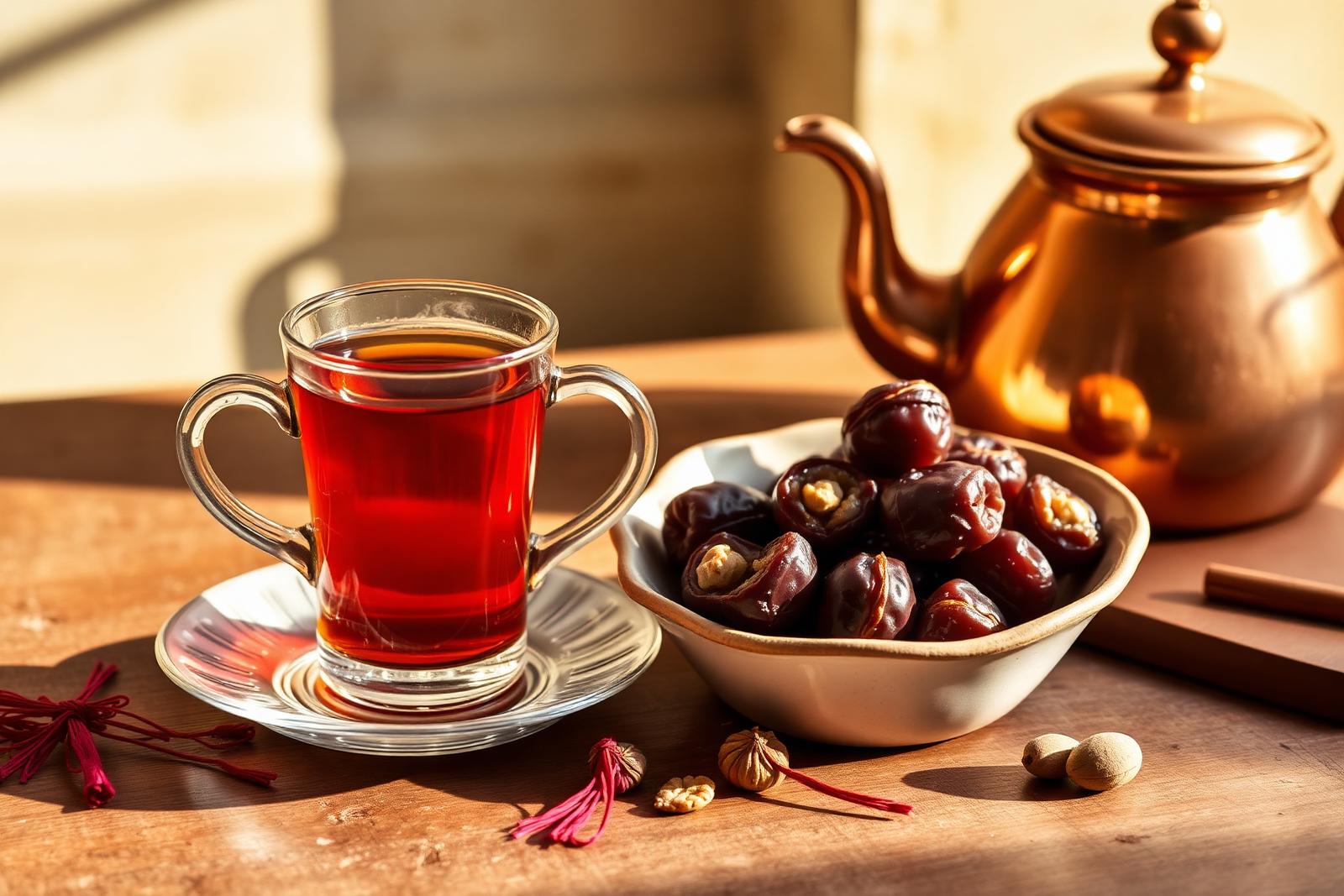
Afternoon tea is the classical Persian rhythm. The final 4 weeks of pregnancy is the most trial-supported window. A saffron-cardamom date-milk before bed is the traditional nightcap for cold constitutions and poor sleep.
Soaked overnight in water or milk — softer and easier on digestion.
Other Ways to Use It
For an afternoon snack, stuff dates with walnut or almond butter.
Date syrup is drizzled on tahini, yogurt, or oatmeal.
Simmered into a tonic milk with cardamom and a thread of saffron.
Eat 2–3 dates with tea for steady afternoon energy.
Blend into smoothies and energy balls.
Try blending 1–2 dates into a smoothie instead of adding sugar or syrup.
Chop them into oatmeal, yogurt, or grain salads.
Roll them with cocoa into energy balls you can take with you.
Chapter 6 of 14
Medicines and Interactions
Medication interaction:
Insulin and sulfonylureas — Dates are a concentrated whole-food sugar; 2–3 dates count toward the meal's carbohydrate load. Pair with protein and fat to blunt the glycemic curve and coordinate dose timing with a diabetes clinician. (moderate concern)
General caution:
Diuretics (spironolactone, ACE inhibitors, ARBs) — Dates are potassium-rich (~150 mg per date). Combined with potassium-sparing therapy in advanced kidney disease, large daily intakes can nudge serum potassium upward. (moderate concern)
Medication interaction:
Warfarin — Modest vitamin K in dates isn't clinically relevant at ordinary intakes; keep intake steady rather than swinging. (low concern)
General caution:
Fructose-malabsorption / severe IBS-FODMAP protocols — Dates are high in fructans and fructose — a few dates can worsen bloating and pain during elimination phases. (low concern)
Chapter 7 of 14
Who Should Be Careful
General caution:
Energy-dense — small servings for blood-sugar control.
General caution:
Sticky — rinse the mouth or brush to protect teeth.
General caution:
Type 2 diabetes on tight glycemic control — count as concentrated carbohydrate.
Allergy:
Latex–fruit allergy (rare cross-reactivity).
Chapter 8 of 14
Pregnancy, Children and Older Adults
Pregnancy and breastfeeding
Pregnancy and breastfeeding:
Dates are one of the most tradition-recommended foods of late pregnancy — a small Iranian and Jordanian RCT tradition and modern trials (Al-Kuran 2011; Kordi 2017) suggest that 6 dates daily in the final 4 weeks may soften the cervix, shorten early labour, and reduce need for oxytocin augmentation. Discuss with the obstetric team when insulin, gestational diabetes, or a strict weight target is in play.
Children
Children:
A safe and traditional Persian childhood food from around 12 months (never before, because of choking risk and unnecessary sugar in infancy). Chopped or blended into porridge, they replace refined sweetener with fibre and minerals. Serve as small pieces to under-4s to remove choking risk from the whole date.
Older adults
Medication interaction:
A quietly powerful daily habit after 60 — potassium, magnesium, fibre, and a small steady sugar dose that supports appetite, digestion, and mood without the blood-sugar spikes of biscuits or sweets. Two to three dates with walnuts at afternoon tea is the classic Persian longevity snack; skip in advanced diabetes without clinician planning.
Chapter 9 of 14
Traditional Persian Perspective
Persian temperament: Warm & Moist (2nd degree). Persian medicine reads dates (khormā) as warm and moist in the second degree — restoring for depleted constitutions, blood-building, warming for cold digestions, and steadying for the nerves. Avicenna prescribed them soaked in milk after illness, childbirth, and long gaps between meals.
In the Household
Persian medicine sees dates as warm and moist, helping to restore vitality, nourish the nerves, build blood, and warm a cold constitution. Avicenna prescribed dates with milk after illness and weakness. Dates with water or milk remain a simple way to restore energy after a long gap between meals.
It was used: restoring strength after illness, childbirth, or fasting. Cold, weak constitutions and low energy. Mild constipation (soaked dates first thing in the morning).
Tea with dates sets the rhythm of Persian hospitality. It's a small ritual that also gives you a steady-energy snack in every season.
Chapter 10 of 14
What It Goes With
§ More Pairings
Spice:
Cardamom
Warming, digesting, sleep-supporting, and traditionally recommended after illness or hard work. Cardamom-and-date tonic milk is the classical Persian nightcap.
Spice:
Saffron
A thread of saffron in a date-milk decoction (a drink made by simmering the plant in water) turns a simple sweetener into a mood-lifting tonic. That makes it the Persian medicine treatment for winter melancholy.
Spice:
Cinnamon
Chopped dates with a dust of Ceylon cinnamon on plain yogurt smooth the glycemic curve and add a warming aromatic to a cooling ferment.
Pairing:
Walnut
A single date stuffed with a walnut half is Persia's most-repeated afternoon snack — sugar and fibre meet omega-3 fat and protein for steady energy without the crash.
Chapter 11 of 14
What It Goes With: A Few More Pairings
Pairing:
Almonds
Dates + almonds is the pocket food of Iranian children and travellers (a small mineral-rich meal that keeps in a bag for a week).
Pairing:
Tahini
A spoon of tahini eaten with a date is the Levantine and Persian answer to nut butter — calcium, healthy fat, and slow sugar in one bite.
Milk:
Milk
Dates simmered into warm milk is the traditional Persian tonic for weakness, insomnia, and the days after childbirth.
Chapter 12 of 14
Through the Year
Spring:
Spring
In spring, two or three dates with water offer a simple, gentle way to restore energy after a long gap between meals.
Summer:
Summer
A single date with cold almonds and a glass of water is the mid-afternoon Persian answer to summer fatigue — sugar, minerals, and electrolytes in one small ritual.
Autumn:
Autumn
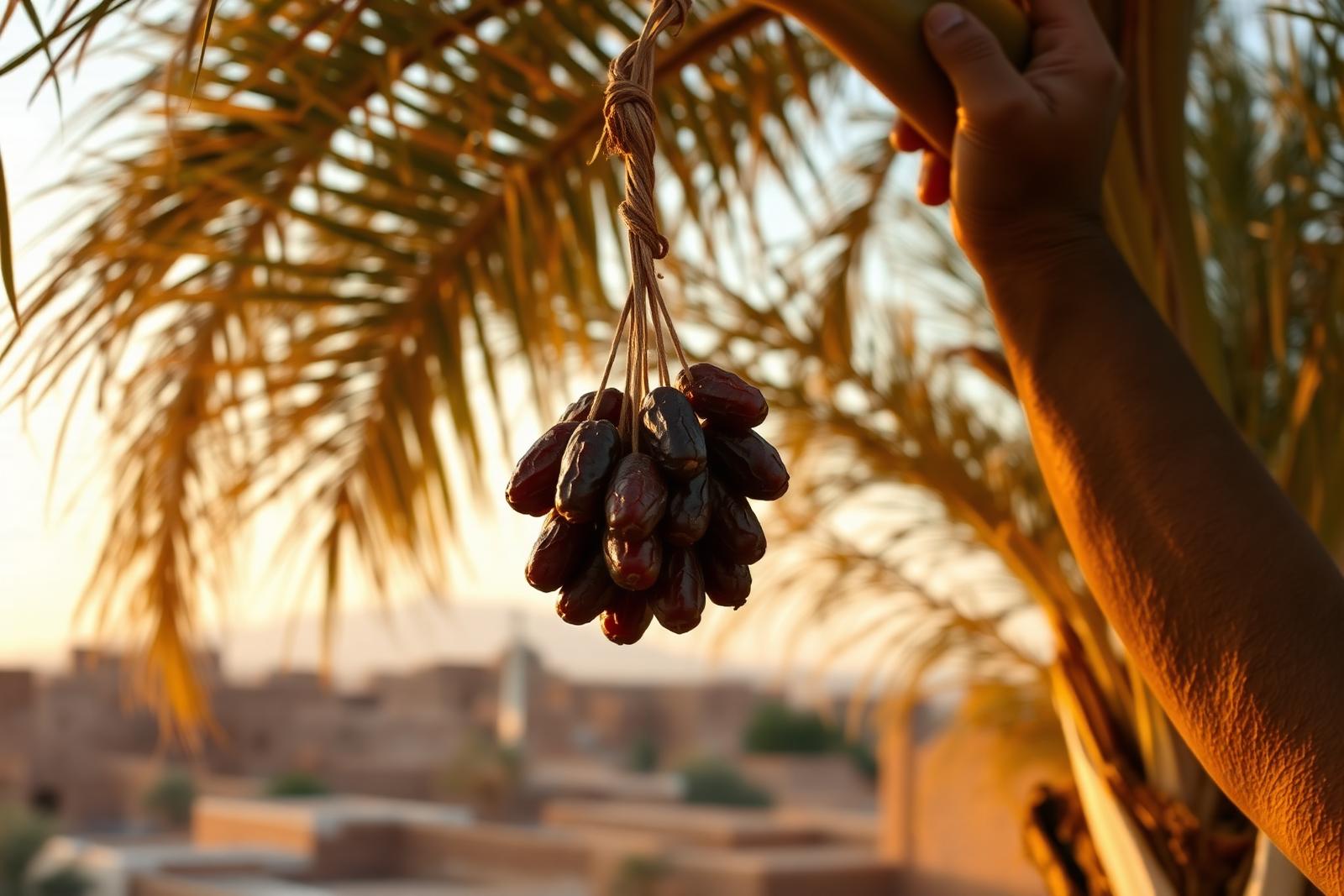
The new-crop harvest arrives — soft, glossy Piarom, Mazafati, and Kabkab dates fill the bazaars, eaten with tea and walnuts as the days shorten.
Chapter 13 of 14
Sources
Sad Giah Hezar Darman (صد گیاه و هزار درمان) — One Hundred Plants and One Thousand Remedies — Dr. Hossein Erfani, 4th edition (1375 / 1996–1997). Primary traditional Persian herbal reference cited throughout this platform. Presented as traditional knowledge, not as modern medical proof.
Office of Dietary Supplements: fact Sheets — US National Institutes of Health (NIH). https://ods.od.nih.gov/factsheets/list-all/.
Herbal Database: memorial Sloan Kettering Cancer Center. https://www.mskcc.org/cancer-care/diagnosis-treatment/symptom-management/integrative-medicine/herbs.
Herbs at a Glance: uS NIH National Center for Complementary and Integrative Health (NCCIH). https://www.nccih.nih.gov/health/herbsataglance.
FoodData Central: searchable nutrient database — US Department of Agriculture (USDA). https://fdc.nal.usda.gov/.
Chapter 14 of 14
Sources (continued)
The Nutrition Source: harvard T.H. Chan School of Public Health. https://www.hsph.harvard.edu/nutritionsource/.
PubMed — peer-reviewed biomedical literature — US National Library of Medicine. https://pubmed.ncbi.nlm.nih.gov/