Cumin is Persian medicine's warming digestive, suited to cold, slow, gassy patterns. Modern work points the same way: 3 g a day improved weight, waist and insulin sensitivity in overweight women over eight weeks.
Read the label carefully. 'Black cumin' usually means Nigella sativa, which is a different seed altogether.
Toast the seed for thirty to sixty seconds before grinding. It multiplies the aroma and takes away the rawness.
Chapter 2 of 13
Cumin: What It Is and Which Part Is Used
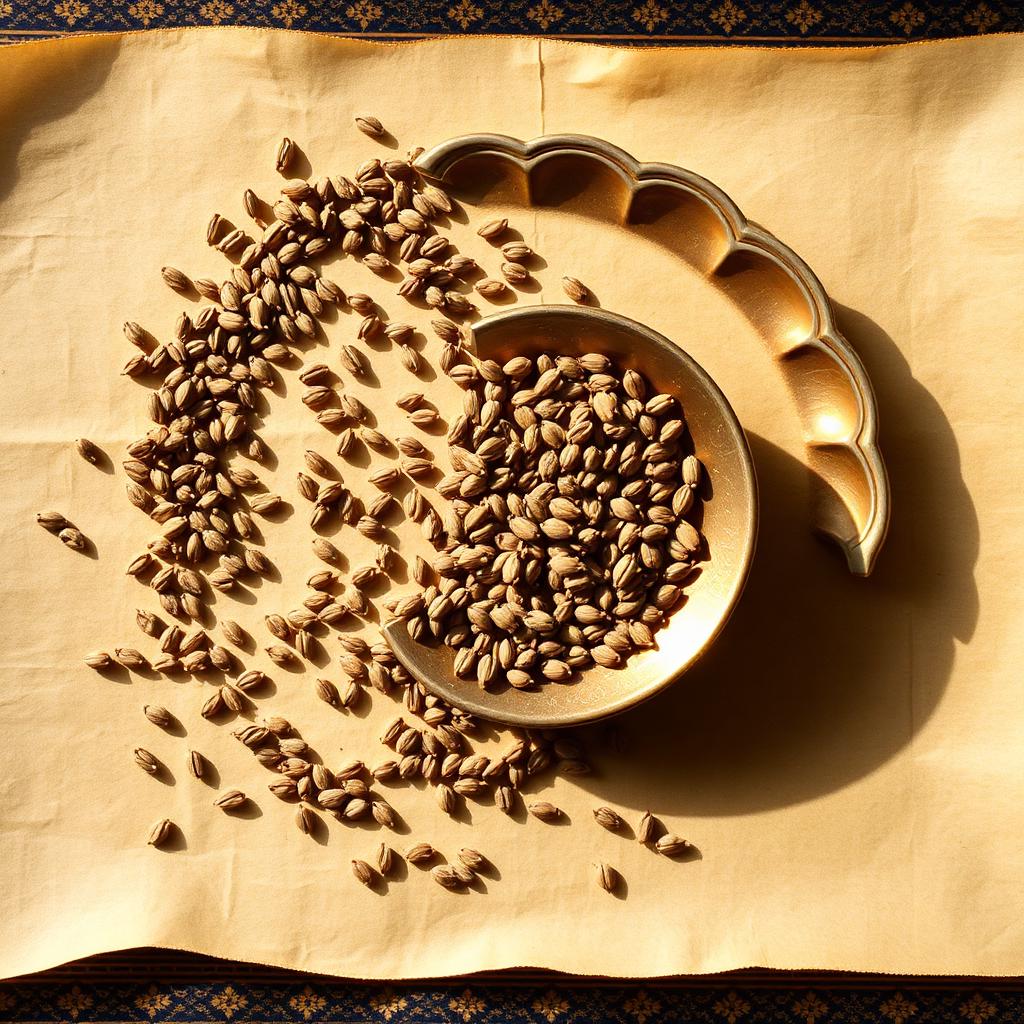
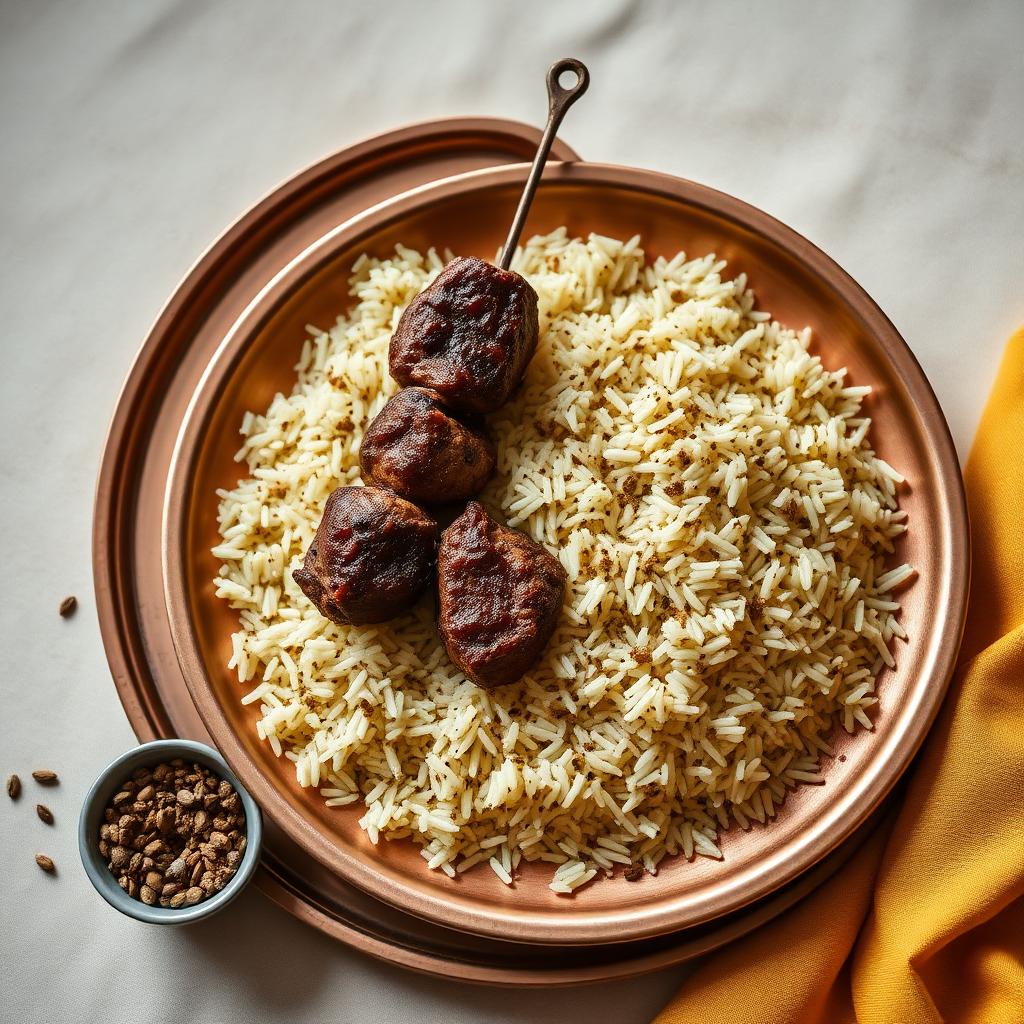
You’ll find cumin: zireh — in Persian kebab, rice, and the tea served after a heavy meal. Its essential oils (the concentrated aromatic oil of the plant) support digestion, and early research has also looked at how it may help metabolic balance.
Known to botanists as Cuminum cyminum.
Cumin eases gas and bloating, and it has been studied for metabolic and blood-sugar balance.
It's a useful source of iron for plant-based diets, and carries aromatic antioxidants.
What It Is and Which Part Is Used: A Little More Background
A slender annual 20–50 cm tall with finely divided thread-like leaves and small white or pink umbel flowers. The 'seed' is actually a tiny ridged fruit (achene) 4–5 mm long, packed with cuminaldehyde — the volatile compound behind cumin's warm, earthy aroma.
Family: Apiaceae (carrot/parsley family).
Chapter 3 of 13
What Is In It
Primary compounds
Cuminaldehyde is the dominant aromatic terpenoid, driving the warm earthy aroma and much of the digestive action.
Cymene, γ-terpinene, β-pinene — supporting monoterpenes with mild carminative (traditionally used to settle gas and bloating) and antimicrobial (slows the growth of germs) activity.
Non-heme iron is a meaningful contributor when cumin is a daily cooking spice.
Vitamins
Thiamin, Riboflavin
Other notable constituents
Minerals: Manganese, Magnesium, Calcium
Chapter 4 of 13
What Studies in People Show
What studies in people show
3 g/day cumin powder for 8 weeks improved weight, waist circumference, and insulin sensitivity in overweight women (RCT).Moderate evidence
Cumin extract improved HbA1c (a blood test showing average blood sugar over about three months), fasting glucose, and insulin in adults with type-2 diabetes (RCT).Moderate evidence
Cumin supplementation reduced total cholesterol, LDL (the harmful type of cholesterol), and triglycerides (a type of fat in the blood) across randomised trials (meta-analysis).Moderate evidence
Chapter 5 of 13
How It Is Prepared
Warm chai-ye zireh after a heavy dinner, or a pinch of toasted-ground cumin folded into lunch rice. Both take the edge off the meal digestion works hardest at.
The kitchen form is toast-and-grind: thirty seconds of whole seeds in a dry pan before grinding for kebab and rice. After meals, chai-ye zireh is a teaspoon of seeds steeped ten minutes.
Other Ways to Use It
For sluggish digestion, cumin joins black pepper and ginger in a trikatu-style triad. A pinch added to lentils, fava and chickpeas as they cook eases the gas before it starts.
Toast the whole seed briefly, then grind it into spice mixes and rice dishes. Steeped for ten minutes, the same seed makes an after-meal tea.
Toast and grind cumin for kebab spice mix, and stir it into rice, lentils and roasted vegetables.
After a heavy meal, brew a teaspoon of the seed as a digestive tea.
Chapter 6 of 13
Medicines and Interactions
Medication interaction:
Antidiabetic medication (metformin, sulfonylureas, insulin) — 3 g/day cumin powder for 8 weeks improved fasting glucose, HbA1c (a blood test showing average blood sugar over about three months), and insulin sensitivity in overweight adults — additive with medications; monitor if using multiple layers. (moderate concern)
Medication interaction:
Warfarin (a blood-thinning medicine) / DOACs — Mild antiplatelet (medicines that stop blood cells sticking together, such as aspirin) activity at concentrated extract doses; culinary intake is compatible. (low concern)
Culinary cumin in rice, kebab, and lentils is safe and traditional throughout pregnancy. Concentrated cumin capsules and essential-oil preparations are avoided given uterine-stimulant records in classical texts.
Children
Children:
Cumin is a Persian family-cooking staple from weaning onward — softens bean-gas and lentil-heaviness in a way children accept. Extracts and essential oil aren't for the paediatric body.
Older adults
Older adults:
A pinch of toasted-ground cumin in daily rice or lentils is one of the lowest-friction ways to soften post-meal glucose and steady bean digestion after 65.
Pregnancy and breastfeeding:
Avoid medicinal doses in pregnancy.
Allergy:
Apiaceae allergy — cross-reactive with anise, fennel, caraway.
Chapter 8 of 13
What Persian Medicine Says
Persian temperament: Hot & Dry (2nd degree). Persian medicine reads cumin as warming and drying — kindling digestive fire, dispelling gas, and gently warming the body. Avicenna prescribed it for cold-pattern indigestion and weak appetite.
Persian medicine reads cumin as warm and dry. It's the everyday remedy for digestion that feels cold, gassy, and slow — the heaviness that can follow beans, rice, or a late meal. Its warmth is mild, so people use it as food rather than dose: dry-roasted and ground into rice, brewed as a thin seed tea after dinner, or stirred into yoghurt when dairy feels heavy.
Chapter 9 of 13
What Persian Medicine Says: In the Household
It's seen as especially well suited to cold constitutions and winter, and classical practice allows it in modest amounts for nursing mothers.
Cumin is what tradition reaches for after beans and heavy food, when gas and heaviness follow. Sluggish digestion with a coated tongue is the other classic sign.
Paired with ginger and honey it's given for cold-pattern morning fatigue, and it's used as an adjunct where post-meal blood sugar runs high.
A little roasted cumin gives Persian kebab koobideh and saffron-cumin rice their warm, earthy character.
Chapter 10 of 13
Traditional Formulas
Zireh polo: saffron rice with toasted cumin seeds, which is a digestive Persian rice traditionally served beside lamb.
Damkardeh-ye zireh: 1 tsp lightly crushed seeds + boiling water, steeped 10 min. That makes it the everyday after-meal cup.
Triad of warm spices: cumin + ginger + black pepper in equal parts as a pinch before meals for cold, sluggish digestion.
Chapter 11 of 13
Questions People Ask
Black cumin vs regular cumin?
'Black cumin' colloquially refers to Nigella sativa (black seed) — a completely different plant. Regular cumin is Cuminum cyminum. Read labels carefully — they aren't interchangeable.
Does cumin help with weight?
Small trials of 3 g/day cumin powder in overweight women showed modest improvements in weight, waist, and insulin sensitivity over 8 weeks — useful as part of a diet.
Chapter 12 of 13
Sources
Sad Giah Hezar Darman (صد گیاه و هزار درمان) — One Hundred Plants and One Thousand Remedies — Dr. Hossein Erfani, 4th edition (1375 / 1996–1997). Primary traditional Persian herbal reference cited throughout this platform. Presented as traditional knowledge, not as modern medical proof.
Office of Dietary Supplements: fact Sheets — US National Institutes of Health (NIH). https://ods.od.nih.gov/factsheets/list-all/.
Herbal Database: memorial Sloan Kettering Cancer Center. https://www.mskcc.org/cancer-care/diagnosis-treatment/symptom-management/integrative-medicine/herbs.
Herbs at a Glance: uS NIH National Center for Complementary and Integrative Health (NCCIH). https://www.nccih.nih.gov/health/herbsataglance.
FoodData Central: searchable nutrient database — US Department of Agriculture (USDA). https://fdc.nal.usda.gov/.
Chapter 13 of 13
Sources (continued)
The Nutrition Source: harvard T.H. Chan School of Public Health. https://www.hsph.harvard.edu/nutritionsource/.
PubMed — peer-reviewed biomedical literature — US National Library of Medicine. https://pubmed.ncbi.nlm.nih.gov/