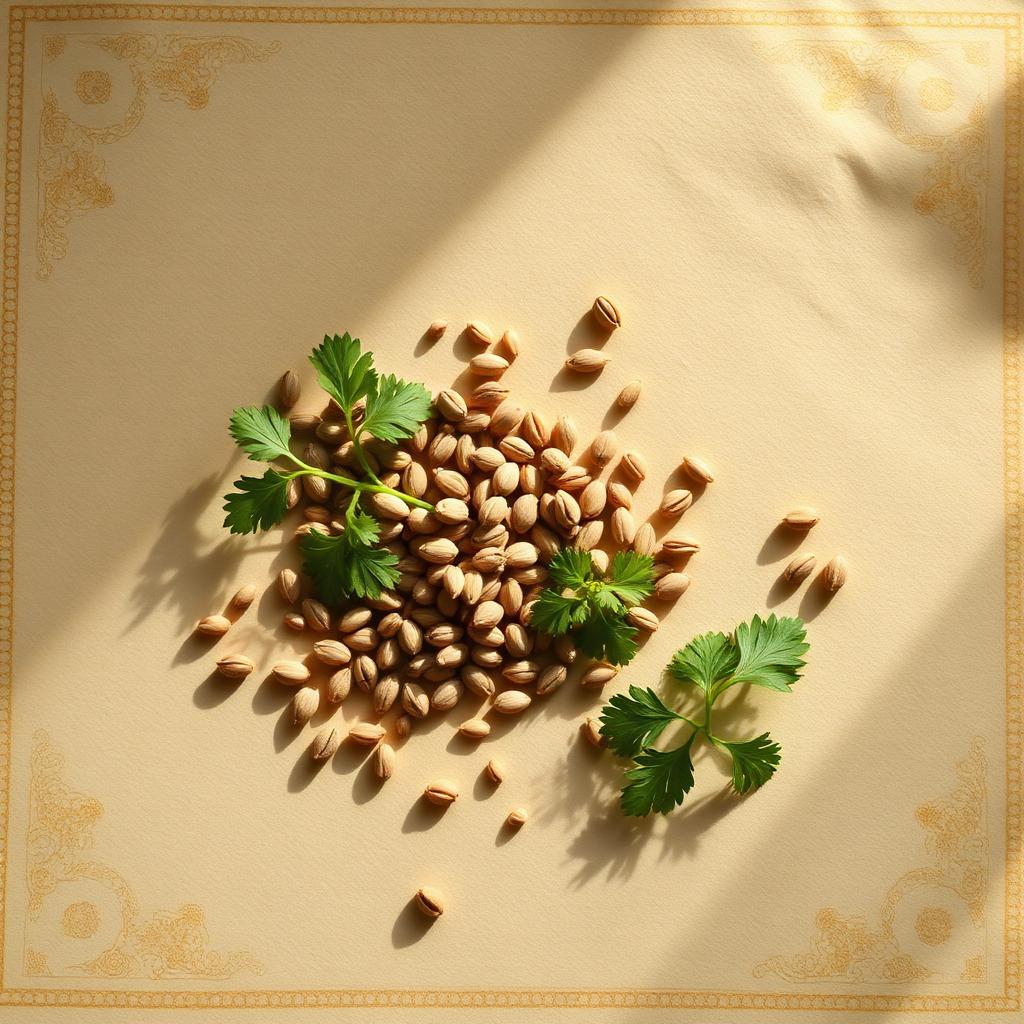
If you've ever wondered why coriander can taste so different from one dish to the next, here's the thing: coriander is really two herbs in one. The cilantro leaf is cooling, for heat and reflux (stomach acid rising into the throat). The seed is warming, for gas and digestion.
Blended as CCF tea: coriander, cumin and fennel — it becomes the everyday Persian digestive that earns its place after most meals.
What Else to Know
The 'soapy' taste about one in ten people report is genetic, so it's biology rather than preference. The heavy-metal binding attributed to cilantro is real in animals but modest in humans. Treat it as gentle daily support.
Think of coriander as two herbs in one. The fresh leaves (cilantro/gashniz) taste bright and citrusy, while the dried seeds are warm and floral. Persian and Mediterranean kitchens have long used both in cooking and home remedies.
Known to botanists as Coriandrum sativum.
It may support a healthy blood-sugar response, and the seeds are mineral-rich.
Chapter 2 of 15
The Plant Itself
A slender annual 30–70 cm tall, with lower leaves broad and feathery (cilantro) and upper leaves thread-like. Tiny white-to-pinkish flowers sit in umbels (flat-topped clusters, like an open umbrella) and give way to round, ribbed beige fruits 3–5 mm across. The leaf and seed have almost opposite flavor profiles — bright citrus versus warm floral — because each carries a different set of aroma compounds.
Family: Apiaceae (carrot/parsley family).
Chapter 3 of 15
What Is In It
Primary compounds
Linalool is the calming, floral monoterpene (a light aromatic plant compound) dominant in the seed.
Decanal and other aldehydes are the leaf compounds that some people perceive as soapy, depending on a gene variant (OR6A2) that shapes how they smell them.
Quercetin (a plant compound found in onions, apples and tea) and other flavonoids — vascular (relating to the blood vessels) and antioxidant support.
Iron and vitamin K: meaningful when cilantro is a daily herb-plate ingredient.
Other notable constituents
Minerals: Manganese, Magnesium
Chapter 4 of 15
In the Laboratory
From laboratory work, not from people taking it
Coriander is traditionally cooling for inflamed digestion. Its linalool and quercetin (a plant compound found in onions, apples and tea) contribute antioxidant activity.
A coriander seed extract made with water and alcohol reduced anxiety-like behaviour and improved sleep measures in animal studies. Small randomised trials in people point the same way. Rated: early research.
Coriandrum sativum polyphenols (protective plant compounds) show lipid-lowering and antioxidant activity in laboratory and animal work and in small human trials. Rated: early research.
Chapter 5 of 15
What Studies in People Show
What studies in people show
Coriander seed extract 500 mg three times a day for 8 weeks improved fasting glucose, HbA1c (a blood test showing average blood sugar over about three months), and insulin in adults with type-2 diabetes (randomised trial).Moderate evidence
Chapter 6 of 15
How It Is Prepared
Cilantro chutney or a heaped handful on lunch, and a warm cup of CCF (coriander–cumin–fennel) about ninety minutes after dinner. Two moments, both quietly medicinal.
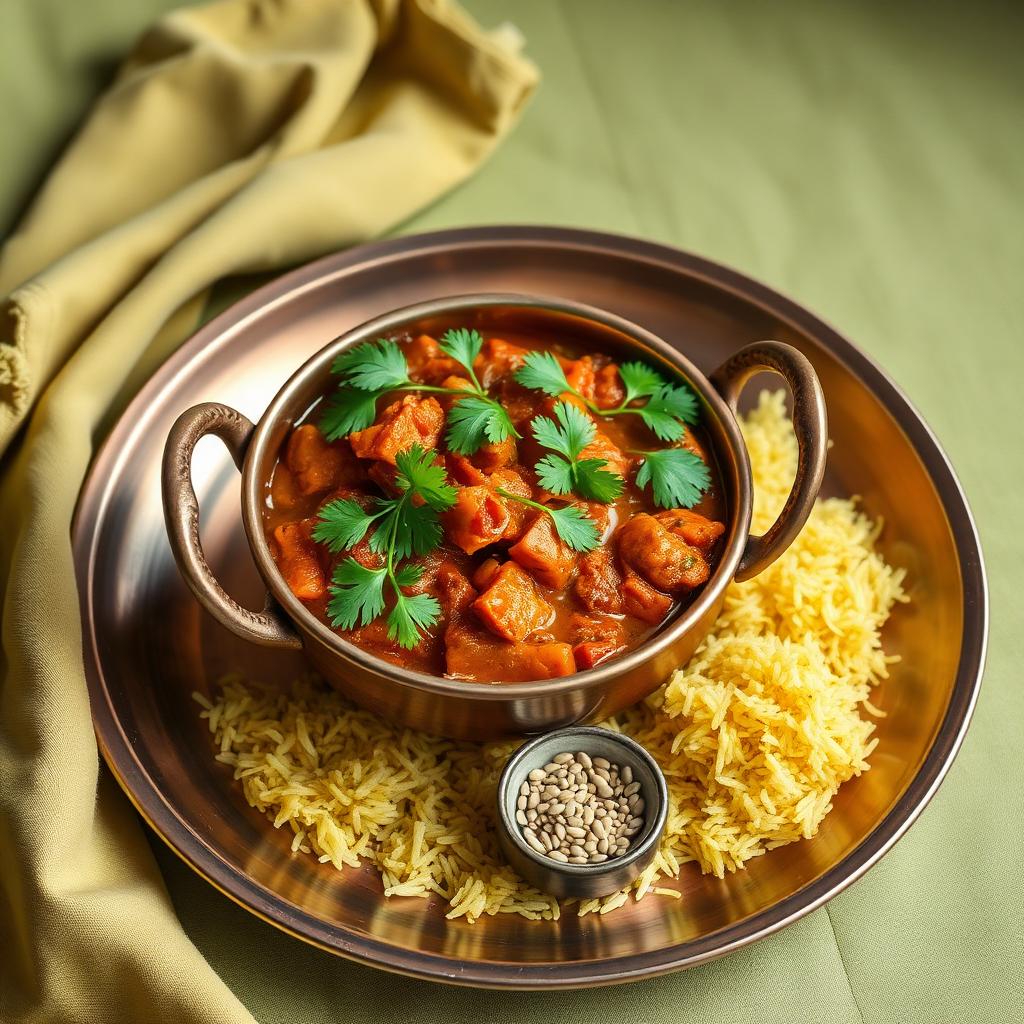
The leaf is used fresh — a chutney of leaves, lemon, garlic and olive oil, or handfuls stirred into ghormeh sabzi and kuku.
Other Ways to Use It
The seed is brewed. Lightly crush a teaspoon and steep it ten minutes, or blend it with cumin and fennel for the classic CCF after-meal damkardeh.
Use the leaf fresh in soups and salads. Toast and grind the seed for spice blends, or steep it as a digestive tea.
For digestion, brew the seed as tea after eating.
Chapter 7 of 15
Medicines and Interactions
Medication interaction:
Antidiabetic medicine (metformin, sulfonylureas, insulin) — Coriander seed extract shows modest glucose-lowering. Usually additive and gentle at food amounts, worth monitoring on layered therapy. (low concern)
Medication interaction:
Antihypertensives — Animal and small human studies suggest an added blood-pressure-lowering effect at concentrated seed doses. (low concern)
Medication interaction:
Warfarin — Fresh cilantro contains meaningful vitamin K — steady daily intake keeps INR (the blood test that shows how fast your blood clots) steady. Sudden large increases can lower INR. (low concern)
Medication interaction:
Sedatives (medicines that make you sleepy) / benzodiazepines — Linalool has a mild calming effect in animal studies. Concentrated coriander seed oil could in theory add to drowsiness. (low concern)
Chapter 8 of 15
Who Should Be Careful
General caution:
Cilantro tastes 'soapy' to some — a genetic trait.
Allergy:
Apiaceae allergy — cross-reactive with carrot, celery, fennel.
Pregnancy and breastfeeding:
Avoid concentrated essential oil (the concentrated aromatic oil of the plant) internally in pregnancy.
Chapter 9 of 15
Pregnancy, Children and Older Adults
Pregnancy and breastfeeding
Pregnancy and breastfeeding:
Cilantro eaten as food (in kuku, ghormeh sabzi, chutney) and the seed in bread and pickles are safe throughout pregnancy. Concentrated coriander essential oil is avoided internally.
Children
Children:
Cilantro is a Persian family herb from weaning — a small handful in kuku sabzi is well tolerated. Seed tea is used in weak concentrations only.
Older adults
Older adults:
A daily handful of fresh cilantro on lentils, rice, and salads adds vitamin K, potassium, and antioxidant polyphenols (protective plant compounds) in a form the older-adult palate accepts.
Chapter 10 of 15
What Persian Medicine Says
Persian temperament: Cool & Dry (2nd degree — leaf. 1st degree — seed, warming toward neutral). Persian medicine reads cilantro leaf as cool and dry — cooling internal heat, calming the heart, easing stomach heat. The dried seed is gently warming and drying — the two together are the CCF digestive.
In the Household
Persian medicine reads coriander as cool and dry, so it often balances warmer dishes. Fresh leaves are scattered over hot, spiced food, while the seed is ground with cumin so the warming blend doesn't become too heating. Traditionally, it was given for a hot, unsettled stomach, palpitations from anxiety, and sleeplessness in hot weather. That's why seed tea is usually an evening drink rather than a morning one.
Chapter 11 of 15
What Persian Medicine Says: Older Uses
People with cold, damp constitutions are advised to eat it cooked with a warming spice instead of raw and alone.
The cooling leaf is given for hot, irritated digestion and heartburn. It's also the classical answer to restless summer heat.
Tradition uses it for mild post-meal anxiety and palpitations, and applies cilantro paste for heavy metal load.
Cilantro is one of those herbs a Persian kitchen keeps coming back to. It's essential to ghormeh sabzi and kuku sabzi, while the seeds bring their warm fragrance to pickles (torshi) and bread.
Chapter 12 of 15
Traditional Formulas
Kuku sabzi: persian green herb frittata, packed with cilantro, dill, and parsley, which is a Nowruz dish carrying spring renewal.
Ghormeh sabzi is the herb stew of cilantro, parsley, fenugreek, and leek with kidney beans and lamb.
CCF damkardeh: equal parts coriander seed, cumin, and fennel — 1 tsp blend per cup steeped 10 min after meals.
Chapter 13 of 15
Questions People Ask
Why does cilantro taste like soap to some people?
A variation in a gene (OR6A2) that shapes one of the nose's smell receptors makes cilantro's aroma compounds smell soapy to roughly 4–14% of people depending on ancestry — it isn't a preference, it's biology.
Chapter 14 of 15
Sources
Sad Giah Hezar Darman (صد گیاه و هزار درمان) — One Hundred Plants and One Thousand Remedies — Dr. Hossein Erfani, 4th edition (1375 / 1996–1997). Primary traditional Persian herbal reference cited throughout this platform. Presented as traditional knowledge, not as modern medical proof.
Office of Dietary Supplements: fact Sheets — US National Institutes of Health (NIH). https://ods.od.nih.gov/factsheets/list-all/.
Herbal Database: memorial Sloan Kettering Cancer Center. https://www.mskcc.org/cancer-care/diagnosis-treatment/symptom-management/integrative-medicine/herbs.
Herbs at a Glance: uS NIH National Center for Complementary and Integrative Health (NCCIH). https://www.nccih.nih.gov/health/herbsataglance.
FoodData Central: searchable nutrient database — US Department of Agriculture (USDA). https://fdc.nal.usda.gov/.
Chapter 15 of 15
Sources (continued)
The Nutrition Source: harvard T.H. Chan School of Public Health. https://www.hsph.harvard.edu/nutritionsource/.
PubMed — peer-reviewed biomedical literature — US National Library of Medicine. https://pubmed.ncbi.nlm.nih.gov/