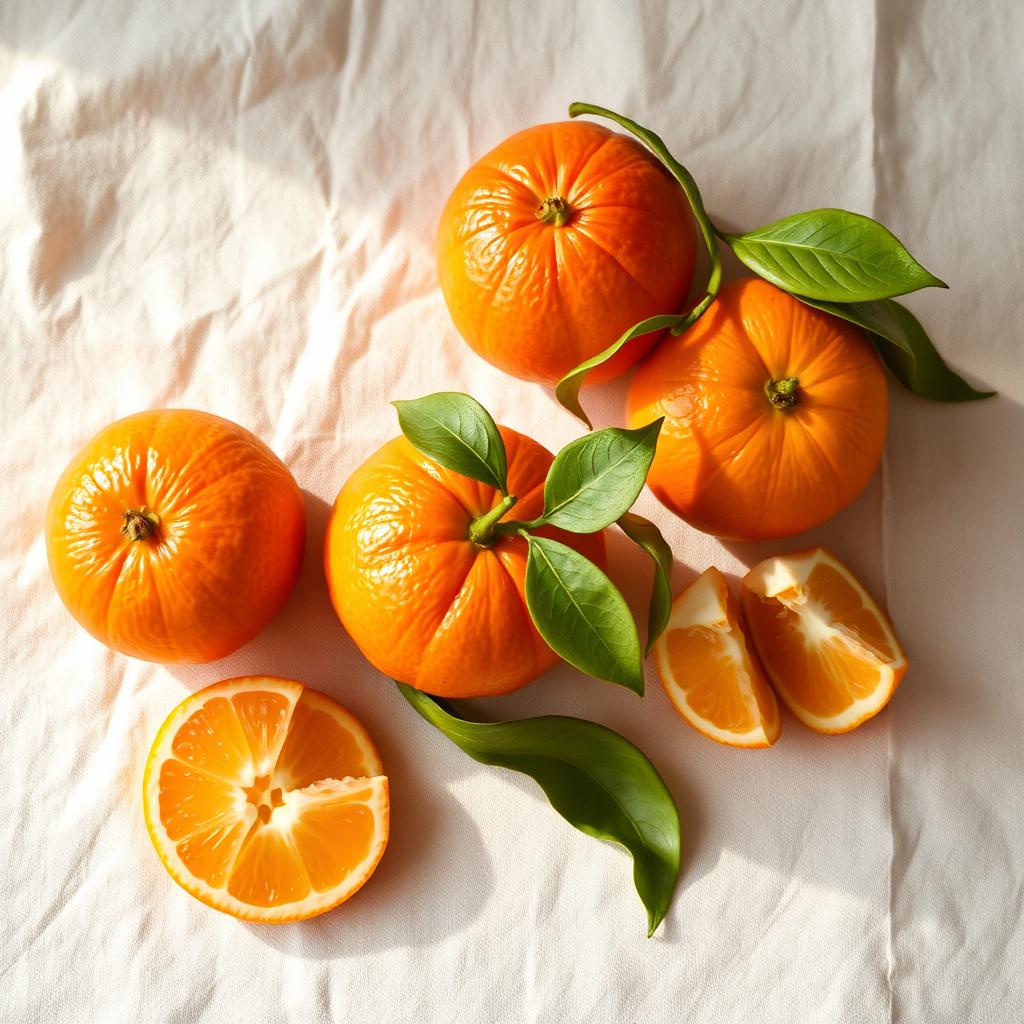
This may be the easiest citrus to eat. It peels with a thumb, has no seeds, and two cover most of a day's vitamin C.
Known to botanists as Citrus × clementina.
Chapter 2 of 13
Why It Matters
Healthy food only helps when people actually eat it. A clementine removes almost every obstacle: no knife, no mess, and no seeds. That's why it can quietly do more for daily fruit intake than fruits with better numbers.
You don't need a knife or much strength in your hands, and there are no seeds to choke on. That makes a clementine one of the easiest fresh foods for older adults to enjoy.
It was used: easy vitamin C with no preparation. Hesperidin, a flavonoid (a family of protective plant compounds) studied for blood vessels. Water and fibre in a small, portable package.
A clementine is a small, slightly flattened orange fruit with a glossy deep-orange skin that lifts away in one piece. It's a cross between a mandarin and a sweet orange. Most clementines have no seeds at all, which is the whole reason they became popular.
Family: Rutaceae (citrus family).
Primary compounds
Beta-cryptoxanthin. Limonene.
Other notable constituents
Minerals: Potassium, Calcium, Magnesium · Antioxidants: Naringenin · Fiber: ~1.3 g per fruit
Chapter 4 of 13
What Studies in People Show
Strong evidence
Vitamin C intake supports normal immune cell function. Deficiency impairs it.Strong evidence
Whole fruit intake, unlike fruit juice, is linked to lower type 2 diabetes risk.Strong evidence
Moderate evidence
Higher citrus fruit intake is linked to lower stroke risk in large prospective cohorts.Moderate evidence
Chapter 5 of 13
Preparation and Kitchen Use
Peel with a thumb from the stem end.
Warm briefly in a hand before peeling if the skin is cold and tight.
Segments dried slowly in a low oven keep as a sweet.
In the kitchen: fresh, peeled by hand. Segments dropped into plain yogurt.
Juiced with a little rose water for a winter drink.
Keep a bowl where people walk past. They disappear.
Pack two in a bag instead of a snack bar.
Peel the segments over a winter salad with fennel and pomegranate.
Chapter 6 of 13
Medicines and Interactions
Medication interaction:
Statins (cholesterol-lowering medicines) metabolised by CYP3A4 — Clementine isn't grapefruit and doesn't carry the same enzyme block. Ordinary eating isn't a concern. (low concern)
Medication interaction:
Warfarin — Vitamin K content is low, but steady intake is still easier to manage than a sudden month of eating six a day. (low concern)
Chapter 7 of 13
Who Should Be Careful
General caution:
Easy to eat five without noticing — the sugar adds up.
General caution:
Wash unwaxed peel before drying it for tea.
Allergy:
Rare citrus allergy.
General caution:
Sensitive stomachs may find several at once too acidic.
Chapter 8 of 13
Pregnancy, Children and Older Adults
Pregnancy and breastfeeding
Pregnancy and breastfeeding:
One of the better fruits in pregnancy: folate, vitamin C, water, and it stays down when other things don't. Many people find cold citrus one of the few things that helps early nausea.
Children
Children:
The fruit a child can open alone, which is most of why it's in the house. No seeds to worry about, though the peel is a choking risk for a toddler left with a whole one. Three or four in a sitting will loosen a small stomach.
Older adults
Older adults:
Peels with a thumb, needs no knife, and doesn't fight arthritic hands. For anyone who has quietly stopped eating fruit because preparing it became work, clementines are the fruit to keep in the bowl.
Chapter 9 of 13
Traditional Persian Perspective
Persian temperament: Cold & Moist (1st degree). Cooling like all sweet citrus, though gentler than an orange because the acid is lower.
Persian medicine sees sweet mandarins as cool and moist, and gentler than sour citrus. People offered them to lift a poor appetite, ease a dry cough, and gently cool a heated body, especially for children and older adults.
Dried peel used as a warming digestive in traditional practice — the peel.
In Iran, winter means mandarin season. Bowls sit out through the cold months, peels rest on top of a heater so the room smells of citrus, and the fruit is passed around while tea is poured.
Chapter 10 of 13
What It Goes With
Pairing:
Walnut
Segments and walnuts on the same plate, which is the standard winter after-dinner offering in a Persian house.
Fruit:
Pomegranate
Scatter the seeds over the segments. Two winter fruits, one bowl, no preparation worth the name.
Pairing:
Fennel
Sliced raw fennel and clementine segments make a salad that cuts through a heavy meal.
Pairing:
Dark Chocolate
Everyone already knows this works. Two squares and three segments.
Chapter 11 of 13
Through the Year
Spring:
Spring
The last boxes are dry and the segments separate badly. Time to stop.
Summer:
Summer
Out of season entirely. What is on sale has travelled from another hemisphere.
Autumn:
Autumn
The first fruit comes in from the northern groves, still green-shouldered and sharp.
Winter:
Winter
The whole point of the fruit. A bowl on the table from December through February.
Chapter 12 of 13
Questions People Ask
Are the white strands worth eating?
Yes. They carry fibre and flavonoids (a family of protective plant compounds).
Can someone with diabetes eat them?
One or two is a modest portion. Quantity is the usual problem.
Chapter 13 of 13
Sources
Citrus flavonoids and heart and blood vessel health — Advances in Nutrition. Https://pubmed.ncbi.nlm.nih.gov/28911535/
Vitamin C and immune function: nutrients. https://pubmed.ncbi.nlm.nih.gov/29099763/.