The kindest Allium: same sulfur family as garlic, gentle on the gut. One of the densest herbal sources of vitamin K per gram. Raw and freshly cut preserves the allicin-family compounds. A daily Persian sabzi at the table beside cheese, walnut, and bread.
Chapter 2 of 18
Chives: What It Is and Which Part Is Used
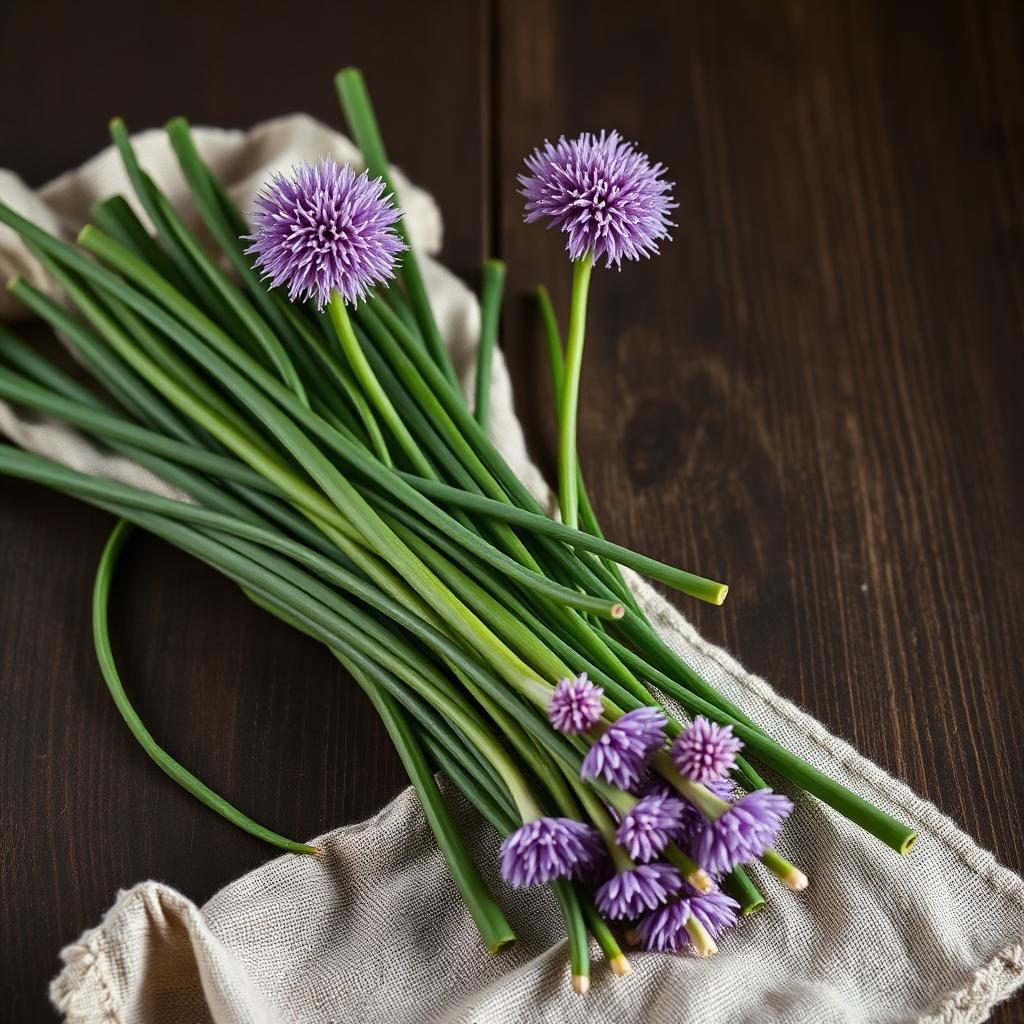
Chives (Allium schoenoprasum) are the smallest members of the cultivated onion family, with slim hollow leaves and lavender pom-pom flowers each spring. In Persian kitchens, they're part of the wider ‘sabzi’ tradition of daily herbs: folded raw into kuku, sprinkled on ash, and served with cheese and walnut. You get the Allium family's characteristic organosulfur compounds and quercetin in a much gentler form than raw garlic or onion, making chives an easy, digestion-friendly way to eat this food family.
Chapter 3 of 18
Why Herbalists Still Reach for It
Longevity kitchens tend to keep an Allium close at hand. Chives are the one you can eat raw, even by the handful, without the heat, odour, or gut discomfort that can come with onion or garlic. That makes them an easy daily way to enjoy a food family repeatedly linked to vascular (relating to the blood vessels) and metabolic health.
Chives bring a gentle Allium and a cluster of vascular-friendly flavonoids (a family of protective plant compounds) to the daily plate without the heat, odour, or gut load of raw onion or garlic. They're easy to add meal after meal, and that kind of simple consistency is what longevity kitchens do well.
Delivers Allium organosulfur compounds (allyl sulfides) in a gentle daily dose.
Rich in quercetin (a plant compound found in onions, apples and tea) and kaempferol — flavonoids (a family of protective plant compounds) studied for vascular (relating to the blood vessels) health.
Chapter 4 of 18
Why Herbalists Still Reach for It: What That Means Day to Day
Exceptional vitamin K per gram: supports bone matrix and healthy clotting.
Vitamin C, folate, and lutein (a yellow pigment linked to eye health) for skin, eye, and everyday antioxidant support.
Aids digestion of heavy meals when folded raw into yogurt, cheese, or eggs.
Chapter 5 of 18
What Is In It
Primary compounds
Allyl sulfides and thiosulfinates are the Allium-family sulfur compounds, released when chives are cut and released more when raw than cooked.
Lutein (a yellow pigment linked to eye health) and zeaxanthin — carotenoids (the orange and yellow plant pigments your body can use) concentrated in green leaves. Support macular pigment density with age.
Vitamin C, folate, and potassium — the everyday nutrient scaffolding of a daily herb.
Vitamins
Vitamin K, Vitamin A (as beta-carotene)
Other notable constituents
Minerals: Manganese, Calcium, Iron · Notable: Exceptional vitamin K per gram, Gentle Allium sulfur compounds
Chapter 6 of 18
What Studies in People Show
Moderate evidence
Meta-analyses (a study that pools the results of many trials) of higher Allium (garlic, onion, chive family) intake show modest reductions in systolic blood pressure and small improvements in lipid profile in adults with elevated heart and blood vessel risk.Moderate evidence
Quercetin (a plant compound found in onions, apples and tea), concentrated in the Allium family including chives, lowers systolic blood pressure at doses ≥500 mg/day in hypertensive adults.Moderate evidence
Early research
Higher habitual Allium vegetable intake is linked to lower gastric-cancer incidence in cohort meta-analyses, likely via organosulfur-mediated modulation of nitrosamine formation.Emerging evidence
Chapter 7 of 18
How It Is Prepared
Freshly snipped at the end of any meal — folded raw into yogurt with lunch, over eggs at breakfast, on soups and grain bowls at dinner.
Snip with scissors just before serving — heat and standing time destroy the volatile sulfur compounds.
Add to hot dishes off the heat, in the final 30 seconds.
Other Ways to Use It
Store cut chives loosely rolled in a damp cloth in the fridge, 3–5 days maximum.
In the kitchen: freeze extra chopped chives in olive oil ice cubes for winter cooking. Fold chopped raw chives into thick yogurt with cucumber for a mast-o-khiar variation. Layer into kuku sabzi with parsley, dill, and fenugreek.
Scatter chive blossoms over salads for a mild onion-sweet finish.
Chapter 8 of 18
Medicines and Interactions
Medication interaction:
Warfarin (a blood-thinning medicine) and vitamin K antagonists — Chives are exceptionally dense in vitamin K per gram. Small culinary garnishes are fine; keep intake steady rather than eating a large handful one day and none the next. Sudden large increases can lower INR (the blood test that shows how fast your blood clots). (moderate concern)
Medication interaction:
Antiplatelets (medicines that stop blood cells sticking together, such as aspirin) and anticoagulants (aspirin, clopidogrel, DOACs) — Very high raw intake theoretically adds mild antiplatelet effect through Allium sulfur compounds. Culinary use isn't clinically significant; skip large medicinal doses before surgery. (low concern)
Medication interaction:
Antihypertensives — Daily Allium intake contributes modestly to blood-pressure support via quercetin (a plant compound found in onions, apples and tea) and kaempferol. Usually additive and welcome; monitor if combined with multiple agents. (low concern)
Chapter 9 of 18
Who Should Be Careful
Allergy:
Allium allergy — rare but real; avoid the whole family.
General caution:
Concentrated onion/garlic supplements are contraindicated (should not be used) in dogs and cats — never feed chive scraps to pets.
Chapter 10 of 18
Pregnancy, Children and Older Adults
Pregnancy and breastfeeding
Pregnancy and breastfeeding:
Culinary chives — snipped over eggs, yogurt, and rice — are safe and traditional throughout pregnancy. Their folate, iron, and vitamin K quietly support the workload of the growing body. Avoid Allium extracts in supplement form.
Children
Children:
Fresh snipped chives on eggs, potato, and yogurt are a gentle Persian introduction to the Allium family from around 8–10 months. The mild flavour and hollow shape are more welcome than raw onion for young palates.
Older adults
Older adults:
A small daily bowl of chive-yogurt is a low-friction way to keep Alliums, vitamin K, and lutein on the plate after 60 — supporting vascular (relating to the blood vessels) flexibility, bone matrix, and macular pigment without the heat of raw onion or the odour of raw garlic.
Chapter 11 of 18
What Persian Medicine Says
Persian temperament: Warm & Dry (1st degree). The mildest of the Alliums in Persian medicine — warming enough to open the chest and stir appetite, gentle enough to eat raw daily with cooling yogurt or cucumber without unbalancing a warm constitution.
Persian traditional medicine reads chives as warm and dry (1st degree). They're seen as a mild opener of the chest and appetite, softer than onion or garlic and better suited to warm constitutions when eaten fresh with cooling yogurt or cucumber.
Chapter 12 of 18
What Persian Medicine Says: In the Household
Sabzi khordan: raw chives on the daily Persian herb-and-cheese plate.
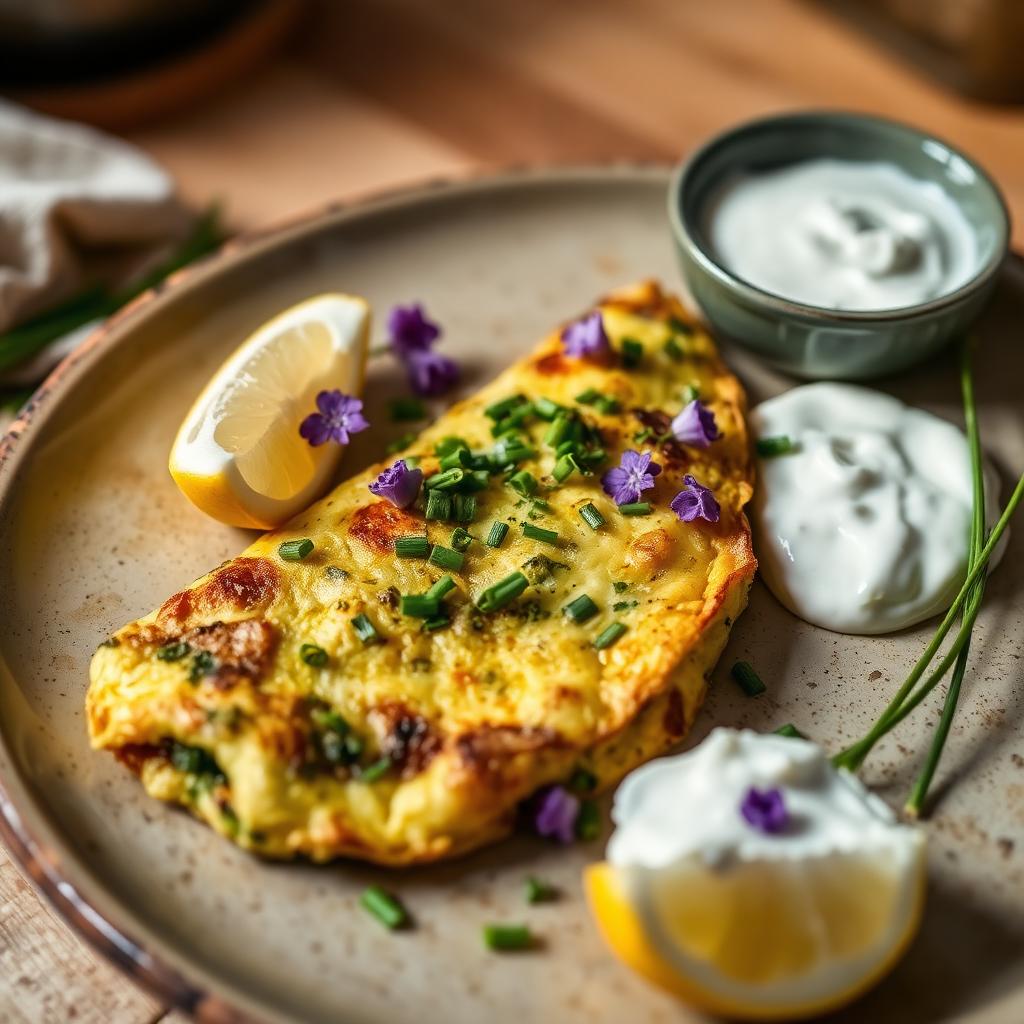
Kuku sabzi is the Nowruz herb omelette that celebrates spring regrowth.
Ash reshteh garnish is snipped raw over the noodle-and-legume soup.
Chive-yogurt spread with walnut as a gentle daily digestive appetiser.
Chives and their close cousin tareh are everyday sabzi in Persian cooking. You'll find them folded raw into kuku sabzi at Nowruz, chopped into kashk-e bademjan, sprinkled on ash reshteh, or served whole on the sabzi khordan plate beside feta, walnut, and warm bread.
Chapter 13 of 18
What It Goes With
Pairing:
Dill
Chives + dill is the classical Persian sabzi duo (a bright, digestion-lifting pair for eggs, yogurt, and rice).
Herb:
Mint
Fresh chives and mint together in yogurt gentle the warming Allium bite and cool a summer plate.
Pairing:
Fennel
Chive-and-fennel salad soothes after heavy meals — mild Allium warmth meeting cooling anethole.
Dairy:
Yogurt
The gentlest way to eat Alliums daily — snipped raw into thick yogurt for mast-o-khiar or a bread dip.
Chapter 14 of 18
What It Goes With: More Pairings
Pairing:
Eggs
Chives + eggs is a universal pairing — kuku sabzi at Nowruz, a bright omelette on any morning.
Dairy:
Feta cheese
Sabzi khordan — chives, walnut, and feta on warm barbari bread is the Persian breakfast in one handful.
Pairing:
Walnut
The tannin-rich walnut balances chive's Allium warmth on the daily herb plate.
Chapter 15 of 18
Through the Year
Spring:
Spring
The chive year begins — first snipping of fresh green leaves into kuku sabzi and the Nowruz sabzi khordan plate.
Summer:
Summer
Snipped generously over cold yogurt, salad Shirazi, and grain bowls. Chive blossoms as an edible garnish.
Autumn:
Autumn
Folded raw into ash and warm potato dishes as evenings cool and heavier stews return.
Winter:
Winter
Frozen chive-and-olive-oil cubes from summer keep the green thread alive in soups and eggs through the cold months.
Chapter 16 of 18
Questions People Ask
Are chives just weaker onions?
They belong to the same Allium family and share the same key compounds — quercetin (a plant compound found in onions, apples and tea) and organosulfur sulfides — but at a gentler dose. They're the Allium you can eat raw, every day, without odour or gut discomfort.
Should I cook chives?
No — heat destroys the volatile Allium compounds and dulls their bright colour. Always snip them raw over hot food in the final 30 seconds, or fold into cold yogurt and salads.
Can chives really support blood pressure?
Directly, the trial evidence is thin. Indirectly, they contribute quercetin (a plant compound found in onions, apples and tea) and Allium sulfur compounds — both moderately supported by pooled studies for blood pressure. Read them as one gentle piece of a whole-diet pattern.
Chapter 17 of 18
Sources
Chives: foodData Central — US Department of Agriculture (USDA). https://fdc.nal.usda.gov/.
Allium vegetables and blood pressure: meta-analysis — Experimental and Therapeutic Medicine (PubMed). https://pubmed.ncbi.nlm.nih.gov/32250480/.
Quercetin and blood pressure: meta-analysis of RCTs — PMC (NIH). https://www.ncbi.nlm.nih.gov/pmc/articles/PMC7019700/.
Sad Giah Hezar Darman (صد گیاه و هزار درمان) — One Hundred Plants and One Thousand Remedies — Dr. Hossein Erfani, 4th edition (1375 / 1996–1997). Primary traditional Persian herbal reference cited throughout this platform. Presented as traditional knowledge, not as modern medical proof.
Office of Dietary Supplements: fact Sheets — US National Institutes of Health (NIH). https://ods.od.nih.gov/factsheets/list-all/.
Herbal Database: memorial Sloan Kettering Cancer Center. https://www.mskcc.org/cancer-care/diagnosis-treatment/symptom-management/integrative-medicine/herbs.
Chapter 18 of 18
Sources (continued)
Herbs at a Glance: uS NIH National Center for Complementary and Integrative Health (NCCIH). https://www.nccih.nih.gov/health/herbsataglance.
FoodData Central: searchable nutrient database — US Department of Agriculture (USDA). https://fdc.nal.usda.gov/.
The Nutrition Source: harvard T.H. Chan School of Public Health. https://www.hsph.harvard.edu/nutritionsource/.
PubMed — peer-reviewed biomedical literature — US National Library of Medicine. https://pubmed.ncbi.nlm.nih.gov/